Hisense has appointed actress Gong Li as its new global brand ambassador

Hisense has appointed famous Chinese-born Singaporean actress Gong Li as its new global brand ambassador.

“The cooperation between Gong Li and Hisense, which has promoted Chinese brands to the world, brings out the best in each other,” the company said in a statement.

According to Hisense, the reason behind the appointment is that Gong Li’s spirit coincides with the brand’s focus and benefits its overseas marketing activitie

Midea overcomes COVID-19 challenge to continue overseas expansion

Despite the challenges posed by the COVID-19 pandemic, Midea Group, a Chinese home appliance maker, will expand its global footprint this year, strengthen the layout of its supply chain, and increase its investment in Thailand, Egypt and Brazil.

Although overseas orders increased by 10 percent year-on-year in the first half of this year, that was not enough to avoid declines in both revenue and net profit.

First-half net profit was 13.90 billion yuan ($2 billion), down 8.29 percent, on a revenue of 139.70 billion yuan, down 9.47 percent. More than 40 percent of its revenue came from overseas markets as Midea added more than 11,000 sales outlets abroad.

The company underlined its e-commerce business. Its products now cover major online retail websites in Italy, the United Kingdom and France.

“We are more willing to build joint ventures in overseas markets, especially countries and regions taking part in the Belt and Road Initiative,” said Fang Hongbo, chairman and president of Midea.

Fang noted that growing market demand in emerging countries and regions, along with an improving domestic demand for smart home appliances, will help boost sales in the years ahead.

“We need to rethink the layout of overseas manufacturing bases,” Wang Jianguo, vice-president of Midea, said.

The company will also look for suitable places to establish a manufacturing base in North America.

Established in 1968, the Foshan, Guangdong province-based Midea makes air conditioners, refrigerators, laundry appliances, kitchen appliances and various small home appliances. It has 28 research and development centers and 34 major production bases around the world.

Its orders from overseas markets rose by 26 percent on a yearly basis in the first quarter. Wang has strong confidence that the company’s performance in the second half of this year will improve despite COVID-related changes and uncertainties.

The company will strengthen its global supply chains and increase investment in Thailand, Egypt and Brazil. In April, Midea began to build an air conditioner factory in Thailand. It is also preparing to build a manufacturing base in Egypt, its 18th overseas.

First-half retail sales of home appliances in China were worth 369 billion yuan, down 14 percent year-on-year, due to COVID-19, said a report released by the China Center for Information Industry Development, which is part of the Ministry of Industry and Information Technology.

The CCIID report also said the market for most of home appliances has shrunk and sales fell in the first half of the year.

“The growth rate of the domestic home appliance market is dropping, so major players should accelerate steps to expand in overseas markets such as North America, South America, Africa and Europe as they continue to show huge growth potential in low, medium and high-end products,” said Liang Zhenpeng, a consumer electronics analyst.

Liang noted in the past most of the Chinese enterprises adopted the original equipment manufacturer or OEM model, but nowadays they tend to build their own brands to be competitive globally.

Midea’s more than 150,000 staff members man its 17 production bases in overseas markets, with its products sold in more than 200 countries and regions. Midea has set up overseas 18 R&D centers in the United States, Japan, Italy, Germany, Singapore, Austria, Israel and other countries.

Since the establishment of its first overseas plant in Vietnam in 2007, Midea has efficiently expanded its operations. The company has stepped up its go-global push in recent years through mergers and acquisitions.

Midea acquired a 32.5 percent stake in Egypt-listed air conditioner manufacturer Miraco. It took a majority stake in German industrial robotics manufacturer Kuka in 2016, marking another important step in the company’s bid to expand into automation and smart manufacturing.

In 2017, it purchased more than a 50 percent stake in Israeli motion solution provider Servotronix Motion Control. Midea also acquired an 80 percent stake in Italian air conditioner maker Clivet SpA and bought the white home appliance products business of Japanese home appliance manufacturer Toshiba Corp in 2016.

The traditional home appliance market is almost saturated and companies need to seek new growth points, said Dong Min, an independent researcher of the home appliances sector.

“Expansion into overseas markets could not only relieve the pressure of high inventory in the domestic market but increase the international influence of Chinese home appliance companies.”

Midea announced in 2018 it would invest 13.5 billion Indian rupees over the next five years to set up a science and technology park in India. Covering an area of roughly 270,000 square meters, the project is estimated to generate direct and indirect employment opportunities for more than 2,000 people.

The park will produce 500,000 refrigerators, washing machines, water purifiers and water heaters respectively, 1.5 million household air conditioners, 250,000 commercial air conditioners, and 4.5 million air conditioner compressors annually.

LG InstaView™ is a Door-in-Door® refrigerator

LG InstaView™ is a Door-in-Door® refrigerator offering easy access to food and an adjustable bin that fits snacks and drinks of all sizes. With this model, user can look inside the fridge without ever opening the door—just knock twice on the unique glass panel. Moreover, InstaView™ features dual ice makers with Craft Ice™ automatically create crushed, cubed and LG’s exclusive slow-melting round ice on demand for upscale, craft drinks at home – without the work. An additional ice maker on the refrigerator door dispenses traditional cubed or crushed ice with the push of a button. The model also offers 3 cooling technologies that work together to extend the life of fruits and vegetables and help keep all foods fresh: Linear Cooling keeps temperatures within 1°F of the setting, Smart Cooling uses sensors and vents for total cooling control, and Door Cooling+ delivers blasts of cool air to all areas of the refrigerator. LG InstaView™ is available in different variants, including Side-By-Side, French 3-Door and 4-Door models, plus a variety of finishes, depths and price points.

Hisense and Gorenje committed to protect their staff from the virus

Hisense Europe Group (HEG) management and representatives of trade unions at the plants in Slovenia (Velenje), Serbia (Valjevo) and the Czech Republic (Mariánské údolí) are united and committed to their intention to protect the health of all employees across Europe during the coronavirus pandemic. HEG management and representatives of trade unions at plants in Slovenia, Serbia and the Czech Republic have urged their employees to strictly abide by the preventive measures against spreading of COVID-19 that were imposed to benefit each individual employee as well as the entire company. HEG continues to work closely with healthcare authorities in all countries it operates in, strictly following all the measures imposed by local authorities.

«Our common response to the current pandemic – reads the statement signed by the HEG management and trade unions in all three countries – is the zero-tolerance approach to the violation of prescribed measures. Behaving responsibly is the only way that can help us maintain our health during the pandemic, which is a major challenge the entire world is facing. We have been investing all our efforts in making sure our employees are well-educated about the importance of strict implementation of all measures, both in the plants and outside them. Together, we urge all employees to practice discipline, physical and social distancing even outside the plants, and thus help contain the spreading of the virus.»
The Group ensures that “HEG plants, as well as all other organizational units throughout Europe, have been following strict preventive measures since day one of the pandemic: physical distancing, mandatory use of disinfection barriers, regular disinfecting of hands and work areas, measuring body temperature at the entrance, and wearing protective masks provided by the company. Protective barriers have been installed in all our plants; they prevent physical contact wherever possible, premises are regularly disinfected, and meetings are held online or with mandatory proper physical distancing.”

Samsung tipped to log strong Q3 earnings on solid chip biz, mobile sales recovery

Samsung Electronics Co. is expected to report strong third-quarter earnings, analysts here said Monday, as its mainstay semiconductor business remained solid despite a decline in memory prices, while its mobile and home appliance sales soared on pent-up demand amid the pandemic.

Samsung was projected to log 63.95 trillion won (US$54.5 billion) in sales in the July-September period, up 3.1 percent from a year earlier, while operating profit was estimated to surge 33.7 percent on-year to 10.4 trillion won over the period, according to Yonhap Infomax, the financial news arm of Yonhap News Agency, which compiled data from 17 brokerage houses.

Should Samsung meet the consensus, the tech giant will post its best quarterly performance since the fourth quarter of 2018, when it logged an operating profit of 10.8 trillion won.

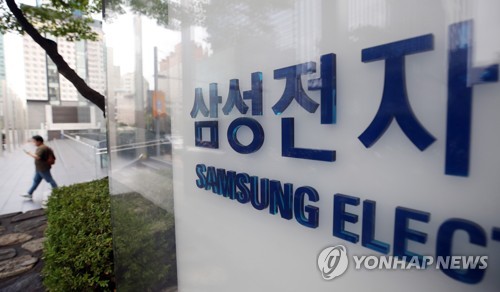
An outdoor sign of Samsung Electronics Co. at the company's office building in Seoul (Yonhap)
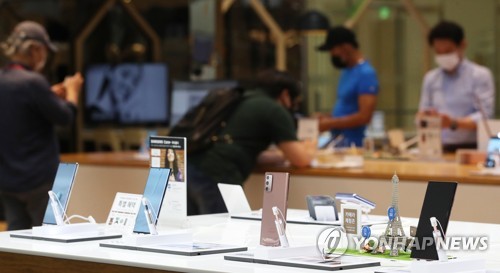
This file photo taken Aug. 7, 2020, shows Samsung Electronics Co.'s Galaxy Note 20 smartphones displayed at a store in Seoul. (Yonhap)
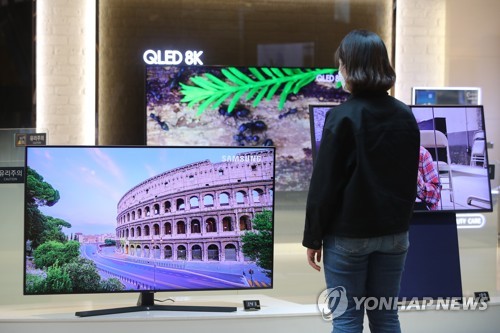
This file photo taken April 29, 2020, shows a customer looking at Samsung Electronics Co.'s QLED TVs at a store in Seoul. (Yonhap)

An outdoor sign of Samsung Electronics Co. at the company’s office building in Seoul (Yonhap)1 of 4hide caption

Compared with the previous quarter, the estimated figure suggests Samsung seeing a 20.7 percent increase in sales and a 27.6 percent jump in operating profit.

Samsung, the world’s leading memory chip and smartphone producer, is expected to announce its third-quarter earnings guidance next week.

Analysts have been raising their earnings outlook for Samsung in recent weeks after they assessed that its chip business is not likely to suffer a big drop in sales despite a decline in memory prices prompted by an excess in inventory.

Server DRAM products in the third quarter were projected to suffer a 10-15 percent price drop in the third quarter, according to market researcher TrendForce, which also estimated that prices for mobile DRAM and consumer DRAM chips to see up to an 8 percent and maximum 10 percent decline, respectively.

However, rush orders from Huawei Technologies Co., the world’s top telecom equipment maker and No. 2 smartphone producer, apparently helped Samsung’s chip business to stay afloat.

Analysts predicted Samsung’s chip business to post an operating profit of around 5 trillion won in the third quarter of the year.

Huawei, one of Samsung’s five largest customers, has been aggressively procuring semiconductors ahead of the U.S. export restrictions that have been in place since Sept. 15.

“Bit growth for DRAM and NAND flash is expected to mark 3 percent and 12 percent quarter-on-quarter increases, respectively, better than its previous guidance,” said Kim Kyung-min, an analyst at Hana Financial Investment.

“Rush orders from its Chinese client, along with a better yield rate and increased wafer input from the expansion of its Xian plant, pushed up the growth,” she said.

Analysts also predicted that Samsung’s foundry business logged growth in the third quarter. The company reportedly secured orders from Qualcomm and Nvidia to manufacture their latest chips.

Samsung’s mobile business was tipped to see a big improvement in its earnings with increased smartphone sales and reduced marketing costs.

Many analysts here predicted that Samsung’s mobile business logged 4 trillion won in operating profit in the third quarter, more than double its second-quarter operating profit of 1.95 trillion won.

Samsung’s Galaxy smartphone sales were estimated to be around 80 million units in the third quarter, about a 50 percent increase from the previous quarter, while that of tablets reached 10 million units, roughly 45 percent higher than the second quarter, analysts added.

“It appears that Samsung has performed well amid Huawei’s struggle and Apple’s new iPhone launch delay, while its tablet sales benefited from a stay-at-home trend,” said Song Myung-sub, an analyst at Hi Investment & Securities. “With decreased marketing costs amid the pandemic, the mobile business unit’s operating margin is expected to be around 10.5 percent in the third quarter.”

Samsung’s home appliance business was also tipped to get a boost from pent-up demand amid the pandemic-driven stay-at-home economy with a sharp increase in its TV sales.

Some analysts even predicted the company’s consumer electronics unit to post over 1 trillion won in operating profit in the third quarter, its best quarterly performance since the second quarter of 2016.

“Considering TV shipments in July and August, it appears that Samsung’s third-quarter TV shipments have posted a better growth than the company’s earlier estimate of a 40 percent increase from the previous quarter,” said Lee Seung-woo, an analyst at Eugene Securities.

According to a recent report from market tracker Omdia, the global QLED TV market, led by Samsung, was projected to grow to 2.44 million units in the third quarter, up 83.9 percent from a year earlier.

Samsung’s display business was projected to post mediocre earnings in the third quarter due to the delayed launch of Apple’s new iPhone 12 series.

Big growth for small domestic appliances

According to GfK data, small and major appliances faced the pandemic situation without significand drop. The Small Domestic Appliances (SDA) market grew by a solid +8.6 percent while the Major Domestic Appliances (MDA) market (including Air Conditioners) experienced limited losses of -8.6 percent in value terms. Excluding Air Conditioners the revenue loss was only -3.7 percent.
«Although the pandemic had a significant negative impact on sales due to retail shutdowns – GfK experts explains – the increased focus on the at-home experiences drove a sales recovery in May and June. Sales of appliances addressing the new challenges generated by the enforced need to “eat at home”, “clean at home” and “groom at home” soared. This includes microwave ovens, vacuum cleaners, dishwashers, beard trimmers and multi-grooming kits. However, for some categories, entire seasons were lost due to COVID-19 – for example, Air conditioners. Overall, MDA (excluding Air Conditioners) only lost -3.7 percent in value terms – even less than the total -5.8 percent for the tech & durables (TCG) market. Whatever the appliance, the overall trends driving choice for consumers of performance, simplification, health hygiene and borderless shopping have become more relevant than ever.»

Looking at the regions, in the first half year of 2020 (H1 2020), the SDA market experienced a solid performance in the developed world. Europe (including CIS) grew by +9 percent. The MDA market was almost stable at -2 percent here. Developed Asian countries also saw a strong uptake of MDA products at an +2.7 percent uptick. While affluent countries were able to invest in appliances to makes their life easier in lockdown, this was less feasible in emerging economies due to the immediate impact of the pandemic on income and willingness to spend money. Consequently, the emerging Asian countries (including China) experienced a double-digit decline in value, weakening MDA market growth. However, the low price point of SDA products and the urgent need for cooking and cleaning products supported a rapid revival of SDA in emerging Asian countries (including China). Here SDA grew by +10.9 percent. Fortunately, in June total appliances growth recovered with double digit sales growth both in China and the rest of the world.

The Label 2020 project helps the transition to the new labelling

The old labelling concept involving A+++ to D efficiency classes has become cumbersome and less transparent for stakeholders so that EU has decided to come back to the original A–G class concept which for the future shall involve rescaling of label classes depending on technology and market development.
To help in the smooth market transition towards the new energy labels, the Austrian Energy Agency coordinates the Label 2020 project, taking place in 16 EU member states.
The project has received funding from the European Union’s Horizon 2020 research and innovation programme and will last until January 2023, with the objective to support: consumers and professional buyers by means of effective information campaigns, services and tools; retailers in the correct, efficient and effective implementation of the new label at the point of sale and in online sales channels; manufacturers in the provision of correct labelling and product information; policy makers, multipliers and other stakeholders in the use and promotion of the new label within national programs, initiatives and schemes.
Among the most important news of the new regulation, we remember that there will be one common scale for all products including only class A to G. There will be no extension to A+ classes anymore.
The label will be linked to a new EU product database via a QR-Code, that provides additional product information for all labelled products for buyers, retailers as well as for market surveillance. In 2021 new labels will be implemented in physical stores and on-line shops for 5 product groups: household refrigerators and freezers, washing machines and washer-dryers, dishwashers, TVs and displays, light sources.
For other labelled product groups like air conditioners, tumble dryers, vacuum cleaners, water heaters etc. the new labels will be implemented as soon as the relevant EU regulations will be in force

New version of its home appliance management app “LG ThinQ.”

LG Electronics has released a new version of its home appliance management app “LG ThinQ.” The app allows users to manage 28 types of home appliances including TVs, refrigerators, air conditioners and washing machines.

The new version features a setting function that allows a user to activate multiple appliances at the same time according to pre-set conditions. For example, if air quality in a house is bad, the app puts an air purifier and an air conditioner into air clean mode at the same time.

Another advantage is that a chatbot service based on artificial intelligence provides product information and helps users shoot troubles and file repair requests. A subscription service function, which automatically purchases necessary parts or consumables at regular intervals, has also been introduced.

The user experience (UX) of the app has also been dramatically enhanced to enable people to intuitively use it.

Baraldi Cappe

Baraldi Cappe, historical Italian company in the sector of kitchen hoods and induction hobs with integrated hood, received the Mention of Honor for its Diamond Flexi, a cooking system with integrated fume extraction, designed and built to meet the needs of modern and innovative environments, ensuring cutting-edge technologies, high quality and ease of use.
Compasso d’Oro is the most authoritative Award for Italian Design and a very high worldwide recognition for projects, products, researches and merits developed in the field of design.
The Honorable Mention represents another important recognition that attests the commitment of Baraldi fot its customers. For more than 55 years, the company has been creating innovative and functional products with an increasingly affirming attention to sustainability as a criterion to be adopted, alongside formal and functional research, design and production

Cuisinart Precision Master™

The team at Good Housekeeping recently named the Cuisinart Precision Master™ 5.5-quart Stand Mixer (SM-50TQ) as the “Best Multi-Purpose Stand Mixer” in their list of, “6 Best Stand Mixers,

Precision Master™ 5.5-Quart Stand Mixer

5.5-quart capacity, polished stainless steel bowl
500-watt motor
Die-cast metal construction
12 speeds for precision mixing
Tilt-back head
One power outlet for optional attachments
Includes chef’s whisk, dough hook, flat mixing paddle, and splash guard with pour spout
Instruction/Recipe book