
LG SIGNATURE Marks 10 Years in the U.S. with a Major Push into Premium Built-In Appliances
To celebrate a decade of redefining home aesthetics and technological innovation, LG Electronics recently marked the 10th anniversary of its ultra-premium brand, LG SIGNATURE, in the United States.
Tag Archives: LG
LG Still Tops India’s White Goods Race
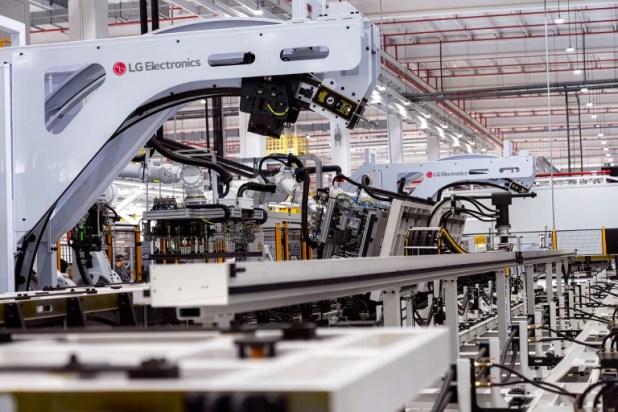
LG has opened a new smart factory in Paraná, Brazil
A 310 Million USD investment that expands LG’s appliance manufacturing footprint across Latin America.
The 770,000 m² site can produce 600,000 refrigerators a year (one every 14 seconds) and brings LG’s latest AI and robotics‑driven manufacturing to the region. Articulated robots, Vision AI inspection and automated workflows boost quality, consistency and workplace safety.
What stands out
Refrigerators designed specifically for Brazilian homes — bi‑voltage compatibility, climate‑ready cooling performance and LED sanitisation — all shaped by LG’s local R&D team. The new plant is set to cut delivery times by up to 80%, reduce import dependency and give retailers a more reliable supply pipeline. Over time, Paraná will become a strategic export hub for Latin America.
A big move from LG — and a clear signal of long‑term commitment to the region’s fast‑growing premium appliance market.
LG Extends Its Lead as Samsung’s Home Appliance Business Slips Into Q2 Deficit
A clear profitability divide has emerged between South Korea’s two home‑appliance giants. Q2 2026 results from Samsung Electronics and LG Electronics show the strongest gap in years — and one that reflects diverging strategic priorities inside both companies.
LG Delivers Another Trillion‑Won Quarter
LG Electronics’ Home Appliance & Solution (HS) division posted an operating profit of 1.1411 trillion won (approx. ¥125.5 billion) in Q2, marking two consecutive quarters above the 1‑trillion‑won threshold.
LG attributes the sustained momentum to:
– Expansion of high‑value‑added SKUs
– Improved cost structure and operational efficiency
– Tariff refunds and supply‑chain optimisation
– Strong performance across both premium and volume categories
The result reinforces LG’s long‑standing strength in core whitegoods categories a position the company has been deliberately consolidating.
Samsung’s Home Appliance Business Falls Into the Red
Samsung Electronics’ home appliance division reported Q2 sales of 14.5 trillion won (approx. ¥1.588 trillion), but an operating loss of 10 billion won (approx. ¥1.1 billion).
This marks the first deficit for Samsung’s home appliance business since the creation of the DX (Device eXperience) division in 2021.
The profit gap between the two companies widened sharply:
– Q1 2026: approx. 990 billion won
– Q2 2026: approx. 1.15 trillion won
Analysts note that Samsung’s intensified investment in semiconductors and AI‑related businesses has shifted focus away from traditional home appliances — while LG has doubled down on its strongest legacy segment.
Strategic Repositioning at Samsung
Reports indicate Samsung has:
– Withdrawn from some TV and appliance businesses in China
– Begun evaluating global production base consolidation
– Initiated discussions around fundamental business reorganisation to restore appliance‑division profitability
This aligns with Samsung’s broader pivot toward high‑growth, high‑tech sectors — but leaves its appliance division exposed to margin pressure and fierce competition from Chinese manufacturers.
Public Reaction in South Korea
Korean netizens offered contrasting views, reflecting both brand loyalty and market realism:
Supportive of LG
– “LG is indeed strong in home appliances.”
– “LG’s products are easier to use and higher quality.”
– “LG is often cheaper than Samsung for similar functions.”
– “Customer support has improved significantly.”
Critical of Samsung
– “Samsung focused too much on semiconductors.”
– “Samsung needs to rebuild its home appliance brand.”
Neutral or Strategic Perspectives
– “Both companies prioritise profitable businesses — no point comparing.”
– “Home appliances may already be a side business for Samsung.”
– “Competition in China is too severe; withdrawal is unavoidable.”
What This Means for the Global Appliance Sector
The widening profitability gap signals a shift in competitive dynamics:
– LG is strengthening its position as a global premium‑plus appliance leader.
– Samsung may be entering a period of portfolio restructuring, with implications for global distribution, product roadmaps, and regional manufacturing footprints.
– Retailers and distributors could see greater SKU stability and margin consistency from LG, while Samsung’s appliance strategy may evolve toward selective categories and innovation‑led differentiation.
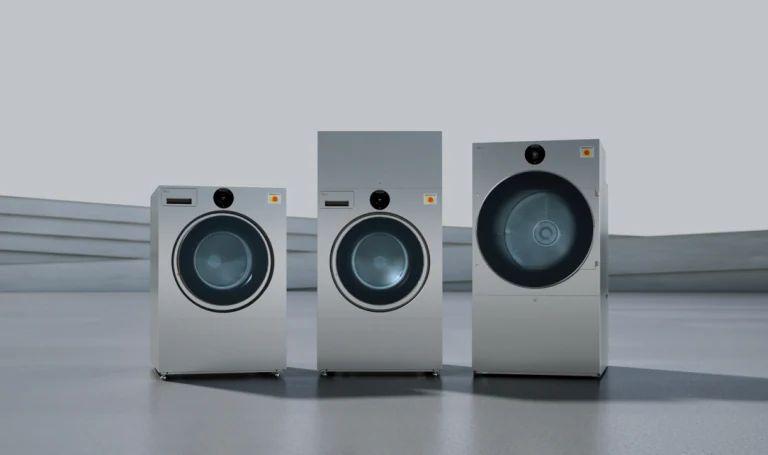
LG targets growth with end-to-end commercial laundry strategy
LG Electronics is expanding its commercial laundry business beyond appliances by positioning itself as a provider of complete business solutions.
The company says its strategy combines high-performance laundry equipment with AI, remote monitoring, predictive maintenance and connected management platforms to help commercial customers improve efficiency and reduce operating costs.
Targeting sectors including hospitality, healthcare and multi-housing, LG aims to build long-term customer partnerships through integrated services rather than standalone product sales.
The move forms part of LG’s wider ambition to become a “Smart Life Solution Company”, with B2B solutions playing an increasingly important role in its global growth strategy.
LG InstaView Refrigerators Pass 53 Million Units Sold — A Milestone Moment for Premium Cooling
LG InstaView Surpasses 53 Million Sales, Cementing Its Place in Premium Refrigeration
That’s the strongest SEO performer for this story — it front‑loads the brand, the milestone, and the category keyword.
If you want alternatives, here are three more optimised headline options, each tuned for different search intents:
– LG InstaView Hits 53 Million Units Sold as Demand for Smart Refrigeration Grows
– LG’s InstaView Door‑in‑Door™ Reaches 53M Sales Worldwide in Premium Cooling Push
– LG InstaView Milestone: 53 Million Refrigerators Sold Across Global Markets
LG Smashes Records: Q2 Earnings Hit All-Time Highs on Premium Appliance Surge
LG Electronics has absolutely shattered its own records, posting its most successful second quarter in company history. Driven heavily by core premium home appliances and a clever pivot into appliance subscriptions, the South Korean tech giant is proving that high-end white goods can still carry a company to massive heights despite shaky global markets.LG brought in a massive 23.83 trillion South Korean Won (KRW)—roughly €13.6 billion—in consolidated revenue for the second quarter of 2026 alone.
Even more impressive is the bottom line. Operating profit for the quarter landed at 1.58 trillion KRW (€920 million). To put that into perspective, LG’s operating profit for just the first half of 2026 has already completely eclipsed its total operating profit for the entirety of 2025.What’s Driving the White Goods Boom?
While LG has expanded into automotive components and software solutions, the foundation of this record-breaking surge remains firmly rooted in the kitchen and utility rooms.
Premium Appliance Domination: High-margin built-in appliances, smart refrigerators, and signature laundry setups are leading the charge. Consumers are opting for durable, premium appliances even during macroeconomic uncertainty.
The Seasonal Air Con Boost: Sweltering seasonal temperatures globally created a massive wave of demand for LG’s air conditioning units, locking in rock-solid sales.
Appliance Subscriptions & Software: LG is successfully changing how it sells. By scaling up their appliance subscription models and expanding webOS platform features into connected home devices, they’ve created highly lucrative, recurring revenue streams.
By doubling down on efficiency, keeping supply chain costs tight, and focusing heavily on premium tech, LG has managed to more than double its operating profit year-over-year. For the white goods industry, it’s a clear signal: the smart, high-end market is where the real growth is happening.
Xiaomi Set to Disrupt Indian White Goods Market with Massive Large Appliance Push
The global white goods landscape is bracing for a major competitive shake-up. Tech giant Xiaomi has officially confirmed its entry into India’s large home appliances market, locking its sights directly on entrenched market leaders like Samsung, LG, and Voltas This is not a tentative trial run. In a significant corporate reshuffle, Xiaomi has officially elevated India to its formal South Asia Regional Headquarters. The newly established hub will take over direct command of operational strategies across India, Bangladesh, Nepal, and Sri Lanka—territories that were previously managed straight out of Beijing.
To spearhead this operational offensive, Xiaomi has brought in Alex Tang as the new General Manager for the South Asia region. Tang’s appointment is highly calculated: he previously commanded Xiaomi’s Southeast Asia division, where he successfully executed the company’s first large-scale appliance localization and rollout outside of mainland China.
LG Unveils Korea’s Largest‑Capacity AI Washer‑Dryer Lineup
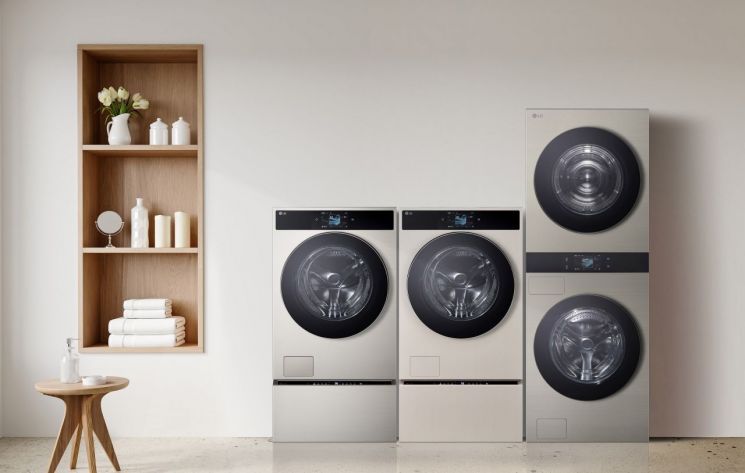
LG Electronics has announced a major expansion to its premium laundry portfolio with the launch of two new LG Tromm AI Objet Collection models — the WashTower and WashCombo — both delivering the largest combination washer‑dryer capacities currently available in Korea.These new additions strengthen LG’s position in the fast‑growing combo‑laundry segment, blending high‑capacity performance with advanced AI‑driven care.Record‑Breaking Capacities for Bigger LoadsWashTower: 25kg wash / 25kg dryWashCombo: 25kg wash / 21kg dryThis scale makes it possible to handle bulky items — including winter duvets — in a single cycle, a key selling point for households seeking convenience without compromising on performance.⚙️ Core LG Technologies Meet AI IntelligenceLG has integrated decades of component engineering into the new lineup, including:AI DD Motor — selects the optimal drum motion from six patterns based on fabric type, soil level, and load size.Dual inverter heat pump — improves drying efficiency and reduces energy consumption.AI Time Sensing — detects load and displays estimated cycle time within three seconds.AI Time Guidance — learns user habits to deliver increasingly accurate drying‑time predictions.Despite their size, both models achieve Grade 1 energy efficiency, thanks to optimised drum movement and compressor control. Faster Cycles and Improved User Convenience customer feedback has shaped several upgrades:Quick Small Load Cycle: Wash and dry up to 3kg in approx. 64 minutes — over 30% faster than the previous 99‑minute cycle.MiniWash Integration: Users can control both the WashCombo and MiniWash from a single display, reducing bending and improving accessibility.Push‑to‑open detergent drawer: A cleaner, more premium exterior design. Enhanced Care & Maintenance Services LG is also expanding its after‑sales support with a new Direct Water High‑Pressure Cleaning service. This includes:Internal and external drum cleaningUV sterilisationEndoscopic inspectionSteam cleaning of detergent drawer, slot, and gasket These additions aim to reassure customers who prioritise hygiene and long‑term appliance care. Premium Colour Options LG continues to lean into design‑led laundry appliances with new finishes:Luxe SilverSteel BlackThe WashTower is available in seven colours, while the WashCombo comes in four, giving retailers more scope to target style‑conscious buyers.
Tech Giants Are Now Building Whole Houses: Inside the Samsung vs. LG Modular Home Wars
For decades, the battle between Samsung and LG took place in your kitchen and laundry room. They fought over who had the smartest refrigerator, the quietest washing machine, or the sleekest air conditioner.
But the rivalry just breached a massive new frontier. They aren’t just trying to sell you the appliances anymore—they want to build the entire house.
With the rise of “workcations” and people looking for weekend getaways, the modular housing market is absolutely exploding. It’s projected to hit a massive 4.4 trillion won (around $3.2 billion USD) by 2030. Now, Korea’s tech titans are racing to drop fully built, AI-powered smart homes straight onto your empty plot of land.
LG’s Play: The Affordably Luxury “Smart Cottage”
LG struck first with its LG Smart Cottage, a modular home packed to the brim with their premium appliances and high-tech heating, ventilation, and air conditioning (HVAC) systems.
Recognizing that cost is the biggest barrier for people wanting a second home, LG just changed the game. They launched the MONO Core 27, a 27-square-meter (about 290 sq. ft.) open-plan, single-story layout featuring a living room, bedroom, kitchen, and bathroom.
The kicker? It costs 100 million won (roughly $72,000 USD)—slashing the price of their previous model exactly in half. It’s essentially a plug-and-play designer tiny home backed by one of the biggest tech brands on earth.
Samsung Fires Back: The Factory-Integrated AI Home
Not one to be outdone, Samsung just announced its official entry into the market, partnering with wooden modular housing specialist Gongganjegaeso to launch the Samsung AI Modular Home.
While LG is focusing on lowering the price barrier, Samsung is flexing its SmartThings ecosystem ecosystem.
When you order a Samsung modular home, over 20 smart devices—including heat pump boilers, refrigerators, TVs, smart lighting, and security cameras—arrive pre-installed and pre-registered directly from the factory floor. You don’t have to spend days setting up Wi-Fi, pairing devices, or hiring installers. You just turn the key, and your entire house is alive and connected.
Samsung has opened massive showrooms in South Korea ranging from tiny-home scale up to a sprawling 330-square-meter luxury layout, and they are already planning to scale this tech up to four-story apartment buildings.
The Big Picture: Why You Should Care
We are moving past the era of the “smart appliance” and entering the era of the “native smart home.” Instead of buying a house and trying to make it smart with aftermarket gadgets, tech companies are building homes from scratch where the walls, the air, the security, and the appliances act as a single, unified machine

