Faber has spent more than 70 years refining the “invisible” engineering that sits behind its cooker hoods — the parts you never see, but that define extraction performance, noise levels, energy use and long‑term reliability. From brushless motors to advanced filtration and fluid‑dynamic noise control, the brand’s latest-generation models show how much innovation now sits inside the modern hood🔧 Brushless Motor Technology
Traditional brushed motors rely on physical contact between components, creating friction, wear and noise. Faber’s brushless motor eliminates this contact entirely, using a rotating magnetic field to control speed with precision. The result is:
– Higher energy efficiency
– Lower consumption
– Longer product life
– Stable performance even at maximum extraction
In the Heaven Light PRO ceiling‑mounted hood, the brushless motor delivers up to 700 m³/h in Boost mode while maintaining low energy use and improved acoustic comfort.
🌀 High Filtering Hood (HFH) System
Faber’s HFH system is one of the most advanced filtration solutions on the market. Instead of a flat charcoal filter, HFH uses a cylindrical filter with a larger surface area, increasing contact between air and activated carbon.
Inside the cylinder, two ultra‑filtering panels work together:
– The first captures larger particles
– The second traps finer ones
This dual‑stage system removes up to 95% of odours, significantly improving indoor air quality. The cylindrical design also reduces noise by around 3 dB(A) compared with traditional charcoal filters.
The Stilo Comfort hood can be equipped with HFH and also includes Intensive Speed, LED lighting and dishwasher‑safe grease filters.
🔇 Fluid Dynamics & Sound PRO
Quiet operation is now a core performance metric for premium hoods. Faber’s Sound PRO technology optimises internal airflow to reduce turbulence and vortices — the main causes of noise.
A specially designed diffuser:
– Cuts noise by up to 6 dB(A) at maximum power
– Improves the quality of the sound, not just the volume
This technology appears across multiple Faber models, helping maintain acoustic comfort without sacrificing extraction performance.
🏠 Why These “Hidden” Technologies Matter
These internal components aren’t visible from the outside, but they define how a hood performs day‑to‑day:
– Cleaner air thanks to more efficient filtration
– Lower running costs through energy‑efficient motors
– Longer lifespan with reduced mechanical wear
– Quieter kitchens through advanced airflow engineering
Faber’s heritage dates back to 1955, when it invented the first modern cooker hood. Today, the brand continues to evolve that legacy with technologies designed to improve real‑world comfort and indoor air quality
Category Archives: Air treatment
Elica Secures €120M Credit Line
Elica has strengthened its financial position with a new €120 million pooled credit facility, backed by a consortium of major European banks and supported by SACE guarantees. The funding will accelerate the company’s industrial transformation, product innovation, and international expansion across its cooking ventilation portfolio.
CEO Luca Barboni says the operation boosts financial flexibility and supports Elica’s long‑term growth strategy. The move reinforces the Fabriano manufacturer’s leadership in premium cooking extraction systems and its push into wider global markets.
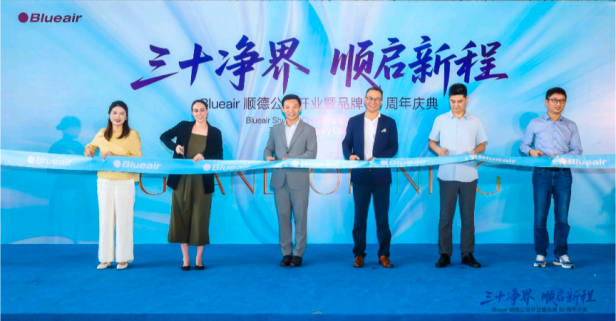
Blueair Opens New Shunde Office, Strengthening Its China-Based Innovation Hub
Blueair has marked a major milestone in its global air‑wellness strategy with the official opening of its new office in Shunde, China — a move designed to tighten collaboration across R&D, production, and supply chain teams right at the heart of one of the world’s most advanced home‑appliance manufacturing clusters. A Strategic Expansion in a Global Innovation NetworkThe Shunde office sits within a region known for its world‑class smart‑appliance ecosystem, giving Blueair direct access to mature supply chains, engineering talent, and rapid‑iteration manufacturing capabilities. This location strengthens the brand’s three‑hub innovation model spanning Sweden, Shanghai, and now Shunde — a structure designed to accelerate product development and bring new air‑wellness technologies to market faster. Blueair leaders emphasised that the Shunde site will play a critical role in engineering execution and fast prototyping, complementing the advanced research and design work carried out in Sweden and Shanghai. Together, the three centres will support the brand’s push into next‑generation purification, smart air‑management systems, and emerging categories such as humidification and air circulation. Strengthening Collaboration at the Source by positioning teams closer to manufacturing partners and certification bodies, Blueair aims to streamline development cycles and enhance product quality. Representatives from SGS, CVC, Intertek, and UL Solutions attended the opening ceremony — signalling strong alignment between Blueair and key testing and compliance organisations. The new office also reinforces Blueair’s long‑term commitment to the Chinese market, where engineering capability, supply‑chain maturity, and innovation velocity continue to shape the global appliance landscape.A Milestone Year for BlueairThe Shunde opening coincides with Blueair’s 30th anniversary.
Why Your Outdoor Kitchen Needs Proper Extraction: A Look at the Elica Capri Range Hood
Designed to handle heavy-duty outdoor cooking, the Elica Capri delivers both performance and durability:
Heavy-Gauge Stainless Steel Construction: Built to withstand outdoor elements, corrosion, and moisture without degrading.
High-CFM Ventilation: Powerful airflow capability quickly captures high volumes of heat and smoke before they disperse across the dining area.
Professional Baffle Filters: Heavy-duty commercial-style baffle filters trap grease efficiently while remaining easy to remove and clean.
Integrated Overhead Lighting: High-output lighting ensures clear visibility over the grill during evening gatherings
Heatwaves Drive 43% Surge in Chinese AC Exports to Europe
By White Goods Now
Amid shifting global trade dynamics, China’s home appliance export sector delivered impressive H1 2026 numbers—led by a 43.2% year-on-year surge in air conditioner exports to the EU ($3.76 billion).
Driven by severe European heatwaves and structural supply shortages, demand was especially high for portable and mobile AC units (+70%), which suit Europe’s historic buildings, strict drilling bans, and high renter demographics.
Brand Highlights
* Midea: Led the market with its PortaSplit portable split AC (15-minute DIY setup). Shipments topped 200,000 units, driving a >70% sales surge across Germany, France, Spain, and the UK.
* Haier: Posted a 24% increase in residential AC brand sales in Europe—the highest among Chinese brands. Emergency orders from France and Spain alone exceeded 100,000 units.
* Gree: Doubled sales in Spain and saw a 50% rise in France, extending installation waitlists through late August.
* Hisense & TCL: Hisense AC sales in Europe soared 117% (up 900% in France), while TCL saw over 300% growth in France and the Nordic region.
Key Drivers
* Supply Chain Scale: China produces over 85% of global AC capacity and 90% of compressors, allowing rapid production scaling.
* Targeted Product Design: No-drill, portable units bypass high European installation costs and building regulations.
* Faster Logistics: Rail transport via the China-Europe Railway Express cut delivery times from 40+ days (sea) down to 15–20 days.
* Brand Value Growth: Chinese manufacturers are increasingly exporting under their own brand names rather than low-margin OEM contracts.
BSH Explores New Ownership Model for Its Cooker Hood Production

BSH Hausgeräte is evaluating a significant strategic shift: transferring ownership of its cooker hood manufacturing operations in Bretten, Germany, to an external partner. The move aims to secure the long‑term future of the site, which currently employs around 1,000 people, and to stabilise production volumes by opening the facility to third‑party customers.
🔧 A New Operating Model for Bretten
According to reporting from German industry sources, BSH has begun exploratory talks with potential partners who could take over the cooker hood production lines. Under this model, the Bretten plant would operate as an independent company supplying BSH brands—such as Bosch, Siemens, and Neff—while also serving additional clients across the appliance sector.
BSH believes this broader customer base could help the plant reach the production volumes needed to operate efficiently. As the company explained, expanding beyond a single customer would make the site “less dependent” and more resilient in a challenging market.
👷 Job Protection at the Forefront
The Bretten factory has faced uncertainty since BSH announced the closure of two German sites last autumn. Local resistance was strong, and the new proposal is seen as a way to preserve a substantial portion of the workforce.
The works council estimates that up to 600 jobs could be safeguarded if the cooker hood division becomes an independent entity with multiple customers. CEO Matthias Metz emphasised the plant’s expertise but acknowledged that structural and economic pressures require a “practicable solution” to secure its future.
🔄 Production Shifts Elsewhere in Europe
While cooker hood production may remain in Bretten under new ownership, BSH has confirmed that oven production will be relocated to other European factories. These facilities currently have spare capacity and are expected to absorb the workload gradually, with the transition scheduled to finish by Q1 2028.
📌 What This Means for the Industry
For the wider white goods sector, BSH’s move reflects a growing trend: manufacturers seeking flexible production models and partnerships to navigate cost pressures, supply chain challenges, and evolving market demand. An independent Bretten operation could emerge as a specialist supplier of cooker hoods to multiple brands—potentially reshaping sourcing strategies across Europe.
Nature Meets Science: Blueair Introduces the World’s First Wool Air Purifier Filter
In the home appliance and white goods industry, innovation is usually measured by smart connectivity, sleek finishes, or energy ratings. But every so often, a breakthrough comes along that fundamentally changes the materials we use inside our homes.
Swedish air purification giant Blueair has done just that, unveiling the world’s first wool air purifier filter: the EcoLast™ Filter.
This launch represents a major milestone in sustainable home wellness technology, proving that premium performance and responsible engineering can go hand in hand.
The Genesis of EcoLast™
The development of the EcoLast™ Filter began with a straightforward but challenging question: Can we design an air filter that is significantly better for the planet without losing an ounce of purification power?
Answering this required looking beyond traditional synthetic materials. Blueair embarked on a intensive two-year collaboration with Lanaco, a New Zealand-based wool technology pioneer. The result of their joint expertise is a filter made from authentic wool and 100% USDA Certified Biobased materials.
High Performance, Low Footprint
Air purifiers are essential white goods for modern, health-conscious homes, but their synthetic filters traditionally contribute to plastic waste. The EcoLast™ Filter shifts the paradigm by combining natural fibers with high-efficiency filtration:
* Exceptional Lifespan: While standard filters often require frequent replacing, the EcoLast™ Filter is built to last, boasting an impressive 18-month lifetime.
* Uncompromised Filtration: It captures 99.97% of airborne particles, effectively trapping common household allergens such as dust, pollen, pet dander, and mold spores.
* Biobased Material: By utilizing Lanaco’s specialized wool technology, the filter replaces fossil-fuel-based synthetics with a highly sustainable, renewable resource.
A New Standard for Eco-Friendly Appliances
As a Certified B Corp, Blueair’s latest product launch is more than just a new accessory—it is a glimpse into the future of sustainable home appliances. By integrating biodegradable and biobased elements into high-wear components like filters, Blueair is setting a new benchmark for how white goods brands can reduce their environmental impact.
For consumers looking to improve their indoor air quality while minimizing their ecological footprint, the EcoLast™ Filter represents a perfect harmony of nature and cutting-edge science.
Keep an eye on White Goods Now for more updates, hands-on reviews, and the latest innovations in home wellness technology.
The Cooling Shift: How Chinese AC Brands Swept the European Market This Summer
Europe has been sweltering. Record-shattering heatwaves across France, Germany, Denmark, and the Czech Republic have completely caught the continent off guard. Historically, residential air conditioning has been relatively rare in European homes due to milder climates and strict local building regulations. However, this summer’s extreme weather transformed cooling from a luxury into an absolute necessity—triggering an unprecedented run on air conditioning units.
With supply chains scrambling, Chinese major appliance brands like Midea, Haier, Gree, Hisense, and TCL stepped up to fill the void, effectively taking home the “MVP” title for Europe’s summer cooling season.
The Massive Surge in Demand
According to recent data, the scale of this cooling boom is staggering. Customs data reveals that exports of air conditioning units from China to the EU reached a record high of $3.76 billion in the first half of 2026 alone—a massive 43.2% year-on-year increase. Notably, Chinese brands now command a 41% share of the European AC market, up from 27% just three years ago.
The brand-specific numbers reflect a true inventory sell-out:
* Gree: Wall-mounted units completely sold out in France, pushing installation wait times all the way into late August.
* Midea: Its flagship PortaSplit (a portable split-system unit designed for easy setups) saw sales double compared to last year, shipping over 200,000 units and helping the brand anchor itself deeply in the competitive German market.
* Haier: European AC sales grew 30% year-on-year, with the company utilizing its global manufacturing bases at full capacity to keep up with restocking.
* Hisense: Sales doubled in France and grew by over 20% across Western Europe, with portable units becoming nearly impossible to find in Italy and Spain.
* TCL: Total European orders grew by 68% in the first half of the year, driven by a 90% surge in demand for portable and inverter split-system units.
Why Did These Brands Win the Summer?
The success of these brands wasn’t just luck; it came down to a mix of clever product design and sheer supply chain muscle.
* Solving the Installation Bottleneck: European building codes and historic architecture make drilling holes for traditional split-system AC installations incredibly difficult and legally complicated. Chinese manufacturers anticipated this by flooding the market with no-installation portable units and innovative “plug-and-play” portable split systems. These units solved the consumer’s immediate pain point without requiring a professional installer or landlord permission.
* Supply Chain Agility: Backed by mature, end-to-end component ecosystems domestically, these brands displayed unmatched manufacturing flexibility, allowing them to ramp up production and ship units faster than regional competitors.
* Established Local Footprints: Brands like Haier and Midea have spent years acquiring local European heating, ventilation, and air conditioning (HVAC) firms. This established network of local warehouses and distribution channels allowed them to react instantly when the French government unexpectedly placed an emergency order for 30,000 AC units to be delivered within days.
The Long-Term Outlook: Risks and Opportunities
Despite the record profits, the industry faces an looming question: What happens when the weather cools down?
Much of this summer’s volume consisted of portable, low-margin units. This is a highly competitive, commoditized segment of the market. If European temperatures dip next summer, manufacturers could face a severe overcapacity problem. Furthermore, Europe’s aging electrical grids, surging energy prices, and tightening environmental regulations mean future products will have to meet incredibly strict efficiency standards.
However, the broader consensus is clear: Europe’s relationship with air conditioning has permanently shifted. The International Energy Agency (IEA) projects that the number of AC units in the EU will more than double from 110 million in 2019 to 275 million by 2050.
For brands like Midea, Haier, and Hisense, this summer wasn’t just a short-term cash injection. It was a massive footprint expansion. The true test moving forward will be whether they can convert this sudden surge in market share into long-term brand loyalty and successfully transition European consumers toward their premium, high-efficiency smart home systems.
Dreame Expands Smart Home Line‑Up With New L9 Laundry Pair and P‑Wind 10 Portable Air Conditioner
Founded in 2017, Dreame Technology remains the youngest of the major players driving innovation in the smart‑home sector. The brand continues its rapid ecosystem expansion with the launch of four new products, led by the AI‑powered L9 washer‑dryer series and the P‑Wind 10 portable air conditioner.
Dreame AI Inverter L9 Washing Machine
AI‑Optimised Washing Performance
The L9 washing machine uses Dreame’s intelligent washing algorithm to analyse load weight, soil level and fabric type in real time. It automatically adjusts water flow, drum rhythm and detergent usage to deliver cleaner results while reducing waste.
High‑Efficiency Inverter Motor
A premium inverter motor ensures stable, quiet operation with improved energy efficiency. The motor’s precise speed control enhances stain removal and protects delicate garments, while contributing to a longer appliance lifespan.
Fabric‑Care Focused Drum Design
The L9’s drum features a gentle, protective pattern designed to reduce friction and prevent fibre damage. Combined with AI‑controlled wash actions, it supports better garment care across everyday loads and specialist cycles.
Smart Connectivity and Convenience
Wi‑Fi control via the Dreame app allows users to start, pause and monitor cycles remotely, receive maintenance alerts and access tailored wash programmes. A large, intuitive display and streamlined interface make the machine easy to operate for all household members.
Dreame AI Twin Inverter L9 Dryer
Twin Inverter Heat Pump Drying
The L9 dryer combines an inverter motor, inverter compressor and high‑flow fan to deliver powerful yet fabric‑friendly drying. Low‑temperature heat‑pump technology supports 30‑minute fast drying, reduced noise and lower energy consumption.
AI‑Driven Drying Precision
Temperature and humidity sensors track moisture levels throughout the cycle, enabling the AI Drying Algorithm to stop at the ideal moment — preventing overdrying and protecting fabrics.
PressFree Steam Care
A dedicated steam‑refresh programme smooths creases in 25 minutes, reducing the need for manual ironing.
User‑Centric Design
Three drying outcomes — Cupboard Dry, Ready to Wear and Iron Dry — plus a four‑layer filtration system support cleaner air and better garment care. A premium TFT display knob elevates the user experience.
—
Dreame P‑Wind 10 Portable Air Conditioner
3‑in‑1 Climate Control
The P‑Wind 10 combines cooling, dehumidification and ventilation in one compact unit, making it suitable for year‑round comfort.
3D Airflow for Even Cooling
Automatic horizontal oscillation and adjustable airflow direction help distribute cool air evenly throughout the room.
Compact, Space‑Saving Design
At 305 × 285 × 700 mm, the P‑Wind 10 fits neatly into bedrooms, studies and small living spaces.
Easy Installation and Smart Operation
Four swivel casters and a simple three‑step assembly process make setup straightforward. Users can control the unit via the LED display, remote control, Wi‑Fi or the Dreame app. A 24‑hour timer and sleep mode support quieter night‑time use.
Available in black and camel.


Elica Opens EuroCucina 2026 with Strong Institutional Support
Elica kicked off EuroCucina 2026 with heavy footfall and high‑level institutional attention. Prime Minister Giorgia Meloni visited the stand on opening day, meeting President Francesco Casoli and the Board before continuing discussions over a private lunch.
The company thanked national Institutions for recognising the strategic importance of the home appliance sector as it navigates major technological and competitive shifts. The visit also underscored the global value of Italian design, innovation, and industrial resilience.
Elica later welcomed Deputy Prime Minister Matteo Salvini, Marche Region President Francesco Acquaroli, and other prominent figures from business and government, reinforcing the brand’s central role in Italy’s manufacturing excellence.

