Blueair Opens New Shunde Office, Strengthening Its China-Based Innovation Hub

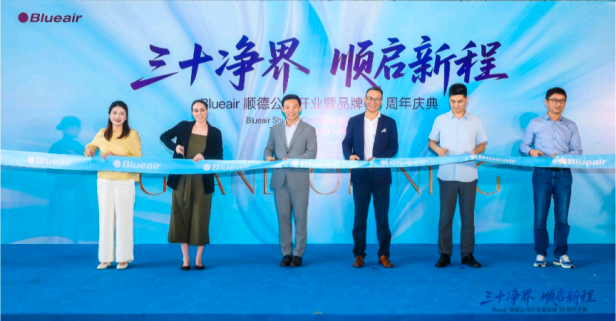
Blueair has marked a major milestone in its global air‑wellness strategy with the official opening of its new office in Shunde, China — a move designed to tighten collaboration across R&D, production, and supply chain teams right at the heart of one of the world’s most advanced home‑appliance manufacturing clusters. A Strategic Expansion in a Global Innovation NetworkThe Shunde office sits within a region known for its world‑class smart‑appliance ecosystem, giving Blueair direct access to mature supply chains, engineering talent, and rapid‑iteration manufacturing capabilities. This location strengthens the brand’s three‑hub innovation model spanning Sweden, Shanghai, and now Shunde — a structure designed to accelerate product development and bring new air‑wellness technologies to market faster. Blueair leaders emphasised that the Shunde site will play a critical role in engineering execution and fast prototyping, complementing the advanced research and design work carried out in Sweden and Shanghai. Together, the three centres will support the brand’s push into next‑generation purification, smart air‑management systems, and emerging categories such as humidification and air circulation. Strengthening Collaboration at the Source by positioning teams closer to manufacturing partners and certification bodies, Blueair aims to streamline development cycles and enhance product quality. Representatives from SGS, CVC, Intertek, and UL Solutions attended the opening ceremony — signalling strong alignment between Blueair and key testing and compliance organisations. The new office also reinforces Blueair’s long‑term commitment to the Chinese market, where engineering capability, supply‑chain maturity, and innovation velocity continue to shape the global appliance landscape.A Milestone Year for BlueairThe Shunde opening coincides with Blueair’s 30th anniversary.
𝗘.𝗚.𝗢. 𝗖𝗿𝗼𝗮𝘁𝗶𝗮 𝗻𝗮𝗺𝗲𝗱 𝘁𝗼𝗽 𝗲𝘅𝗽𝗼𝗿𝘁𝗲𝗿 𝗼𝗻𝗰𝗲 𝗮𝗴𝗮𝗶𝗻

E.G.O. Elektro-komponente d.o.o. (E.G.O. Croatia) has once more been honored with the “Golden Key Award” as one of Croatia’s leading exporters. Matija Hržan, Head of Production – Switches and Injection Molding at E.G.O. Croatia, accepted the award during the 21st Convention of Croatian Exporters in Zagreb in late June.

Why Your Outdoor Kitchen Needs Proper Extraction: A Look at the Elica Capri Range Hood

Designed to handle heavy-duty outdoor cooking, the Elica Capri delivers both performance and durability:
Heavy-Gauge Stainless Steel Construction: Built to withstand outdoor elements, corrosion, and moisture without degrading.
High-CFM Ventilation: Powerful airflow capability quickly captures high volumes of heat and smoke before they disperse across the dining area.
Professional Baffle Filters: Heavy-duty commercial-style baffle filters trap grease efficiently while remaining easy to remove and clean.
Integrated Overhead Lighting: High-output lighting ensures clear visibility over the grill during evening gatherings

Smeg UK Reports 9.3% Revenue Growth as Cooking & Coffee Strategy Pays Off

Smeg UK has delivered a confident performance for 2025, recording 9.3% year‑on‑year revenue growth and a 20% uplift in profit, according to newly published figures. The business reached £73.7 million in revenue and £1.54 million in profit,

Heatwaves Drive 43% Surge in Chinese AC Exports to Europe

Heatwaves Drive 43% Surge in Chinese AC Exports to Europe
By White Goods Now
Amid shifting global trade dynamics, China’s home appliance export sector delivered impressive H1 2026 numbers—led by a 43.2% year-on-year surge in air conditioner exports to the EU ($3.76 billion).
Driven by severe European heatwaves and structural supply shortages, demand was especially high for portable and mobile AC units (+70%), which suit Europe’s historic buildings, strict drilling bans, and high renter demographics.
Brand Highlights
* Midea: Led the market with its PortaSplit portable split AC (15-minute DIY setup). Shipments topped 200,000 units, driving a >70% sales surge across Germany, France, Spain, and the UK.
* Haier: Posted a 24% increase in residential AC brand sales in Europe—the highest among Chinese brands. Emergency orders from France and Spain alone exceeded 100,000 units.
* Gree: Doubled sales in Spain and saw a 50% rise in France, extending installation waitlists through late August.
* Hisense & TCL: Hisense AC sales in Europe soared 117% (up 900% in France), while TCL saw over 300% growth in France and the Nordic region.
Key Drivers
* Supply Chain Scale: China produces over 85% of global AC capacity and 90% of compressors, allowing rapid production scaling.
* Targeted Product Design: No-drill, portable units bypass high European installation costs and building regulations.
* Faster Logistics: Rail transport via the China-Europe Railway Express cut delivery times from 40+ days (sea) down to 15–20 days.
* Brand Value Growth: Chinese manufacturers are increasingly exporting under their own brand names rather than low-margin OEM contracts.

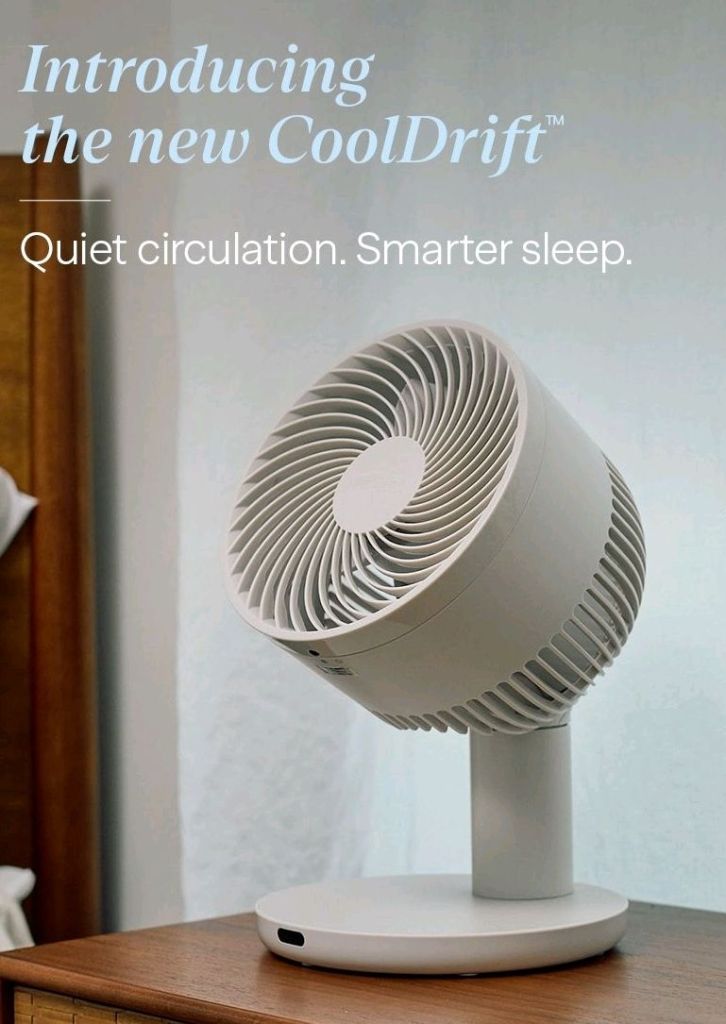
Blueair coolDrift


Blueair introduced their latest innovation: CoolDrift™, the new air circulator fan designed with sleep science in mind for the ultimate restful experience.

Combining exceptional cooling performance with one of the quietest fan experiences on the market, CoolDrift is the only tabletop fan with science-backed Smart Modes, developed in collaboration with our wellness expert to help you fall asleep faster, stay asleep longer, and wake up feeling refreshed.

Valberg Tops France’s Washing Machine Market in 2025

Valberg, the private‑label brand of Électro Dépôt, has officially become France’s best‑selling washing machine brand in 2025, according to GfK MI Sales Tracking. It’s a milestone moment for a marque built on value, accessibility and rapid product development.

The brand’s rise is closely tied to its energy‑efficient A‑class washing machines, launched in 2023 at the same price point as lower‑rated models. That move resonated strongly with cost‑conscious shoppers and helped cement Valberg’s reputation for delivering quality, performance and affordability.

Over the past decade, Valberg has sold more than 13 million products, maintaining an impressive 4.4/5 average customer rating. Électro Dépôt says this success reflects its strategy of building MDD ranges directly around user feedback. One example: a new automatic door‑opening function to improve drying, now fitted across all Valberg and HighOne dishwashers.

Ion Slavov, Director of Offer at Électro Dépôt, says the results show that “innovation, performance, quality and accessibility can go hand in hand” — and that MDD brands can now compete head‑on with long‑established industry giants.

BSH Reaffirms Its Commitment to the Right to Repair — What It Means for the Appliance Sector

The Right to Repair movement continues to gather momentum across Europe, and BSH is positioning itself firmly at the centre of the conversation. In a recent update shared by the company, BSH reiterated its long‑term commitment to repairability, spare‑part availability and sustainable product lifecycles — signalling a clear direction of travel for the wider white goods industry.

The Sector View

Across the industry, manufacturers are responding to regulatory pressure and consumer demand with varying levels of ambition. BSH’s proactive stance places it among the leaders pushing for a repair‑friendly future — one that balances innovation with responsibility.

For retailers and trade professionals, the takeaway is clear: repairability is no longer a compliance box to tick. It’s a competitive differentiator.

LG Electronics Publishes 2025–2026 Sustainability Report

LG Electronics has released its 2025–2026 Sustainability Report, confirming that the company has already met — and surpassed — several key ESG milestones originally set for 2030. The report highlights major progress in greenhouse‑gas reduction, resource circularity and responsible governance, positioning LG among the global leaders in sustainability performance.

LG reports that its Scope 1 and Scope 2 emissions for 2025 came in below its 2030 target, reflecting accelerated investment in energy‑efficient operations and renewable electricity. The company also exceeded its long‑term goal for waste‑recycling performance, achieving a rate above the 95% benchmark set for the end of the decade.

Alongside environmental gains, the report outlines advances in accessibility, responsible AI governance and board‑level transparency, reinforcing LG’s commitment to inclusive design and ethical technology development.

With continued recognition from major ESG rating agencies, LG’s latest report underscores the company’s position as one of the sector’s most consistent sustainability performers.

From Nokia to the Future Kitchen: Why Standing Still Is the Biggest Risk

Nokia was once untouchable.
A global icon. A market leader. A brand that defined an era.

But when smartphones arrived, the world shifted faster than anyone expected. Nokia didn’t fail because it lacked technology — it failed because the market moved toward a new user experience, a new ecosystem and a new way of thinking.

Today, the kitchen appliance industry is facing its own version of that moment.

The First Shift: From Gas to Induction

Gas hobs are giving way to induction. Not simply because induction is cleaner, safer and more energy‑efficient, but because the kitchen itself is evolving into a more intelligent, connected and adaptive environment.

And just like the jump from feature phones to smartphones, the next transformation is already underway.

The Second Shift: From Fixed Zones to Full‑Surface Freedom

Traditional induction hobs still rely on fixed cooking zones — one circle, one function, one limitation.

Future kitchens won’t accept that.

No‑zone and full‑surface flexible induction will allow cookware to be placed anywhere, creating a more intuitive, more responsive cooking experience. As smartphones replaced button phones, flexible induction platforms will replace traditional segmented heating units.

But that’s only the beginning.

The Third Shift: The Hob as an Energy Base Station

The induction hob is no longer just a cooking appliance.
It is becoming the energy hub of the future kitchen.

With emerging wireless power technologies, the hob surface could supply energy not only to cookware, but to coffee machines, blenders, kettles, food processors and modular accessories. Cables disappear. Countertops stay clean. The kitchen becomes flexible, modular and intelligent.

This isn’t a product upgrade.
It’s a platform revolution.

The Real Question for the Industry

For appliance brands, kitchen manufacturers and technology partners, the question is no longer if this shift will happen.

The question is:
Are we preparing early enough?

At Novanest, they see the future of cooking converging around three pillars:

  • Flexible induction
  • Wireless kitchen power
  • Intelligent platform integration

The next‑generation kitchen won’t be defined by gas flames or fixed heating zones.
It will be defined by freedom, intelligence and a new energy ecosystem.Novanest Global is a specialist engineering provider of induction hob technology, delivering PCBA modules, core components, and complete SKD/CKD cooktop solutions to OEM and ODM brands worldwide. With a strong R&D base, certified manufacturing, and a portfolio spanning induction hobs, heating elements, and integrated kitchen systems, the company positions itself as a one‑stop technical partner for modern, energy‑efficient cooking appliances.

Novanest Global is a specialist engineering provider of induction hob technology, delivering PCBA modules, core components, and complete SKD/CKD cooktop solutions to OEM and ODM brands worldwide. With a strong R&D base, certified manufacturing, and a portfolio spanning induction hobs, heating elements, and integrated kitchen systems, the company positions itself as a one‑stop technical partner for modern, energy‑efficient cooking appliances.