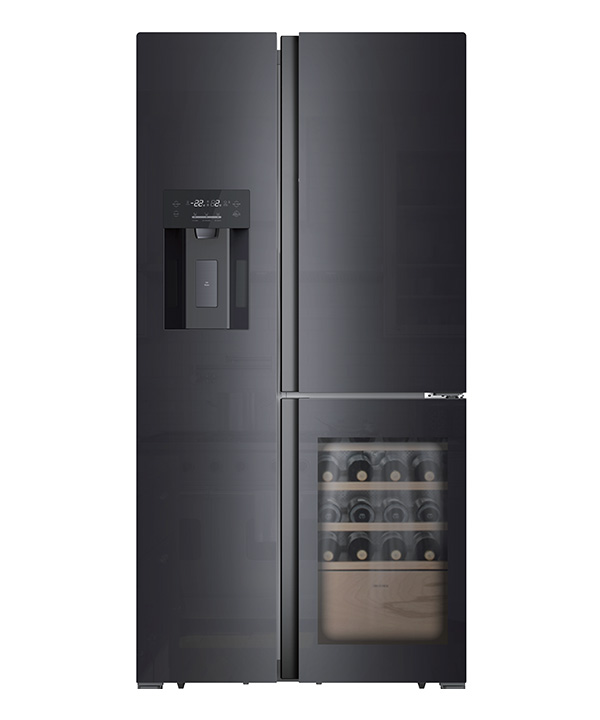
Turkish appliance maker Kumtel has again been named in the Fortune 500 Türkiye list. The Kayseri-based company ranks as the 4th-largest in Türkiye’s electrical home appliances sector and the 8th-largest firm in Kayseri.
Continue readingTag Archives: OEM
Designing a Custom Vintage Fridge (with McCoolix)
Retro refrigeration is booming — but only a handful of manufacturers know how to build a vintage fridge that actually looks and feels authentic. McCoolix, one of the sector’s most specialised OEMs, breaks down the process: choosing the right era, shaping the silhouette, specifying real chrome hardware, and building a colour palette that becomes part of your brand identity.
Continue readingFrom Nokia to the Future Kitchen: Why Standing Still Is the Biggest Risk
Nokia was once untouchable.
A global icon. A market leader. A brand that defined an era.
But when smartphones arrived, the world shifted faster than anyone expected. Nokia didn’t fail because it lacked technology — it failed because the market moved toward a new user experience, a new ecosystem and a new way of thinking.
Today, the kitchen appliance industry is facing its own version of that moment.
The First Shift: From Gas to Induction
Gas hobs are giving way to induction. Not simply because induction is cleaner, safer and more energy‑efficient, but because the kitchen itself is evolving into a more intelligent, connected and adaptive environment.
And just like the jump from feature phones to smartphones, the next transformation is already underway.
The Second Shift: From Fixed Zones to Full‑Surface Freedom
Traditional induction hobs still rely on fixed cooking zones — one circle, one function, one limitation.
Future kitchens won’t accept that.
No‑zone and full‑surface flexible induction will allow cookware to be placed anywhere, creating a more intuitive, more responsive cooking experience. As smartphones replaced button phones, flexible induction platforms will replace traditional segmented heating units.
But that’s only the beginning.
The Third Shift: The Hob as an Energy Base Station
The induction hob is no longer just a cooking appliance.
It is becoming the energy hub of the future kitchen.
With emerging wireless power technologies, the hob surface could supply energy not only to cookware, but to coffee machines, blenders, kettles, food processors and modular accessories. Cables disappear. Countertops stay clean. The kitchen becomes flexible, modular and intelligent.
This isn’t a product upgrade.
It’s a platform revolution.
The Real Question for the Industry
For appliance brands, kitchen manufacturers and technology partners, the question is no longer if this shift will happen.
The question is:
Are we preparing early enough?
At Novanest, they see the future of cooking converging around three pillars:
- Flexible induction
- Wireless kitchen power
- Intelligent platform integration
The next‑generation kitchen won’t be defined by gas flames or fixed heating zones.
It will be defined by freedom, intelligence and a new energy ecosystem.Novanest Global is a specialist engineering provider of induction hob technology, delivering PCBA modules, core components, and complete SKD/CKD cooktop solutions to OEM and ODM brands worldwide. With a strong R&D base, certified manufacturing, and a portfolio spanning induction hobs, heating elements, and integrated kitchen systems, the company positions itself as a one‑stop technical partner for modern, energy‑efficient cooking appliances.
Novanest Global is a specialist engineering provider of induction hob technology, delivering PCBA modules, core components, and complete SKD/CKD cooktop solutions to OEM and ODM brands worldwide. With a strong R&D base, certified manufacturing, and a portfolio spanning induction hobs, heating elements, and integrated kitchen systems, the company positions itself as a one‑stop technical partner for modern, energy‑efficient cooking appliances.
Rethinking White Goods: The Modular Power Shift in Kitchen Design
For decades, we’ve built major domestic appliances—especially cooktops—as self-contained “boxes.” You buy a cooktop, and the heating elements, UI, and power boards are all crammed together under a single pane of glass.
But what happens when you separate the coils from the brain?
By decoupling the physical induction coils from the heavy-duty power control boards, we are witnessing a massive architectural shift in kitchen design. This modular separation is redefining what “white goods” can actually do.
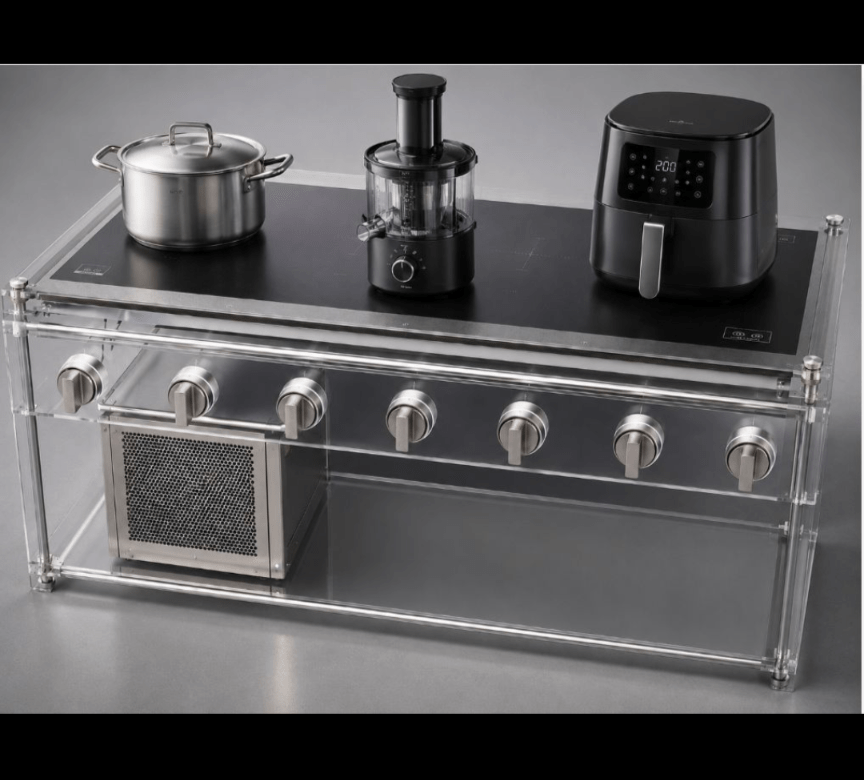
Novanest is a China-based OEM and ODM manufacturer focused on invisible and full-zone induction cooking solutions.
Why This Architecture is a Game-Changer
1. Ultra-Slim, “Invisible” Aesthetics
When you remove the bulky power boards from beneath the countertop, the space needed directly under the stove is slashed to almost nothing. This allows designers to create paper-thin kitchen islands with fully usable drawer space right beneath the cooking zone.
2. A Giant Leap for Right-to-Repair & Maintenance
Traditionally, if a power board fails, the entire glass cooktop has to be pried out of the counter. Under this new layout, the main electronic units live in an easily accessible side cabinet. Technicians can service or swap the “brain” of the appliance in minutes without ever touching the countertop seal.
3. Infinite Customization (1 to 8+ Zones)
Because the cooking zones are modular, manufacturers aren’t locked into rigid 30-inch or 36-inch footprints. Kitchens can be configured with two zones, six zones, or even irregular layouts spanning across an entire island, scaling effortlessly from high-end residential homes to demanding commercial kitchens.
4. Turning the Countertop into a Wireless Power Grid
The real magic happens when you pair this modular design with wireless power standards. Suddenly, the same glass or stone slab doesn’t just heat pots—it serves as a wireless energy hub. Homeowners can place a blender, cordless kettle, or air fryer directly on the surface, drawing power without a single messy cord in sight.
The Takeaway: The next generation of white goods isn’t about selling standalone appliances. It’s about turning the kitchen island into a unified, flexible energy platform.
Sacon
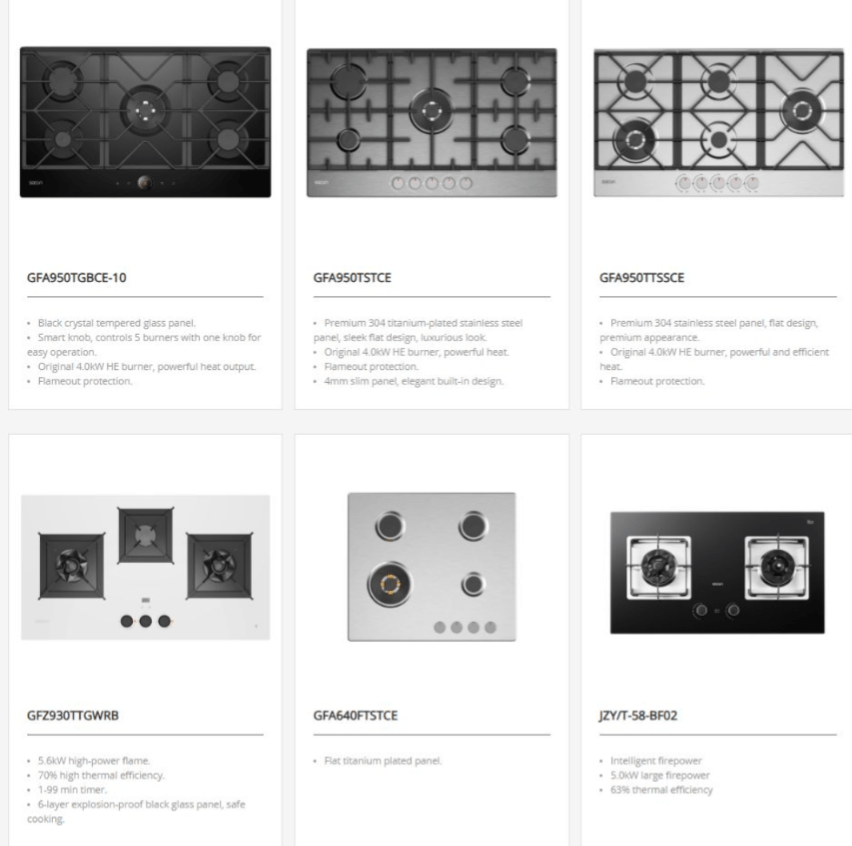
Sacon’s latest gas hob range signals a brand moving confidently into the premium tier — with the right mix of materials, safety, and performance to resonate in high‑demand markets. For retailers and developers looking to differentiate their built‑in cooking offer, Sacon is becoming a name worth watching.
Silverline Announces Strategic Leadership Changes to Accelerate 2026 Growth Vision
Silverline, a leading innovator in the home appliance industry, is proud to announce a series of strategic leadership changes effective January 1, 2026. These changes are designed to strengthen the company’s organizational structure and support its ambitious growth initiatives in the years ahead.
– Glauco Pizzutto has been appointed CEO of the Silverline Group, assuming full strategic and operational leadership responsibilities.
– Roberto Pizzutto will serve as President, continuing to lead commercial strategy and foster long-standing business relationships.
– Denis Artuso joins Silverline as Sales Director, bringing a fresh perspective to drive market expansion and customer engagement.
– Folco Pizzutto will lead the Purchasing Department, focusing on supply chain optimization and deepening partnerships with key industrial collaborators. He will also maintain oversight of the brands’ commercial activities.
“These changes mark a pivotal moment in Silverline’s journey,” said Glauco Pizzutto. “We’re aligning our leadership to meet the demands of a rapidly evolving market, while staying true to our commitment to innovation, quality, and customer satisfaction.”
Founded in Turkey in 1994, Silverline today brings next-generation kitchen enjoyment to millions of kitchens in over 70 countries. With our innovative designs, advanced technologies, and environmentally conscious products, we are one of the world’s leading cooker hood manufacturers, boasting an annual production capacity of 2.3 million units.

Homa Building the Future of Cooling
At Homa, manufacturing isn’t a backstage operation—it’s the heart of our vision. Factory N°9, the newest production hub, is more than a facility; it’s a living system of care, precision, and innovation. Adding 1.4 million units to their yearly capacity, it strengthens our position among the Top 4 cooling appliance manufacturers globally.
Designed for premium no-frost models, Factory N°9 incorporates cutting-edge automation, digitalisation, and energy efficiency. As CEO Michael Yao states, *“We’re not just building refrigerators; we’re building trust and delivering excellence.”*
More than machines, this factory embodies design thinking. Its adjacent Living Campus underscores our commitment to wellbeing, featuring gardens, gyms, and riverside walkways.
At Homa, don’t just produce—we co-develop. By collaborating with global partners, we create refrigerators that blend technical excellence with brand identity and user-focused innovation

Hefei Snowky show it big
Hefei Snowky Electric Co., Ltd Founded in June 2011, the company currently has three automated production lines for large refrigerators with an annual production capacity of 1 million units will be at the Canton Fair from 15th to 19th April.