Blueair Opens New Shunde Office, Strengthening Its China-Based Innovation Hub

Blueair has marked a major milestone in its global air‑wellness strategy with the official opening of its new office in Shunde, China — a move designed to tighten collaboration across R&D, production, and supply chain teams right at the heart of one of the world’s most advanced home‑appliance manufacturing clusters. A Strategic Expansion in a Global Innovation NetworkThe Shunde office sits within a region known for its world‑class smart‑appliance ecosystem, giving Blueair direct access to mature supply chains, engineering talent, and rapid‑iteration manufacturing capabilities. This location strengthens the brand’s three‑hub innovation model spanning Sweden, Shanghai, and now Shunde — a structure designed to accelerate product development and bring new air‑wellness technologies to market faster. Blueair leaders emphasised that the Shunde site will play a critical role in engineering execution and fast prototyping, complementing the advanced research and design work carried out in Sweden and Shanghai. Together, the three centres will support the brand’s push into next‑generation purification, smart air‑management systems, and emerging categories such as humidification and air circulation. Strengthening Collaboration at the Source by positioning teams closer to manufacturing partners and certification bodies, Blueair aims to streamline development cycles and enhance product quality. Representatives from SGS, CVC, Intertek, and UL Solutions attended the opening ceremony — signalling strong alignment between Blueair and key testing and compliance organisations. The new office also reinforces Blueair’s long‑term commitment to the Chinese market, where engineering capability, supply‑chain maturity, and innovation velocity continue to shape the global appliance landscape.A Milestone Year for BlueairThe Shunde opening coincides with Blueair’s 30th anniversary.

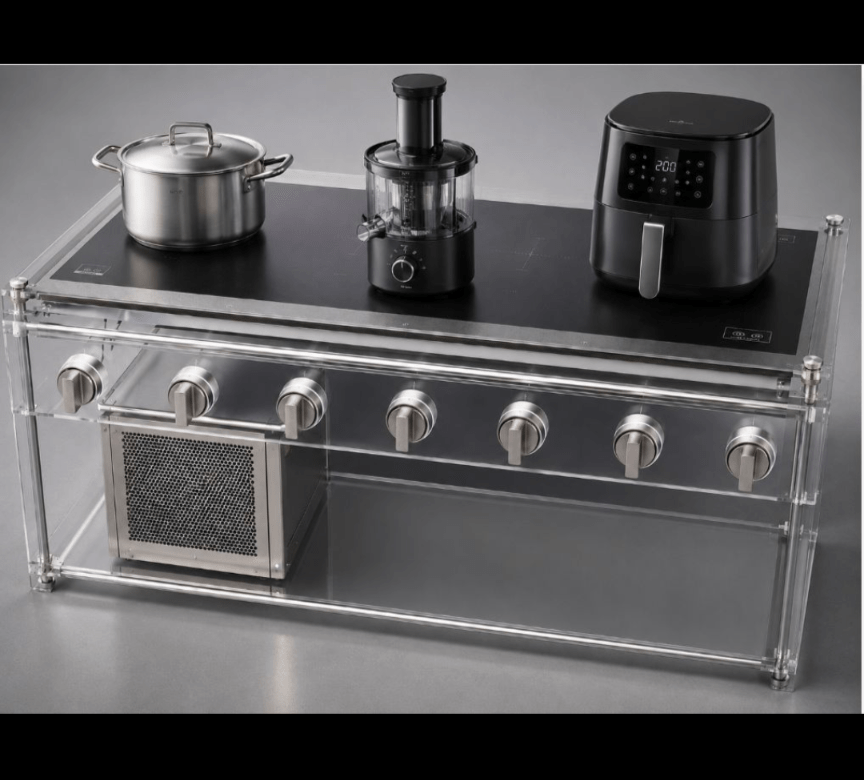
Rethinking White Goods: The Modular Power Shift in Kitchen Design

For decades, we’ve built major domestic appliances—especially cooktops—as self-contained “boxes.” You buy a cooktop, and the heating elements, UI, and power boards are all crammed together under a single pane of glass.

But what happens when you separate the coils from the brain?

By decoupling the physical induction coils from the heavy-duty power control boards, we are witnessing a massive architectural shift in kitchen design. This modular separation is redefining what “white goods” can actually do.

Novanest is a China-based OEM and ODM manufacturer focused on invisible and full-zone induction cooking solutions.

Why This Architecture is a Game-Changer

1. Ultra-Slim, “Invisible” Aesthetics

When you remove the bulky power boards from beneath the countertop, the space needed directly under the stove is slashed to almost nothing. This allows designers to create paper-thin kitchen islands with fully usable drawer space right beneath the cooking zone.

2. A Giant Leap for Right-to-Repair & Maintenance

Traditionally, if a power board fails, the entire glass cooktop has to be pried out of the counter. Under this new layout, the main electronic units live in an easily accessible side cabinet. Technicians can service or swap the “brain” of the appliance in minutes without ever touching the countertop seal.

3. Infinite Customization (1 to 8+ Zones)

Because the cooking zones are modular, manufacturers aren’t locked into rigid 30-inch or 36-inch footprints. Kitchens can be configured with two zones, six zones, or even irregular layouts spanning across an entire island, scaling effortlessly from high-end residential homes to demanding commercial kitchens.

4. Turning the Countertop into a Wireless Power Grid

The real magic happens when you pair this modular design with wireless power standards. Suddenly, the same glass or stone slab doesn’t just heat pots—it serves as a wireless energy hub. Homeowners can place a blender, cordless kettle, or air fryer directly on the surface, drawing power without a single messy cord in sight.

The Takeaway: The next generation of white goods isn’t about selling standalone appliances. It’s about turning the kitchen island into a unified, flexible energy platform.