
Haier Europe continues its expansion with a strategic partnership between Candy and Gulf Electronics Company LLC, a leading and trusted distributor in the United Arab Emirates.
Under this partnership, Gulf Electronics will manage the distribution of Candy free-standing appliances across the country, supporting our ambition to reach an even broader consumer base.
Author Archives: whitegoodsnow

Alpes Inox Showcases the Art of Italian Stainless‑Steel Design
Alpes Inox, the Veneto‑based specialist renowned for its stainless‑steel kitchen systems, has once again demonstrated why Made in Italy continues to set the benchmark for premium fabrication and timeless design. A recent showcase from the brand highlights its signature approach: modularity, precision engineering, and a commitment to materials that last a lifetime.
A Heritage Built on Stainless Steel
Founded in 1954, Alpes Inox has always treated stainless steel not just as a material, but as a design philosophy. The company’s latest presentation reinforces this heritage—sleek worktops, integrated sinks, and freestanding modules that combine professional‑grade durability with domestic elegance.
Modular Thinking for Modern Homes
The spotlight piece in the LinkedIn post centres on Alpes Inox’s modular kitchen blocks. These units are designed to adapt to any space, offering flexibility without compromising on performance. Each element—whether a hob, sink, or storage module—is crafted with the brand’s hallmark welded‑steel construction, ensuring rigidity, hygiene, and long‑term reliability.
Made in Italy: More Than a Label
The Made in Italy stamp remains a powerful differentiator in the premium appliance and kitchen‑furniture sector. Alpes Inox embodies this through artisanal manufacturing, meticulous finishing, and a design language rooted in Italian modernism. Their latest showcase reinforces the message: authenticity, craftsmanship, and innovation remain central to the brand’s identity.
Why It Matters for Retailers and Designers
For kitchen studios, appliance retailers, and specifiers, Alpes Inox’s stainless‑steel systems offer a compelling proposition:
– Premium positioning — Ideal for customers seeking long‑lasting, professional‑grade materials.
– Modular flexibility — Easy to configure for compact apartments or large open‑plan spaces.
– Sustainability credentials — Stainless steel is fully recyclable and built for decades of use.
– Design differentiation — A distinctive aesthetic that stands apart from mainstream cabinetry.
The WhiteGoodsNow.com Take
Alpes Inox continues to prove that stainless steel is not just a material choice—it’s a design statement. Their latest showcase reinforces the brand’s relevance in a market increasingly focused on durability, hygiene, and timeless aesthetics. For retailers and designers looking to elevate their premium offering, Alpes Inox remains one of the most authentic expressions of Italian kitchen engineering.
ESCOLO
Since 2015, ESCOLO has focused on commercial refrigeration solutions for supermarkets, bakeries, restaurants, hotels, and food service businesses. We know commercial buyers need more than good-looking equipment. They need stable performance, practical structure, dependable production, and a supplier who understands daily operation. That is why ESCOLO provides a wide range of refrigeration equipment, including display coolers, open chillers, kitchen refrigerators, freezers, and customized cooling solutions. With a 50,000㎡ automated facility in Foshan, OEM/ODM capability, and strict quality control, we support businesses looking for professional, long-term refrigeration partners.
Microwave That Crisps Like an Air Fryer — A New Category in Home Cooking
Ninja has officially stepped into new territory with the launch of its first-ever microwave that crisps like an air fryer, marking one of the most interesting appliance innovations of 2026. For households looking to streamline countertop clutter without sacrificing performance, this hybrid microwave–air fryer could be a game‑changer.
A Microwave Reinvented for Modern Cooking
Traditional microwaves excel at reheating but fall short when it comes to texture. Ninja’s new model aims to solve that long‑standing frustration by combining standard microwave technology with a high‑heat convection system designed to deliver crisp, browned results similar to an air fryer.
This means users can:
- Reheat leftovers without sogginess
- Crisp chips, pizza, pastries, and snacks
- Cook fresh foods with air‑fried texture
- Replace or reduce reliance on a standalone air fryer
For busy households, students, and small kitchens, the appeal is obvious: one appliance doing the job of two.
Key Features and Technology
- Dual Heat System — A microwave heating element paired with a convection crisping system.
- CrispWave™ Technology — Ninja’s proprietary approach to achieving air‑fried texture inside a microwave cavity.
- Multi‑Mode Cooking — Standard microwave functions plus crisping, browning, reheating, and hybrid cooking cycles.
- Space‑Saving Design — Built to fit standard countertop dimensions while offering expanded functionality.
While full technical specifications will vary by region, Ninja’s focus is clearly on merging convenience with performance — a trend dominating the small‑appliance market.
Why This Launch Matters for the White Goods Sector
The microwave has remained largely unchanged for decades. Ninja’s entry signals a broader shift: consumers want multifunctional appliances that reduce clutter and deliver better results than traditional single‑purpose machines.
This launch aligns with several industry trends:
- Hybrid appliances are becoming mainstream.
- Air frying remains one of the fastest‑growing cooking categories.
- Manufacturers are competing on innovation rather than capacity alone.
For retailers, this product creates a new talking point in the microwave aisle — and potentially a new premium category.
Who This Product Is For
This microwave is likely to appeal to:
- Families wanting crisp results without using a separate air fryer
- Students and renters with limited kitchen space
- Tech‑savvy cooks who enjoy multifunction appliances
- Anyone frustrated by soggy microwave reheating
It’s a practical upgrade for everyday cooking, not just a novelty.
WhiteGoodsNow.com Verdict
Ninja’s first crisping microwave is one of the most notable appliance launches of the year. It blends convenience, innovation, and performance in a way that feels genuinely useful — not gimmicky. If the real‑world results match the promise, this could become a category‑defining product.
If you want, I can also create:
- A shorter version for quick news posts
- A SEO‑optimised version targeting appliance keywords
BSH Explores New Ownership Model for Its Cooker Hood Production
BSH Explores New Ownership Model for Its Cooker Hood Production
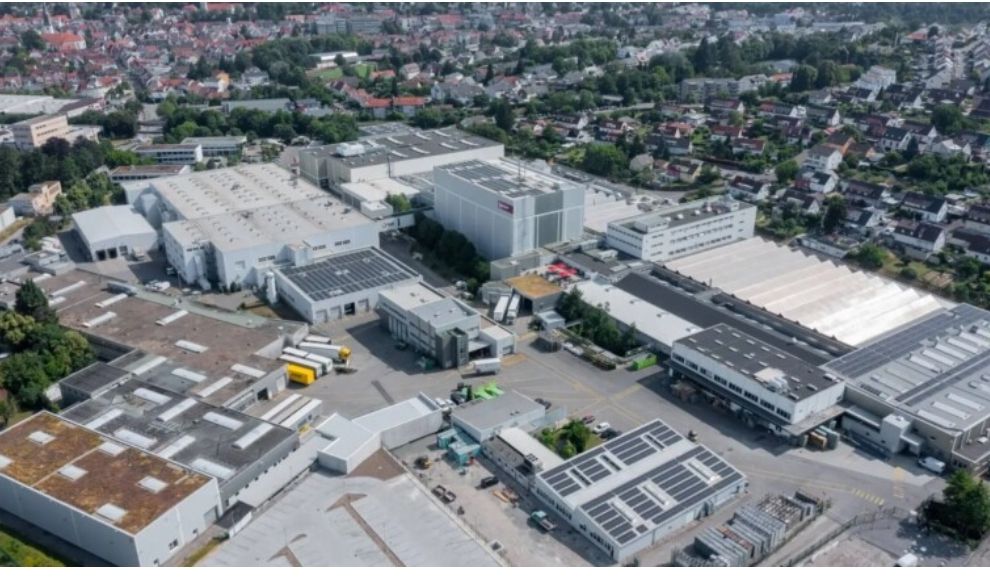
BSH Hausgeräte is evaluating a significant strategic shift: transferring ownership of its cooker hood manufacturing operations in Bretten, Germany, to an external partner. The move aims to secure the long‑term future of the site, which currently employs around 1,000 people, and to stabilise production volumes by opening the facility to third‑party customers.
🔧 A New Operating Model for Bretten
According to reporting from German industry sources, BSH has begun exploratory talks with potential partners who could take over the cooker hood production lines. Under this model, the Bretten plant would operate as an independent company supplying BSH brands—such as Bosch, Siemens, and Neff—while also serving additional clients across the appliance sector.
BSH believes this broader customer base could help the plant reach the production volumes needed to operate efficiently. As the company explained, expanding beyond a single customer would make the site “less dependent” and more resilient in a challenging market.
👷 Job Protection at the Forefront
The Bretten factory has faced uncertainty since BSH announced the closure of two German sites last autumn. Local resistance was strong, and the new proposal is seen as a way to preserve a substantial portion of the workforce.
The works council estimates that up to 600 jobs could be safeguarded if the cooker hood division becomes an independent entity with multiple customers. CEO Matthias Metz emphasised the plant’s expertise but acknowledged that structural and economic pressures require a “practicable solution” to secure its future.
🔄 Production Shifts Elsewhere in Europe
While cooker hood production may remain in Bretten under new ownership, BSH has confirmed that oven production will be relocated to other European factories. These facilities currently have spare capacity and are expected to absorb the workload gradually, with the transition scheduled to finish by Q1 2028.
📌 What This Means for the Industry
For the wider white goods sector, BSH’s move reflects a growing trend: manufacturers seeking flexible production models and partnerships to navigate cost pressures, supply chain challenges, and evolving market demand. An independent Bretten operation could emerge as a specialist supplier of cooker hoods to multiple brands—potentially reshaping sourcing strategies across Europe.
Fast Ice & Cold Storage: Hoshizaki UK Boosts Irish Distribution with New Dublin Hub
In the commercial catering and hospitality sector, there is one golden rule: refrigeration and ice makers never get a day off. Operating 24/7, these essential appliances are the literal backbone of any busy kitchen or bar. When a unit goes down or an operator needs an urgent upgrade, waiting weeks for delivery simply isn’t an option.
To meet this critical demand, commercial cooling giant Hoshizaki UK & Ireland has officially strengthened its distribution network by opening a brand-new warehouse facility in Dublin.
Roborock Launches Qrevo S Pro in the Middle East
Roborock Qrevo S Pro launch, highlighting only the must-know details.
Roborock Launches Qrevo S Pro in the Middle East
Roborock has officially brought the Qrevo S Pro to the UAE and Saudi Arabia, offering premium smart-cleaning features at a highly competitive price point.
1. Hands-Free Maintenance (The Dock)
The upgraded multifunctional dock is designed to let you ignore chores for weeks at a time:
* Auto-Emptying: Stores dust in a sealed 2.7L bag for up to 65 days.
* Hygienic Mop Care: Washes mop pads with 75°C hot water to melt grease, then dries them with 45°C warm air to prevent mold and odors.
* Self-Refilling: Automatically tops up the robot’s water tank.
2. Powerful Cleaning Performance
* Suction: A massive 18,500Pa HyperForce suction power pulls deep dirt out of carpets.
* Mopping: Dual-spinning mops (200 RPM) scrub away tough spills.
* Carpet Detection: Mops automatically lift by 10mm when stepping onto rugs, keeping your carpet completely dry.
3. Smart Navigation & Control
* LiDAR Mapping: Quickly maps your home’s layout for efficient cleaning paths.
* Obstacle Avoidance: Uses Reactive Tech to steer clear of cables, shoes, and toys.
* Smart App & Voice: Fully customizable cleaning via the Roborock App (SmartPlan 2.0) and compatible with Alexa, Siri, and Google Home.
Availability: The Roborock Qrevo S Pro is available now on Amazon and major retail stores across the UAE and Saudi Arabia.

Rethinking White Goods: The Modular Power Shift in Kitchen Design
For decades, we’ve built major domestic appliances—especially cooktops—as self-contained “boxes.” You buy a cooktop, and the heating elements, UI, and power boards are all crammed together under a single pane of glass.
But what happens when you separate the coils from the brain?
By decoupling the physical induction coils from the heavy-duty power control boards, we are witnessing a massive architectural shift in kitchen design. This modular separation is redefining what “white goods” can actually do.
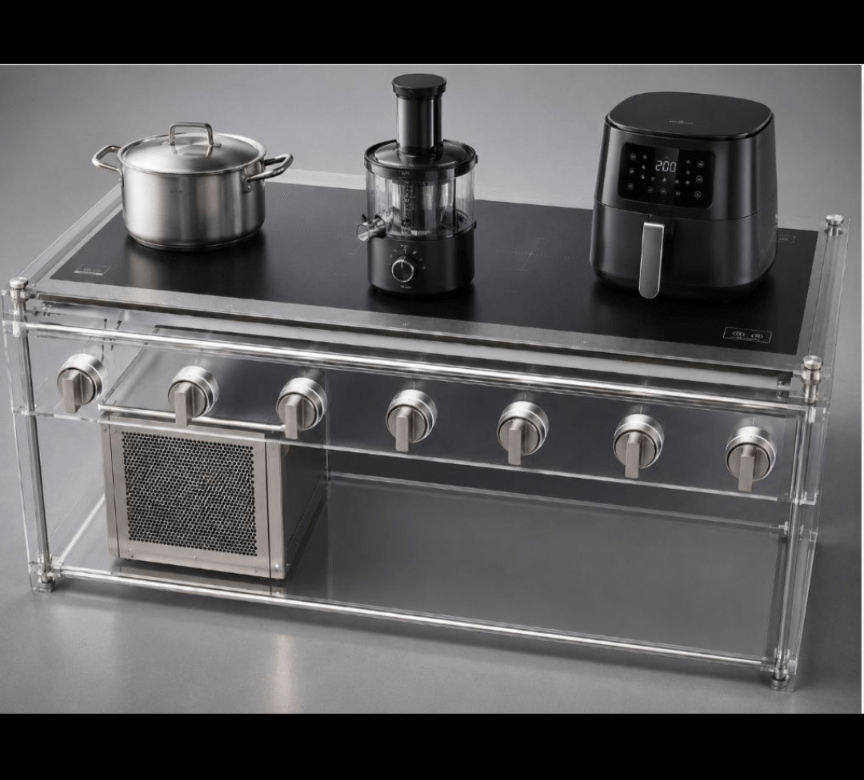
Novanest is a China-based OEM and ODM manufacturer focused on invisible and full-zone induction cooking solutions.
Why This Architecture is a Game-Changer
1. Ultra-Slim, “Invisible” Aesthetics
When you remove the bulky power boards from beneath the countertop, the space needed directly under the stove is slashed to almost nothing. This allows designers to create paper-thin kitchen islands with fully usable drawer space right beneath the cooking zone.
2. A Giant Leap for Right-to-Repair & Maintenance
Traditionally, if a power board fails, the entire glass cooktop has to be pried out of the counter. Under this new layout, the main electronic units live in an easily accessible side cabinet. Technicians can service or swap the “brain” of the appliance in minutes without ever touching the countertop seal.
3. Infinite Customization (1 to 8+ Zones)
Because the cooking zones are modular, manufacturers aren’t locked into rigid 30-inch or 36-inch footprints. Kitchens can be configured with two zones, six zones, or even irregular layouts spanning across an entire island, scaling effortlessly from high-end residential homes to demanding commercial kitchens.
4. Turning the Countertop into a Wireless Power Grid
The real magic happens when you pair this modular design with wireless power standards. Suddenly, the same glass or stone slab doesn’t just heat pots—it serves as a wireless energy hub. Homeowners can place a blender, cordless kettle, or air fryer directly on the surface, drawing power without a single messy cord in sight.
The Takeaway: The next generation of white goods isn’t about selling standalone appliances. It’s about turning the kitchen island into a unified, flexible energy platform.
Shifts in the US Appliance Landscape: What the Electrolux-Midea Deal Means for Anderson’s 1,200 Workers
If you’ve been keeping an eye on the major players in the appliance industry, you know that the North American market has been a tough nut to crack lately. High manufacturing costs, shifting consumer demand, and biting import tariffs have forced many legacy brands to rethink how they operate.
Recently, we saw one of the biggest strategic shakeups in years. Electrolux Group, the Swedish appliance giant, announced a massive, long-term strategic partnership in North America with China’s Midea Group.
At the center of this deal is a major transition for Electrolux’s historic refrigerator plant in Anderson, South Carolina—a move that brings a temporary factory shutdown, layoffs for over 1,200 workers, and a complete reimagining of what the facility will produce.
Let’s break down exactly what is happening in Anderson, why Electrolux and Midea are teaming up, and what this means for the future of your laundry room and kitchen appliances.
The Anderson Plant: Out with Fridges, In with Laundry
For 37 years, the Anderson, South Carolina facility has been a cornerstone of local manufacturing, specializing in food preservation (refrigerators). However, under the new joint venture, that is about to change completely.
- The Timeline: Electrolux phased out refrigerator production at the Anderson plant in July 2026.
- The Retrofit: The plant is temporarily closing to undergo a massive overhaul. It is being completely repurposed from a food preservation factory into a state-of-the-art fabric care (laundry) factory.
- The Reopening: Fabric care production is slated to officially kick off in the first half of 2027.
What Happens to the 1,200 Anderson Workers?
A factory shutdown of this scale naturally raises immediate concerns for the local community. The transition affects approximately 1,200 local workers who are facing layoffs during the retooling period.
However, there is a silver lining. Because the facility is being repurposed rather than closed permanently, laid-off workers are being invited back to the revamped plant once it resumes operations. The new joint venture expects to gradually hire up to 1,200 employees across 2027 and 2028 as laundry production ramps up to full capacity.
The Big Picture: Why the Electrolux-Midea Partnership?
This isn’t just a localized factory change; it’s a massive corporate realignment. Electrolux and Midea are forming three distinct joint ventures in North America:
- A Sales Joint Venture (50/50 split): Co-developing and selling food preservation products across both companies’ brand portfolios in North America.
- Juarez, Mexico Factory JV (Midea owns 65%, Electrolux owns 35%): Operating the existing refrigerator plant in Mexico.
- Anderson, South Carolina Factory JV (Electrolux owns 55%, Midea owns 45%): Operating the newly retooled laundry plant.
What’s in it for Electrolux?
Electrolux’s North American division represents roughly a third of its global sales, but it has struggled heavily with high operational costs and underperforming factories. By bringing in Midea—known globally for highly efficient, automated manufacturing processes—Electrolux gets an infusion of operational expertise and shares the financial risk. The partnership is expected to yield massive fixed and variable cost savings.
What’s in it for Midea?
Midea is a global powerhouse (reporting over $63 billion in revenue), but they have lacked a major manufacturing footprint in North America. By buying into these joint ventures, Midea successfully circumvents steep US import tariffs, gains direct access to established local distribution networks, and can leverage Electrolux’s deeply trusted brand name.
What Does This Mean for Appliance Buyers?
If you are shopping for white goods over the next couple of years, you can expect a few key changes to flow from this deal:
- More Tech-Forward Laundry: With Midea’s heavy investments in digital features and smart home integration, the top-load and front-load laundry units coming out of the South Carolina plant in 2027 and beyond will likely feature advanced smart features and high-efficiency designs.
- Refreshed Refrigerator Lineups: The sales joint venture means we will see a wider, more feature-rich range of refrigerators hitting the market under both the Electrolux and Frigidaire labels, co-designed with Midea’s latest cooling technologies.
- A Competitive Market: By streamlining manufacturing, both brands hope to offer highly competitive pricing on mid-to-high-end appliances, meaning better value on the retail floor.
The transition period through 2026 will undoubtedly be a challenging time of adjustment for the workforce in Anderson, but the long-term investment ensures that South Carolina will remain a crucial hub for American-made home appliances for years to come.
Nature Meets Science: Blueair Introduces the World’s First Wool Air Purifier Filter
In the home appliance and white goods industry, innovation is usually measured by smart connectivity, sleek finishes, or energy ratings. But every so often, a breakthrough comes along that fundamentally changes the materials we use inside our homes.
Swedish air purification giant Blueair has done just that, unveiling the world’s first wool air purifier filter: the EcoLast™ Filter.
This launch represents a major milestone in sustainable home wellness technology, proving that premium performance and responsible engineering can go hand in hand.
The Genesis of EcoLast™
The development of the EcoLast™ Filter began with a straightforward but challenging question: Can we design an air filter that is significantly better for the planet without losing an ounce of purification power?
Answering this required looking beyond traditional synthetic materials. Blueair embarked on a intensive two-year collaboration with Lanaco, a New Zealand-based wool technology pioneer. The result of their joint expertise is a filter made from authentic wool and 100% USDA Certified Biobased materials.
High Performance, Low Footprint
Air purifiers are essential white goods for modern, health-conscious homes, but their synthetic filters traditionally contribute to plastic waste. The EcoLast™ Filter shifts the paradigm by combining natural fibers with high-efficiency filtration:
* Exceptional Lifespan: While standard filters often require frequent replacing, the EcoLast™ Filter is built to last, boasting an impressive 18-month lifetime.
* Uncompromised Filtration: It captures 99.97% of airborne particles, effectively trapping common household allergens such as dust, pollen, pet dander, and mold spores.
* Biobased Material: By utilizing Lanaco’s specialized wool technology, the filter replaces fossil-fuel-based synthetics with a highly sustainable, renewable resource.
A New Standard for Eco-Friendly Appliances
As a Certified B Corp, Blueair’s latest product launch is more than just a new accessory—it is a glimpse into the future of sustainable home appliances. By integrating biodegradable and biobased elements into high-wear components like filters, Blueair is setting a new benchmark for how white goods brands can reduce their environmental impact.
For consumers looking to improve their indoor air quality while minimizing their ecological footprint, the EcoLast™ Filter represents a perfect harmony of nature and cutting-edge science.
Keep an eye on White Goods Now for more updates, hands-on reviews, and the latest innovations in home wellness technology.

