
BSH Home Appliances Nazarje secured two Silver Awards at the 24th GZS Innovation Day, recognized for eco-friendly appliance design and long-lasting kitchen hardware.
Continue readingTag Archives: BSH
EQ.6 Bows Out After 12 Years — And a New Generation Steps In
The production lights dimmed on a true BSH classic this week, as the final EQ.6 Fully Automatic Coffee Machine rolled off the line — closing a remarkable 12‑year chapter in the company’s coffee portfolio.
Continue readingFlame powered by 100% hydrogen
A New Chapter in Energy Transition
Hydrogen has long been discussed as a clean‑energy alternative, conversation directly into the kitchen.
The first units have already been assembled in Santander for a pioneering trial in Fife, Scotland, where, for the first time in the UK, households will cook with a flame powered by 100% hydrogen
– Hydrogen viability — Bosch positions hydrogen as a realistic long‑term option for domestic appliances, particularly in markets pushing hard on decarbonisation.
– Safety engineering — Luis emphasises Bosch’s investment in flame control, leak detection, and combustion stability — essential for consumer confidence.
– Infrastructure readiness — The technology is promising, but widespread adoption depends on hydrogen distribution networks and government‑level energy strategy.
– Prototype status — Bosch is clear: this is early‑stage innovation, not a commercial launch. The hob serves as a proof‑of‑concept to demonstrate feasibility and spark industry dialogue.
Why This Matters for the Appliance Sector
For retailers, designers, and specifiers, Bosch’s hydrogen hob signals where premium brands are directing their R&D budgets. The industry is moving beyond incremental improvements and into alternative‑fuel cooking, a category that could redefine product ranges over the next decade.
Key implications:
– Future product roadmaps — Expect hydrogen‑compatible appliances to appear in long‑term planning documents.
– Sustainability messaging — Hydrogen aligns strongly with net‑zero commitments, giving brands a new narrative beyond induction efficiency.
– Kitchen design evolution — Designers may eventually need to consider hydrogen lines alongside gas and electric infrastructure.
Bosch’s Positioning
Luis’s interview reinforces Bosch’s reputation for engineering‑led innovation. The brand isn’t claiming hydrogen is ready for mass‑market rollout — instead, it’s demonstrating leadership by exploring what comes next.
This approach mirrors Bosch’s broader strategy: invest early, test rigorously, and shape the conversation around future cooking technologies.
Sector Outlook
Hydrogen hobs won’t replace induction tomorrow, but they represent a credible pathway for markets seeking low‑carbon alternatives. As governments accelerate hydrogen investment, appliance manufacturers will be watching closely — and Bosch’s prototype ensures they’re part of the discussion from day one.
BSH Expands Bosch & Siemens Small Appliance Portfolio to Accelerate Premium Growth in India
BSH expands Bosch & Siemens small‑appliance range in India, targeting premium growth across kitchen machines, vacuums, food‑prep and coffee categories.
BSH Reaffirms Its Commitment to the Right to Repair — What It Means for the Appliance Sector
The Right to Repair movement continues to gather momentum across Europe, and BSH is positioning itself firmly at the centre of the conversation. In a recent update shared by the company, BSH reiterated its long‑term commitment to repairability, spare‑part availability and sustainable product lifecycles — signalling a clear direction of travel for the wider white goods industry.
The Sector View
Across the industry, manufacturers are responding to regulatory pressure and consumer demand with varying levels of ambition. BSH’s proactive stance places it among the leaders pushing for a repair‑friendly future — one that balances innovation with responsibility.
For retailers and trade professionals, the takeaway is clear: repairability is no longer a compliance box to tick. It’s a competitive differentiator.
BSH Explores New Ownership Model for Its Cooker Hood Production
BSH Explores New Ownership Model for Its Cooker Hood Production
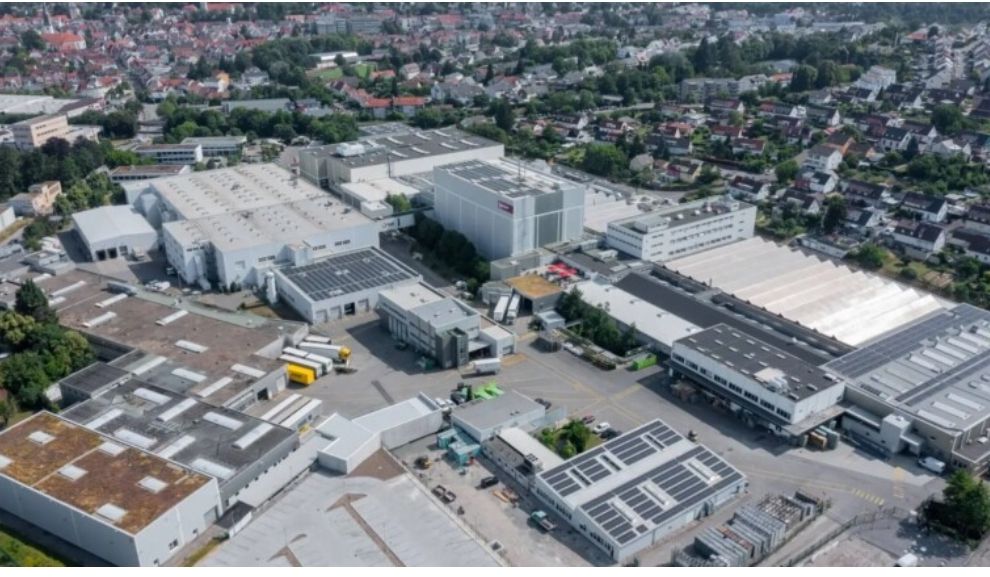
BSH Hausgeräte is evaluating a significant strategic shift: transferring ownership of its cooker hood manufacturing operations in Bretten, Germany, to an external partner. The move aims to secure the long‑term future of the site, which currently employs around 1,000 people, and to stabilise production volumes by opening the facility to third‑party customers.
🔧 A New Operating Model for Bretten
According to reporting from German industry sources, BSH has begun exploratory talks with potential partners who could take over the cooker hood production lines. Under this model, the Bretten plant would operate as an independent company supplying BSH brands—such as Bosch, Siemens, and Neff—while also serving additional clients across the appliance sector.
BSH believes this broader customer base could help the plant reach the production volumes needed to operate efficiently. As the company explained, expanding beyond a single customer would make the site “less dependent” and more resilient in a challenging market.
👷 Job Protection at the Forefront
The Bretten factory has faced uncertainty since BSH announced the closure of two German sites last autumn. Local resistance was strong, and the new proposal is seen as a way to preserve a substantial portion of the workforce.
The works council estimates that up to 600 jobs could be safeguarded if the cooker hood division becomes an independent entity with multiple customers. CEO Matthias Metz emphasised the plant’s expertise but acknowledged that structural and economic pressures require a “practicable solution” to secure its future.
🔄 Production Shifts Elsewhere in Europe
While cooker hood production may remain in Bretten under new ownership, BSH has confirmed that oven production will be relocated to other European factories. These facilities currently have spare capacity and are expected to absorb the workload gradually, with the transition scheduled to finish by Q1 2028.
📌 What This Means for the Industry
For the wider white goods sector, BSH’s move reflects a growing trend: manufacturers seeking flexible production models and partnerships to navigate cost pressures, supply chain challenges, and evolving market demand. An independent Bretten operation could emerge as a specialist supplier of cooker hoods to multiple brands—potentially reshaping sourcing strategies across Europe.
BSH Strengthens Global Leadership with New Emerging Markets CEO
BSH Strengthens Global Leadership with New Emerging Markets CEOBSH has announced a significant senior appointment that will shape its strategy across one of the company’s most dynamic regions. Igor Vincetic will take on the role of CEO for BSH’s Emerging Markets Region from August 2026, marking a return to the business after more than a decade of prior experience within the organisation.Vincetic brings nearly 20 years of expertise in consumer goods and home appliances, most recently leading commercial operations as General Manager for Electrolux in Malaysia and Singapore. His career spans transformation projects across Asia Pacific and the Eastern Adriatic—experience that aligns closely with BSH’s ambitions in fast‑growing markets.In his new role, Vincetic will oversee a vast geography covering Turkey, Southeast Asia, Central Asia, Ukraine, the Middle East and Africa—a network of around 130 countries. He emphasised his commitment to strengthening partnerships, deepening customer relationships and delivering standout consumer experiences across the region.For the global appliance sector, this appointment signals BSH’s intent to accelerate growth and reinforce its competitive position in markets where demand for innovative, reliable home appliances continues to rise.
BSH Poland Backs Stronger European Appliance Manufacturing
BSH Household Appliances Poland has joined industry leaders and policymakers in calling for stronger support for European home appliance manufacturing during a debate at the European Parliament.
Organised by APPLiA – Home Appliance Europe and moderated by MEP Dariusz Joński, the discussion focused on the sector’s competitiveness and the need to align industrial policy with Europe’s economic goals.
Participants noted that the European home appliance industry generates nearly €80 billion in added value and supports almost one million jobs across the region.
Konrad Pokutycki of BSH Poland highlighted challenges including geopolitical uncertainty and rising regulatory pressure, and stressed the importance of keeping Europe a centre for both the design and production of home appliances.
The debate also marked the launch of a new initiative by Members of the European Parliament to strengthen the industry. MEPs signed a memorandum calling for a more level playing field and greater manufacturing investment across Europe.
Industry representatives said the initiative reflects growing recognition of the sector’s strategic importance to Europe’s industrial future.
BSH India Accelerates Premium Kitchen Push with Siemens,
India’s premium and luxury kitchen market is projected to grow significantly over the next five years, driven by:
– Rising home renovation spending
– Growth of luxury real estate in metros
– Increased preference for European‑style built‑in appliances
– A shift toward minimal, integrated kitchen aesthetics
BSH’s multi‑brand strategy — Bosch for mass‑premium, Siemens for upper‑premium, and Gaggenau for luxury — positions the company to capture demand across the full spectrum of premium kitchen buyers.
BSH Opens New 73,000 m² Small Appliance Factory in Rzeszów
BSH has officially opened its new small appliance factory in Rzeszów, marking a major expansion of its manufacturing footprint in Poland. The 73,000 m² site brings together a production hall, logistics centre and office space, creating a consolidated hub designed to support the company’s long‑term growth in the small appliance category.The move sees BSH transfer its existing Polish small appliance operations into the larger, modern facility, where the company will scale production of Bosch Unlimited cordless vacuum cleaners, bagless and laundry models, and capsule coffee machines. The Rzeszów site will also host the launch of a new platform of pressure coffee machines, strengthening BSH’s position in the fast‑growing premium coffee segment.The opening ceremony brought together local authorities, media, senior leaders from BSH Poland and the Small Appliances division, employees from the Rzeszów site, and representatives from Panattoni Poland, the developer behind the investment.BSH thanked the project teams across #TeamBSH for delivering the factory on schedule and ensuring a smooth transition into the new facility — a milestone that reinforces the company’s commitment to manufacturing in Poland

