The Hisense brand has been awarded for the disruptive design of its new range of appliances. The Reddot Design Awards, one of the most important awards in the industry, have rewarded the company for its quality and excellent work in imagining the style and forms of future technology.

Washing Machine Hisense WFGS1016VM A +++ (-20%)
One of the main objectives of Hisense is to offer great possibilities to completely revolutionize the aesthetic beauty of the home of each of its users. Through technological and creative development, the company is committed to overcoming the borders of style thanks to a new offer adapted to the needs of all types of families and situations.
For that reason, some of the brand’s products have been valued by the Reddot awards, one of the most prestigious international competitions in the design industry. These awards give designers, organizations and companies like Hisense the opportunity to demonstrate their creative potential when it comes to thinking and presenting a concept, an identity brand, or a communicative strategy.
Among the appliances awarded with the Reddot Design Awards in 2019, are the Hisense washers and dryers. Thanks to the latest technological advances applied to cleaning and drying, this new generation of products seeks to completely transform the treatment of garments.
Hisense washing machines
Hisense, responsible for the environment and the quality of life of its users, offers two washing machines awarded by Reddot and with an energy classification A +++ (-20%). These new models of washing machines provide great benefits to the user, such as Inverter technology, which saves energy, has a much lower sound level and extends the life of household appliances. In addition, several of its models have in turn Steam Plus, which allows the treatment of clothing by steam, or programs such as Ion Wash 59 ‘, which allow washing up to 10 kg in just 59 minutes.
Among the Hisense washing machines that have received this award are: WFGS1016VM A +++ (-20%), WFGS9014V A +++ (-20%), WFGA9014V A +++ (-20%) and WFGA8014V A +++ (-10%).
Hisense dryers
The DHGS90M A ++ and DHGA90 A ++ dryer models offer great energy savings thanks to a class A ++ energy efficiency. The first has a steam function and capacity for up to 9 kg of clothes. According to the brand, its sophisticated and efficient heat pump can dry at lower temperatures taking better care of the garments. In addition, its Ion Gen function offers drying with ionized air that reduces unpleasant odors, helps stretch natural fibers and thus eliminates wrinkles. Both models have also been awarded at the Reddot Design Awards 2019 for their design and functionality.
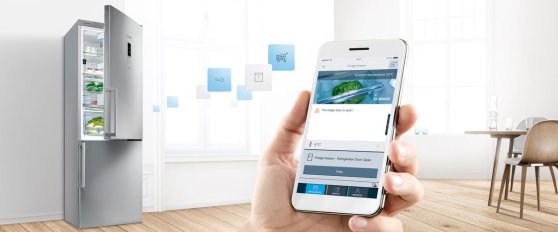
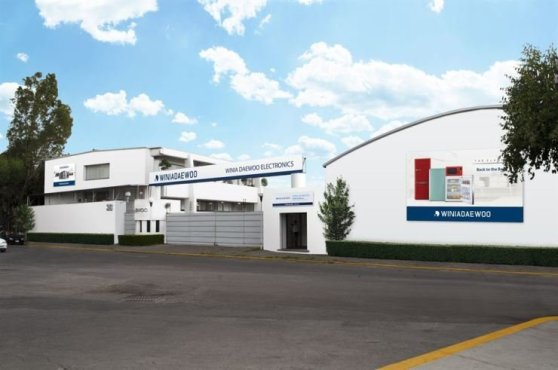
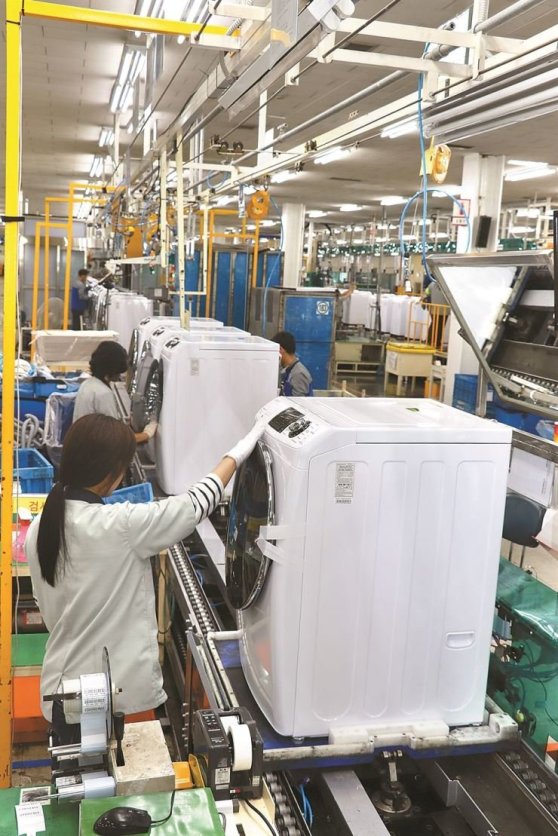 Though the two companies are independent, they share their R&D activity to improve efficiency in developing new products.”Since Daewoo was included in Dayou Winia Group in March 2018, we have been sharing many of our activities with Winia Dimchae to boost efficiency and productivity. Besides sharing the sales network of the two, we are sharing R&D and product design activities to improve sales. Also, to concentrate on what each company is good at, Winia Daewoo is focusing on producing washers and dryers while Winia Dimchae is making air-quality control products such as air conditioners and air purifiers,” he said.Winia Daewoo employees in its Gwangju plant produce washing machines. / Courtesy of Winia DaewooThe CEO added Winia Daewoo is also seeking to be included as one of the country’s 10 best companies to work for.”We are aiming to improve our operating profit-to-sales ratio to 5 percent by 2023 and become one of the country’s 10 best companies to work for,” he said.”Also, Winia Daewoo has been working to make Dayou Winia Group one of Korea’s top 50 business group by 2025. To reach this goal, we have been utilizing our global sales network and business knowhow so that more consumers can experience the group’s quality products.”Ahn, who served as a chief of Samsung Electronics’ Peru branch, joined Dongbu Daewoo Electronics in 2015 and was responsible for overseas sales of the firm’s Central and South American region and became the CEO of Winia Daewoo in 2018.Speaking on how Winia Daewoo products are received in the global market, Ahn said producing locally customized appliances makes it one of the most popular brands in many countries.”Winia Daewoo has succeeded in many countries with its locally customized appliances. For instance, our Chef Mexicano microwave enables users to cook 31 traditional Mexican foods such as tortillas and picadillos. To develop the microwave, our employees conducted on-site surveys of local Mexican food and thanks to that effort, we have been leading the microwave market there since 2013,” he said.Though the company has seen growing hurdles due to the rise of Chinese makers that have been aggressively expanding their market presence with cheap and quality products, Winia Daewoo can sharpen its edge by focusing on developing these customized appliances.”We have been expanding our market share with these locally customized products. Based on quality products and our sales networks in many countries that have been in place for more than 30 years, we will continue to take the lead in the competition,” he said.Combining AI, IoT with home appliancesWith artificial intelligence (AI), the internet of things (IoT) and machine learning technologies emerging as must-have features for home appliances as companies can offer an improved user experiences, Winia Daewoo is also working on developing these technologies
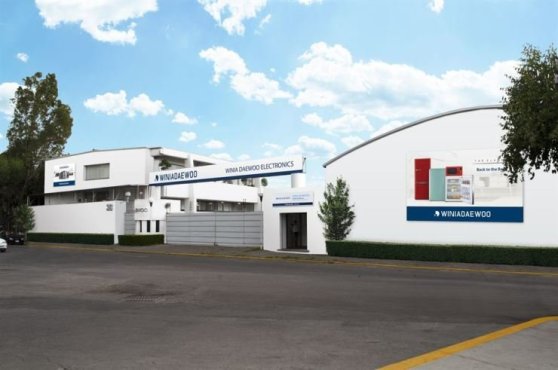 .”To seek further growth in the business, Winia Daewoo has been conducting research and development into the latest technologies that are crucial in the Fourth Industrial Revolution,” Ahn said adding IoT technologies will be applied to Winia Dimchae’s signature kimchi refrigerator first.”Our sister company Winia Dimchae plans to feature an IoT feature in its upcoming kimchi refrigerator, which will hit the market this year. These features will also be included in Winia Daewoo products at the right time,” he said.