Whirlpool inaugurates the new Europe headquarters

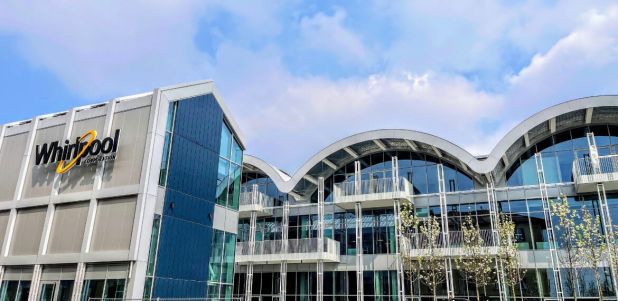
The new headquarters measure 7 thousand square meters and accommodate 400 peopleThe new headquarters of Whirlpool Corporation was inaugurated in Milan on April 20th . At the center of an area in strong development such as the Certosa district, the building (totally Carbon free) is spread over more than 7 thousand square meters, distributed over two floors, for over 400 people and more than 100 different nationalities.The great novelty of the headquarters is represented by the new World of Whirlpool: a real journey through design innovations and latest generation technologies. 500 m2 dedicated to the group’s major European brands and their various narratives, in a journey through the company’s most innovative products.

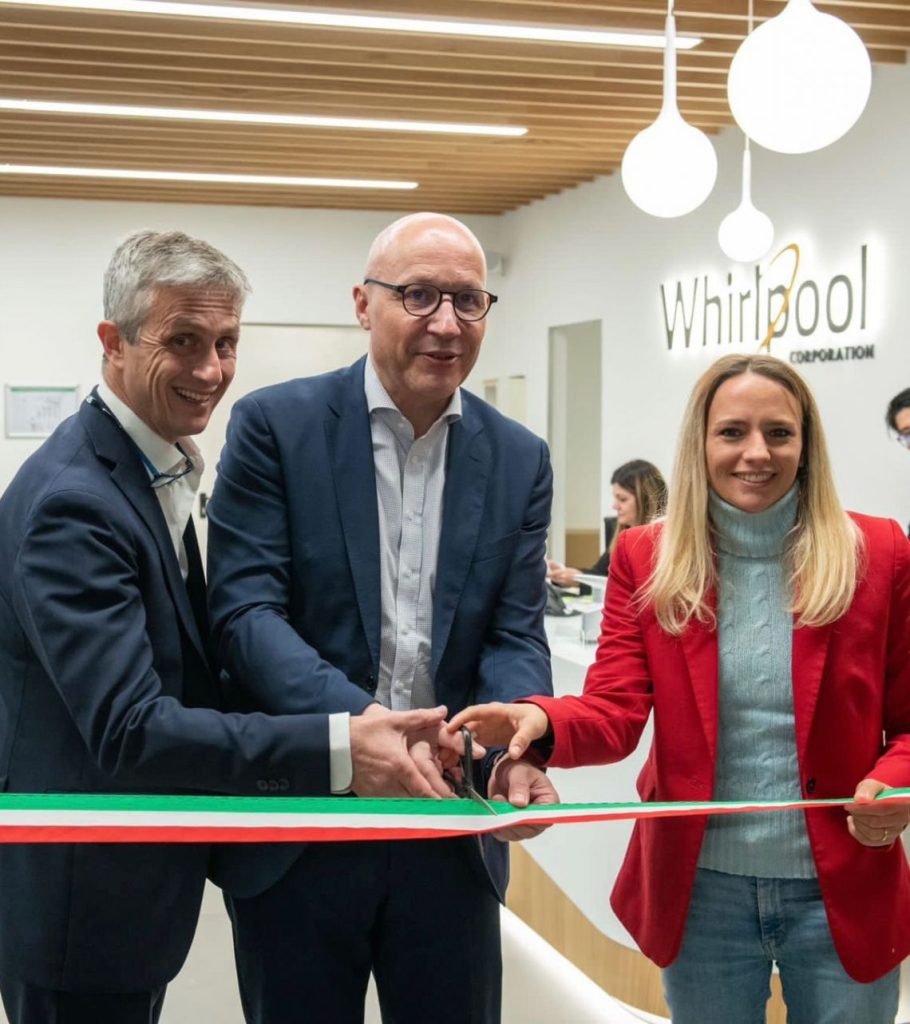
Whirlpool EMEA CEO Giles Morel inaugurates the company’s Milan headquarters. At his side Giulia Pelucchi, President of the Municipality 8 of Milan and Stefano Sirolli, CEO of the real estate developer Real Step.

Hisense Prioritises Sustainable Growth to Build a Greener Future

Earth Day’s purpose is to engage people, institutions, and businesses to recognize their responsibility to accelerate the transition to an equitable, prosperous green economy for all. Hisense, a leading global home appliance and consumer electronics brand, has always viewed sustainable business practices as one of its top priorities, and is committed to achieving, and helping bring about lower energy consumption, and environmental sustainability.

The global consumer electronics giant, best known for its TV, Laser TV and white goods, has recently taken an array of steps to reduce its own impact on the planet, ensuring its manufacturing, supply chain and the products it produces are more efficient and sustainable.

With self-developed technologies, like its self-adaptive backlight control algorithm, digitalized power control algorithm, high-voltage LED light and drive technology, Hisense has managed to reduce energy consumption of each TV by 25%. Moreover, in amending the design of its televisions, the company has reduced the amount of plastic that is required to dissipate heat, saving 4,626 tons of plastic per-year, the equivalent of 514million plastic bags.

Hisense’s refrigeration category has solicited praise from the United Nations Development Program for its use of foaming technology to improve the efficiency of its fridges; a development which is believed to have saved nearly 6,000 tons of carbon emissions.

The company is also improving the footprint of its factories, increasing solar power generation in the plants it operates. It expects the total installed capacity to reach 60MW by the end of 2023, and the annual power generation capacity will reach 53 million kWh. The proportion of solar power generation in Hisense’s total electricity consumption is now at more than 10%.

Hisense is also keen to bring about a more sustainable world beyond its own operations, and to mark Earth Day it has launched a new tree planting initiative to promote the importance of safeguarding the environment.

To find out more about Hisense’s commitment to take us Towards a Greener Future, visit: https://www.youtube.com/watch?v=ZcqzEepU98g

About Hisense:

Hisense is a leading global home appliance and consumer electronics brand. Hisense’s business covers multimedia products (with a focus on Smart TVs), home appliances, and IT intelligent informatio

Electrolux Delivering sustainable business strategy

Jonas Samuelson, Electrolux Group CEO, and Vanessa Butani, VP Group Sustainability, talk about achieving the Electrolux Group science-based climate target three years ahead of schedule, and how the company managed challenges in 2022 to continue work toward its For the Better 2030 goals. This interview is published in the Electrolux Group Sustainability Report 2022. https://www.electroluxgroup.com/en/delivering-on-our-sustainable-business-strategy-35311/

Miele subsidiary Agrilution ends business with automated greenhouses

Daily freshly harvested salads and herbs from an automatically controlled greenhouse (‘Plantcube’) – with this concept, the Munich-based start-up Agrilution wanted to bring the idea of vertical farming into the home. Since the end of 2019, this has been happening under the umbrella of the Miele Group. Now, the Gütersloh-based household appliance company has announced that it will no longer be continuing the business with the Plantcubes due to a lack of economic prospects. This affects almost 40 salaried as well as additional student employees, who have been given notice of termination due to the closure of the business on June 30, 2023. The approximately 650 users, who also purchased their seeds (‘Seedbars’) through Agrilution, will soon receive an offer to buy back their equipment.

Experts understand ‘vertical farming’ as the space-saving supply of fresh food via large, multi-storey greenhouses. Agrilution itself was founded in 2013, but then had to file for insolvency proceedings in 2019 after a financing round could not be realised as planned. After the opening of insolvency proceedings, Miele took over the brand, the know-how and almost all employees in a so-called asset deal and transferred them to the newly founded 100% subsidiary Agrilution Systems GmbH.

Over the past few years, with intensive financial and technical support from Miele, work has been done to guide the business model, product portfolio and workforce into a sustainable marketable future. ‘Unfortunately, however, it has since become apparent that demand has fallen far short of expectations,’ says Gernot Trettenbrein, Senior Vice President New Growth Factory, amongst others responsible for new business areas at Miele. In addition, this product was marketed at over 3,000 euros due to its technical complexity.

In order to make the Plantcube attractive to broader target groups, an additional series was to be launched at a significantly lower entry price. However, this could no longer be realised due to the skyrocketing costs of materials, energy and logistics. As a result, after careful consideration of all available options, the decision was made not to pursue the plantcube business any further. In conjunction with this, Agrilution’s business operations will cease on June 30, 2023. Miele would like to thank the Agrilution team for their dedicated service and wishes all employees the success they deserve in their future careers.

The dealers who marketed Agrilution’s Plantcube as resellers have already been informed separately by Agrilution, as have all end customers and other users. Furthermore, the company has announced that it will buy back all Plantcubes that are in use or still in stock. Detailed offers will follow within the next few weeks

Green product award to the Miele dishwasher

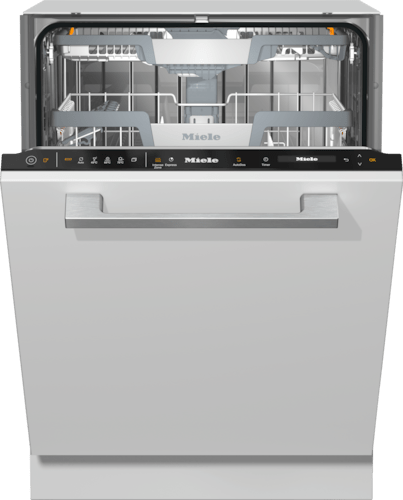
Tenth edition for the Green Product Award . In the kitchen category, the award went to the fully integrated Miele model G 7465 SCVi XXL AutoDos. The international jury appreciated “In particular, the transparency of energy and water consumption through the app involves the consumer who seeks greater sustainability and makes him responsible”. This is the new consumption panel in the Miele app, which displays how often a program is used weekly, monthly or annually and how much water and electricity it actually uses. The app also compares the average values of the programs and provides ecological advice.

The awards are organized by the Green Future Club, a network of sustainable innovators and experts with a vision for a near future where all products are sustainable. The club organizes awards, exhibitions and networking events, supports young designers and publishes the annual Green Trend Book with international best practices. Nils Bader , promoter of the award, emphasizes: “ With the awards, we present existing, future and, of course, sustainable alternatives and network the players. With the exhibition and the talks we want to surprise and show what is already possible. No one should do things randomly, but plan, design and ultimately consume with a different perspective in the future .”Innovative water feed for washing with less water
In the ECO programme, water consumption is reduced to 8.9 litres. This also means that less energy is required to heat the water, and you benefit from an energy-efficient dishwasher. The water savings are achieved through the intelligent design of the supply system and a new, highly efficient filter system. Additional insulation reduces thermal losses and thus the amount of energy required to heat the water.

Elica presents the 2022 Sustainability Report

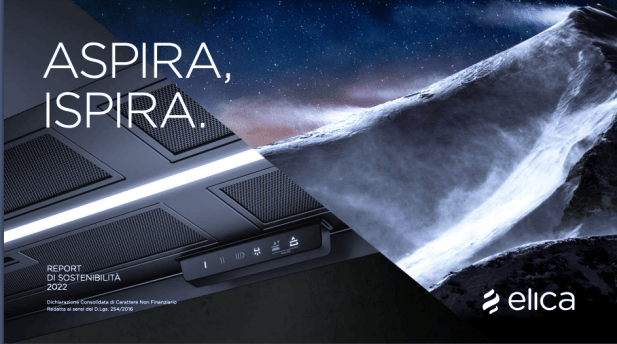
Elica spa has published the 2022 edition of the Sustainability Report under the slogan “Aspira, Inspira” which represents the ability to continuously imagine innovative and sustainable solutions for the future because every great idea, just like every great company, is born from an inspiration . Improving air quality has always been the starting point. Inspiring people and your target market is the next step.
Despite the difficult context, Elica achieved particularly challenging goals in 2022, breaking its own records for the second consecutive year. The consolidation of its global leadership was made possible by excellent management and financial performance and by a strategic “Sustainability Roadmap” based on three pillars: production and products with low environmental impact, people and governance.
During 2022, the Group used 100% renewable energy in almost all of its production sites in Italy and Poland. This policy has been accompanied by some energy efficiency projects which have contributed to further limiting our carbon footprint.

Electrolux climate neutral

Electrolux will continue to reduce its environmental footprint by shifting to renewables, and optimizing the use of energy and other resources throughout its operations. We aim to have climate neutral operations by 2030.

2022 highlights
Almost 10% reduction of carbon emissions for scope 1 and 2 (2015 baseline), surpassing our 2025 science-based climate target.
55% of Electrolux plants were certified according to our Zero Waste to Landfill program by the end of 2022.
Sourced 98% of our electricity came from renewable sources.
Roadmap to 2030
Reduce our CO2 footprint by 85% by 2025 (2015 baseline) and achieve climate neutral operations by 2030.
Improve energy efficiency at our manufacturing sites and warehouses by an additional 12.5% by 2025 (2020 baseline).
Improve water efficiency at our manufacturing sites by 25% by 2025 (2020 baseline) in potential water risk areas, until the site has reached optimal levels of efficiency.
Increase the proportion of renewable energy for our operations to 65% by 2025.
Certify all plants to the Zero Waste to Landfill program by 2025

EU Commission: Is there a right to repairs

The European Commission Have adopted a new proposal for common rules to encourage the repair of electronic equipment. This should make it easier and cheaper to repair devices instead of replacing them, as the commission announced. Refurbed.at basically sees the move as the right signal, but the proposal in its current form unfortunately falls short of expectations, as the platform for remanufactured products says.
In recent decades, replacement of defective products has often been preferred to repair, and consumers have not been given sufficient incentives to have the goods in question repaired once the legal guarantee has expired, the EU Commission has criticized. The new proposal aims to make it easier and cheaper for consumers to have goods repaired instead of having them replaced. “In addition, higher demand will boost the repair sector and at the same time create incentives for manufacturers and sellers to develop more sustainable business models,” writes the EU Commission and continues: “The proposal will ensure

Five to ten years repairability
Customers should be able to request that manufacturing companies repair products that are technically repairable under EU law for a period of five to ten years . But of course there are no rules without exceptions at the European Commission either. This means that sellers are obliged to repair within the warranty period, “unless it is more expensive than an exchange,” it says.elektro.at HOME


EDITOR’S CHOICE
positive signal
EU Commission: Is there a right to repairs?
BACKGROUND | Stefanie Bruckbauer | 03/23/2023

The European Commission yesterday adopted a new proposal for common rules to encourage the repair of electronic equipment. This should make it easier and cheaper to repair devices instead of replacing them, as the commission announced. Refurbed.at basically sees the move as the right signal, but the proposal in its current form unfortunately falls short of expectations, as the platform for remanufactured products says.
In recent decades, replacement of defective products has often been preferred to repair, and consumers have not been given sufficient incentives to have the goods in question repaired once the legal guarantee has expired, the EU Commission has criticized. The new proposal aims to make it easier and cheaper for consumers to have goods repaired instead of having them replaced. “In addition, higher demand will boost the repair sector and at the same time create incentives for manufacturers and sellers to develop more sustainable business models,” writes the EU Commission and continues: “The proposal will ensure

Five to ten years repairability
Customers should be able to request that manufacturing companies repair products that are technically repairable under EU law for a period of five to ten years . But of course there are no rules without exceptions at the European Commission either. This means that sellers are obliged to repair within the warranty period, “unless it is more expensive than an exchange,” it says.

Companies should also provide information about which products they have to repair themselves. And: Citizens should be able to find out about repair services and points of sale for outdated goods on national mediation platforms.

The European Parliament and the EU states must now discuss the proposals and negotiate a compromise on the proposals. It may be some time before consumers really benefit from the project.

By the way: Of course, the environment should also be relieved by the project. Fewer discarded products naturally result in less waste and less material used in manufacturing. As a result, there are also fewer greenhouse gas emissions. It is estimated that 18.5 million tons of greenhouse gas emissions, 1.8 million tons of resources and 3 million tons of waste will be saved over 15 years.

Discarded products are often still usable goods that can be repaired, but are often thrown away prematurely, resulting in 35 million tonnes of waste, 30 million tonnes of wasted resources and 261 million tonnes of greenhouse gas emissions in the EU every year, according to the EU Commission. In addition, the loss consumers incur by choosing replacement over repair is estimated at nearly €12 billion per year.

Refurbed: “Basically a positive signal”
The online marketplace refurbed.at (which, according to its own statements, is committed to the development of a long-term circular economy) considers the initiative to be a “positive signal” for the development towards a sustainable circular economy.

Kilian Kaminski , co-founder of refurbed says: “The current linear model of production, consumption and waste processing is not sustainable – many of the resources we depend on are finite. Their exploitation brings us to the limits of our planet and destroys our livelihoods. To counteract this, the transition to a circular economic model, the circular economy, is necessary. The ‘right to repair’ is an essential milestone for this project. Because the repair and reuse of devices should not just be an option, but the new norm at European level. With a longer service life, fewer resources are used and fewer emissions are emitted.”Refurbed therefore calls for other elements to be considered in addition to the aspects of the proposal:

Consumers need the right information to make an informed purchasing decision. One possibility can be an EU repair score, which informs buyers whether a product can be repaired, how easy it is and what the costs are.
The repair sector is underdeveloped because it has never been a priority and this needs to change. Making repair the norm requires financial incentives that make repair affordable. This can be achieved through extended producer responsibility.
The principle of “repair before replacement” must be enshrined in law. The current proposal is not strong enough here. Products must be designed to be repairable – as long as manufacturers are allowed to replace damaged products when it is cheaper than repairing them, they will not adjust the design of their products. If repair is not possible, replacement should be made with a remanufactured item.

Samsung seeks to overcome downturn with energy-efficient home appliances

Samsung Electronics on Tuesday unveiled the lineup of its new range of energy efficient Bespoke home appliances, in a move to attract Korean consumers and satisfy strict environmental regulations in Europe and elsewhere.

The tech giant said it will improve its profitability this year with upgraded products equipped with artificial intelligence (AI) technology.

“What consumers are most interested in recently are energy-related functions. So we will overcome the difficulties this year, through our eco-friendly products,” Samsung Electronics Vice Chairman Han Jong-hee said at a press conference.

Samsung Electronics Executive Vice President Choi Ick-soo also said that the company’s energy-efficient products have helped generate growth in sales, especially in the European market.

In the aftermath of the global economic recession, Samsung Electronics suffered a 60 billion won ($46 million) operating loss in its home appliance business during the fourth quarter of last year. This was the first time in seven years that the company suffered a quarterly operating loss in its home appliance business.

Although the vice chairman did not specify the timing of the turnaround, he said that the company expects better earnings during the second half of this year.

According to the company, the new Bespoke appliances use 30 percent less energy than first-class energy-efficiency products. In addition, consumers can further reduce the use of energy, thanks to AI technology, which can analyze how consumers use the products.

“Our washing machines can reduce microbeads from clothes by 60 percent,” Han said. “We will reduce the amount more significantly by launching a microbeads filter this year.”

Samsung Electronics emphasized the fact that it made some parts of its refrigerators and other home appliances with reusable plastic. It also noted that the new Bespoke products are equipped with Samsung’s SmartThings function to enhance connectivity between them.

During the press conference, Samsung Electronics reiterated that it will focus on nurturing the robotics business as one of its new growth engines.

“Engineers at Samsung Research plan to develop a Samsung robot platform,” Han said. “We are preparing to launch the EX1 robot this year, and there is the possibility of further development in our robot vacuums.”

His remarks came as Samsung Electronics’ recent acquisition of shares in Rainbow Robotics sparked expectation that the conglomerate may resume large-scale M&As this year. The vice chairman, however, remained cautious about the speculation.

Instead, he confirmed that Samsung Electronics will be more aggressive in using ChatGPT for its home appliance business.

“As more companies are using ChatGPT, I don’t deny the fact that it has become part of the mainstream,” Han said.

Midea’s Best-Selling Microwave Receives First-Ever Intertek Green Leaf Certification

The Midea microwave oven MM720C-PM0E00 2AT has recently received the first Green Leaf Certification from Intertek for one of its globally best-selling microwave oven products, as being in accordance with the ISO 14067:2018 standard, which specifies principles and guidelines for the quantification and reporting of the carbon footprint of a product (CFP). This is the first Green Leaf Certification Intertek provided for a microwave ovenThe MM720C-PM0E00 2AT, is an eco-friendly microwave oven with outstanding performance. Its capacity of 20L is ideal for small families. The microwave’s 700W power ensures fast and efficient heating, while featuring five power levels and can easily defrost based on the time or weight of the food. With these features and the 360° heating, it can ensure even cooking without cold spots and also prevent overcooking.

“Being awarded the Green Leaf Certification from Intertek is a testament to the Midea’scommitment to environmental protection and sustainability in our products. By taking steps to reduce the carbon footprint and minimize its impact on the environment, Midea is helping to create a better future for everyone and will continue to work hard to develop products that are both high-quality and eco-friendly.” said Dr. Zhou Fuchang, R&D Director at Midea Microwave & Cleaning Appliances Division.

The Green Leaf Certification is a comprehensive certification program that helps companies validate their environmental claims. It is awarded toproducts that have been independently verified by an accredited laboratory and found to conform to specified existing environmental standards and regulations. The certification allows companies to clearly and accurately communicate their commitment to sustainability and environmental protection to consumers.