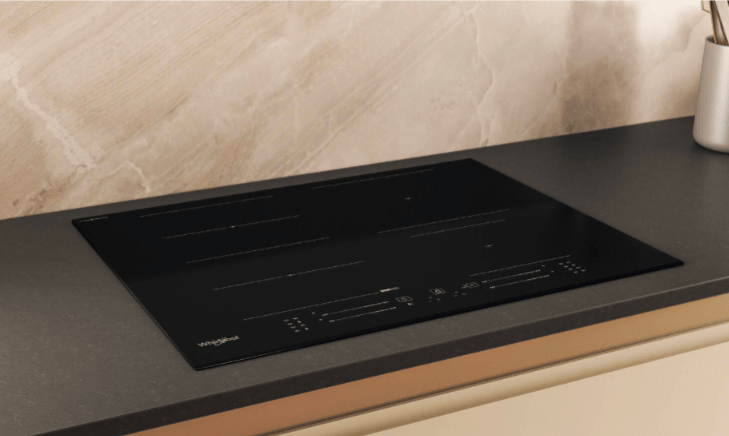
Whirlpool Introduces MattProtect: A More Durable Induction Hob Surface

Whirlpool is expanding its cooking portfolio with the launch of MattProtect, a new induction hob surface engineered for enhanced durability and easier day‑to‑day maintenance. The brand positions this finish as a step-change in surface resistance, aimed at consumers who want premium aesthetics without compromising robustness.

Matte Finish Built to Last
The MattProtect surface delivers three times more resistance to halos, scratches and impacts compared with standard vitroceramic glass. It also reduces visible marks, helping users keep the hob looking clean with less effort — a key selling point in a category where maintenance and appearance strongly influence purchase decisions.

FlexiCook and 6th Sense: Whirlpool’s Signature Technologies
The new model integrates FlexiCook, Whirlpool’s adaptive cooking system that automatically detects pan position and adjusts the active zone and power level accordingly. 
It also includes 6th Sense assisted functions such as Keep Warm and Melt, which automatically regulate power for precise, low‑temperature tasks.

Whirlpool CEO Warns of “GFC‑Level” Declines

Whirlpool Corporation CEO Marc Bitzer has delivered one of the starkest assessments of the appliance market in this earnings cycle, drawing a direct comparison between today’s demand environment and the 2008 global financial crisis.

Speaking on the company’s Q1 earnings call — highlighted in a recent Morning Brew Daily segment Bitzer told investors:

“This level of industry decline is similar to what we have observed during the global financial crisis and even higher than during other recessionary periods.”

For the only major U.S.-based kitchen and laundry appliance manufacturer, it’s an unusually blunt signal: the consumer demand backdrop now resembles the worst downturn in modern industry history.


Q1 2026: Revenue Down, Profitability Under Pressure

Whirlpool reported Q1 revenue of $3.27 billion, a 9.6% year‑over‑year decline, as global appliance demand continued to contract. The company posted an ongoing loss of $0.56 per share, while North America — its most critical profit engine — saw EBIT collapse 96% to just $6 million.

Key datapoints for the trade:

– Appliance demand fell 7% across major markets 
– North America EBIT nearly wiped out, signalling intense margin pressure 
– Stock dropped 12% following the announcement 
– Year‑to‑date, shares are down 32.29%, reflecting investor concern over prolonged demand weakness

Industry Context
Bitzer’s recession‑era comparison adds weight to what many manufacturers and retailers are already experiencing: a market still struggling to stabilise after years of inflation, elevated interest rates, and weakened consumer confidence.
For the sector, Whirlpool’s commentary reinforces a broader theme — the downturn is deeper, more persistent, and more structurally challenging than early‑2020s cycles

Whirlpool Suspends Dividend After Q1 Loss as Demand Slumps and Prices Rise

Whirlpool Corporation has suspended its quarterly dividend for the first time in 55 years, a significant move that underscores the depth of the challenges facing the world’s largest major appliance manufacturer.

The decision follows a steep first‑quarter loss and comes alongside the company’s largest price increase in more than a decade, as Whirlpool responds to what management describes as recession‑level demand conditions.

Executives linked the downturn to a combination of macroeconomic shocks, weakened consumer confidence, and global instability — including disruption tied to the Iran war — all of which have contributed to a sharp contraction in appliance demand across key markets.

To stabilise performance, Whirlpool is pairing its price actions with accelerated cost‑reduction measures. These initiatives, which the company says will “materially reshape” its operating structure, also shift Whirlpool’s risk–reward profile for investors at a time when the sector is already navigating prolonged demand softness.

For the appliance industry, Whirlpool’s dividend suspension marks one of the clearest signals yet of the pressure facing global manufacturers as they balance inflation, supply‑chain volatility, and a consumer market still struggling to recover

Whirlpool Tackles Overwashing with New Xpert Care Washing Machines in India

Whirlpool has introduced its latest innovation in India—the Xpert Care front-load washing machine series—by addressing a surprisingly overlooked issue in laundry care: overwashing. While most brands continue to emphasize stain removal and spin speed, Whirlpool is flipping the script by focusing on fabric preservation. At the heart of this shift is its new Ozone Air Refresh Technology, designed to minimize unnecessary washes and help clothes last longer.

Rethinking the Need to Wash

Whirlpool’s insight is simple but powerful: not every garment needs a full wash. Think office wear, special occasion outfits, or clothes worn just once—these often end up in the laundry basket out of habit, not necessity. The result? Accelerated fading, shrinkage, and fabric fatigue. The Xpert Care range offers a smarter alternative—bridging the gap between traditional washing and dry cleaning.

Meet Ozone Air Refresh: A Waterless Refresh Cycle

The standout feature of the Xpert Care lineup is its Ozone Air Refresh Technology. Instead of water and detergent, the machine uses an integrated ozoniser to convert oxygen into ozone. This ozone is then circulated within the drum, effectively neutralizing odours and bacteria. Once the cycle is complete, the ozone safely reverts to oxygen and is released.

Whirlpool claims the system has been tested for up to 50 consecutive refresh cycles on delicate, dry-clean-only garments—like sarees, blazers, trousers, and embellished clothing—with no shrinkage or colour loss under controlled conditions. Beyond fabric care, the ozone cycle is also said to eliminate up to 99.9% of bacteria, allergens, dust mites, and viruses, while removing persistent smells like cigarette smoke and cooking odours.

Whirlpool’s India Unit Sale to Advent International Falls Through Over Valuation Dispute

In a significant turn of events in the global M&A landscape, talks between U.S. appliance giant Whirlpool Corporation and private equity powerhouse Advent International regarding the sale of Whirlpool’s India unit have reportedly collapsed. According to sources cited by Reuters, the deal—valued at up to $1 billion—was derailed due to disagreements over valuation.

Advent International had emerged as the leading contender to acquire a 31% stake in Whirlpool of India Ltd (NSE: WHIR.NS), a move that would have triggered a mandatory open offer for a controlling stake under Indian securities regulations. The acquisition was seen as a strategic play by Advent to deepen its footprint in the Indian consumer durables market, leveraging Whirlpool’s established brand presence and distribution network.

However, despite advanced negotiations, the two parties were unable to bridge the valuation gap. The breakdown underscores the challenges global investors face in aligning expectations with multinational corporations, especially in high-growth but price-sensitive markets like India.

Whirlpool of India, a subsidiary of Michigan-based Whirlpool Corp (NYSE: WHR), has been a prominent player in the Indian home appliance sector, known for its refrigerators, washing machines, and kitchen appliances. The potential divestment was part of Whirlpool’s broader strategy to streamline its global operations and focus on core markets.

While this deal may have faltered, industry watchers suggest that interest in India’s consumer appliance sector remains robust, driven by rising disposable incomes, urbanization, and a growing appetite for premium home solutions. It remains to be seen whether Whirlpool will seek other suitors or recalibrate its strategy for the Indian market.

Stay tuned for more updates as this story develops.

Whirlpool Tops Q3 Expectations with Solid Earnings

Whirlpool Corporation (NYSE: WHR), maker of Maytag and KitchenAid appliances, beat Wall Street forecasts in its third-quarter report released Monday.

The company posted net income of $73 million, or $1.29 per share. Adjusted earnings came in at $2.09 per share, well above the $1.41 estimate from analysts surveyed by Zacks Investment Research.

Revenue also impressed, reaching $4.03 billion, surpassing the expected $3.92 billion.

Looking ahead, Whirlpool reaffirmed its full-year earnings guidance of $7 per share, signaling continued confidence in its performance.

Whirlpool Corporation Announces $300 Million Investment

The Michigan-based manufacturer, which started in the U.S. in 1911 and has stayed in the U.S. throughout its history, is preparing to ramp up production at two Ohio facilities.
Whirlpool Corporation today announced a planned $300 million investment in its U.S. laundry manufacturing facilities, one in a series of strategic commitments to grow its American manufacturing footprint. This investment is expected to create between 400 and 600 new jobs across the company’s operations in Clyde and Marion, Ohio, positioning Whirlpool Corp. for increased production of its next generation of washers and dryers, while also supporting approximately 5,000 additional jobs outside the company.

Whirlpool seeks investigation into alleged tariff evasion by competitors

A dramatic drop in the price of imported washing machines from South Korea has sparked concern among U.S. appliance giant Whirlpool. Recent data reveals that units once priced at nearly $840 are now entering the market at just $73—a staggering decline that has Whirlpool questioning the fairness of global competition.

🗣️ In a statement released Monday, Whirlpool confirmed it has “shared its concerns about this data with the administration at various levels.” The company has also taken its grievances directly to foreign competitors, including Samsung, LG, and the owner of GE Appliances. Whirlpool emphasized that “recent trade policies can only help level the playing field for U.S. manufacturers if foreign-owned companies play by the rules.”

🇺🇸 With more than a century of manufacturing history in the U.S., Whirlpool says it remains committed to defending its workforce of approximately 20,000 American employees. The company’s message is clear: fair trade isn’t just about policy—it’s about accountability.

Whirlpool India: A Strategic Tug-of-War Amid Global Appliance Shifts

Investor AB, the powerful Swedish holding company behind Electrolux and other industrial giants, is backing EQT in a potential takeover of Whirlpool India. While EQT remains the only serious bidder, Whirlpool CEO Marc Bitzer is asking $550–600 million for a 31% stake—an amount that led Bain Capital to walk away.

Despite interest, Whirlpool India faces stiff competition from Chinese and Japanese-Korean brands and lacks presence in premium segments. Tariff protections haven’t delivered results, adding pressure to the deal.

Electrolux may not be changing hands just yet—but the appliance sector is clearly heating up.

Whirlpool Accuses Samsung and LG of Dodging Tariffs via Transfer Pricing

Whirlpool has filed a complaint with U.S. authorities, alleging that Samsung and LG’s American subsidiaries manipulated internal “transfer pricing” to lower tariffs on imported appliances. By undervaluing goods shipped from overseas units, Whirlpool claims the companies reduced their tax burden unfairly.

The complaint was submitted to the White House and U.S. Customs in August, reigniting tensions in a market where Samsung and LG now hold a combined 36% share, compared to Whirlpool’s 20%.

Both Korean firms deny wrongdoing, citing compliance with U.S. tax laws and highlighting their investments in domestic manufacturing.

Whirlpool’s move could influence future tariff policies and intensify scrutiny of multinational pricing strategies.