
The curtain has fallen on one of France’s most iconic appliance manufacturers. On Thursday, December 11, the Nanterre Commercial Court ordered the liquidation of Groupe Brandt, marking the end of a months-long effort to save the company through an employee-led cooperative. The decision spells the loss of approximately 700 jobs and halts production of legacy brands including Brandt, De Dietrich, Sauter, and Vedette.
This outcome underscores a broader and troubling trend: the continued erosion of European-based appliance manufacturing in the face of global competition, financial fragility, and investor hesitancy.
A Last-Ditch Effort That Fell Short
The final hope for Groupe Brandt rested on a bold proposal—a Scop (Société coopérative et participative), or employee cooperative, backed by Groupe Revive and entrepreneur Cédric Meston, co-founder of plant-based food brand HappyVore. The plan aimed to preserve local jobs and maintain production in the historic Loiret and Loir-et-Cher regions by turning employees into co-owners.
Despite strong political and regional support, including €17 million in public funding from the French state, Centre-Val de Loire region, and the city of Orléans, the plan ultimately collapsed. The court deemed the proposal financially unviable, citing a shortfall of €3–8 million that banks refused to cover.
Political Will Meets Financial Reality
The rescue effort drew unprecedented political attention. Industry Minister Sébastien Martin pledged €5 million in state aid, while regional leaders rallied to raise additional funds. Yet, even with this show of unity, the private sector’s reluctance to assume risk proved decisive.
With no viable path to cover the remaining funding gap—and no means to pay salaries beyond December 15—the court had little choice but to proceed with liquidation.
What This Means for the Industry
Groupe Brandt’s collapse is more than a corporate failure—it’s a symbolic blow to the European white goods sector. Once a pillar of French industrial pride, Brandt’s demise highlights the vulnerability of legacy manufacturers in a capital-intensive, globally competitive market.
For industry watchers, the case raises urgent questions:
– Can cooperative ownership models realistically rescue distressed manufacturers?
– What role should public funding play in safeguarding industrial heritage?
– And how can Europe retain its foothold in appliance production amid mounting global pressures?
As the dust settles, one thing is clear: the Brandt story will resonate far beyond France’s borders.
Category Archives: History of whitegoods
From Refrigerators to Mahogany Boats: Electrolux’s Unexpected Voyage into Marine Innovation

When you think of Electrolux Group, sleek refrigerators, efficient washing machines, and cutting-edge kitchen appliances probably come to mind. But did you know this iconic white goods brand once made boats?
Yes — actual mahogany camping boats.
In the 1940s and ’50s, Electrolux took a surprising detour from household appliances to maritime craftsmanship. The Skärgårdsbåt S-10M (“archipelago boat”), designed by the renowned C.G. Pettersson, was a sleek, oak-framed vessel powered by a 10–12 hp Archimedes B-22 engine. It could cruise at around 10 knots and was sold at an accessible price through Electrolux’s own boat division. At its peak, over 1,000 units were sold annually.
⚙️ Innovation Born from Necessity
This wasn’t just a quirky side project. It was a strategic pivot born out of wartime necessity. During WWII, Electrolux retooled its production lines to support Sweden’s national defense. In Stockholm, the company manufactured air filters for the military. In Motala, steel fittings replaced refrigerators. And in a bold move, Electrolux entered the marine engine market by acquiring Archimedes and later Penta, coordinating both brands to sell outboard motors under different names.
After supplying engines to the Swedish navy, Electrolux faced a challenge: how to reach civilian consumers when no suitable boats existed. The solution? Build their own.
🧊 What It Means for White Goods Today
While Electrolux eventually phased out boat production in the late ’50s to refocus on its core business, the story of the Skärgårdsbåt is more than a historical footnote. It’s a testament to the brand’s adaptability, engineering excellence, and customer-first mindset — values that continue to shape its white goods innovation today.
From pivoting in wartime to pioneering in peacetime, Electrolux’s journey reminds us that great design and smart problem-solving can take many forms — whether it’s a high-performance dishwasher or a mahogany boat gliding through the Swedish archipelago.
Miele celebrities 125 Years
July 1899, Carl Miele Sr. and Reinhard Zinkann registered their new company Miele & Cie. with the vision of making better products rather than cheaper ones. This commitment to ‘Immer Besser’ has guided Miele through 125 years of remarkable achievements.
Starting in a small factory in Herzebrock with just 11 employees and a cream separator as the first product, we launched our first round wooden tub washing machine, the ‘Meteor’, just two years later. In 1907, Miele moved to Gütersloh, where Miele continued to expand their innovative product range and workforce.
Today, Miele is one of Germany’s most respected brands, employing over 22,000 people in 49 countries. Our journey has been marked by many successes and pioneering milestones, as well as challenges and bold decisions that have shaped the company.
From early social responsibility and initiatives such as a company health insurance fund in 1909, to leading the way in environmental sustainability and winning the German Sustainability Award in 2014 and 2023 – Miele has always pushed the boundaries. risen from a manufacturer of cream seperators and butter churns to a world leader in premium kitchen, laundry, floorcare and medical appliances.
Farewell to Roberto Bertazzoni (Smeg)
On March 31, Roberto Bertazzoni died at the age of 81. He had been at the helm of Smeg as president and CEO since the 1970s , now directed by his son Vittorio. Appointed Cavaliere del Lavoro in 1993, Roberto Bertazzoni was the protagonist of the industrial epic that led the Smalterie Metallurgiche Emiliane Guastalla founded by Roberto’s father in 1948 to become a multinational with around 2,600 employees and a turnover of 900 million. The funeral on Tuesday 2 April in the cathedral of his Guastalla
UK Antitrust gives green light to the joint venture between Whirlpool and Arçelik: Beko Europe is born
Arçelik’s main goal is to create the future leader of the home appliance industry, and certainly this agreement marks a significant step towards that direction. In any case, the new industrial entity, Beko Europe, will include a wide range of brands of great relevance in the sector, ranging from Whirlpool itself to Indesit, Bauknecht, Privileg, Ignis, Grundig, Arctic, Elektrabregenz, Flavel and Leisure, Hotpoint, Altus and Blomberg. This diversification of the brand portfolio will provide a unique opportunity for the new joint venture to reach a wide range of consumers and consolidate its presence in the global home appliance market The agreement will also have an important impact on Italian territory. Arcelik will provide two factories in Romania to the new company, while Whirlpool will move its European large household appliances business unit, which includes seven factories in Europe and employs a total of 14,000 employees. In Italy, the operation will involve various factories, such as those in Siena for freezers, Comunanza (Ascoli Piceno) for washing machines and washer-dryers, Melano (Ancona) for hobs and Cassinetta (Varese) for built-in refrigerators and microwave ovens. Furthermore, the Carinaro (Caserta) site will be involved with a logistics warehouse and a reconditioning center for damaged Whirlpool products.
Domestic appliances deal cleared by the CMA
Following a provisional clearance in February, the CMA is now allowing the proposed deal between Arçelik and Whirlpool to go ahead.Arçelik and Whirlpool are two of the largest suppliers of major domestic appliances (MDAs) in the UK, including washing machines, tumble dryers, dishwashers and cooking appliances. Arçelik supplies MDAs primarily under the Beko, Blomberg and Grundig brands, and Whirlpool supplies MDAs primarily under the Indesit and Hotpoint brands.
The Competition and Markets Authority (CMA) referred the deal to a Phase 2 review after initially identifying concerns which warranted further investigation during its Phase 1 investigation.
Since then, an independent CMA panel has gathered and analysed a wide range of evidence – including seeking views from businesses and customers – in order to assess the potential impact of this deal.
The panel reviewed evidence which showed that while Arçelik and Whirlpool both have strong market positions, they will continue to face significant competition from other suppliers. This includes well known suppliers and brands such as BSH (including its Bosch and Neff brands), Haier Group (including its Hoover and Candy brands), Samsung and LG; retailers’ ‘private label’ brands such as Logik and Bush (Currys and Argos); and more recent entrants such as Hisense.
The evidence also showed that the competitive landscape has changed considerably in recent years and continues to do so. Whirlpool’s market position in MDAs has significantly declined over the last decade, and it is likely that its European MDA business will be fundamentally different in the future. At the same time, suppliers such as Haier Group and Hisense have gained market share, and it is likely that they will continue to expand. These market dynamics are supported by a range of evidence, including from internal documents, financial analysis and third parties.Arçelik will set up a new standalone business, Beko Europe B.V., to which Arçelik will contribute its European MDA and small domestic appliances businesses and Whirlpool will contribute its EMEA MDA business. On completion of the deal, Arçelik will hold c.75%, and Whirlpool will hold c.25%, of the shares in Beko Europe.
Morphy Richards
Morphy Richards, a renowned brand known for its high-quality, British-style, and innovative products, has announced a strategic brand upgrade to support business growth in the medium and long term. In collaboration with globally recognized strategic consulting firm Prophet, Morphy Richards aims to pinpoint its core competence and devote to the best path for sustainable growth. The goal is to allow consumers get a different life experience brought by Morphy Richards products.
Established in 1936, Morphy Richards is a time-honored brand. As a historic British brand, Morphy Richards has a presence in a number of countries across Europe and Asia. Specializing in small household appliances, Morphy Richards has deeply cultivated the kitchen and living appliances sector. The brand upgrade aims to enhance brand influence, steer the direction of product development, and improve performance. As part of this strategic initiative, Morphy Richards is now actively recruiting business partners who share the same growth goals. Organizations and individuals interested in partnering with this time-honored brand are invited to make contact.
“In the post-pandemic world, the most relevant brands speak to consumers’ heads and hearts by offering dependable, consistent, and delightful product innovations and branded experiences. We are honored to partner with Morphy Richards to unlock the next wave of uncommon growth across more and more markets,” said Jolin, Associate Partner of Prophet. A growth and transformation consulting firm that helps leaders unlock uncommon growth, Prophet has 15 offices and over 600 strategists, data analysts, marketers, digital experts, and creatives worldwide, partnering with multiple companies to develop solutions that drive lasting impact and help move society forward.
“We have a truly unique opportunity. In the UK, Morphy Richards has 86% brand recognition which is up there with industry-leading global brands! With the right products and a great team, I am confident that we can re-establish Morphy Richards as the envy of the industry,” said Rob Wileman, Managing Director of Consumer Brands Limited, which has become the official licensee of Morphy Richards in the UK in 2023.
About Morphy Richards
Morphy Richards, a premium and innovative small appliance brand, was established in the UK in 1936. For more than eight decades, Morphy Richards has been committed to infusing smart ideas and quintessential British style into the kitchens and everyday lives of families.
SEB 165 anniversary
From 1857 to the present day, visitors can discover the entire history of the Seb group on Seb Discovery. A saga divided into 6 historical periods, to better understand how the small French family business has become a historical player in Appliance market
For its 165th anniversary, Groupe Seb launches the Seb Discovery website
December 14, 2022, by Sandra Nicoletti
From 1857 to the present day, visitors can discover the entire history of the Seb group on Seb Discovery. A saga divided into 6 historical periods, to better understand how the small French family business has become a historical player in the PEM and professional coffee.
For its 165th anniversary, Groupe Seb launches the Seb Discovery website
This is an extraordinary gift that Groupe Seb gave itself for its 165th anniversary. A website dedicated to the history of the group, which traces the entire saga of the French family business born in 1857. From tinsmithing to the group’s latest innovations, through its various acquisitions, Seb Discovery offers a journey through time and eras. Divided into 6 major periods and animated by two guides, the site plunges the Internet user into period decorations and invites him to discover the evolution of products, from the oldest to the most innovative. A family history that has made Seb a key player in the market for small household appliances for the general public, but also in the field of professional coffee
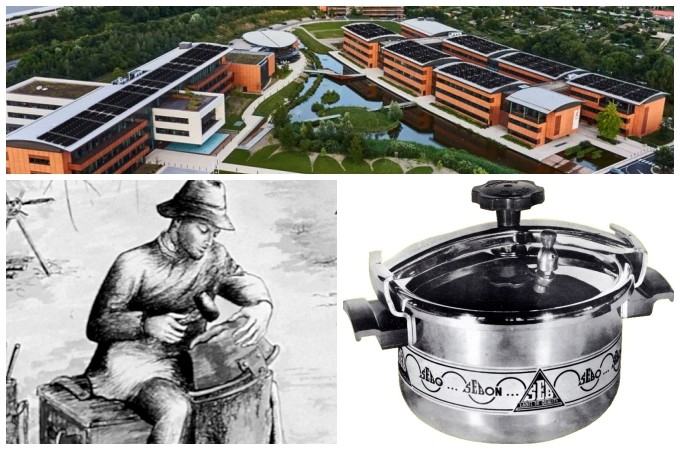
The Seb saga in 6 major periods
The invitation to travel began in 1857 in Burgundy, with the birth of the company then specializing in tinsmithing (making tinplate objects) and continued until 1951.
The 2nd part extends from 1952 to 1972, with the beginning of equipped kitchens and the rise of household equipment in homes, including the Super Cocotte Seb which was a hit at the time.
Then, from 1973 to 1990, Internet users discovered a new era for Seb, which became Groupe Seb, thanks to the acquisition of Tefal in 1968 and Calor in 1972.
From 1991 to 2000, the group opened up to emerging countries and developed several subsidiaries around the world with positions as local leaders in small household appliances, particularly in South America.
Then, a new era began in 2001 with the acquisition of Moulinex and continued until 2010, during which the group became the world leader in small household appliances.
The journey ends with the period 2010 to the present day, marked by the acquisition of WMF , a specialist in professional coffee, and by the opening of a new world headquarters in Ecully, the Campus Seb , which also hosts a world center of innovation.
Liebherr history
The history of Liebherr Refrigeration – Where it all began Only every tenth German household owned a refrigerator during the ’50s, and demand increased with economic growth. Hans Liebherr decided to rely on its production facilities at the southern German location in Ochsenhausen to start a new appliances business. The first refrigerator was manufactured there in 1954, and today Liebherr continue manufacturing high-quality refrigerators and freezers. With the following link you can get an insight into how Liebherr became a household name known for manufacturing innovative appliances and more about Liebherr history.
The history of Liebherr Refrigeration – Where it all began Only every tenth German household owned a refrigerator during the ’50s, and demand increased with economic growth. Hans Liebherr decided to rely on its production facilities at the southern German location in Ochsenhausen to start a new appliances business. The first refrigerator was manufactured there in 1954, and today we continue manufacturing high-quality refrigerators and freezers. With the following link https://lnkd.in/dwF5Zpix, you can get an insight into how our brand became a household name known for manufacturing innovative appliances and more about our history.
Whirlpool 110 year anniversary
11th November 2021, Whirlpool Corporation is celebrating its 110 year anniversary. To mark the occasion, the company will be reflecting on its significant history of innovation and collaboration throughout the decades.
Improving life at home has been at the heart of Whirlpool Corporation’s approach since it was founded in 1911. From humble beginnings, to becoming one of the world’s leading appliance manufacturers, the company has evolved into a well-loved, highly respected brand that is recognised across the globe.
To read about Whirlpool’s history https://www.whirlpoolcorp.com/history/
 WHITEGOODSNOW