
A New Chapter in Energy Transition
Hydrogen has long been discussed as a clean‑energy alternative, conversation directly into the kitchen.
The first units have already been assembled in Santander for a pioneering trial in Fife, Scotland, where, for the first time in the UK, households will cook with a flame powered by 100% hydrogen
– Hydrogen viability — Bosch positions hydrogen as a realistic long‑term option for domestic appliances, particularly in markets pushing hard on decarbonisation.
– Safety engineering — Luis emphasises Bosch’s investment in flame control, leak detection, and combustion stability — essential for consumer confidence.
– Infrastructure readiness — The technology is promising, but widespread adoption depends on hydrogen distribution networks and government‑level energy strategy.
– Prototype status — Bosch is clear: this is early‑stage innovation, not a commercial launch. The hob serves as a proof‑of‑concept to demonstrate feasibility and spark industry dialogue.
Why This Matters for the Appliance Sector
For retailers, designers, and specifiers, Bosch’s hydrogen hob signals where premium brands are directing their R&D budgets. The industry is moving beyond incremental improvements and into alternative‑fuel cooking, a category that could redefine product ranges over the next decade.
Key implications:
– Future product roadmaps — Expect hydrogen‑compatible appliances to appear in long‑term planning documents.
– Sustainability messaging — Hydrogen aligns strongly with net‑zero commitments, giving brands a new narrative beyond induction efficiency.
– Kitchen design evolution — Designers may eventually need to consider hydrogen lines alongside gas and electric infrastructure.
Bosch’s Positioning
Luis’s interview reinforces Bosch’s reputation for engineering‑led innovation. The brand isn’t claiming hydrogen is ready for mass‑market rollout — instead, it’s demonstrating leadership by exploring what comes next.
This approach mirrors Bosch’s broader strategy: invest early, test rigorously, and shape the conversation around future cooking technologies.
Sector Outlook
Hydrogen hobs won’t replace induction tomorrow, but they represent a credible pathway for markets seeking low‑carbon alternatives. As governments accelerate hydrogen investment, appliance manufacturers will be watching closely — and Bosch’s prototype ensures they’re part of the discussion from day one.
Author Archives: whitegoodsnow
BSH Expands Bosch & Siemens Small Appliance Portfolio to Accelerate Premium Growth in India
BSH expands Bosch & Siemens small‑appliance range in India, targeting premium growth across kitchen machines, vacuums, food‑prep and coffee categories.
LG Extends Its Lead as Samsung’s Home Appliance Business Slips Into Q2 Deficit
A clear profitability divide has emerged between South Korea’s two home‑appliance giants. Q2 2026 results from Samsung Electronics and LG Electronics show the strongest gap in years — and one that reflects diverging strategic priorities inside both companies.
LG Delivers Another Trillion‑Won Quarter
LG Electronics’ Home Appliance & Solution (HS) division posted an operating profit of 1.1411 trillion won (approx. ¥125.5 billion) in Q2, marking two consecutive quarters above the 1‑trillion‑won threshold.
LG attributes the sustained momentum to:
– Expansion of high‑value‑added SKUs
– Improved cost structure and operational efficiency
– Tariff refunds and supply‑chain optimisation
– Strong performance across both premium and volume categories
The result reinforces LG’s long‑standing strength in core whitegoods categories a position the company has been deliberately consolidating.
Samsung’s Home Appliance Business Falls Into the Red
Samsung Electronics’ home appliance division reported Q2 sales of 14.5 trillion won (approx. ¥1.588 trillion), but an operating loss of 10 billion won (approx. ¥1.1 billion).
This marks the first deficit for Samsung’s home appliance business since the creation of the DX (Device eXperience) division in 2021.
The profit gap between the two companies widened sharply:
– Q1 2026: approx. 990 billion won
– Q2 2026: approx. 1.15 trillion won
Analysts note that Samsung’s intensified investment in semiconductors and AI‑related businesses has shifted focus away from traditional home appliances — while LG has doubled down on its strongest legacy segment.
Strategic Repositioning at Samsung
Reports indicate Samsung has:
– Withdrawn from some TV and appliance businesses in China
– Begun evaluating global production base consolidation
– Initiated discussions around fundamental business reorganisation to restore appliance‑division profitability
This aligns with Samsung’s broader pivot toward high‑growth, high‑tech sectors — but leaves its appliance division exposed to margin pressure and fierce competition from Chinese manufacturers.
Public Reaction in South Korea
Korean netizens offered contrasting views, reflecting both brand loyalty and market realism:
Supportive of LG
– “LG is indeed strong in home appliances.”
– “LG’s products are easier to use and higher quality.”
– “LG is often cheaper than Samsung for similar functions.”
– “Customer support has improved significantly.”
Critical of Samsung
– “Samsung focused too much on semiconductors.”
– “Samsung needs to rebuild its home appliance brand.”
Neutral or Strategic Perspectives
– “Both companies prioritise profitable businesses — no point comparing.”
– “Home appliances may already be a side business for Samsung.”
– “Competition in China is too severe; withdrawal is unavoidable.”
What This Means for the Global Appliance Sector
The widening profitability gap signals a shift in competitive dynamics:
– LG is strengthening its position as a global premium‑plus appliance leader.
– Samsung may be entering a period of portfolio restructuring, with implications for global distribution, product roadmaps, and regional manufacturing footprints.
– Retailers and distributors could see greater SKU stability and margin consistency from LG, while Samsung’s appliance strategy may evolve toward selective categories and innovation‑led differentiation.
Panasonic’s New Two‑in‑One Bread & Ice Cream Maker Surprises at UK Showcase
Panasonic has unveiled a compact Mini Bread and Ice Cream Maker, blending kneading and churning into one countertop unit. At a London hands‑on event, testers produced crisp loaves, creamy frozen yogurt, and even mochi using the machine’s dedicated paddle.
Bread mode handles kneading, proving, and baking automatically. Ice cream mode is just as simple: freeze the bowl, swap the tin for an adapter, pour in your mix, and let the machine churn. Early results were light, smooth, and genuinely tasty.
Panasonic also previewed its 4‑in‑1 Air Fryer Combi Microwave, delivering baked cheesecakes, crisp cornflake chicken, and fluffy rice via Fuzzy Logic tech.
The bread‑and‑ice‑cream maker was the standout a niche but clever solution for households wanting fresh bread, homemade ice cream, and mochi from a single appliance.
European heatwave drives urgent AC shipments from China
European heatwave triggers rush for China–Europe AC shipments
Record temperatures across Europe have emptied warehouse shelves, pushing major Chinese brands to divert thousands of air‑conditioners onto faster China–Europe rail routes. With heatwaves topping 40°C and sea freight slowed by Middle East disruptions, manufacturers are switching to rail to cut delivery times from 40 days to about 15.
China Railway Express is now running packed trains into Central and Western Europe as retailers scramble to restock before the next surge in demand.
Desmon appoints Kirstie Lassallette-Desnault
Kirstie Lassallette-Desnault has joined Desmon, the commercial refrigeration brand and part of the Middleby Corporation, as its new Senior Vice President of Sales. The appointment comes at a defining moment for Desmon, with Kirstie tasked with building a high performing commercial department and setting the business on a sustained path of global growth.

China’s Small Appliance Makers Face Broad H1 Profit Declines in 2026
China’s small home appliance sector has entered mid‑2026 under clear pressure, with five major listed manufacturers — Supor, Xinbao, Biyi Electric, Aishida and Bear Electric — all reporting year‑on‑year declines in revenue and profit for the first half of the year. The cluster of results, released in mid‑to‑late July, highlights a sector grappling with weak demand, intense price competition and margin compression across core categories.
Supor: Revenue Flat, Profit Under Pressure
Supor posted revenue of 11.41 billion yuan, down 0.59% year‑on‑year. Net profit fell more sharply, dropping 7.70% to 868 million yuan.
The company continues to face a squeeze between softer domestic demand and rising promotional intensity in cookware, kitchen appliances and small domestic electricals.
Xinbao: Profit Plunge Exceeds 70%
Xinbao’s forecast points to one of the steepest declines among the group.
Net profit is expected to land between 125–155 million yuan, representing a year‑on‑year fall of more than 70%.
Export‑oriented categories remain challenged by global inventory digestion and slower overseas replenishment cycles.
Biyi Electric: Swinging to Loss
Biyi Electric expects net profit attributable to the parent to fall between –31.7 million and –35.7 million yuan, marking a loss versus the same period last year.
The company has been hit by weaker volumes in entry‑level appliances and sustained price pressure in online channels.
Aishida: Significant H1 Loss
Aishida anticipates a net loss of 77.9–111 million yuan for the first half of 2026.
The business continues to navigate restructuring costs and a slow recovery in its core product lines.
Bear Electric: Revenue and Profit Down
Bear Electric’s performance forecast shows:
Revenue down 6.14% year‑on‑year in Q1
– Net profit down 38.67% year‑on‑year
With competitive intensity rising further in Q2 — particularly in lifestyle appliances and novelty categories — Bear’s overall H1 profit scale has declined compared with last year.
Sector View: Competition Tightens as Demand Softens
The synchronised downturn across five brands underscores a broader trend: China’s small appliance market is in a cooling phase, marked by:
– High promotional pressure in e‑commerce channels
– Slower replacement cycles among younger consumers
– Fragmented category innovation, making differentiation harder
– Export headwinds as overseas retailers continue to destock
Manufacturers are expected to respond with tighter cost control, selective premiumisation, and more disciplined product planning in the second half of the year.
LG targets growth with end-to-end commercial laundry strategy
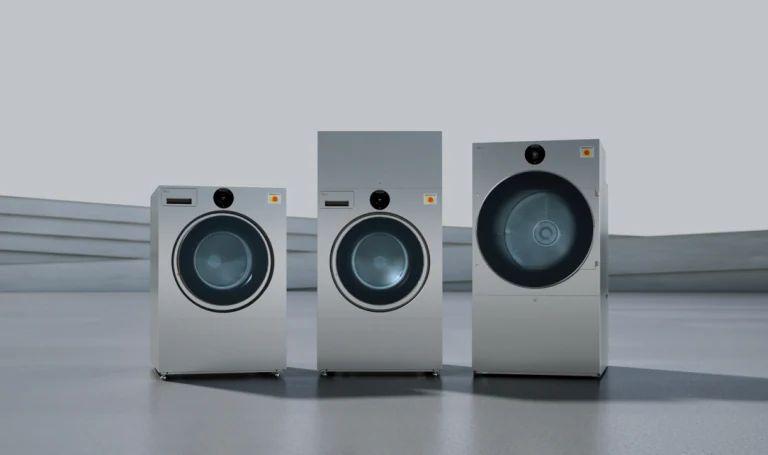
LG Electronics is expanding its commercial laundry business beyond appliances by positioning itself as a provider of complete business solutions.
The company says its strategy combines high-performance laundry equipment with AI, remote monitoring, predictive maintenance and connected management platforms to help commercial customers improve efficiency and reduce operating costs.
Targeting sectors including hospitality, healthcare and multi-housing, LG aims to build long-term customer partnerships through integrated services rather than standalone product sales.
The move forms part of LG’s wider ambition to become a “Smart Life Solution Company”, with B2B solutions playing an increasingly important role in its global growth strategy.
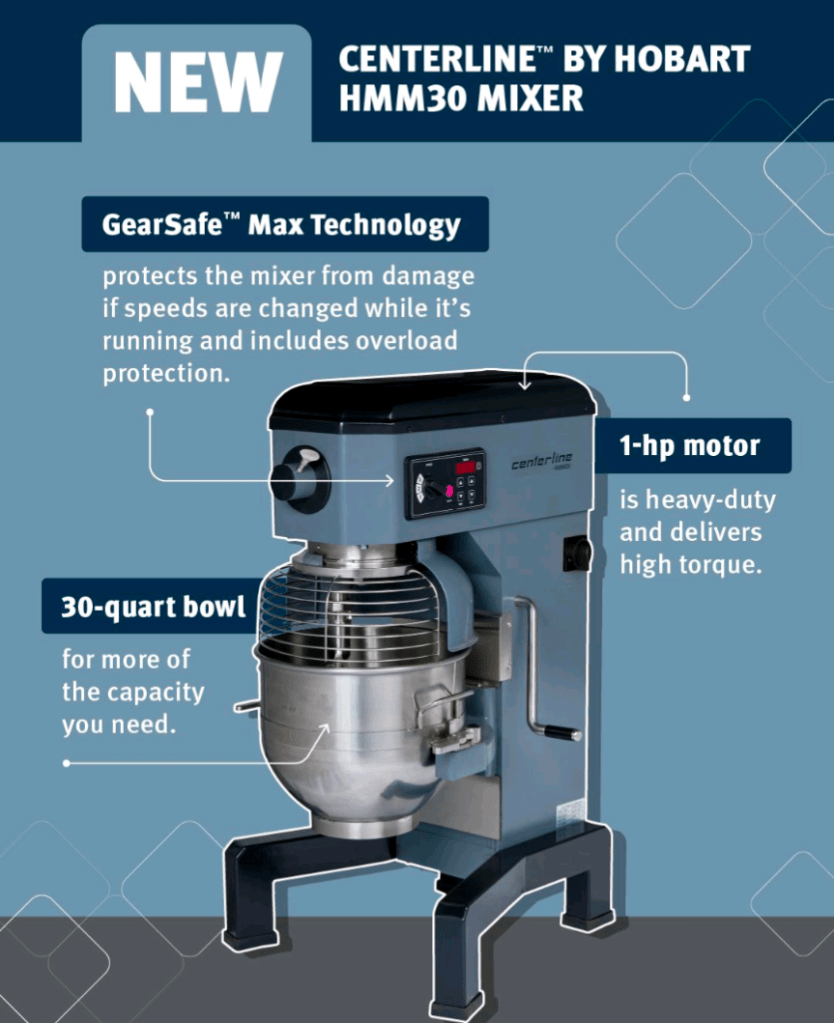
Hobart Expands Centerline™ Range with New HMM30 30-Quart Commercial Mixer
Hobart Food Equipment has expanded its commercial preparation line-up with the Centerline™ HMM30 mixer—a 30-quart solution engineered for high-demand professional kitchens needing mid-to-large capacity without compromising on reliability or value.
Positioned above the established HMM10 (10-quart) and HMM20 (20-quart) models, the HMM30 bridges the gap for bakeries, pizzerias, and commercial kitchens requiring larger batch outputs.
Components & Technologies Hidden Inside Today’s Faber Cooker Hoods
Faber has spent more than 70 years refining the “invisible” engineering that sits behind its cooker hoods — the parts you never see, but that define extraction performance, noise levels, energy use and long‑term reliability. From brushless motors to advanced filtration and fluid‑dynamic noise control, the brand’s latest-generation models show how much innovation now sits inside the modern hood🔧 Brushless Motor Technology
Traditional brushed motors rely on physical contact between components, creating friction, wear and noise. Faber’s brushless motor eliminates this contact entirely, using a rotating magnetic field to control speed with precision. The result is:
– Higher energy efficiency
– Lower consumption
– Longer product life
– Stable performance even at maximum extraction
In the Heaven Light PRO ceiling‑mounted hood, the brushless motor delivers up to 700 m³/h in Boost mode while maintaining low energy use and improved acoustic comfort.
🌀 High Filtering Hood (HFH) System
Faber’s HFH system is one of the most advanced filtration solutions on the market. Instead of a flat charcoal filter, HFH uses a cylindrical filter with a larger surface area, increasing contact between air and activated carbon.
Inside the cylinder, two ultra‑filtering panels work together:
– The first captures larger particles
– The second traps finer ones
This dual‑stage system removes up to 95% of odours, significantly improving indoor air quality. The cylindrical design also reduces noise by around 3 dB(A) compared with traditional charcoal filters.
The Stilo Comfort hood can be equipped with HFH and also includes Intensive Speed, LED lighting and dishwasher‑safe grease filters.
🔇 Fluid Dynamics & Sound PRO
Quiet operation is now a core performance metric for premium hoods. Faber’s Sound PRO technology optimises internal airflow to reduce turbulence and vortices — the main causes of noise.
A specially designed diffuser:
– Cuts noise by up to 6 dB(A) at maximum power
– Improves the quality of the sound, not just the volume
This technology appears across multiple Faber models, helping maintain acoustic comfort without sacrificing extraction performance.
🏠 Why These “Hidden” Technologies Matter
These internal components aren’t visible from the outside, but they define how a hood performs day‑to‑day:
– Cleaner air thanks to more efficient filtration
– Lower running costs through energy‑efficient motors
– Longer lifespan with reduced mechanical wear
– Quieter kitchens through advanced airflow engineering
Faber’s heritage dates back to 1955, when it invented the first modern cooker hood. Today, the brand continues to evolve that legacy with technologies designed to improve real‑world comfort and indoor air quality

