The T10 family features three mopping robots – the Deebot T10, the Deebot T10 PLUS and the Deebot T10 TURBO. Ecovacs’ robots feature newly-developed AIVI 3.0 AI technology, which allows them to detect obstacles more rapidly when cleaning around the home. The models are also equipped with a more powerful Horizon Sunrise 3 processor, making its AI more advanced and capable of recognising single images up to 20 times faster.
A built-in Starlight HD camera means users can easily navigate all types of area, even in low light. The camera allows users to see every corner of their home while cleaning.
In addition, the voice assistant YIKO is on hand to help users control and guide the cleaning robots. It has been described as the industry’s first integrated interactive natural language assistant for household robots, and can speak multiple languages. Deebot T10 family features a four-stage cleaning system. Two side brushes handle floor dust, while the main brush is used to sweep the floor. The robots have been specially designed to adapt to different environments, regardless of the floor type. The robots are also equipped with differing mopping systems for various surfaces and cleaning methods.
Look no further than the Deebot T10 range from Ecovacs for a family of innovative, dependable robots which aim to set a new standard in floor cleaning.
Haier Europe After two years of waiting, at the IFA in Berlin, the event dedicated to the world of technology, innovation and the best of consumer electronics.
A fundamental stage to present to the world new solutions where the IoT is the protagonist in environments created ad hoc for Candy, Hoover and Haier. The consumer is invited to live a new domestic experience, starting from proposals that are not only functional, but also with an attractive and renewed design.
The exhibition space, located in Hall 3.1, includes an area of 3,700 square meters and tells a new vision of the smart home. A journey into connectivity where the fundamental steps are the new products, designed with technological solutions that come to life by interacting with visitors, involving them in unique moments.
Haier Europe’s primary objective is to satisfy the needs of every consumer through continuous technological innovation, the careful use of artificial intelligence and an ever-current design study: the perfect “zero distance” style. Thanks to a capillary connection between the products, ecosystems are created that are modeled around the lives of people who are able to anticipate desires and offer solutions that simplify and improve the routines of daily life.A leading role is played once again by the app hOn, the platform that allows you to manage all the appliances of the three brands and have access to a multitude of services thanks to a selection of partners in continuous expansion, based on a built ecosystem. on scenarios. 4.5 million registered users on the hOn app were recently reached.
Candy, Hoover and Haier are revealed in three distinct macro-areas, dynamic and connected places, with three immersive paths that also wind through stations dedicated to the discovery of novelties and range musts. Events, animations, international show cooking will contribute to offering an engaging user experience. IFA 2022 represents an important moment of sharing even the most important results achieved by the company, including the opening of new plants. In 2021, the construction of two new factories was completed in Romania and Turkey, specialized respectively in the production of refrigerators and dryers. In 2022, production also started in the new plant dedicated to the production of dishwashers in Turkey.
All new factories are best-in-class and are designed to improve production capacity, product availability and range flexibility. The new plants play a fundamental role in the go-to-market and customer centricity strategy.
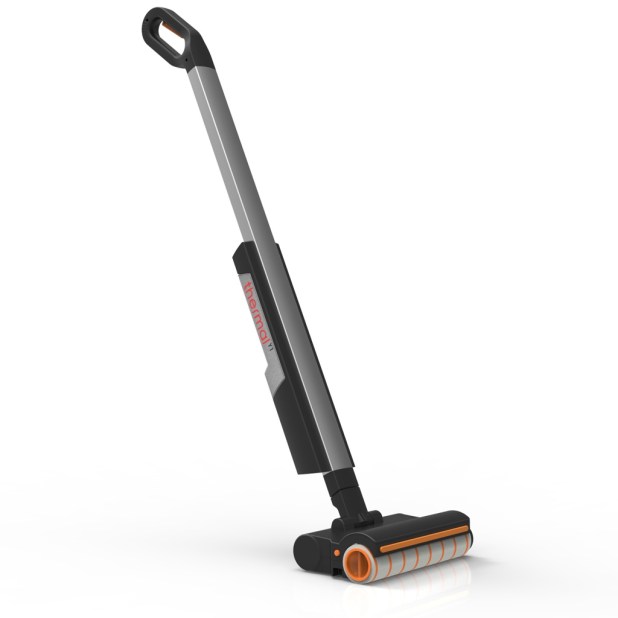
This model is the first heated roller mop that uses heat to deep clean floors. the mop features a self-cleaning brush system that lets users clean all types of floor with ease.
the exclusive patented roller heating system allows users to optimise the two fundamental factors of floor cleaning: humidity and temperature. the y1 is therefore perfect for cleaning critical surfaces such as marble or delicate surfaces like wood. it is one of the easiest and quickest ways to clean and sanitise floors around the home, which makes floors safer and more hygienic around children and pets.
euroflex claims to be the first in the world to create a floor cleaner that uses exothermic technology (which is an international patent). the thermal y1 transfers heat (of around 250°f/120°c) to the cleaning rolling pad, which creates enough energy to clean hard surfaces in a quick and efficient way. the model works with a precise amount of water to reduce waste and to create the ideal moisture for cleaning. 200mm of water can clean an area up to 90m2.
Miele arrived in Kraków! After an intense period of construction, furbishment, training and polishing, Miele Experience Center in Unity Center is officialy open.
LG Electronics Inc. (LG) announced its highest-ever second-quarter revenues, reflecting strong sales for LG home appliances in key regions and the profitable growth of LG’s vehicle components business as the global automotive industry rebounds.
LG reported revenues of KRW 19.5 trillion in the second quarter of 2022, 15 percent higher than the same quarter the previous year. Operating profit for the second quarter was KRW 792.2 billion, 12 percent lower than the same quarter last year, largely due to supply chain challenges and higher logistics costs.
Given the business impact of the evolving state of the pandemic and economic conditions, LG is leveraging its comprehensive business portfolio, expanding sales from premium to mass-tier products and growing business-to-business areas such as auto parts.
The LG Home Appliance & Air Solution Company reported revenues of KRW 8.07 trillion in the second-quarter, first time in LG’s history for a single business unit to exceed quarterly revenues of KRW 8 trillion. Operating profit was KRW 432.2 billion. Revenues increased 18 percent from the second quarter a year ago, mainly driven by stronger sales of premium appliances and new categories such as hygiene products using steam technology in the key regions of North America and Latin America. The business unit plans to continue its momentum by improving competitiveness of premium products and strengthening its mass-tier lineup.
The LG Home Entertainment Company recorded revenues to KRW 3.46 trillion in the second quarter with operating loss of KRW 18.9 billion reflecting increased marketing investments in response to intensified market conditions. LG’s Home Entertainment strategy will center on effectively managing marketing expenses and growing the premium TV segment, particularly around peak selling seasons including the FIFA World Cup and holiday.
The LG Vehicle component Solutions Company achieved second-quarter sales of KRW 2.03 trillion, a 19 percent increase from the same period of 2021, leading the business unit to be profitable for the first-time. The significantly higher sales were driven by LG proactively responding to higher demand from automakers with efficient supply chain management. With the cloud of uncertainty created by inflation and geopolitical risks, the company will continue to build strong relationships with global automakers along with strong cost structure management to further improve profitability.
The LG Business Solutions Company recorded solid second-quarter revenues of KRW 1.54 trillion with operating profit of KRW 14.3 billion. Revenues increased 19 percent from a year ago largely on the back of recovery of the business-to-business segment. The company plans to aggressively target the rebounding B2B segment by developing more customized solutions and expanding its product portfolio for stable growth.
Discontinued Operations: Second-quarter financial results from LG’s solar panel business, which closed in June as previously announced, are being treated as a loss from discontinued operations.
Cecotec will participate in the IFA fair in Berlin, the technological event par excellence in Europe, whose 2022 edition will be held from September 2 to 6 at the Messe fairgrounds in Berlin.
Located in hall 3.1 B, at stand 105, the brand will present the latest news and technological innovations from its wide range of household appliances and solutions for the home and people.
Cecotec is a Valencian family business specializing in the manufacture and sale of household appliances and applications for the home focused on improving people’s lives. The company was born in 2013, has a workforce of around 750 people and has closed the last few years with a turnover of more than 300 million euros per year. It is present throughout Spain and has a commercial presence in more than 50 countries, as well as subsidiaries and logistics in France, Italy and Germany. It has a wide range of vacuum cleaners, kitchen products, washing machines, dishwashers, refrigerators, personal care, rest, fitness, DIY, electric mobility, etc. equipped with the latest technologies available to everyone
Hitachi launches new products in Nepal Hitachi, an international electric home appliance brand, has launched four new products in Nepal.
Universal Electrocom Pvt Ltd, a branch of Ramesh Corp entity, is an authorised distributor for the brand’s home appliances in Nepal.
The products include four models of microwave oven, front-load fully automatic 12KG washing machine, French bottom refrigerator 638lt and cordless stick vacuum cleaner.
Elica’s first-half 2022 results are something to be proud of. Despite the challenging situation and the market uncertainties,
Elica posted outstanding 1H results with revenue at EUR 290.2 million, up 7.7% on 1H 2021. This growth was driven by sales of own brands and Motors Division, led by an even stronger Q2, setting new revenue and margin records.
Whirlpool UK Appliances Limited, the home of Hotpoint, has announced the appointment of Alistair Dobson as Supply Chain Director, UK and Ireland. Having worked for Whirlpool UK in various roles of increasing responsibility for over two decades, Alistair brings a wealth of knowledge and experience of the domestic appliance industry to his new positionAlistair’s new position as Supply Chain Director will involve leading the company’s supply chain operations, including overseeing its commitment to creating a circular economy
Italian company Glem Gas has a long know-how in cooking technologies. This expertise is transferred in any appliance of the brand. As regards ovens, Glem Gas equipped its models with several features, allowing to obtain a perfect cooking.
The cooling system perfectly maintains heat insulated inside the oven cavity. A forced air flow over its perimeter ensures that all components work in the right temperature range for the entire life of the product. It is also a further guarantee of duration and performance by Glem Gas.
Moreover, all Glem Gas ovens are equipped with a small chimney in the upper part of the internal cavity that allows the cooking steam to be expelled externally through the tangential fan.