
Over 50 product-specific tips gathering the intelligence of global leading #homeappliances manufacturing companies to encourage small, effective changes to the way we use #homeappliances on a daily basis https://www.applia-europe.eu/initiatives/kill-your-bill
Category Archives: Environmental
Beko expects 100% of energy resources to be renewable by 2030
The data shows, human activities and influence have generated an unprecedented climate and environmental crisis. Without going any further, each year around 2 billion tons of waste are generated in the world and, by 2050, the figure could grow to 3.4 billion tons.
In this context, Beko has integrated sustainability into all its axes, offering added value and providing solutions that are more respectful of the environment.
The recognition of the international group has been thanks to the saving of 2.17 million m3 of water with water efficiency projects and rainwater collection in factories, the use of more than 7,000 tons of recycled materials in its products and the initiative of 228 energy efficiency projects, between 2020 and 2021. In addition, through the use of recycled cardboard in their packaging, they have managed to save more than half a million trees in 2021.
The company’s commitment for 2030/2050 is to use 100% renewable energy resources, achieve 99% waste recycling in all global manufacturing operations and increase the use of recycled content up to 40% in its products. and reduce water and energy consumption per product by 45%. The goal for 2050 is to achieve net zero emissions throughout the value chain.
Innovative environmentally responsible technologies
Thanks to technology, Beko is constantly exploring new solutions that help consumers and, above all, respect the environment as an added value. Beko SaveWater dishwashers guarantee perfect cleaning results with 1/3 less water consumption. AutoDose® is another featured technology for dishwashers and washing machines, which dispenses the optimal amount of detergent, based on load and soil level. In washing machines, AquaTech® technology, thanks to the power of water, reduces washing time by half, which implies a consumption of up to 30% less energy than class A washing machines.
In relation to the recycling that has been generated since the project began in 2017, the company has managed to recycle more than 58 million plastic bottles with a reduction in CO2 emissions of almost 2,200 tons.
An example is the RecycledTub washer and dryer, made from plastic waste that has been transformed into an alternative raw material. For its part, the RecycledNet oven is made from waste extracted from fishing nets and industrial thread; while the RecycledDry dryer has been designed with an average of 15% recycled plastic. Finally, the BioCycle refrigerator is one of the products made with biocomposites to protect the plane
Arçelik: well-deserved recognition
Arçelik’s washing machine factory in Ulmi, Romania, ranked among the most advanced in the world in terms of environmental sustainability. Indeed, Arçelik, a global appliance manufacturer and subsidiary of Turkey’s largest industrial conglomerate, Koç Holding, has been awarded Sustainability Lighthouse status by the World Economic Forum (WEF) for its manufacturing plant . ‘Ulmi, Romania. A recognition that rewards effective measures in terms of energy performance applied on the site. This follows the already existing statusArçelik as a Global Lighthouse awarded by WEF to its Ulmi plant in 2019 and Eskişehir plant in 2021 for the successful adoption of Fourth Industrial Revolution (4IR) technologies to improve productivity and performances.

Sustainability Lighthouse
The World Economic Forum’s Global Lighthouse Network (GLN) seeks to promote 4IR technologies to transform production facilities, value chains and business models. In 2021, GLN introduced Sustainability Lighthouse as a new designation to recognize manufacturers who apply innovative 4IR transformations to boost productivity while preserving the environment.
Arçelik shows the way
Arçelik’s washing machine factory in Ulmi, Romania, leads the way in efficient and sustainable manufacturing and uses state-of-the-art technologies for improved energy and water efficiency. The Ulmi plant is now designated as one of the Global Lighthouse Network’s ten sustainability flagship sites. A new recognition that Hakan Bulgurlu, CEO of Arçelik, commented saying: “ We are proud to be recognized as a pioneer in sustainable development by the World Economic Forum. This is a reflection of our deep commitment to environmental protection throughout our organization. We have ambitious environmental goals and we believe that theWe aim to achieve net zero emissions for all of our operations by 2050 through green investments in renewable energy, as well as energy efficiency in products and production. Our plant in Ulmi acts as a Sensitivity: Public laboratory and serves as an example for the entire Arçelik ecosystem. We set out to build not only an efficient Industrial 4.0 site in terms of production, but also a unit that reflects our commitment to contributing to a better future. And this recognition is well deserved, thanks to investments in advanced technologies and green production applications. I am proud of all my colleagues who have worked hard and with dynamism to achieve this. »
As a world leader in sustainability, the Arçelik washing machine factory in Ulmi stands out for the following achievements :
- The factory is the first and only production unit in Romania to hold LEED Platinum certification.
- The factory uses 100% green electricity. It has renewable energy systems for heating and cooling, such as rooftop solar (PV) panels (930 kWp) and concentrated solar power (700 kWth) and plans to increase the yield of the panels 160% solar power by the first half of 2023.
- The factory’s “digital twin” model automatically adjusts lighting and optimizes cooling and heating systems. The building management system uses an algorithm that leverages approximately 15,000 real-time data points from more than 650 energy-measuring devices and sensors.
- The lighting system uses 62.9% less electricity than a non-automated system , and the need for natural gas boilers is reduced by 34.5% for the preparation of domestic hot water.
- Due to the high level of water stress around the plant, an advanced treatment plant was installed, treating 100% of domestic and industrial wastewater, and recycling and reusing 68% of its water intake.
- All these efforts have resulted in a 17% energy saving per product, a 25% reduction in water consumption per product and a 22% reduction in scope 1 and 2 GHG emissions per product in production in one year , in accordance with company objectives.
- Since its commissioning, the plant has avoided the emission of 684 tons of CO2.
- The factory uses 100% green electricity. It has renewable energy systems for heating and cooling, such as rooftop solar (PV) panels (930 kWp) and concentrated solar power (700 kWth) and plans to increase the yield of the panels 160% solar power by the first half of 2023.

Electrolux Students design for single, compact living.
the fifth year running, Electrolux has collaborated with students from the Umeå Institute of Design (UID) to develop product ideas for the home of the future.
With more people living alone today than at any point in recorded history,* the majority in small urban apartments, demand for goods such as small appliances, flatpack furniture and foldable items is rising. That’s why the students this year were challenged to develop progressive premium product ideas for single people living in small spaces. The 14 students from the Master’s program in Advanced Product Design created concepts for so-called singletons living a micro-home lifestyle in four major cities – Hong Kong, Munich, Mumbai and New York.
“These students challenge conventional assumptions,” says Thomas Johansson, Design Director at Electrolux. “They envision the future and create concepts that harness the essence of our brand in a captivating way. It’s also a fantastic opportunity for Electrolux to reach the best emerging talent.”
The product ideas:HumiTex: a slim dehumidifier that hangs in a closet to ensure optimal conditions for clothing, with premium materials and connectivity to signal when it needs to be emptied. Designed for space-conscious singletons in humid Hong Kong. By Ellis Walker, Jinying Cheng, Mattias Nordin and Thilo Fiebig.
Adapted: a premium hub that uses the kitchen’s vertical space to organize small kitchen appliances either as a piece of furniture or wall-mounted. The modules are connected in an app. Designed for busy singletons in Munich looking to reduce visual and mental clutter. By Joel Sjödin, Corinna Diestel, and Silvester Kössler
Jodana: an ecosystem of cooktops that adapt to the user’s circumstances. Can be stored vertically and combined with others in a modular system when cooking for more than one. Connectivity enables couples to cook together while apart. Designed for the singleton in bustling Mumbai. By Luisa Ebeling, Indalecio Gaytan, Niklas Muhs, and Yash Saboo.
Sensea: offers a ritual-like and sensory drinking experience. AI-based ,the device becomes a nudging companion, using physical data readout to gauge needs, habits and moods to prepare suitable morning, midday and evening herbal blends. Designed for singletons in New York City who seek calm, comfort, and wellbeing. By Gerardo Soler, Nina Långström, and Niklas Andreasen.
ThyssenKrupp will supply green steel for Miele
ThyssenKruppSteel Europe and the German producer of household appliances Miele Group have signed a memorandum of understanding on the supply of green steel from the iron direct reduction plant in Duisburg. The enterprise to be launched in 2026, reports the Thyssenkrupp website.
ThyssenKrupp will supply its patented Bluemint steel for the home appliance producer. In the following years, the volume of purchases will gradually increase. By 2030, Miele and Thyssenkrupp plan to switch 100% to Bluemint.
By 2030, the German producer of household appliances aims to reduce carbon emissions from its devices at the stage of use (Scope 3) by another 15% compared to 2019. Miele has already signed similar agreements for the supply of low-carbon steel with Germany’s Salzgitter AG (in 2021) and Sweden’s H2 Green Steel (in May 2022).
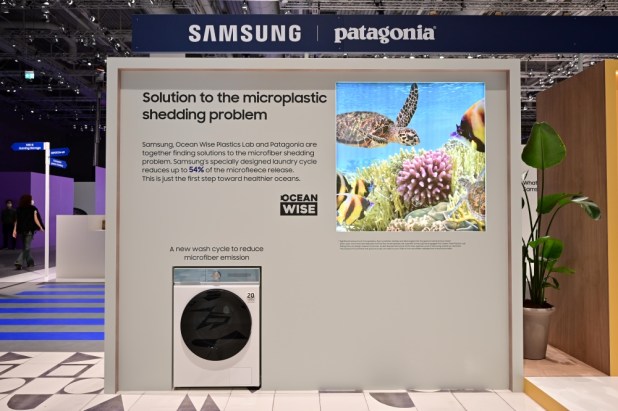
Samsung washing mashine reduces microplastic to 54%
Samsung and Patagonia met to begin discussions on developing a solution to reduce microplastics that are shed from clothes when washed. Microplastics have a major impact on the environment, threatening not only the marine ecosystem but the health of the humans as well.
Since Samsung’s Digital Appliances division was already conducting its own research to reduce microplastics, we were able to form a mutual understanding and agreed to work together quickly – said Chiwoong Yoon, who worked on ESG Strategy and acted as manager throughout the collaborative project -. The support from Patagonia heavily motivated us and gave us the confidence to accelerate the development of a practical solution and commercialize it.»
In order to accurately and objectively verify that microplastics were being reduced, the companies needed help from a research institute in the field. Patagonia introduced the nonprofit marine conservation research organization Ocean Wise Plastics Lab to Samsung.
A year after the development began, Samsung finally succeeded in developing a laundry cycle that is specifically designed to reduce microplastic shedding by up to 54 percent. This technology both effectively washes clothes and reduces the release of microplastics, all while maintaining the quality of clothes

Recycle Your Electricals UK
More than 11 million toasters are thrown away in the UK every year, according to research commissioned by Recycle Your Electricals.
Consumers across the UK eat 40 million slices of toast a day and the average person eats 291 slices a year, but 11.4 million toasters are chucked away every year – and, of those people who dispose of them, almost half (46%) don’t know how or where to recycle them, or weren’t aware they could be recycled at all. Everything with a plug, battery or cable must be recycled – including toasters.
Ahead of International E-Waste Day (October 14), Material Focus, which is the organisation behind Recycle Your Electricals, has launched a new campaign called ‘Love Your Old Toaster. The scheme encourages people to recycle their electricals and raise awareness of the 5,000 recycling drop off points across the UK.
To promote the initiative, a recycling bank disguised as a giant toaster popped up at the Westfield Stratford City shopping centre in east London recently (September 30 to October 2). The toaster was covered in colourful illustrations of small household electricals, designed by muralist Eloisa Henderson-Figueroa.
TV presenter and consumer advocate, Michelle Ackerley, was the first person to pop her old electricals in for recycling. Actress Joanna Page also joined the campaign, to spread the word through radio interviews and on her Instagram.
In three days alone, more than 360 small household electricals for reuse and recycling were collected – from old and unwanted kettles, phones, cables, calculators, printers, electric toothbrushes and laptops.
The toaster was also on show at Westfield London last weekend (Shepherd’s Bush, October 7-9)
Miele washing machines at the top of StiWa
The current edition of Stiftung Warentest (StiWa) ‘test’ magazine (10/2022), the WCI 870 WPS and the WWE 360 WPS GreenPerformance washing machines by Miele achieved the top mark of Good (1.6) and putting in a compelling performance over a period of 10 years with their low running costs. In total, StiWa evaluated 14 frontloaders with load capacities between 8 and 9 kg.
«We are pleased about the most recent test win – says Michael Endt, category marketing Germany -and, in particular, at the top marks awarded for environmental properties. This proves that our efforts in developing sustainable and low-consumption products have paid off».
Alongside the criteria included in the evaluation, both models in the test convinced with their innovative PowerWash process with which even very small loads can be washed clean (A-rated wash efficiency) without compromising on energy efficiency. In combination with QuickPowerWash, this is even done in less than one hour. The test results for Miele’s WCI 870 WPS also apply to the technically identical models WWI 860 WPS and WEI 875 WPS
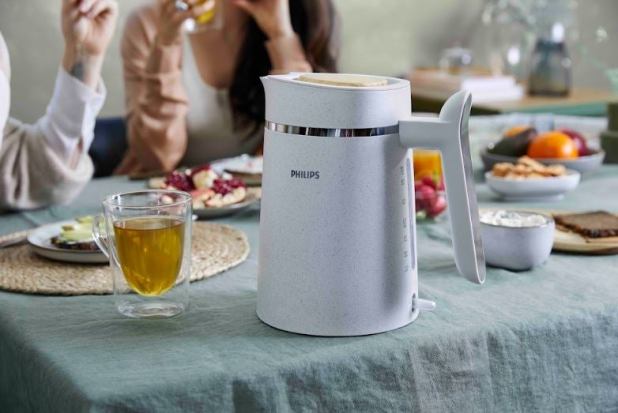
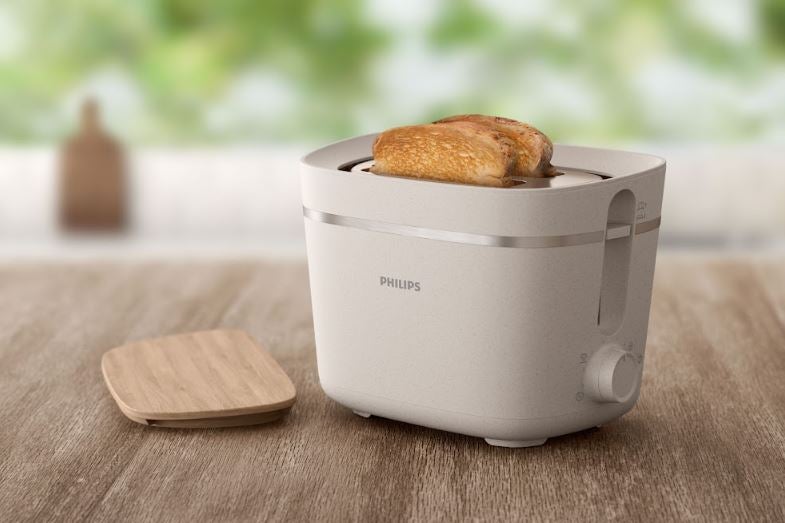
Philips sustainable breakfast set
Philips Domestic Appliances have launched the Eco Collection in Australia after our successful launch in korea. This is the world’s first sustainable breakfast set made with bio-based plastics from plant oil waste. The breakfast set is designed to offer consumers a green alternative and supports our ambition to grow responsibly and sustainably. The Eco Collection includes a modern designed kettle and toaster that comes with different energy-saving functionalities.
We have partnered with EcoMatcher to plant trees in the Philippines with every purchase from the Eco Collection. This will increase the size of our Buhay Forest (Buhay means Life in Tagalog).
At EcoMatcher, there is an emphasis on the social and economic impact that tree planting can have on societies, partnering with foundations that focus on long-term and sustainable empowerment and development of local communities.
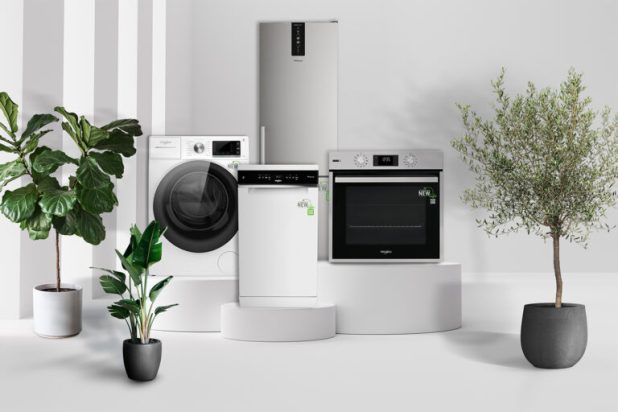
Whirlpool opens a reconditioning center for its appliances in Italy
Whirlpool has opened a center for the reconditioning of its appliances in Carinaro (Italy), within the Whirlpool EMEA spare parts and accessories logistics hub. After a careful process of repair and quality control, the products are put back on the market for sale. “Sustainability is at the heart of our culture and, at Whirlpool, we are committed every day to lead the sector towards increasingly sustainable practices. This year we have set ourselves even more challenging goals, with the commitment to spread a culture that supports sustainability, offering an innovative service for green purposes – says Paolo Lioy, CEO of Whirlpool Italy and Iberia -. It is for this reason that we have decided to open a reconditioning center for our appliances in Carinaro. The reconditioned products are subjected to a series of tests to guarantee 100% product quality”.

