Dyson investment plan

Dyson reveals the next phase of its five-year, £2.75bn investment plan to develop machines that use software and connectivity to improve themselves. This has been explained by Jake Dyson, the company’s chief engineer, who shows in a YouTube video an update of Dyson’s five-year investment plan that includes products that improve themselves thanks to software and “data science”, allowing solve problems in the machines before the owner is aware of them.

In line with Dyson’s announcement of investment in robotics at the beginning of the year, this new commitment to hire software developers and data scientists reinforces the company’s commitment to its software & connectivity team, which has multiplied by 10 in a decade. .

Led by Jake Dyson, these professionals are working on a new generation of smart products 10-15 years from now.

Hardware, software and connectivity play a key role as Dyson increasingly embeds intelligence into its machines, the MyDyson app and user experience, looking to create self-improving products for the long term. https://youtu.be/Uni7TfoC5e0

Carla De Luca, Sustainable Procurement, on how we’re helping our suppliers become more sustainable Electrolux

Carla De Luca, Sustainable Procurement, on how we’re helping our suppliers become more sustainable
December 1, 2022
As a sustainability leader, Electrolux Group aims to reach net-zero emissions across the value chain by 2050. To make this happen, it is vital our suppliers are on board. Carla De Luca, Sustainable Procurement Senior Program Manager at Electrolux, explains how we’re working with them to improve their environmental performance.

Tell us a bit about your role.

I’m a sustainability leader, focused on responsible and environmentally-conscious business practices and decision making. My role was created four years ago to create a center of excellence within purchasing at Electrolux and I work with our top 300 suppliers to improve their environmental performance.

How does your team work with sustainability?

We have had a responsible sourcing program for over 15 years at Electrolux with some awesome activities. But what we’ve done over the last three years is to strengthen the environmental assessment of our suppliers. This has created a more holistic approach to supplier relationship management and sustainable procurement that ensures we take better informed decisions to make our sustainability goals a reality. 

Why is sustainability so important in purchasing? 

With supply chain emissions being on average 12 times higher than operational emissions, we recognize that working with suppliers is vital to reducing our overall carbon footprint to reach our 2050 goal.  

We have to work closely with both our purchasing teams and our suppliers in order to achieve our sustainability objectives. In fact, I see our supply chain as an extension of our own business and we are ultimately asking our suppliers to work with their business in the same way as we run our own operations. We have committed suppliers, but they sometimes need our help and support to improve their sustainability performance. 

How do you promote sustainability among suppliers? 

Our initial priority was to get our suppliers to start measuring their carbon footprint and to set their emissions reduction targets. This was a huge task but essential in enabling them to reduce their emissions. 

We also worked to change the misconception that sustainability increases cost – to introduce a “value-based approach”. In our supplier training sessions, we raise awareness that sustainability can leverage cost reductions, for example through energy and resource efficiency. Our value-based approach to purchasing takes a much broader perspective on value than just cost, which is good for business and a more sustainable world. 

How have our supply chain partners responded? 

I’m really proud of our suppliers who I have spent a lot of time engaging with to make sure they are on board with our sustainability approach. We actually receive messages of thanks from suppliers, and they really see Electrolux as a change agent that contributes toward their shift to becoming more sustainable. 

What are the success factors that make Electrolux a world leader in sustainable procurement?

Besides our holistic and value-based approach to sustainability, I would say it’s our dedication to supplier engagement and collaboration.

In 2022, we are the only CDP member company in the world with a 100% supplier response rate (among 250+ customers with over 150 suppliers engaged). As companies have an average response rate of 65-70%, we have a clear advantage when we engage with our supply chain.

We also collaborate and share best practice. For example, we are planning to roll out our Green Spirit program, which is our internal initiative to reduce environmental impact in our own operations, to some of our suppliers. At Electrolux, we have so much expertise and experience and we want to help bring our suppliers along on our sustainability journey

Consortium on Microplastics Release during Household Washing Processes

Microplastics have become a topic of considerable concern across many industries and sectors. With efforts scaling up at the international level to tackle the problem, the implementation of different regulations across Europe risks hampering the free movement of goods and jeopardising the Single Market. All of which calls for the adoption of a lifecycle-based approach to identify the most cost-effective solution to a global issue.

Concern about the potential impact of microplastics has gathered momentum during the past few years. The number of scientific investigations has increased, along with public interest and pressure on stakeholders. “Understanding the magnitude of the issue is key to ensure an effective solution,” explained Giulia Zilla, APPLiA’s Energy & Environment Policy Manager when interviewed by Radio24 on the role and contribution of the home appliance industry to this global problem. Whilst lengthy discussions are taking place on trying to identify solutions, it is essential to acknowledge the complexity of the issue. In this sense, the deployment of washing machine filters into European homes has been widely identified as a possible mitigation strategy to microfiber emissions. “While filters can contribute to halting the journey of microplastics before they reach the environment, a more comprehensive and long-term solution, reconsidering the very use of plastics, is needed,commented Zilla. Mandating the equipping of all household washing machines with a filter does not seem to represent a conclusive solution to tackle the microplastics issue, as fibres will always find their way into the environment, if present in textile products themselves.

Before setting any legislative requirements on washing machines, a number of technical considerations must be addressed. Among others, the filter can cause clogging of the machine but what is more, the burden of maintenance to keep the machine running would fall on consumers, from cleaning to replacement and disposal, in order to prevent the rinsing off of fibres in the sink. Even in the case of integrated filters, it would be very problematic to deal with the maintenance of the filter itself while ensuring the best performance of the machine.

As a key actor in the discussion, APPLiA is the coordinator of the Consortium on Microplastics Release during Household Washing Processes, bringing together over 20 signatory parties ranging from washing machines, detergent and filter manufacturers, to test institutes and facilities towards a standardised testing methodology assessing microplastics release during household washing cycle. These preliminary but rather concrete steps make clear the industry’s commitment to take part in the discussion and ultimately tackle microplastic pollution in Europe.

Giulia Zilla, APPLiA’s Energy & Environment Policy Manager, was invited to present the contribution of the home appliance sector in tackling the global microplastics challenge in an insightful discussion on Radio24’s Si può fare led by Laura Bettini.

Do you speak Italian? The recording is available at this link.https://www.radio24.ilsole24ore.com/programmi/paese-migliore?refresh_ce=1

https://www.applia-europe.eu/initiatives/microplastics/423-consortium-on-microplastics-release-during-household-washing-processes

Arçelik: well-deserved recognition for the Turkish group

Arçelik’s washing machine factory in Ulmi, Romania, ranked among the most advanced in the world in terms of environmental sustainability. Indeed, Arçelik, a global appliance manufacturer and subsidiary of Turkey’s largest industrial conglomerate, Koç Holding, has been awarded Sustainability Lighthouse status by the World Economic Forum (WEF) for its manufacturing plant . ‘Ulmi, Romania. A recognition that rewards effective measures in terms of energy performance applied on the site. This follows the already existing statusArçelik as a Global Lighthouse awarded by WEF to its Ulmi plant in 2019 and Eskişehir plant in 2021 for the successful adoption of Fourth Industrial Revolution (4IR) technologies to improve productivity and performances.

New opportunities for small household appliances as adoption of IOT grows

What is the Internet of Things?
The Internet of Things (or IoT for short) is a network of devices all connected wirelessly by the internet that can collect, share and act upon data without the involvement of human beings to make our lives better and improve the world around us.

The rapid adoption of internet of things (IOT) technology is driving growth within the small household appliances sector, according to a new report from ResearchAndMarkets.com.
The report states that the small household market in the US was valued at approximately €24.6 billion ($24.64 billion) in 2021. That figure is estimated to reach around €33 billion ($33.05 billion) by 2027.

The adoption of IOT technology, along with rising consumer awareness about said products, is predicted to drive demand for the small household appliance market in the US. ResearchAndMarkets.com forecasts that the US small household appliances market will have a compound annual growth rate of 5.01% from 2022 to 2027.

The report explains that the US small household appliances market is made up of ten product types: small kitchen appliances, vacuum cleaners, grills and roasters, coffee machines, microwave ovens, irons, hair clippers, toasters, hair dryers and electric kettles.

There are a number of market drivers leading to a rising demand in small household appliances. One of the drivers is the desire from consumers to have a residence with advanced facilities, such as a dishwasher or coffee machine. As well as this, there is a perceivable increase in single-person households, urban populations and smart homes too. Also driving growth within this market segment is the rising millennial population.

Among the trends in the small household appliances market is cloud technology: “the evolvement and rise in cloud technology have supported and enriched the smart home technology,” the report notes. Other significant trends include the widespread adoption of internet of things (IOT), the rising prevalence of social media, along with innovations within artificial intelligence technology.

Beko partners with Youreko to help consumer choices with Energy Savings Tool

Beko, one of the leading home appliances brands in Europe*, is delighted to announce its integration with Youreko, an energy efficiency tool that helps consumers choose sustainably and understand the financial running costs when choosing new appliancesThe integration of the Youreko tool on Beko’s website, displays information to consumers on how energy efficient Beko’s appliances are when compared with traditional models and how much money the consumers could save in the long run with manufacturer’s appliances. The tool supplements the listings of Beko’s washing machines, washer dryers, tumble dryers, dishwashers, refrigerators and freezers.Currently operational on the Beko UK website, the Youreko partnership will be further implemented on Beko’s websites in Romania and Poland, helping consumers across Europe to calculate their cost saving potential.

Resource efficiency is a key priority for Beko, particularly in the current economical and climate-conscious environment. This integration with Youreko is an extension of the brand’s ongoing commitment to providing products for their consumers to encourage sustainable living.

The tool helps consumers on Beko’s websites by providing more information on the energy consumption and financial cost of running a particular appliance. Utilising an easy-to-read gold, silver or bronze tiered rating system, the tool signals where money and energy can be conserved most, helping consumers make more informed buying decisions.

By integrating Youreko into its products, Beko is also able to make a smart-recommendation to the consumers based on a product’s energy efficiency rating. This calculation is based upon a comparison against a more traditional, like-for-like model of the applianc

A-Class appliances: what it means.

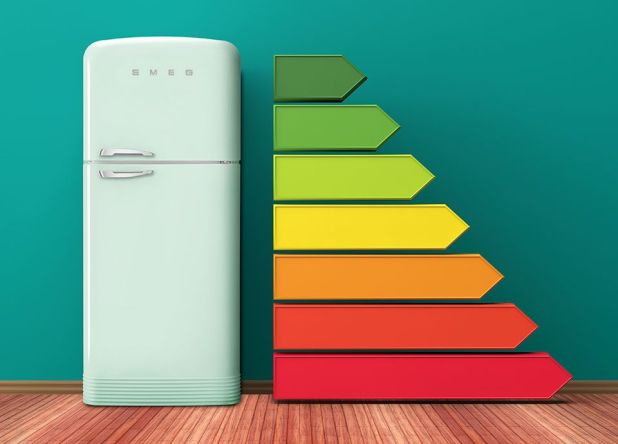
Starting from March 2021, the new energy label has come into force, and it is mandatory on a wide range of appliances. The EU has established a standard applicable to all appliances to facilitate their comparison.
Thanks to the new classification based on a colour scale, you can identify those with the higher consumption levels (Class G) in red, and those with the lower consumption levels in dark green. By eliminating all “+”, the label has become more understandable, and the appliance classification has become stricter.

How much class A appliances consume and why they are more convenient
In order to understand the convenience of class A appliances, here is the average consumption of the most energy-intensive appliances:

A class A refrigerator with freezer consumes approximately 100 kWh per year, while a class G model consumes almost three times as much.
A class A washer that does 100 full-load washing cycles with the Eco 40-60° program consumes approximately 50 kWh per year, half of a class G model.
The air conditioning unit’s consumption is calculated also based on the SEER, which indicates the seasonal energy efficiency in cooling mode: the higher it is, the higher the appliance’s energy savings. On average, in class A, the SEER is around 8, and the annual energy consumption for cooling is around 100 kWh; while in lower classes, with a lower SEER, consumption can exceed 300 kWh per year.

Beko expects 100% of energy resources to be renewable by 2030

The data shows, human activities and influence have generated an unprecedented climate and environmental crisis. Without going any further, each year around 2 billion tons of waste are generated in the world and, by 2050, the figure could grow to 3.4 billion tons.

In this context, Beko has integrated sustainability into all its axes, offering added value and providing solutions that are more respectful of the environment.

The recognition of the international group has been thanks to the saving of 2.17 million m3 of water with water efficiency projects and rainwater collection in factories, the use of more than 7,000 tons of recycled materials in its products and the initiative of 228 energy efficiency projects, between 2020 and 2021. In addition, through the use of recycled cardboard in their packaging, they have managed to save more than half a million trees in 2021.

The company’s commitment for 2030/2050 is to use 100% renewable energy resources, achieve 99% waste recycling in all global manufacturing operations and increase the use of recycled content up to 40% in its products. and reduce water and energy consumption per product by 45%. The goal for 2050 is to achieve net zero emissions throughout the value chain.

Innovative environmentally responsible technologies

Thanks to technology, Beko is constantly exploring new solutions that help consumers and, above all, respect the environment as an added value. Beko SaveWater dishwashers guarantee perfect cleaning results with 1/3 less water consumption. AutoDose® is another featured technology for dishwashers and washing machines, which dispenses the optimal amount of detergent, based on load and soil level. In washing machines, AquaTech® technology, thanks to the power of water, reduces washing time by half, which implies a consumption of up to 30% less energy than class A washing machines.

In relation to the recycling that has been generated since the project began in 2017, the company has managed to recycle more than 58 million plastic bottles with a reduction in CO2 emissions of almost 2,200 tons.

An example is the RecycledTub washer and dryer, made from plastic waste that has been transformed into an alternative raw material. For its part, the RecycledNet oven is made from waste extracted from fishing nets and industrial thread; while the RecycledDry dryer has been designed with an average of 15% recycled plastic. Finally, the BioCycle refrigerator is one of the products made with biocomposites to protect the plane