Ultimate Products acquire the Salter brand

Ultimate Products are delighted to announce that we have agreed terms to acquire the Salter brand. Dating back to 1760, Salter is the UK’s oldest housewares brand and is the UK market leader in kitchen and bathroom scales. Since 2011, we have been selling Salter branded kitchen electrical cookware under a very successful license, and are very pleased to bring scales, kitchen electrical and cookware together under one roof as a combined offer for our customers.

Commenting on the acquisition, CEO @Simon Showman said “it will enhance and diversify our existing exceptionally strong portfolio of value-focussed consumer goods brands. We already have a close relationship with Salter and its customers as a result of our long-standing licensing agreement and we look forward to growing the brand further both in the UK and internationally in the coming years.”

Nidec Global Appliance, a division of Japanese manufacturer Nidec, announced that it will invest US$70 million in new production lines for its Embraco brand compressors and condensing units, including propane (R290) and isobutane (R600a) models.

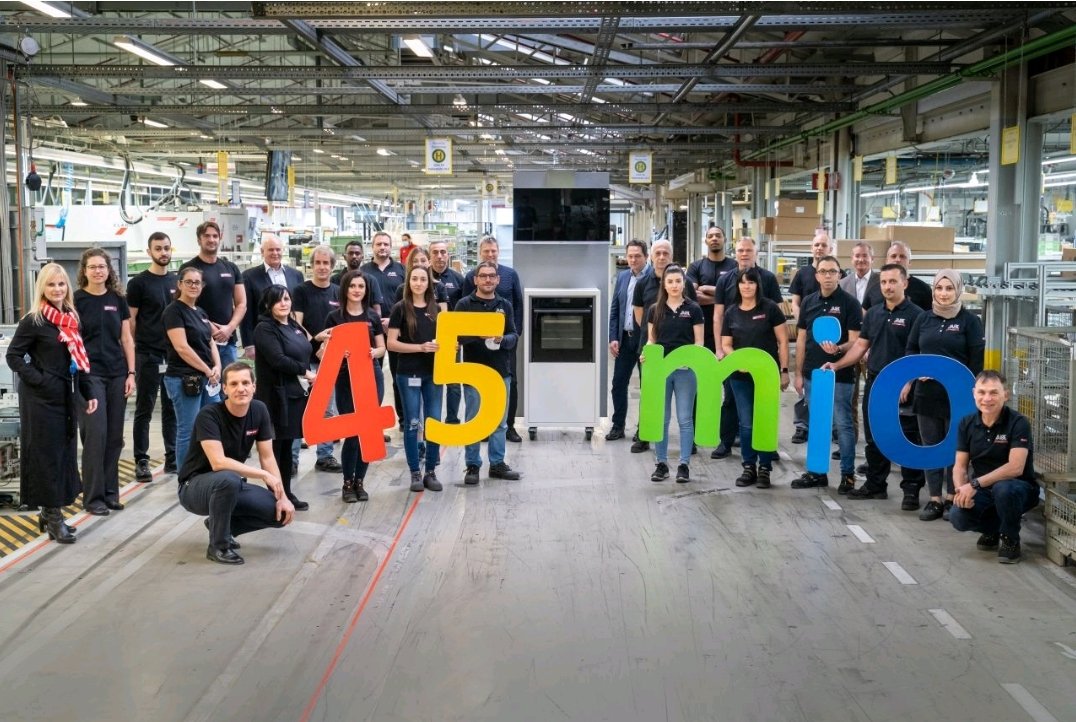
Currently, Embraco produces 45 million compressors and condensing units per year. The new production lines – at plants in Brazil, Mexico, China and Austria – will increase annual production capacity by more than 10 million units.

Nidec has three business units: one that provides solutions for commercial refrigeration equipment; another that makes compressors and motors for residential appliances; and a third that produces components for HVAC systems.

A number of factors, including effects of the COVID-19 pandemic, motivated the investment decision. “As people all around the world are spending more time at home, it has become increasingly important to re-evaluate the level of quality and energy efficiency of residential appliances,” explained Valter Taranzano, CEO of Nidec Global Appliance.

“In parallel, more people at home means more consumption of fresh food, increasing the demand for refrigeration in the food retail sector, such as supermarkets and convenience stores,” he said, adding that cooling is also a key factor in the health and scientific industries, two sectors that experienced an increase in demand for refrigeration due to COVID-19.

Taranzano noted that the investment package also puts Nidec “ahead of the game to support the transition to natural refrigerants and to variable speed (more energy efficient) compressors, which are two movements that are ongoing in different stages in many parts of the world.” Additional production capacity is also required “to support our future growth plans,” he said.

Investments in Brazil and Mexico

Out of the US$70 million, an investment of US$21 million in a plant in Joinville, Brazil, will add a third production line of EM compressors and deliver additional 2.5 million units per year in response to high demand in Brazil and Latin America. This is on top of a US$4 million investment already made to increase productivity, Nidec said.

The EM compressor – one of Embraco’s “best sellers, the company said – is a fixed-speed unit running on R600a and R290, and suited for a variety of applications, such as home refrigerators, supermarket’s refrigeration equipment, professional kitchens and merchandisers. The new production line will deliver the latest EM models, EM2 and EM3.

At a plant in Itaiópolis, Brazil, Nidec is investing around US$2 million to increase production capacity for condensing units by 25%.

In Apodaca, Mexico, the production facility is receiving US$35 million to build a new production line for ES compressors, increasing production capacity by 60%. The plant will supply North America, supporting the transition to hydrocarbon units with greater cooling capacity in the region.

Investments in Austria and China

In Austria and China, Nidec Global Appliance is investing in greater production of variable speed compressors, which “are a more environmentally responsible option that provides significant energy savings compared to traditional on-off compressors,” the company said, adding that the units have “the option of running on natural refrigerants.

In a plant in Fürstenfeld, Austria, Nidec is investing US$5 million to start production of two variable speed models, FMX and VES, for the European market.

Nidec Global Appliance, a division of Japanese manufacturer Nidec,  announced that it will invest US$70 million in new production lines for its Embraco brand compressors and condensing units, including propane (R290) and isobutane (R600a) models.

Currently, Embraco produces 45 million compressors and condensing units per year. The new production lines – at plants in Brazil, Mexico, China and Austria –  will increase annual production capacity by more than 10 million units.

Nidec has three business units: one that provides solutions for commercial refrigeration equipment; another that makes compressors and motors for residential appliances; and a third that produces components for HVAC systems.

A number of factors, including effects of the COVID-19 pandemic, motivated the investment decision. “As people all around the world are spending more time at home, it has become increasingly important to re-evaluate the level of quality and energy efficiency of residential appliances,” explained Valter Taranzano, CEO of Nidec Global Appliance.

“In parallel, more people at home means more consumption of fresh food, increasing the demand for refrigeration in the food retail sector, such as supermarkets and convenience stores,” he said, adding that cooling is also a key factor in the health and scientific industries, two sectors that experienced an increase in demand for refrigeration due to COVID-19.

Taranzano noted that the investment package also puts Nidec “ahead of the game to support the transition to natural refrigerants and to variable speed (more energy efficient) compressors, which are two movements that are ongoing in different stages in many parts of the world.” Additional production capacity is also required “to support our future growth plans,” he said.

Investments in Brazil and Mexico

Out of the US$70 million, an investment of US$21 million in a plant in Joinville, Brazil, will add a third production line of EM compressors and deliver additional 2.5 million units per year in response to high demand in Brazil and Latin America. This is on top of a US$4 million investment already made to increase productivity, Nidec said. 

The EM compressor – one of Embraco’s “best sellers, the company said – is a fixed-speed unit running on R600a and R290, and suited for a variety of applications, such as home refrigerators, supermarket’s refrigeration equipment, professional kitchens and merchandisers. The new production line will deliver the latest EM models, EM2 and EM3.

At a plant in Itaiópolis, Brazil, Nidec is investing around US$2 million to increase production capacity for condensing units by 25%.

In Apodaca, Mexico, the production facility is receiving US$35 million to build a new production line for ES compressors, increasing production capacity by 60%. The plant will supply North America, supporting the transition to hydrocarbon units with greater cooling capacity in the region.

Investments in Austria and China

In Austria and China, Nidec Global Appliance is investing in greater production of variable speed compressors, which “are a more environmentally responsible option that provides significant energy savings compared to traditional on-off compressors,” the company said, adding that the units have “the option of running on natural refrigerants.

In a plant in Fürstenfeld, Austria, Nidec is investing US$5 million to start production of two variable speed models, FMX and VES, for the European market.  

Nidec Global Appliance, a division of Japanese manufacturer Nidec,  announced that it will invest US$70 million in new production lines for its Embraco brand compressors and condensing units, including propane (R290) and isobutane (R600a) models.

Currently, Embraco produces 45 million compressors and condensing units per year. The new production lines – at plants in Brazil, Mexico, China and Austria –  will increase annual production capacity by more than 10 million units.

Nidec has three business units: one that provides solutions for commercial refrigeration equipment; another that makes compressors and motors for residential appliances; and a third that produces components for HVAC systems.

A number of factors, including effects of the COVID-19 pandemic, motivated the investment decision. “As people all around the world are spending more time at home, it has become increasingly important to re-evaluate the level of quality and energy efficiency of residential appliances,” explained Valter Taranzano, CEO of Nidec Global Appliance.

“In parallel, more people at home means more consumption of fresh food, increasing the demand for refrigeration in the food retail sector, such as supermarkets and convenience stores,” he said, adding that cooling is also a key factor in the health and scientific industries, two sectors that experienced an increase in demand for refrigeration due to COVID-19.

Taranzano noted that the investment package also puts Nidec “ahead of the game to support the transition to natural refrigerants and to variable speed (more energy efficient) compressors, which are two movements that are ongoing in different stages in many parts of the world.” Additional production capacity is also required “to support our future growth plans,” he said.

Investments in Brazil and Mexico

Out of the US$70 million, an investment of US$21 million in a plant in Joinville, Brazil, will add a third production line of EM compressors and deliver additional 2.5 million units per year in response to high demand in Brazil and Latin America. This is on top of a US$4 million investment already made to increase productivity, Nidec said. 

The EM compressor – one of Embraco’s “best sellers, the company said – is a fixed-speed unit running on R600a and R290, and suited for a variety of applications, such as home refrigerators, supermarket’s refrigeration equipment, professional kitchens and merchandisers. The new production line will deliver the latest EM models, EM2 and EM3.

At a plant in Itaiópolis, Brazil, Nidec is investing around US$2 million to increase production capacity for condensing units by 25%.

In Apodaca, Mexico, the production facility is receiving US$35 million to build a new production line for ES compressors, increasing production capacity by 60%. The plant will supply North America, supporting the transition to hydrocarbon units with greater cooling capacity in the region.

Investments in Austria and China

In Austria and China, Nidec Global Appliance is investing in greater production of variable speed compressors, which “are a more environmentally responsible option that provides significant energy savings compared to traditional on-off compressors,” the company said, adding that the units have “the option of running on natural refrigerants.

In a plant in Fürstenfeld, Austria, Nidec is investing US$5 million to start production of two variable speed models, FMX and VES, for the European market.  

Fisher & Paykel New 🇬🇧 HQ

Fisher & Paykel new UK HQ is all but complete. It includes solar power, adaptive LED lighting, electric vehicle charging, over 30kg of wild flower seed to accompany the adjacent lake and native tree planting. Needless to say we have foc

They have focused on operational efficiency as well as

outstanding training facilities and the safest, brightest warehouse facilities.

Marking a new decade for Fisher & Paykel in the U.K. and Europe a brand to watch

https://www.fisherpaykel.com/uk/

Two new built-under wine cabinets from Siemens

Premium design built-under wine cabinet for perfect wine storage
Electronic temperature control: set the target temperature clearly and easily.
Oak shelves: unique and premium presentation of your wines.
glass door design in black.
All eyes on freshness: the premium LED with its side and top-lights illuminate every corner of your fridge

The iQ500 KU20WVHF0G is 30cm wide and can store up to 21 bottles. Designed as a single-zone wine cabinet, it can be set to a single temperature (between 5 and 20°C), ideal for those who enjoy a specific type of wine. Siemens recommends between 8 and 12°C for ready-to-drink white wine, between 12 and 19°C for red and around 5 to 8°C for sparkling. The iQ500 KU21WAHG0G is 60cm wide and stores up to 44 bottles. It is a dual-zone cabinet, with two separate spaces that can be set to different temperatures according to whether red or white wine is being stored.

The iQ500 KU21WAHG0G is 60cm wide and stores up to 44 bottles. It is a dual-zone cabinet, with two separate spaces that can be set to different temperatures according to whether red or white wine is being store

Bosch new dishwasher range

Bosch presented its new collection of dishwashers, which includes built-in and freestanding models. The numerous washing programs, designed for every need, together with the EcoSilence Drive brushless motor and new functions, guarantee an efficient use of water and energy. In addition, the models have the PerfectDry system with Zeolite, a mineral that absorbs the moisture to transform it into heat and lasts for the entire life of the product, regenerating itself during each cycle. This technology is completed with the 3D air flow, able to evenly distribute the heat generated by the Zeolite inside the dishwasher. Other pluses of the new dishwashers are: the Extra Clean Zone for intensive washing and the third Extra Space basket. Finally, the dishwashers can be connected via Wi-Fi to the Home Connect App to easily control and manage the functions directly from a smartphone, tablet or smartwatch and have some additional functions, available only via the app. Among the functions that can be managed remotely, there are: Favorite, Silence on Demand (to reduce the noise level), Easy Start (which guides user in choosing the most suitable washing program for the type of dishes loaded) etc. Thanks to the connection to the most popular voice assistants, it is possible to manage the dishwasher with voice control.

Whirlpool Corporation will invest $15 million in factory

Whirlpool Corporation will invest $15 million into its factory in Tulsa, OK as part of the company’s ongoing efforts to further strengthen its U.S. manufacturing capabilities and bring more innovation, top ranking consumer products and high-quality jobs to the region. In conjunction with its investment, Whirlpool will receive an additional $1 million from the state of Oklahoma through its Business Expansion Investment Program (BEIP). The plant produces freestanding and slide-in ranges under the Whirlpool, Amana, Maytag, KitchenAid and JennAir brands.

Whirlpool expects to create approximately 150 new jobs, building on the company’s Tulsa expansion project announced in 2018. With the additional investment, the company has committed to increase its factory headcount to a total of over 2,000 employees in Tulsa. In March 2020, Whirlpool opened an 800,000-square-foot Factory Distribution Center which doubled the size of its footprint in Tulsa.

Glen Dimplex reports £36 million loss

Global domestic appliance group Glen Dimplex has posted a £36 million loss in its first financial reporting since the onset of the Covid-19 pandemic.

The Dublin head-quartered outfit, which was set up in Newry by Martin Naughton in 1973, took an 11 per cent hit to its turnover, with six months of lockdown eating into its revenues by £82m, reducing it to just over £659m in the year ending September 30 2020.

Glen Dimplex is the world’s largest electric heating maker. But its vast appliance business ranges from Morphy Richards and radio maker Roberts to Walker televisions and Belling cookers.

Most of the group’s sales, just over half-a-billion pounds in the last reporting period, were derived from within the EU.

The latest grouped accounts for its Newry domiciled business Glen Electric Ltd, states that the impact of Covid-19 can be seen across all entities within its group.

A number of its sites had to close for a period due to government restrictions, with the group revealing it had received £4.8m in Covid-19 wage support in the six months of the pandemic period included in the accounts.

Nevertheless, cost cutting measures saw the group’s workforce cut by almost 300 to 3,799.

Glen Electric said revenue and profitability had recovered “markedly” in the 202/21 financial year with demand for its products strengthening.

Most of the losses stated in the report relate to the cost of restructuring and re-investment in the business as part of what the directors described as the group’s transformation to focus on smart technologies and sustainably driven energy solutions.

The group spent £17.2m into restructuring, most of it in Germany, and pumped £21.1m into R&D. Another £2.3m went to The Naughton Foundation, an educational charity named for the company’s founder.

Summarising the performance during the reporting period, the directors said: “The £40.6m investment occurred at a time when Covid-19 impacts were at their peak resulting in a total loss for the year before taxation of £36.3, up from £14.6m in the prior year.

“The loss reflects the impact of continued investment in the group’s future as well as its ability to absorb such costs in the short term to achieve its long-term growth objectives.”

Glen Electric’s directors also revealed that they increased investment in stock over the year to avoid the risk of potential procurement delays due to Brexit and to ensure enough stock is on hand to meet customer demand.