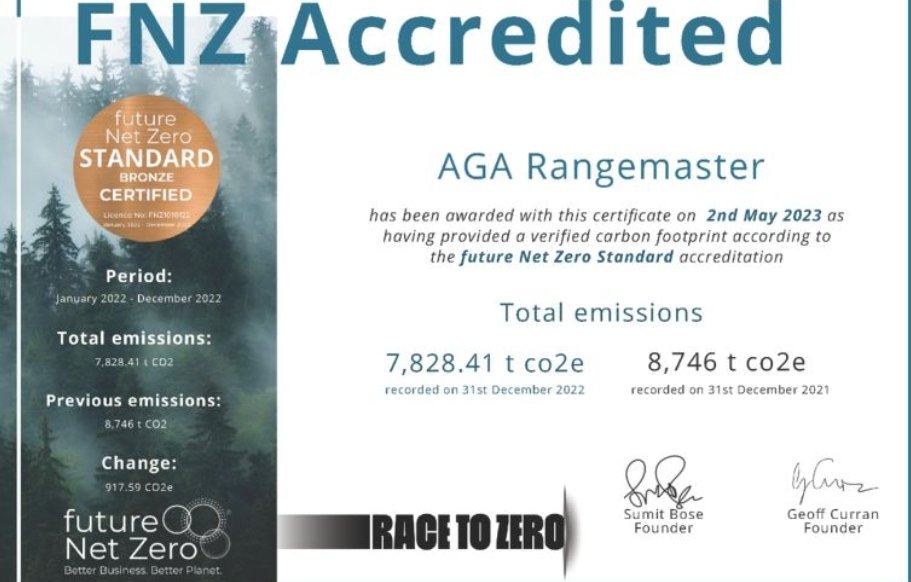
During 2022 AGA Rangemaster Ltd made a pledge to reduce their #carbonfootprint. To achieve this a number of initiatives were identified through delivering excellence initiatives and working in collaboration with stakeholders from all sites we set about reviewing our processes, our reliance on fossil fuels and identifying innovative ways of saving energy and reducing our carbon footprint.
Many of the initiatives required little to no capital investment. Other projects included the replacement of fluorescent lighting and high intensity lighting with LED lighting. Theses initiatives and others will continue throughout 2023.
As a result of our efforts our year ending 2022 data has been externally verified and we have reduced our total t co2e by 917.6 tonnes. This is a superb achievement and AGA Rangemaster Limited would like to thank all those who have participated. The challenge is to reduce our t co2e even further during 2023 as we continue in the Race to Zero emissions.
Large household appliances will have to be transported almost entirely using reuseable packaging by 2030, according to the European Commission’s proposed packaging waste law, a move widely questioned by players in the supply chain.
The EU’s Packaging and Packaging Waste Regulation (PPWR), tabled in November last year, aims to slash unnecessary boxes and wrappings while promoting recycling as well as reuse.
The proposal, which is currently being examined by the European Parliament and EU member states before eventual adoption, has caused anxiety in the retail and logistics sector, which is still in the process of analysing the implications of the Commission’s proposed reuse targets.
But the white goods sector is confronted with headaches of their own.
Under the Commission’s proposal, 90% of packaging used for large household appliances must be “made available in reusable transport packaging” by 2030 when they are placed on the EU market for the first time.
The mandate is contained in Article 26.1 of the draft regulation, which lays down re-use targets for packaging used in the transport of “large household appliances” such as refrigerators, washing machines, tumble dryers, electric fans or air conditioners.
Whether that objective makes sense is open for debate, though.
The provision “is a significant source of concern for our sector”, said Paolo Falcioni, director general of APPLiA, a trade association representing the home appliance industry in Europe.
According to APPLiA, packaging for large household appliances must be functional and protective, to ensure the product is not damaged physically or by humidity during its journey from the manufacturer to the retailer and eventually to the consumer.
Packaging typically used for this purpose include pallets, plastic straps, carboard boxes, and pallet wrappings, some of which “cannot be reused due to technical constraints”, APPLiA said.
“For example, pallet wrapping may become damaged or contaminated with materials that cannot be adequately cleaned, rendering them unusable for future shipments. In other cases, reuse may be possible, but the cost and complexity of returning the packaging to the manufacturer can make it impractical,”
In a surprising turn of events, washing your clothes in cold water can actually be a wise decision when it comes to doing the laundry. Not only does it save you money, but it also makes a positive impact on the environment while delivering impeccable results.
Samsung’s revolutionary Ecobubble technology has transformed the effectiveness of washing clothes at lower temperatures. Let’s delve into the details of this groundbreaking innovation and how it is revolutionising the laundry experience.
Washers: A household essential with energy implications With washing machines present in over 96% of German households, these appliances have become an integral part of our lives. However, they also rank among the top 10 energy-consuming devices.
To address the environmental impact and reduce electricity bills, connecting the washer to a warm water supply, using lower temperature modes, and skipping pre-washing are smart choices. WiFi-enabled machines with AI and app control make it easier to select the most suitable programme.
The power of fine foam and low temperatures Samsung showcases the immense potential of its Ecobubble technology, proving that exceptional washing results can be achieved with the perfect combination of fine foam and low temperatures.
The washing detergent is dissolved in a foam generator before coming into contact with the garments, creating fine foam bubbles by introducing air.
This foam is then introduced into the drum, swiftly penetrating the fabric due to its delicate consistency. As soon as the foam encounters the laundry, it becomes active, ensuring optimal cleanliness.
Ecobubble: Elevating the laundry experience Samsung’s Ecobubble technology transforms detergent into a foam cushion inside the drum. This not only treats the laundry gently but also results in a 24% more thorough clean at lower temperatures, surpassing conventional 40°C cotton cycles.
#BubblesAgainstTroubles By immersing the laundry in bubbles for approximately 30 minutes, Ecobubble technology allows deep penetration into the fabric, effectively removing stubborn stains from delicate silk blouses to cosy sweaters. This technique enables stain removal at lower temperatures while achieving remarkable energy savings of up to 70% thanks to the Ecobubble technology.
Intelligent washing machines for a connected future Modern washing machines equipped with artificial intelligence can recognise the type of fabric being washed and adjust the selected program accordingly. When combined with WiFi capabilities, these machines can be controlled and monitored through apps like SmartThings and SmartThings Energy. SmartThings Energy allows users to effortlessly track their daily, weekly, and monthly energy consumption.
Although it may seem counterintuitive, washing your laundry in cold water has become a game-changer with Samsung’s Ecobubble technology. By harnessing the power of fine foam and low temperatures, Ecobubble provides exceptional cleaning results while saving money and reducing environmental impact.
The ability of AI-equipped washing machines to adapt to different fabric types further enhances convenience and efficiency. Embrace the cold-water laundry revolution, contribute to a sustainable future, and enjoy flawless laundry results every time with Ecobubble technology.
From April 13 to May 28, the latest interior design and lifestyle trends were on display at top design fair Casa Décor in Madrid, Spain and Electrolux Group’s premium brand AEG is there. This article shares the key trends that are expected to evolve the performance and enjoyment in the kitchen now and in the very near future.
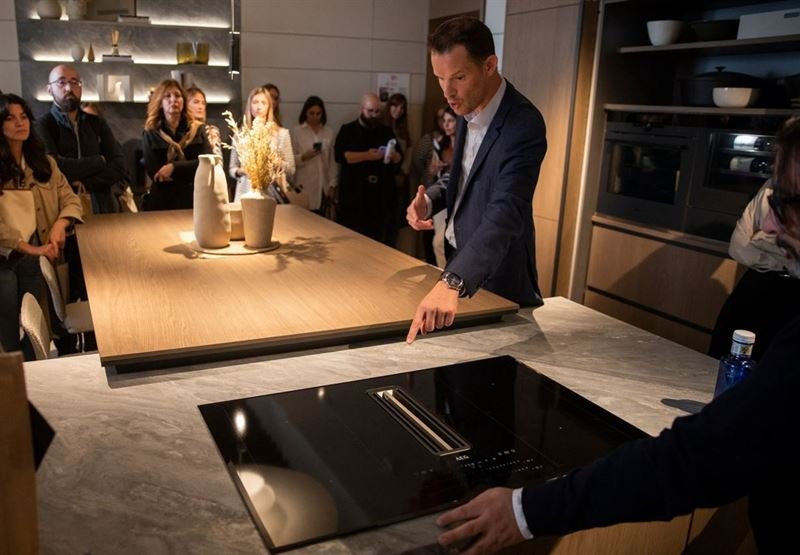
Director Product Line Taste, Iberia, Alberto Dani took part in a panel discussion “Design, Functionality and Sustainability,” alongside Anna Ferrer, architect specializing in sustainability and founder of CU4 Studio, and Beatriz Tejada, Design and Creative Studio Director for Spanish furniture manufacturer dica. AEG is showcasing its latest kitchen appliances as part of dica’s design space.. When it comes to appliances, less is more Appliances should be simultaneously beautifully understated, but clever in performance by offering multiple functions. At the event, sleek hobs with integrated fans were the norm, as were ovens that could toggle between steam, convection and microwave cooking. All help to reduce visual clutter, whilst the AEG matte black appliances are discreet with a premium finish so that when on display they present a sophisticated design statement.
Alberto Dani showcasing the AEG induction hob with integrated fan.
Serious about sustainability: from eco settings to compact spaces
The showcase included no end of sustainable thinking with many design features using recycled material – from PET on ceiling lights to the inner liners of the AEG fridge made from 70% recycled plastic. Trends from the panel discussion also focused on quality, longer lasting materials, as well as personalization when designing spaces. Kitchens and homes can support people far better when done to fit around people’s lifestyles and their sustainable wishes and more of this is being requested. Appliances also offered eco settings that ensure energy use is minimized without sacrificing performance.Technology and smart design strengthen emotional connection ”Many of the new experiences on offer in the kitchen could pass you by and your life would be just fine,” says Dani. “But as it should be with smart design and technology working together, once a feature or product offer has been experienced, it is very difficult to settle for less and this helps strengthen the emotional connection to kitchen and user.
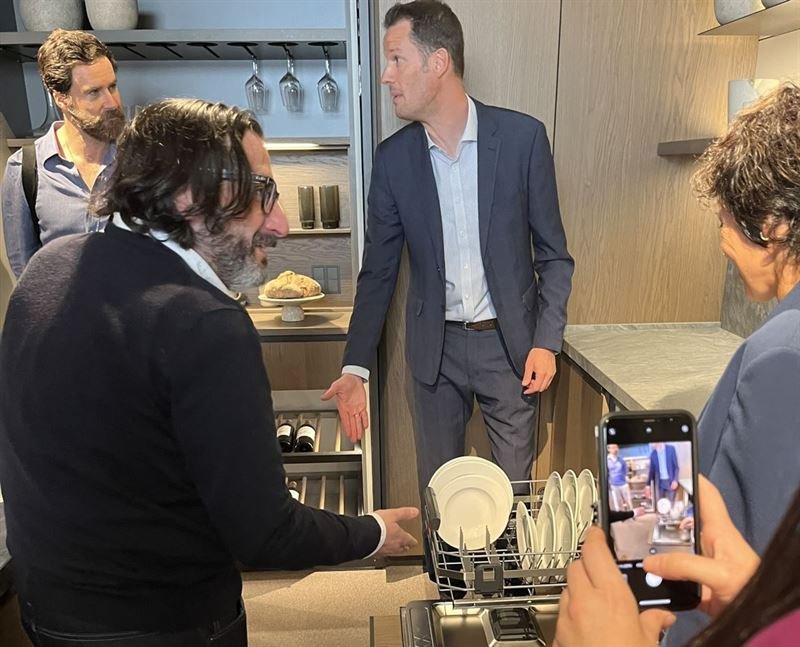
Such experiences include the AEG ComfortLift dishwasher that lifts the lower basket of the appliance up for easy loading and unloading, the vacuum sealer that helps keep food for longer and provides new ways to cook, as well as the steam function within multipurpose ovens.
Alberto Dani demonstrating the ComfortLift dishwasher.
People are willing to spend more
“We also see that as people demand more, so they are willing to spend more,” adds Dani. “In Spain, the average price of home appliances has increased by 16% versus pre-pandemic. Part of this is due to inflation, but equally it shows that people invest in their home, especially when you consider that prices of home appliances have been historically quite stable,” he explains.
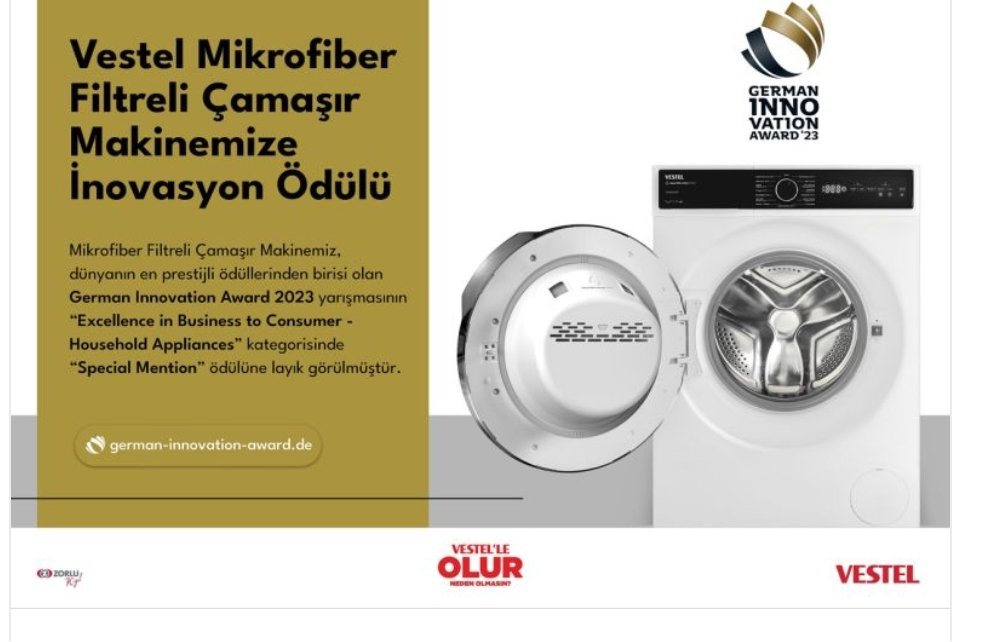
Vestel MicroFiber Washing Machine has achieved “Special Mention” Award from German Innovation Award 2023 at Excellence in Business to Consumer – Household Appliances Category.
Posco has launched the country’s first low-carbon steel product in line with the steelmaker’s ambitious goal to achieve carbon neutrality by 2050, the company said Sunday.
LG Electronics has become the first client to purchase the newly-launched low-emission steel product for the company’s home appliances production, the company added.
This year’s World Environment Day theme focuses on solutions to plastic pollution under the campaign #BeatPlasticPollution. Hisense, the consumer technology brand and a major international provider of home appliances, strives to practice environmental protection to reflect its long-term belief in bringing people a better life together with loved ones, through its appliances with cutting-edge technologies through the story of ‘Go tech, and Beyond’. For example, Hisense’s refrigerators and washing machine series carry an efficient system to deliver lower energy consumption. In the meantime, its air-conditioner products with the cyclone-style cleaning system can ensure consumers breathe fresh and healthy air all the time.
‘Go tech, and Beyond’ presents Hisense’s pursuit of providing technological innovation to millions of families globally with high-quality products and bringing excellent experiences to people’s lives.
Large household appliances will have to be transported almost entirely using reuseable packaging by 2030, according to the European Commission’s proposed packaging waste law, a move widely questioned by players in the supply chain.
The EU’s Packaging and Packaging Waste Regulation (PPWR), tabled in November last year, aims to slash unnecessary boxes and wrappings while promoting recycling as well as reuse.
The proposal, which is currently being examined by the European Parliament and EU member states before eventual adoption, has caused anxiety in the retail and logistics sector, which is still in the process of analysing the implications of the Commission’s proposed reuse targets.
But the white goods sector is confronted with headaches of their own.
Under the Commission’s proposal, 90% of packaging used for large household appliances must be “made available in reusable transport packaging” by 2030 when they are placed on the EU market for the first time.
The mandate is contained in Article 26.1 of the draft regulation, which lays down re-use targets for packaging used in the transport of “large household appliances” such as refrigerators, washing machines, tumble dryers, electric fans or air conditioners.
Whether that objective makes sense is open for debate, though.
The provision “is a significant source of concern for our sector”, said Paolo Falcioni, director general of APPLiA, a trade association representing the home appliance industry in Europe.
According to APPLiA, packaging for large household appliances must be functional and protective, to ensure the product is not damaged physically or by humidity during its journey from the manufacturer to the retailer and eventually to the consumer.
Packaging typically used for this purpose include pallets, plastic straps, carboard boxes, and pallet wrappings, some of which “cannot be reused due to technical constraints”, APPLiA said.
“For example, pallet wrapping may become damaged or contaminated with materials that cannot be adequately cleaned, rendering them unusable for future shipments. In other cases, reuse may be possible, but the cost and complexity of returning the packaging to the manufacturer can make it impractical,”
SMEG annual sustainability report is now published and available to download At Smeg, they are committed to designing beautiful, functional products, caring for people and planet. You can download it here https://www.smeguk.com/company/sustainability
AMDEA CEO Paul Hide was quoted in a recent online news story published by the i national newspaper.
The piece, which appeared this month, ahead of AMDEA’s Parliamentary Reception, (May 24) at which it called on the Government to encourage consumers to use energy efficient home appliances, focused on how microwave ovens could have an important role to play in net zero homes and easing the cost of living crisis.
At a time when families are cash-strapped and time-stretched, the microwave is due a renaissance, suggested the article.
Speaking to Serina Sandhu, senior reporter at the i, Mr Hide said: “Microwave ovens have been a staple of UK kitchens for more than 40 years. Particularly with the current focus on energy bills, UK consumers hold these energy efficient and versatile cooking appliances in high regard, purchasing some three million every year. These appliances are not only capable of cooking nutritious and tasty meals, they can save you money too.”
The AMDEA-organised event called on the Government to support households in becoming net zero through making smarter choices about all their kitchen appliances, not just microwaves.
Jennipher Marshall-Jenkinson, chair of the UK Microwave Technologies Association, told the i: “I can honestly say to you that microwaves are the safest, the most convenient, the most nutritious and energy efficient way to cook food in this 21st century,” adding that she hopes to give everybody “peace of mind” about using microwaves to cook meals.