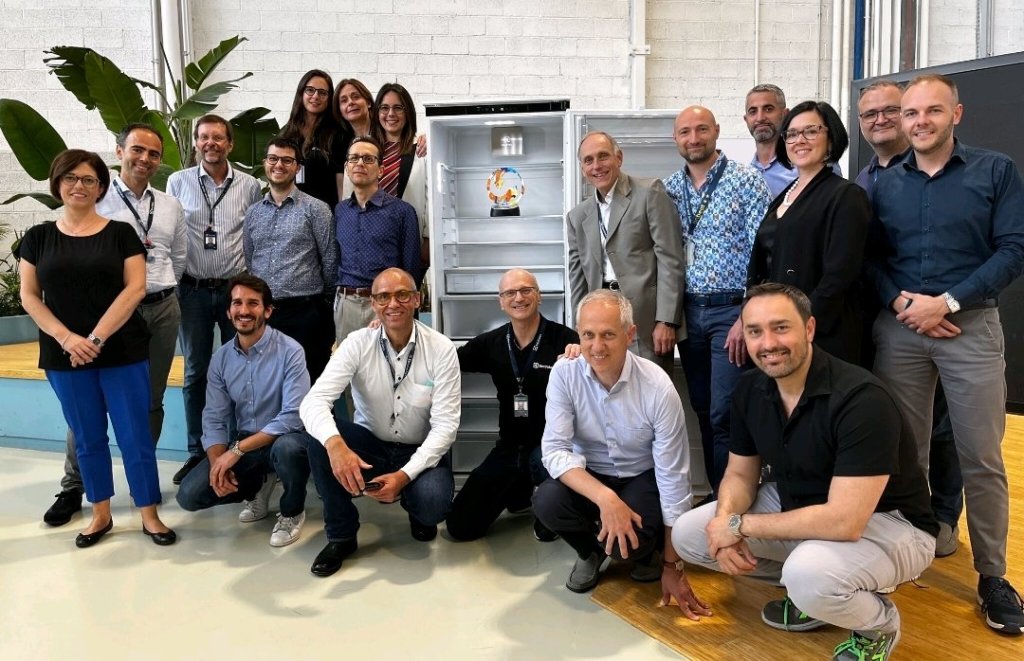
The Electrolux Group site in Susegana has opened its doors to the Plastics Recycling Award Europe 2023 – Automotive, Electrical or Electronic Product of the Year 2023! The award was in fact won by Green Zone MaxiSpace, the refrigerator developed and manufactured at the Treviso site. Green Zone MaxiSpace is the first built-in refrigerator with internal linings made of 70% recycled plastic from decommissioned refrigerators and represents a record in its category, given that 13% of the plastic used overall for its construction is recycled plastic. Thanks to the precious work of all Susegana colleagues, from those who work in R&D, in purchasing and up to those who work directly in the production areas, Green Zone MaxiSpace is a concrete example of our commitment to research and implement new and sustainable solutions, which allow us to reuse and reduce waste and the use of virgin materials. An approach that is also very popular with our consumers, who demonstrate that they perceive the value of this product both from the point of view of aesthetics and sustainability.
According to statistics about worldwide electronic waste,* every Swede generates 20 kg of electronic waste annually. With the launch of AtEase, Electrolux Group’s new product subscription-based service for Sweden, consumers can make more sustainable choices for the home.
AtEase is part of Electrolux Group’s ambition to reduce electronic waste and contribute to the circular economy, with Swedish consumers having the option to subscribe to a new product or a refurbished one.
AtEase is an all-inclusive service that covers everything needed to keep the appliance running smoothly, including proactive maintenance, automatic shipments of accessories, and support (the appliance is replaced within three days if a fault occurs during the subscription). Crucially, every product returned to Electrolux Group is refurbished for reuse or gives life to new appliances by donating its parts.
“If the product is too damaged or worn to be refurbished, we can reuse parts such as circuit boards, rubber bumpers, or casings to extend the life of other products. In fact, 75% of the parts we use in the refurbishment of a robot vacuum cleaner have been harvested from an end-of-life product,” says James Ostridge, Product as a Service Director.
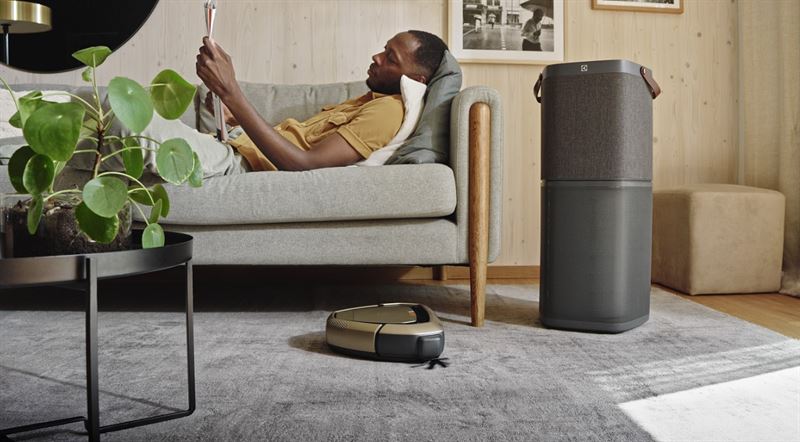
The products currently offered through AtEase include the Pure i9 Robotic Vacuum Cleaner, Well A7 Air Purifier and Pure A9 Air Purifier. Further floor and air care products will be introduced later this year, and more products, including kitchen and garment care, will be added to the service over time. The launch of AtEase is a natural step following a successful pilot launched in 2019 to offer Swedish consumers the Pure i9 on a subscription pay-per-use basis. AtEase will also be introduced to further markets beyond Sweden in the coming years.
Since July 2022, Electrolux Group has also offered landlords in Sweden a similar program of appliances-as-a-service for installations, maintenance and repair of appliances, prolonging the product life span and reducing electronic waste.
Meanwhile, in Singapore, the company launched a similar direct to consumer subscription model last year that offers the rental, set up, repair and recycling of products.
Brits urged to recycle millions of unwanted faddy kitchen appliances UK households are holding on to a whopping 18.2 million kitchen electricals that are rarely or never used.
According to research carried out on behalf of Recycle Your Electricals, millions of fad kitchen gadgets, from air fryers to bread makers, blenders to chocolate fountains, juicers to popcorn machines, are gathering dust in UK cupboards.
Ninety two percent of UK households own ‘FadTech’ – with an average of four items per home – but nearly half of households say their once-trendy items are now rarely or never used.
The top five most likely items to be gathering dust are: ice cream makers, chocolate fountains, hostess trolleys, popcorn machines and bread makers. The number of unused bread makers in UK cupboards would stretch from London to Paris and halfway back again.
In addition, there are an estimated 2.4 million unused blenders taking up space in cupboards.
Recycle Your Electricals is on a mission to get Brits to fish out their FadTech and donate or recycle them to allow the valuable materials in them to be reused as something even more useful.
For example, the estimated 2.4 million blenders gathering dust across the UK could be recycled into 2.1 million defibrillators, according to the study.
Scott Butler, executive director of the Recycle Your Electricals campaign, said: “We’ve all fallen for the latest FadTech – including me – and sometimes they become kitchen staples. But, often, after taking up counter space they’re consigned to a cupboard.
“They’re not cheap, so it can feel wasteful to clear them out but they can be recycled into something really useful or donated if they’re still in good condition. If you have FadTech to recycle, the easiest thing to do is visit our postcode locator to find your nearest drop-off point.”
Actor and presenter, Joanna Page, has a stash of FadTech, thanks to her children. She is backing the campaign, and said: “I’ve got children, so we get these items thinking they’ll be fun and they are at first. But then you don’t use them more than once a year and they just end up taking up space in your cupboard.
“I’ve got two waffle makers, I don’t even know why I need two. They’re not cheap, so it can be hard to part with them, but it’s great to hear they can be recycled and free up some all-important cupboard space.”Across UK homes, there are 6.5 million kettles, 3.4 million microwaves and 3.6 million toasters that are either broken or spare.
The future of cooking? Electrolux group are always looking ahead at product innovations that offer consumers more sustainable choices for the home. We’ve created this concept hydrogen gas cooktop that delivers the reliability and heat of a gas cooktop, without the environmental impact of traditional electricity or gas-powered appliances when connected to a renewable gas supply. The concept 90cm Ultimate Taste 900 Hydrogen Gas cooktop has been developed alongside Australian Gas Infrastructure Group (AGIG) for their concept home, HyHome in Victoria, Australia. In HyHome, the appliances, heating and hot water are all powered by green hydrogen gas to showcase the future of sustainable living through alternative energy sources. Green hydrogen works in much the same way as natural gas, but when created using renewable sources produces zero greenhouse gas emissions when burned. Please note that this cooktop is a concept and not currently available for sale, and we expect different markets to introduce hydrogen gas at different paces with a blended mix of hydrogen and natural gas to begin with
The main business of Glen Dimplex, the Irish-headquartered heating, cooling and appliance giant, nearly quadrupled its profits last year as the company substantially concluded a period of restructuring. Newly filed accounts for Glen Dimplex European Holdings, which makes up about 60pc of group operations, showed the business made a profit of €42.8m in the year to September 30, 2022, up from just €11m in the previous year.
Glen Dimplex increased turnover by just 4pc in the period to €944m, with growth coming mainly from the group’s energy efficient heating and ventilation products, which are in high demand in the EU because of public policy initiatives. “Encouragingly, the strong profit growth experienced in the 2021/22 financial year has continued into the early part of the 2022/23 financial year and the outlook remains positive driven by strong underlying demand trends, a supportive policy environment and fiscal supports for end users,” the accounts stated.The company, which is owned by the Louth-based Naughton family, has been undergoing a transformation in recent years to focus more on sustainability and the electrification of energy, increasingly via smart tech.The firm sold the well-known consumer appliance business Morphy Richards to long-term Chinese manufacturing partner Xinbao for €185m. Glen Dimplex retained the rights to distribute the brand in Ireland, New Zealand and Australia for 10 years as part of the deal.The shift has seen Glen Dimplex become very busy in terms of mergers, acquisitions and disposals, with the company an active buyer of heating and ventilation businesses
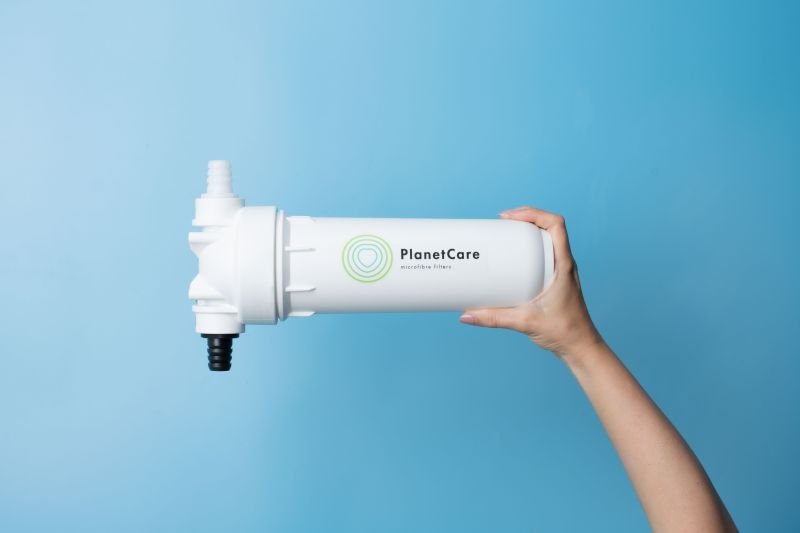
Schulthess partner PlanetCare has developed an effective microfiber filter that catches microplastics that are otherwise washed out with our clothes in the washing machine. A great thing! Each filter comes with reusable cartridges that are replaced and remanufactured. If you buy a Schulthess machine now, you can order the filter at the same time. But every machine can also be equipped with it afterwards.
Miele teamed up with sustainability champions across the world to share knowledge, inspiration and successes. ‘Stories from our only home’ with Norbert Niederkofler is the first in a series of films that aim to inspire change. Discover how and why the 3-Star Michelin Chef has redesigned his menu and his restaurant from the ground up.
Steel plays a vital role in the construction of large home appliances. From refrigerators to washing machines, steel provides strength, durability, and stability helping to keep home appliances running smoothly each day
Haier Appliances India, announced that its state-of-the-art deep freezer manufacturing unit in Ranjangaon – Pune has achieved a significant milestone by obtaining the prestigious ISI certification. The certification, issued by the Bureau of Indian Standards (BIS), validates that all products manufactured at this facility meet the highest standards of safety, durability, and performance, ensuring customer satisfaction