
Extraordinary success reached in Haier’s factory in Eskişehir, Turkey: 6 million tumble dryers produced! 🎉
With the opening of the new washing factory announced last year, the production is expanded to a new tumble dryers’ platform, which features premium production processes, advanced R&D and manufacturing know-how.
Category Archives: Manufacturing
LG factory
World Economic Forum Recognizes LG for Innovative Digital Transformation of Its Home Appliance Manufacturing Facility in South Korea LG Smart Park, a production base of LG Electronics (LG), has been selected as a Lighthouse Factory by the World Economic Forum (WEF).
Shaping the future of manufacturing, WEF “Lighthouse” facilities implement Fourth Industrial Revolution technologies, such as the Internet of Things, big data, artificial intelligence and robots, into manufacturing and supply chain operations to deliver a wide range of benefits, from increased production efficiency to enhanced environmental sustainability.
LG Smart Park, LG Electronics’ home appliances factory in Changwon, Republic of Korea
‘Digital twin’ technology enables the operation system to analyze the production processes in virtual reality.
Refrigerator door attachment based on 3D vision recognition technology
Overhead conveyor system
“As the world grapples with many challenges, it is remarkable to see how Lighthouses are yielding sustainability benefits while achieving business goals, which we call eco-efficiency,” said Francisco Betti, Head of Shaping the Future of Advanced Manufacturing and Value Chains, World Economic Forum. “We need them to continue illuminating the way forward for the global manufacturing community by shaping a responsible future of manufacturing that works for people, society and the environment.”
Over the past five years, LG has transformed its factory complex in Changwon, South Korea into LG Smart Park, a futuristic hub of home appliance manufacturing. The key elements of the transformation are a digitally-enabled end-to-end three-dimensional logistics system, an advanced analytics system based on edge computing technology and machine learning that predicts defects, and state-of-the-art facilities that can mass-produce multiple models to respond flexibly to customer requirements.
The newly implemented “digital twin” technology enables the operation system to analyze production processes in virtual reality. It can predict if any issues will occur within the next 10 minutes and provide exact parts and materials for the assembling of each appliance with an accurate, up-to-the-minute status of the facility’s logistics operations. Sensors utilizing deep learning technology are installed throughout the factory to monitor each phase of production in real-time, helping factory workers to preemptively identify and resolve any possible issues. As a result, the cost of defective product returns dropped by 70 percent from 2020 to 2021 while overall quality competitiveness[1] and production efficiency[2] were both significantly strengthened.
Floors one, two and three at LG Smart Park employ an overhead conveyor system that quickly transports boxes containing refrigerator parts to the required production lines. Attached to each line is an intelligent warehouse that monitors inventory in real-time, enabling automated materials management, including the request of additional parts and supplies.
On the ground, automated guided vehicles (AGVs) leveraging stable 5G network connectivity transport parts and materials to wherever they are needed on site. Through its three-dimensional logistics automation system, the company can minimize the amount of warehouse space needed by 30 percent compared to conventional logistics systems, and shorten the time required for hourly materials transportation by 25 percent.[1]
LG Smart Park has also adopted the use of robots featuring an AI engine and camera to make the home appliance production process faster and safer. The robots undertake dangerous and complicated tasks, such as welding and the lifting of heavy parts and equipment.
LG plans to apply the innovative, smart production technologies pioneered at LG Smart Park to a total of 26 LG production facilities in 13 countries, accelerating the digital transformation of its global manufacturing network by 2025.
“LG Smart Park illustrates our strong commitment to adopting the revolutionary technologies as the leader of the global premium home appliance market,” said Lyu Jae-cheol, president of the LG Electronics Home Appliance & Air Solution Company. “We are presenting a blueprint for the future of manufacturing, one that delivers better outcomes across environmental, economic and employment aspects.”
For more information, please visit https://www.lgnewsroom.com/2022/03/lg-smart-park-named-lighthouse-factory-for-futuristic-manufacturing-technology/
[1] Comparing the figures from the year 2020 to 2021 according to the lighthouse site visit report by World Economic Forum.
[2] Units produced per hour has increased by 17 percent, comparing the year from 2020 to 2021 according to the lighthouse site visit report by World Economic Forum
About LG Electronics Home Appliance & Air Solution Company
The LG Home Appliance & Air Solution Company is a global leader in home appliances, smart home solutions, air solutions as well as visionary products featuring LG ThinQ AI. The company is creating various solutions with its industry leading core technologies and is committed to making life better and healthier for consumers by developing thoughtfully designed kitchen appliances, living appliances, HVAC and air purification solutions. Together, these products deliver enhanced convenience, superb performance, efficient operation and compelling health benefits.
SOURCE LG Electronics,
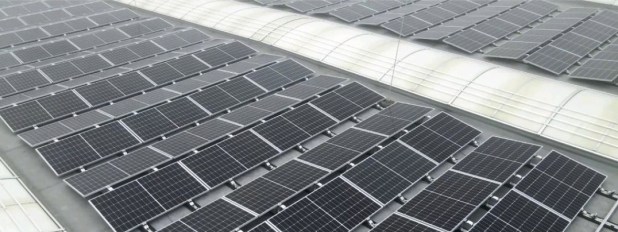
Photovoltaic system at the Liebherr Ochsenhausen factory
With the construction of the new photovoltaic system at the Ochsenhausen production site, Liebherr appliances is taking an essential step towards even more climate-friendly production. A total of 5,333 modules on the roof of the logistics center at the site will supply 1,996,000 kWh per year in the future, which corresponds to a saving of 790 tonnes of C02. The photovoltaic team erected the plant within 12 weeks and has been in operation since February 2022.
Fhiaba new factory
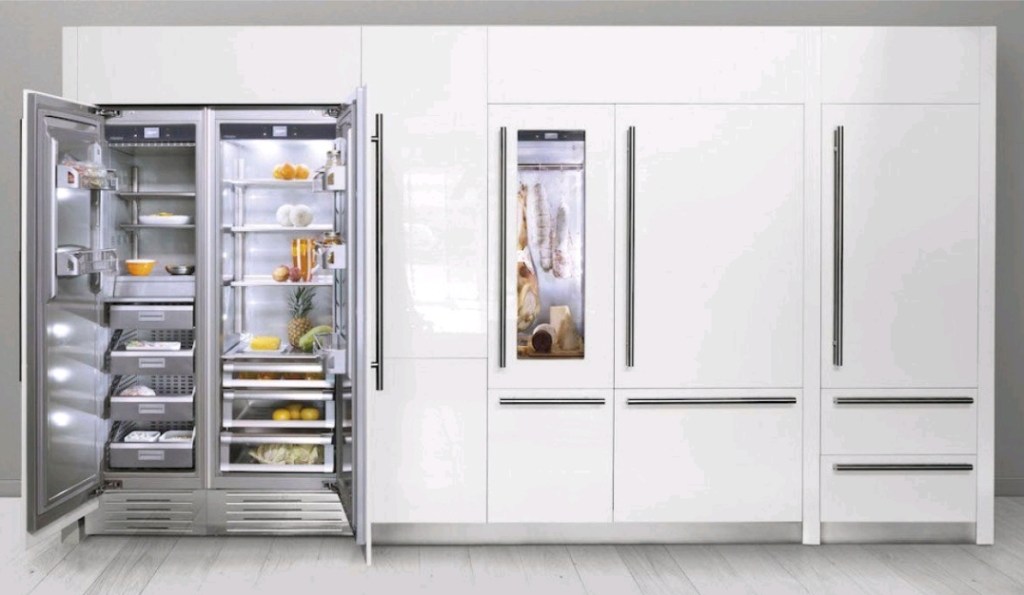
Fhiaba, Italian producer of high-quality refrigerators, freezers and wine cabinets, has taken a new factory into use next to its existing factory, so that it can meet the enormously increased demand for its products! Fhiaba, Italian producer of high-quality refrigerator, freezer and wine cabinets, has opened a new factory next to its existing factory, so that it can meet the enormously increased demand for its products! This allows them to still deliver within 8-10 weeks, ” says Peter Schutte enthusiastically.
Fhiaba offers so many different models that an unlimited amount of combinations is possible. By placing different cooling devices next to each other, you can compose your ideal cooling wall yourself.
The refrigerators and wine cabinets are made in the northeast of Italy and are made of very high quality stainless steel (AISI 304).
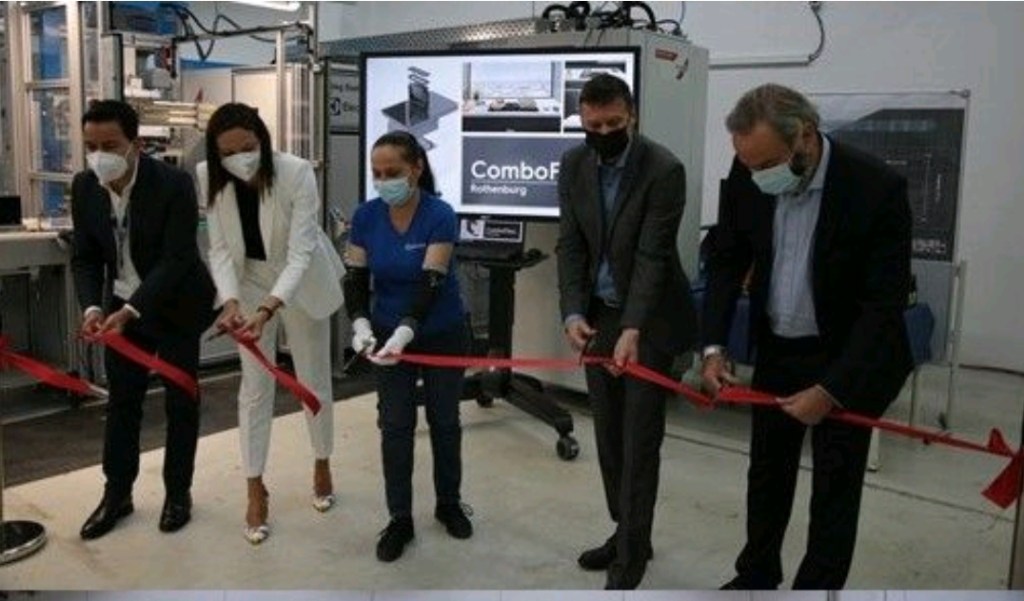
Electrolux production
Electrolux have started very proudly the production of AEG new Made in Germany COMBO HOB AEG Flexibridge 8000 XT in their factory in Rothenburg
LG investment into whitegoods production
LG Electronics which have become the world’s top white goods supplier will make investments nearly $700 million to increase white goods production this year.
According to LG Electronics’ annual report released Wednesday, it churned out more than 10 million units of each fridges, washers, and air-conditioners in 2021, the record high output for each. Their mixed sales last year recorded 20.9 trillion won ($17.1 billion), more than 3.7 trillion won from a year ago.
The utilization rate at its fridge factory recorded 126.1 percent after the manufacturing unit produced more than eleven million units, above its initial annual production capacity of 9,137,000 units. The utilization rate of its washer and air-conditioner factories reached 106.8 percent and 110.4 percent, respectively.
The factories stayed overworked despite more than one challenges such as chip shortages and higher raw material prices.
Although the corporation published a record-high of 74.7 trillion won in sales last year, its operating profit diminished 1.1 percent on year to 3.86 trillion won due to the higher costs in logistics and raw materials, including steel, resin, and copper that make up core materials in appliance production.
To meet the strong demand for the refrigerators, washers and air-conditioners, LG Electronics will invest 851.9 billion won in its home appliance & air solution (H&A) division to ramp up output, as well as 688.1 billion won and 313.1 billion won in home entertainment (HE) division and vehicle component solutions (VS) division, respectively.
Elica record growth
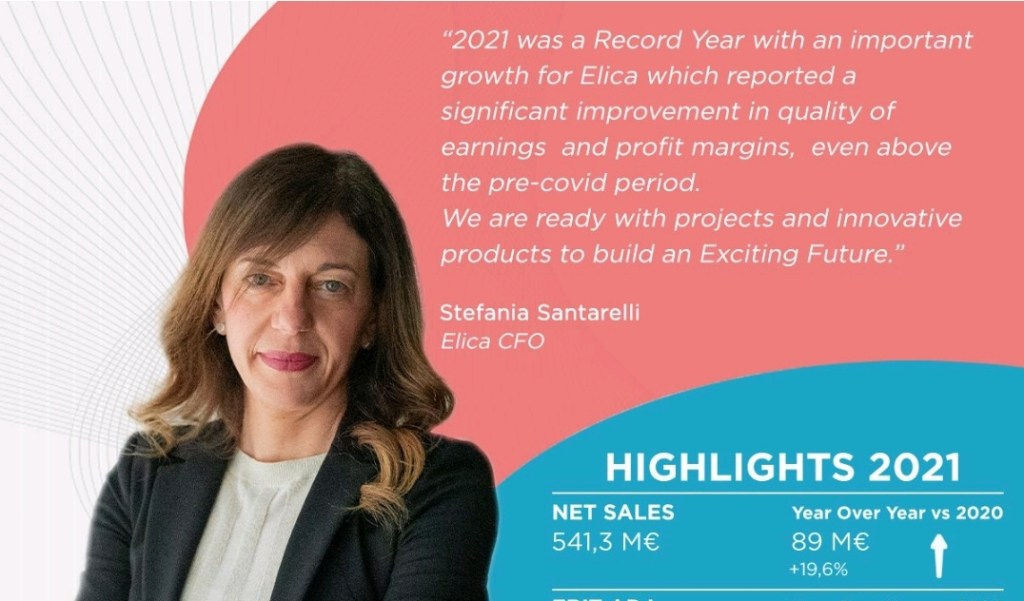
Elica BoD approved 2021 Consolidated Results.
“For Elica, 2021 was a record year with an important growth. We are ready to build an exciting future”.
Commented Stefania Santarelli – Elica CFO.
https://www.elica.com/corporation/en/investor-relations/financial-press-releases
Samsung Commitment to India with Investment to Set Up New Compressor Plant
The new facility in Sriperumbudur, near Chennai., spread over 22 acres, will have a capacity to produce 8 million compressor units a year, which will be expanded in the future. Compressors produced at the plant will be used in refrigerators that Samsung manufactures in India and also be exported.
Electrolux on the way to the target of zero waste
Electrolux on the way to the target of zero waste sent to landfill at all manufacturing sites by 2025. During 2021, other seven factories achieved zero waste to landfill certification issued by a third party: at Manaus and Curitiba in Brazil, Adelaide in Australia, Rosario in Argentina, Olawa and Zabrze in Poland, and Susegana in Italy. Together with the factories in Sao Carlos in Brazil, Solaro and Porcia in Italy and Cairo in Egypt that were certified before 2021, 32% of plants are now certified and the Santiago factory in Chile is expected to follow in the first quarter of this year. “Working toward climate neutral operations, doesn’t just involve
working with energy – it involves working with the efficient use of all kinds of resources – says Giuseppe Caiulo, VP Group Operations Sustainability and Lean Manufacturing -. By producing less waste, we can avoid creating emissions – both caused by their disposal and the sourcing of virgin materials”. When one of the Electrolux factories is third-party certified to the Electrolux Zero Waste to Landfill program, it means that it sends less than 1% of its total waste to landfill. Additionally, certified factories must send less than 3% of their total waste to energy recovery.
Ödül Madeni Eşya
Ödül Madeni Eşya is an experienced manufacturer that started its activities in 1973. The company produces household appliances such as gas and electric stoves and built-in cookers. The mottos of the company are “constant customer satisfaction and top quality products” as well as to be “the preference of professionals”.Ödül Madeni Eşya is an experienced manufacturer that started its activities in 1973. The company produces household appliances such as gas and electric stoves and built-in cookers. The mottos of the company are “constant customer satisfaction and top quality products” as well as to be “the preference of professionals”.
 WHITEGOODSNOW