
A Circular Initiative event in Stockholm, Electrolux unveiled a new Product Recyclability Tool to support its ambitious circularity goals. The prototype tool builds on the knowledge gathered during the company’s ongoing collaboration with Stena Recycling to explore circular solutions. Stena Recycling collects discarded electric consumer products and breaks them down into raw materials for new products or for energy recovery. “The tool will enable our design and engineering teams to explore recyclability right from the beginning of the design process so we can create products that are even more recyclable, so their components can continue their life as useful materials – says Vanessa Butani, VP Group Sustainability –. The tool is still in the early stages of development and the next step for us will be to open the process to other companies, working together to expand its functionality, data quality and market relevance”. Over the past three years, Electrolux has worked closely with Stena Recycling to understand what happens to its products at their end of life and how it is possible improve product circularity. In 2020, the partnership developed a prototype vacuum cleaner made with 100% recycled materials and reused components and in 2021 a prototype vacuum cleaner that is 90% recyclable.
“Our deep investigation in the vacuum cleaner category has been particularly useful in understanding our material choices and design decisions that benefit both quality and recyclability – says Barry Waddilove, Sustainability Director Development & Collaborations –. In 2022, we are expanding these studies across all our major product categories including dishwashers, fridges and cookers
Category Archives: Environmental
Arçelik to grant $5 million support to 7,000 entrepreneurs
Arçelik to grant $5 million support to 7,000 entrepreneurs
Arçelik Garage Innovation Hub, a growing global open innovation platform, has to date interacted with more than 2,000 partners, scouted more than 1,800 startups and developed cooperation with more than 80 startups.
Garage Innovation Hub organized an Open Innovation Day with the participation of a large number of startups, business leaders and investors from around the world in order to contribute to the dissemination of the open innovation culture.
As part of the United Nations Generation Equality Forum commitments, Arçelik plans to reach 7,000 entrepreneurs, 5,000 of whom are women, by 2026, and support them in reaching financial support of approximately $5 million with the Garage Innovation Hub.
Partnering with venture capital funds
“As a growing global innovation platform, together with our nearly 2,000 stakeholders, including mentors, investors, universities, and entrepreneurs from all over the world; we provide business development, access to financial support and mentorship to entrepreneurs, starting from the idea stage,” Arçelik’s chief strategy and digital officer Utku Barış Pazar said.
On the path to becoming one of the leading open innovation platforms on a global scale, Pazar said they have set important goals such as supporting the incorporation of new ideas in many fields like sustainability, artificial intelligence, augmented reality (AR) and virtual reality (VR), marketing and production technologies, and health care, in each of the 146 countries where they operate in the next five years.
Arçelik has over 40,000 employees throughout the world and its global operations include sales and marketing offices in 49 countries, and 28 production facilities in nine countries. It has 12 brands, namely Arçelik, Beko, Grundig, Blomberg, ElektraBregenz, Arctic, Leisure, Flavel, Defy, Altus, Dawlance and Voltas Beko.
It is Europe’s second-largest white goods company by market share, based on volumes. Arçelik reached a consolidated turnover of 6.5 billion euros ($6.85 billion) in 2021.
Arçelik’s 29 R&D and design centers and offices across the globe are home to over 2,000 researchers and hold more than 3,000 international patent applications to date
Electrolux wins iF Design Awards for products that help consumers achieve a better home environment
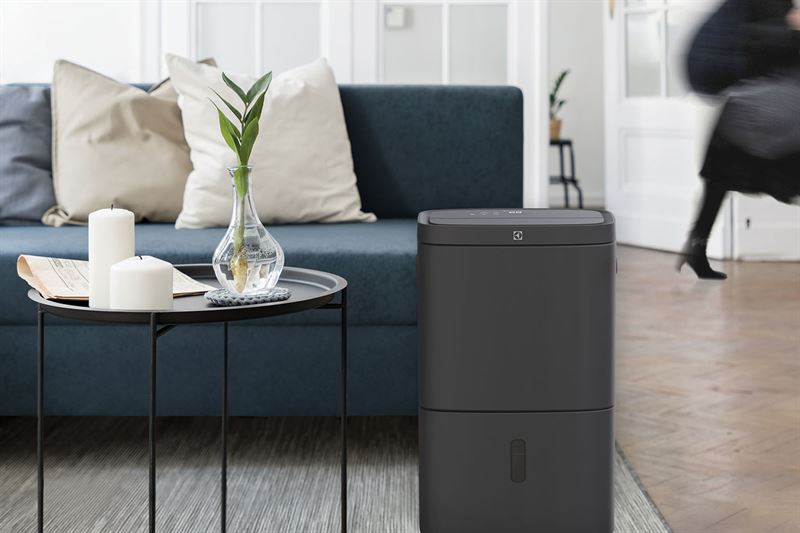
Electrolux Group has won prestigious iF Design Awards for an air purifier and stick vacuum cleaner that help improve wellbeing in the home.The Electrolux UltimateHome series is a 2-in-1 dehumidifier and air purifier that provides an optimum humidity level and improved air quality for an uninterrupted sleep. Since 9 out of 10 people live in areas with air pollution, consumers are increasingly aware of how indoor air quality and climate can affect health and wellbeing. Urban consumers seek “clean and fresh” solutions, and multi-functional products save on floor space while creating healthier living conditions.
This product earned above-average scores by the international jury in all five criteria: idea, differentiation, form, function and impact. These refer to the product’s relevance, novelty, design for the target group, ease of use, and sustainability.
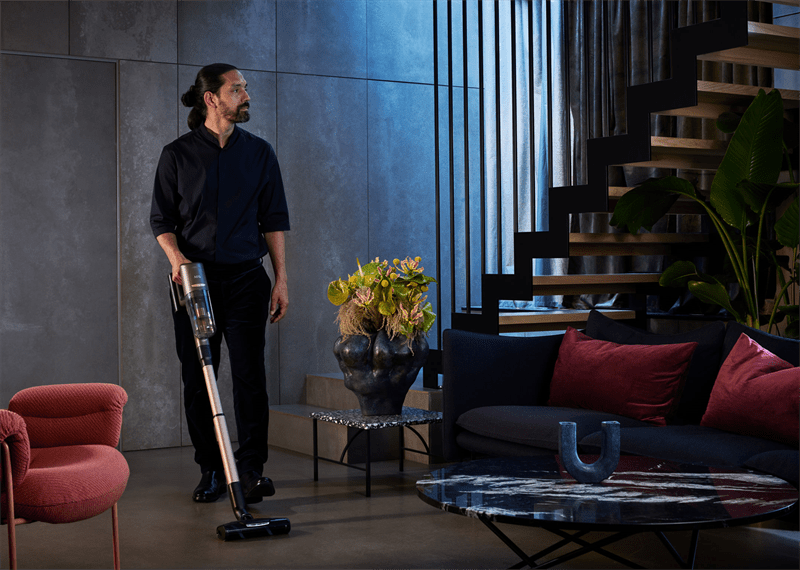
The 800/8000 series focuses on bringing effortless performance into the cordless pistol stick segment. The design enables balanced weight and its sculpted ergonomic handle and telescopic tube make it a consumer-centric product. The 800/8000 is designed to fit into the user’s home and adapt to a variety of cleaning needs. The modular design makes upgradability, repairability and recyclability simpler and more sustainable.
The jury gave this product high scores for form, impact and function, meaning it demonstrates design excellence, is easy to use, and serves society and sustainability.
Record results for BSH group
BSH Hausgeräte GmbH (BSH) achieved its highest-ever turnover in the 55 years of its existence for the second consecutive year. In the 2021 fiscal year, BSH generated turnover of €15.6 billion, or a year-over-year increase of over 12%.
News of the record results have come at the same time as an announcement by group CEO and Chairwoman, Carla Kriwet, that she would be leaving the company for personal reasons. Her departure on April 30, 2022, was, she said, in order to continue her professional career outside the Bosch Group.
BSH grew its turnover sharply in all regions in the 2021 fiscal year. The manufacturer benefited from global demand for high-quality home appliances, its strong global brand portfolio, and innovative digital services for consumers.
BSH remains the undisputed market leader in the Europe region, growing its turnover by 9% last year. In particular, it recorded good growth in the major Western European markets, such as Germany, the United Kingdom, France, Spain and Italy, as well as Northern Europe and Turkey.
BSH increased its turnover in the Americas (USA and Canada) by a strong 23%.
BSH posted an 18% year-over-year increase in turnover for the Asia-Pacific/Africa region as a whole. BSH was able to grow its turnover by 17% year-over-year in the Chinese market, the largest in the region. BSH remains the leading non-Chinese home appliance manufacturer in China.
The strongest turnover driver in the 2021 fiscal year was the Refrigeration product category, which posted a year-over-year growth of 20%, followed by the product category Cooking (ovens +14%, cooktops and ventilation +13%). Turnover in Laundry Care grew by 9%. Dish Care grew its turnover by 7%. Small appliances (consumer products), such as automatic coffee machines, food processors and vacuum cleaners, also performed positively, growing by 9%.
BSH’s Customer Service, which has won multiple awards, likewise increased its turnover by 4% year-over-year. The approximately 15,000 BSH customer service staff and their service partners continued supporting consumers in some 50 countries without interruption in the second year of the coronavirus pandemic.
growing its local development centres in China, Egypt and Mexico, and with its expanded and new production facilities in those regions, BSH is underscoring its aim to place a stronger focus on addressing the specific needs of consumers in different markets. At the same time, regional production reduces transport routes and supply chains, thus making a major contribution to decreasing CO2 emissions.
Research and development spending in 2021 rose by €47m to €755m, or 5% of the total turnover. The focus moving forward will remain on consumer-centric innovations, IoT solutions, digitalisation of the entire value chain, and establishing a functioning circular economy.
BSH’s development and production operations at all its locations worldwide have been carbon-neutral since 2020. Since September 2021, BSH has procured green steel from Salzgitter AG with a 66% lower carbon footprint to manufacture washing machines at its Polish plant in Łódź. In addition, BSH also aims for all of its locations to be completely supplied with green electricity by 2030.
BSH increasingly uses recycled materials to produce new appliances – its target is for the home appliances it makes to contain a minimum of 25% recycled materials by 2025. That percentage is to be at least doubled to 50% by 2030. At the same time, BSH set the goal of increasing the proportion of recyclable materials contained in its appliances to at least 80% by 2025 and at least 95% by 2030.
BSH continues to invest in new business models, such as the “Refurbished” pilot project recently launched in Austria. For the first time, professionally refurbished Bosch washing machines are offered for sale along with a manufacturer’s warranty. In addition, consumers have been able to lease home appliances in Germany and the Netherlands under the subscription model of BlueMovement since 2021. The sharing model WeWash was launched in 2016 and offers residents in large condominiums in Germany and Austria the option of booking a washing machine by app and cashless payment for each washing cycle.
GE Earth Day
GE Appliances (GEA), a Haier company, today marked Earth Day by releasing its 2021 Corporate Citizenship Report, highlighting the latest progress and five bold new goals that will power the company’s future work across its five core pillars: Community Engagement, Inclusion & Diversity, Operations Sustainability, Product Sustainability, and Compliance & Ethics.
“This work is central to who we are as a business and what we want to accomplish in the future”
Inspired by people and powered by innovation, GE Appliances is committed to building the world’s best appliances and strengthening communities. The GEA Way Forward goals, developed with employees, customers and appliance owners, reflect the company’s top priorities and are driving GE Appliances’ Citizenship efforts.
The GEA Way Forward Goals
Create 10,000 U.S. jobs by 2027.Reach 40% women and 40% people of color by 2025.Use 15% less energy to make each product at all U.S. plants by 2026.*Transition 100% of products produced in North America to lower global warming potential refrigerants and foams by 2025.Spend $1 billion cumulatively with diverse suppliers by 2030
WIRE)–GE Appliances (GEA), a Haier company, today marked Earth Day by releasing its 2021 Corporate Citizenship Report, highlightingthe latest progress and five bold new goals that will power the company’s future work across its five core pillars: Community Engagement, Inclusion & Diversity, Operations Sustainability, Product Sustainability, and Compliance & Ethics.
“This work is central to who we are as a business and what we want to accomplish in the future”Tweet this
Inspired by people and powered by innovation, GE Appliances is committed to building the world’s best appliances and strengthening communities. The GEA Way Forward goals, developed with employees, customers and appliance owners, reflect the company’s top priorities and are driving GE Appliances’ Citizenship efforts.
The GEA Way Forward Goals
- Create 10,000 U.S. jobs by 2027.
- Reach 40% women and 40% people of color by 2025.
- Use 15% less energy to make each product at all U.S. plants by 2026.*
- Transition 100% of products produced in North America to lower global warming potential refrigerants and foams by 2025.
- Spend $1 billion cumulatively with diverse suppliers by 2030
BEKO HEALTHY KITCHENS
Beko Home Appliances, considered to be among the world’s most sustainable appliance manufacturers, is using Earth Day to announce a slew of eco-conscious initiatives including a strategic alliance that places two of the first and highest-profile Beko Healthy Kitchens in one of the world’s healthiest and most sustainable homes
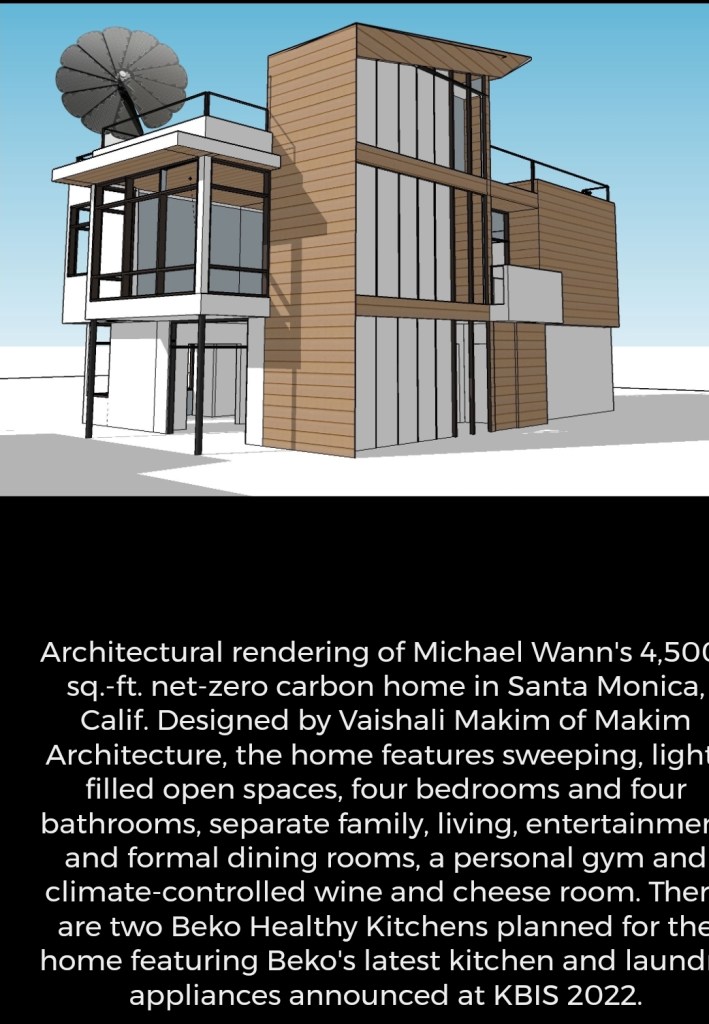
The U.S. subsidiary of Arcelik, Inc., has partnered with gaming and tech icon Michael Wann to design and outfit the chef’s and family kitchens in Wann’s 4,500-square-foot net-zero carbon home taking shape in Santa Monica, Calif. Currently chief strategy officer for Super League Gaming and instrumental in the growth of Tastemade, Fullscreen and Mobcrush, Wann is building a two-level home near Santa Monica College as both a personal residence and a public example of the possibilities of healthy, sustainable home and kitchen design.
“For years, our dream has been to build a home that reflects our love for a healthy, balanced day-to-day life and fully sustainable, eco-friendly lifestyle,” Wann said. “The result will be an attainable net-zero-carbon showplace of accessible healthy, earth-friendly living – and a tangible example for others wanting to make a real difference in their own health and the health of the planet without sacrificing lifestyle goals.”
With the introduction of the Beko Healthy Kitchen earlier this year, Beko is looking to transform the U.S. industry in 2022 and beyond through expert councils, inspired kitchen designs and buildouts, major corporate strategic alliances and at least 35 new cooking, cooling and cleaning products with proprietary technologies and features that empower Americans to lead healthier lives while contributing to a healthier planet.
“To have the first tangible Beko Healthy Kitchens take shape in a home intended to serve as a best-in-class example of healthy, sustainable design represents perfectly the Beko mantra that healthy living is only truly possible on a healthy planet,” said Zach Elkin, president of Beko Home Appliances.
A floorplan by Vaishali Makim, AIA, principal of Makim Architecture of Santa Monica, calls for sweeping, light-filled open spaces, four bedrooms and four bathrooms, separate family, living, entertainment and formal dining rooms, a personal gym and climate-controlled wine and cheese room. Wann started construction in May 2021 on the former site of his family’s vegetable garden and expects move-in by January 2023.
For Wann’s 145-square-foot downstairs chef’s kitchen and 152-square-foot upstairs open-floor-plan family kitchen, Beko is working with designers on its Beko Healthy Kitchen Council to combine appliances, cabinets, surfaces, lighting and interior aesthetics with nutrition, recipe-prep, and earth-friendly elements to create centers of health, wellness and sustainability. Both kitchens will boast an array of the latest Beko kitchen and laundry appliances that were announced at KBIS 2022 including dishwashers equipped with CornerIntense® and IonGuard™, refrigerators with HarvestFresh+™, an industry-largest Beko Double-Wall Oven and range with AirFry, and washing machines outfitted with AquaTech® and RecycledTub® each made from 60 recycled polyethylene terephthalate (PET) bottles.
The home will also feature the world’s first rooftop installation of a SmartFlower solar system that combines integrated sculptural design, advanced robotics and automation to track the sun throughout the day to produce 40% more energy than traditional solar panels.
For more information on the Beko Healthy Kitchen, visit beko.com/us-en.
Electrolux Sustainability 2021 report
Release of the new Electrolux Sustainability Report 2021, which shows that we’ve reduced our greenhouse gas emissions in operations by 78% compared to 2015. That’s four years ahead of our 2025 target of an 80% reduction.
As well as highlighting the progress made with our ambitious climate goals, the report also details the results from our other important sustainability issues, as we strive toward our purpose to shape living for the better.
Find the full report here: https://www.electroluxgroup.com/sustainabilityreports/2021/
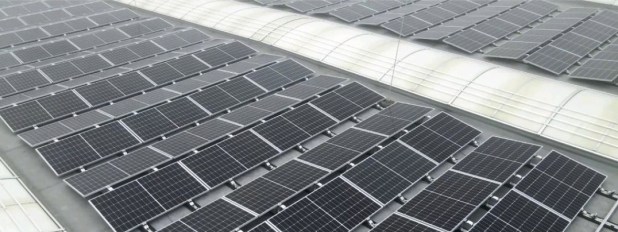
Photovoltaic system at the Liebherr Ochsenhausen factory
With the construction of the new photovoltaic system at the Ochsenhausen production site, Liebherr appliances is taking an essential step towards even more climate-friendly production. A total of 5,333 modules on the roof of the logistics center at the site will supply 1,996,000 kWh per year in the future, which corresponds to a saving of 790 tonnes of C02. The photovoltaic team erected the plant within 12 weeks and has been in operation since February 2022.
Electrolux reduces sea transport emissions by 15% in 2022
Electrolux will now use more sustainable fuels for 25% of its total sea freight. By partnering with shipping companies Maersk and CMA CGM Group to use biofuel based on waste oils and LNG (Liquefied Natural Gas), Electrolux will reduce its sea transport greenhouse gas emissions by 15 percent already in 2022.
Electrolux is working toward halving its transport emissions by 2025. To reach this target two important agreements have been signed with shipping companies Maersk and CMA CGM. With the new agreements in place, 25% of Electrolux Group’s total sea freight will be transported using the most effective solutions for decarbonizing available in the market right now. 80,000 twenty-foot equivalent containers (TEU) will now be transported by using Maersk’s biofuel, which is based on certified waste oils such as used cooking oil, and CMA CGM’s solution based on LNG (Liquefied Natural Gas) and guarantee of origin biomethane.
“These partnerships put Electrolux at the forefront in terms of the percentage of the total volume of products being transported in a more sustainable way. As we continuously contract increasing volumes of biofuel for sea transportation, we are also supporting the overall market development toward more sustainable practices for shipping goods across the world”, says Carsten Franke, Electrolux Chief Operating Officer
WHIRLPOOL CORP. OUTLINES PROGRESS ON NET ZERO TARGETS
Whirlpool Corporation today issued an update on progress towards achieving Net Zero targets the company first announced in May of 2021. As part of this update, Whirlpool Corp.—building on its long history of improved environmental performance—is accelerating its commitment to sustainable operations through investments in renewable energy, manufacturing plant retrofits, and on-going energy, water, and waste reduction projects.
“Our vision at Whirlpool is to improve life at home. We know fulfilling that vision requires us to think not just in terms of the four walls around us and the communities in which we live, but of the planet that sustains us,” said Marc Bitzer, chairman and CEO of Whirlpool Corp. “Over the course of our history we have consistently developed products and technologies that deliver on this vision.”
Demonstrating Action*
In 2021, Whirlpool Corp.:
Drove a 27 percent reduction of greenhouse gas (GHG) emissions globally for all Scope 1 and Scope 2 emissions compared to a 2016 baseline, accelerating the company’s progress to meet its Net-Zero target by 2030.Achieved 14 percent Scope 3 Category 11 emissions reduction, in line with its target reduction of 20 percent by 2030, compared to 2016 levels.Issued its first Sustainability Bond, withthe proceeds allocated to drive positive environmental and social impacts.Continued to develop innovative technologies and products that reduce its environmental impact.
Whirlpool Corp.’s approach to fostering long-term, sustainably-resilient operations starts with innovative design and technology to improve energy and water efficiency, as well as recyclability. Continuous improvements as part of the World Class Manufacturing process have been rolled out in plants and operations across the manufacturing process and supply chain.
“Whirlpool takes a holistic, long-term approach to environmental sustainability,” said Ron Voglewede, director of sustainability. “It’s not too far into the future that we envisage manufacturing home appliances in plants that are 100 percent renewable-powered with off-site and expanded on-site wind farms and solar panels, and an end-of-life product recycling program which directly feeds into our own supply chain for new products.”Whirlpool Corp. is one of the largest onsite wind energy consumers among Fortune 500 companies in the U.S. Through expanding on-site renewables, additional Virtual Power Purchase Agreements (VPPAs), and green energy procurement, the company targets a nearly one-third reduction in its global carbon footprint in its operations.
The company is on track to achieve its Zero Waste to Landfill (ZWtL) goal for all manufacturing sites by the end of the year. Currently, 90 percent of its sites have achieved Gold or Platinum ratings using the UL ECVP 2799 Zero Waste to Landfill standard. The company has also recently joined the U.S. Department of Energy’s (DOE) Better Climate Challenge, targeting a reduction of greenhouse gas emissions by 50 percent within 10 years and collaborating with the DOE and other organizations to cut carbon and save energy. Over the past five years, it has also achieved a 34 percent reduction in water consumption in its operations globally.
Advancing a Sustainable Future Through Our Products
Whirlpool Corp.’s average refrigerators use less energy than a 60 watt light bulb, its clothes washers have 57 percent more capacity than they did in 1992, and they use 78 percent less energy1—all without compromising quality and function. Overall, Whirlpool Corp. has reduced by 60 percent its product emissions since 2005, and continues to invest in innovation to launch leading products that improve performance, while lowering their overall carbon footprint.
An initiative in Europe has led to the removal of expanded polystyrene (EPS) packaging from cooking products and dishwashers sold to one of its large retail customers. The company also considers how it can use its scale and its presence in approximately 70 percent of U.S. homes2, to drive sustainable behaviors—from educating consumers about not needing to pre-rinse dishes before placing them in the dishwasher, to using connected appliance features to run their appliances during the best times to lower their costs and have the least impact on the electrical grid.To learn more about Whirlpool Corp.’s progress, please view the recently released 2021 Sustainability Report http://whirlpoolcorp.com/2021SustainabilityReport/

