
Electrolux been awarded Top Employer Europe for the fourth year in a row! And never before has Electrolux been awarded Top Employer in so many countries across Europe – with Switzerland and Austria joining the organizations recognized by the Top Employers Institute for creating exceptional employee conditions.
Tag Archives: Electrolux
Electrolux joins Home Connectivity AllianceHome Connectivity Alliance
Electrolux is now a member of the Home Connectivity Alliance (HCA) to make devices and apps work together across brands for a better consumer experience. Electrolux joins Samsung Electronics, Haier, GE Appliances, Arçelik, American Standard Heating and Air Conditioning and Trane Residential as founding members of the HCA, launched at CES. This alliance aims to ensure interoperability so consumers can use their television, washing machine, oven and other appliances across different brands, platforms and apps. “Electrolux is focused on sustainable consumer experience innovation that can help shape living for the better. As the number of connected products continues to grow in homes across the world, the need for cross brand interoperability increases to enable great consumer experiences. This is why we are happy to be part of HCA”, said Ola Nilsson, Electrolux Group CXO. “Interoperability is a necessity in order for us to drive ease of use and create value for consumers – added Electrolux CTO Andrea Corda, who will represent Electrolux on the HCA as a Board Director -. It’s similar to setting protocols, the same way you can use one browser to access any website across the internet. You’ll be able to use one device, be it your phone or your tv, to operate anything from an air purifier to an oven. Within that interoperability, we’ll create another layer to show what Electrolux, or AEG, or Frigidaire can do for you”. Along with interoperability, consumer safety and data privacy are key pillars of HCA’s mission. Home Connectivity Alliance members will have the opportunity to innovate, share expertise across peers, and become leaders in expanding the connected home ecosystem.
Electrolux Sustainable eating: The role of food preservation
Developing technologies to help consumers along the way to delicious, healthy, and sustainable meals – this is Elena Breda’s focus as she heads up Global Food Preservation at Electrolux.
Electrolux works hard towards its ambition to make sustainable eating the preferred choice by 2030. So what does sustainable eating mean when it comes to food preservation?
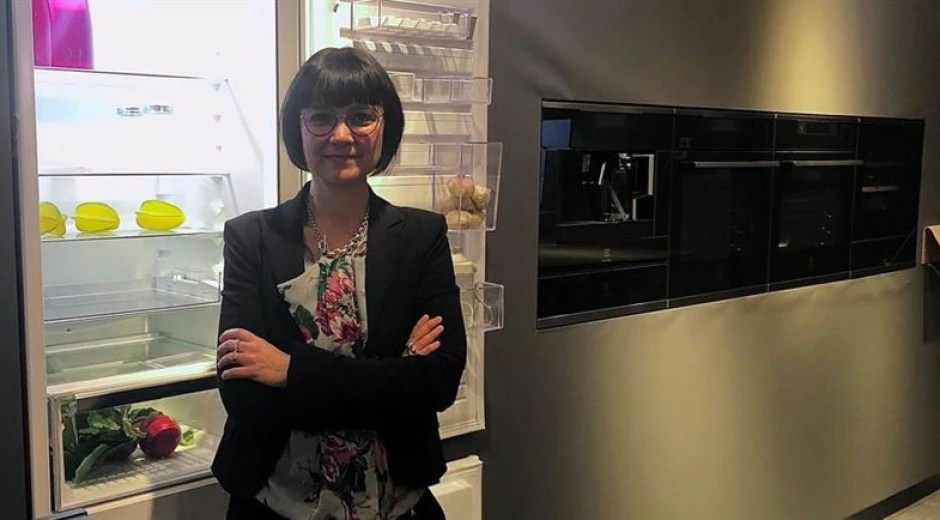
“We know that one-third of all food is currently wasted. So first of all, it means helping consumers protect food quality, maintaining taste, texture, color and nutrition levels for longer,” explains Breda. Some Electrolux refrigerators have sealed crispers with automatic humidity controls and filters that help fruits and vegetables keep their vitamin content for up to 14 days. There are also chillers to keep meat and fish fresh for up to three times longer than in regular fridge compartments.
But the work of the food preservation team – alongside the food preparation team – goes beyond that to promote sustainable eating, Breda says. “We look at the overall process: starting from the ingredients you buy, how you choose them, how you preserve them, how you process them, how you cook them, and, after you enjoy your meal, if there is any left over, how you preserve the food for later consumption, keeping the maximum quality. Connected appliances will play an important role.” she explains
With approximately 80% of environmental impact coming from the product use phase, Breda explains plans to tackle that. “We’ve made great strides in recent years in reducing energy use. For example, with refrigerators, we’re shifting more and more to ‘variable speed compressors’. They not only reduce energy use – they also reduce noise AND improve temperature stability, helping keep food fresh. That’s a win-win transition.”
Going beyond that, the team is committed to the Electrolux target of using 50% recycled plastics in its appliances by 2030.
With all the work her team does, consumer experience is always top of mind. “We want to offer consumers the full experience they expect. You may not be as emotionally attached to your fridge as you are to your steam oven, for example, but we will ensure you have fantastic ingredients preserved in the optimal way in your fridge to help you on your way to a fantastic meal.
Top tip from Elena:
“When you need to preserve meat or fish for longer, chill them at a constant temperature of -2 degrees Celsius, either in the chillers or in the convertible compartments in our refrigerators to guarantee taste, texture, juiciness and protein content for up to 3 times longer than in regular fridge compartments. If you need to freeze meat, sous-vide it before freezing, for a delicious meal later on.”
Electrolux recognised for climate leadership by CDP
CDP, a non-profit organisation helping companies disclose their environmental impact, has recognised Electrolux for its climate leadership, just as the company signed a new €1bn credit line linked to its sustainability aims.
For the second year in a row, the Swedish home appliance manufacturer has earned a place on CDP’s elite “A List” for tackling water security. The non-profit runs a global system for investors, companies, cities, states and regions, and each year thousands of companies submit their annual climate disclosures for independent assessment against its scoring methodology.Electrolux was among just 118 companies to make the CDP’s shortlist for 2021, picked from more than 3,000 leaders in the market. CDP also awarded it an “A-” score for its climate change work.
Electrolux receives EIB loan to increase energy efficiency of appliances
Are you looking to design the most sustainable kitchen possible? Are more energy-efficient appliances at the top of your specification list?
In the face of climate change, continued innovation in this area is of increasing importance for most.
To enable this, Electrolux has secured additional finance to boost research and the development of more energy-efficient home appliances, with a €250 million loan from the European Investment Bank (EIB).We have ambitious targets to become climate neutral and we appreciate the ongoing support from the EIB to help us achieve this. From how we source our materials, to coming up with innovations that allow both ourselves as a business and anyone who buys our products to have as low an impact on the planet as possible is central to us,” says Jonas Samuelson, CEO of Electrolux.
85% of total CO2 emissions in the life cycle of white goods are produced during the use of the products, highlighting the need for sustainability by supporting the development of products with improved environmental performance, such as appliances with reduced water and energy consumption. Electrolux will also study solutions to minimize plastic waste from its products and promote their recycling.
Electrolux compact appliances
With solo households set to grow 32% by 2030, and living space becoming ever more premium, we are seeing compact appliances being ever more desirable.
The new Electrolux Compact range is designed to fit in a wide range of kitchen configurations and includes the 900 Coffee machine, offering delicious coffee from the comfort of your own home. Easily prepare everything from espresso to cappuccino – just select a type of coffee, customise to your personal taste and the machine will do the rest with barista-level perfection.
Selecting a set of compact appliances for your kitchen design project no longer means making a compromise on performance.
For more information the Compact Range:https://www.electrolux.co.uk/kitchen/cooking/compact-built-in-range/
Electrolux receives EIB loan to increase energy efficiency of appliances
Electrolux has signed a €250 million loan with the European Investment Bank (EIB) to support research, development and innovation (RDI) on more energy-efficient household appliances.
Electrolux will use the financing to boost its research and development in the areas of energy efficiency and digitalization. The financing signed is the fourth EIB operation with Electrolux and comes after a similar facility signed in 2015, which also highlights the need for continued innovation in areas such as energy efficiency in the face of climate change.
“We have ambitious targets to become climate neutral and we appreciate the ongoing support from the EIB to help us achieve this. From how we source our materials, to coming up with innovations that allow both ourselves as a business and anyone who buys our products to have as low an impact on the planet as possible is central to us,” says Jonas Samuelson, CEO of Electrolux.
85% of total CO2 emissions in the life cycle of white goods are produced during the use of the products, highlighting the need for sustainability by supporting the development of products with improved environmental performance, such as appliances with reduced water and energy consumption. Electrolux will also study solutions to minimize plastic waste from its products and promote their recycling
Electrolux warned it may struggle to meet demand
Electrolux warned it may struggle to meet demand through the rest of the year and into 2022 due to global supply-chain challenges, after its profit slumped in the third quarter as component shortages held back production.
Europe’s biggest home appliances maker said it still sees demand normalising above pre-pandemic levels but flagged limited availability of some product categories through the year, with regional variances.
“We continue to have a tight collaboration with suppliers to mitigate global supply shortages, but we estimate that the fourth quarter will be even more challenging than the third quarter,” the rival to Whirlpool said in a statement.
“Although we anticipate sequential improvements in 2022, we expect challenging conditions to remain in meeting continued strong demand.”

ELECTROLUX INAUGURATES “GENESI”, THE GROUP’S MOST AUTOMATED FACTORY IN ITALY
Electrolux has inaugurated in Susegana (TV), “Genesi”, the most automated factory of the Group in the world that will produce built-in refrigerators. It required an investment of over 130 million euros and 134 new permanent hires, covers an area of 42,000 square meters, and hosts 1.2 km of assembly lines, equipped with over 6,000 sensors and 116 robots.
Advanced automation, digitization, innovation through new modularized product platforms, and important progress for operators, aimed at enhancing their skills and further raising the safety bar: these are the objectives that have guided the Electrolux Group in the implementation of its factory in most automated in the world, Genesi, which was inaugurated today in Susegana (TV).
Announced in July 2019, the project of the Genesi plant in which built-in refrigerators are produced using the most modern Industry 4.0 logic, represents the realization of an investment of over 130 million euros, of which over 95% made within the system Italian production: 1,200 meters of production lines, 116 robots and an automation level of 49, the highest in the world within the Electrolux Group. This change necessitated an important training plan for personnel working with the new systems and technologies, with over 7,000 hours of training on 36 different topics. Added to this is the inclusion of highly specialized profiles which have led, from 2019 to today, to over 130 permanent hires, including experts in connectivity, robotics,

“Genesi is part of a transformation program that the company has undertaken globally and of its Digital Transformation strategy. This new plant represents the window on the future of our innovative and sustainable way of producing, of responding to the demands of consumers and the market, and of enabling working synergies between people and machines designed to facilitate their work “, declares Massimiliano Ranieri. , Chief Executive Officer of Electrolux Italia and Chief Operations Officer of the Electrolux Business Area Europe. “I am particularly proud to be here in Susegana to inaugurate Genesi which, with its automation level of 49, the highest in the world for Electrolux,
The active workers online, between 60 and 100 depending on the product being processed, will operate in a completely new way, aimed at optimizing technical times and preventing errors or accidents, using the tools of industry 4.0: from tablets, smartwatches, touch screens and artificial vision systems. Furthermore, through more than 20 km of network cables, a central computer – DOME, Digital Operations Manufacturing Execution, a project of the Electrolux Group for the digitization of factories – collects and coordinates in real time the millions of data that come from automations and factory systems; data that support people in their daily work, allowing to intercept possible quality defects in advance and making available the ‘evolutionary history’ of each single product. Great attention was also paid to the well-being of the workers: the manual positions, designed according to the best international standards in the field of ergonomics, will be customizable according to the physical characteristics of each of them.The built-in appliances that will roll out of the new production lines of the Susegana plant will further strengthen Electrolux’s competitiveness in the refrigeration sector. The presence of 42 automatic quality measurement systems and that of over 6,000 sensors, together with various new technologies, will in fact guarantee a product capable of emitting up to 20% less CO2 and responding to all consumer needs: maximum performance , great attention to energy consumption and sustainability, optimal food conservation and waste reduction.
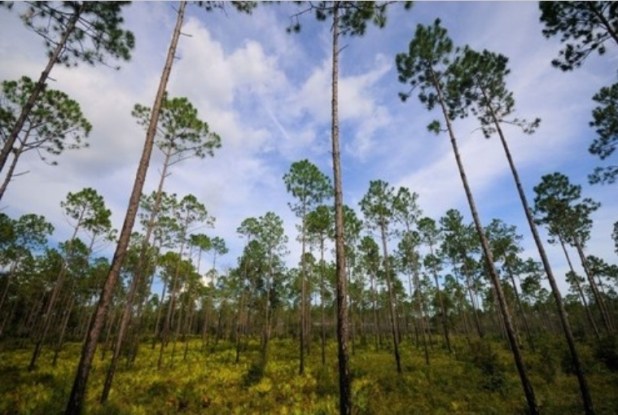
Electrolux Celebrates 1,000th Tree Donation To The Nature Conservancy
Electrolux announced today that it has donated its 1,000th tree to The Nature Conservancy.
Through a partnership with The Nature Conservancy’s Plant a Billion Trees campaign, Electrolux North America is helping plant a tree on behalf of every consumer who registers their new Electrolux appliance before June 30, 2022. The company reached the 1,000th tree in the campaign’s first three months. The campaign is a major forest restoration effort with the goal of planting a billion trees across the planet.
Electrolux is committed to a sustainable future, both in its manufacturing operations and in consumers’ homes.
Electrolux is planting a tree on behalf of every U.S. consumer who registers their new Electrolux appliance.
“We are deeply committed to sustainability and are proud to support The Nature Conservancy,” said Nolan Pike, head of Electrolux North America. “Many thanks to our consumers for helping us make a big difference and reach the one-thousandth tree donation mark so quickly. Together, we are planting the seeds to shape a better future for our planet – the home we all share.”
Electrolux U.S. consumers who want to register their new product can do so here. After registering a product, consumers will receive a welcome email with a link to select a tree to be planted in one of four important North American forests.
“Planting the right trees in the right places is a rewarding way to foster clean and abundant waters, enhance wildlife habitats, cool our cities, improve our health, and help mitigate carbon emissions to stabilize our climate,” said Rachel Holmes Urban Forest Strategist at The Nature Conservancy. “We appreciate partners like Electrolux for contributing to our efforts to plant one billion trees.”

