How Location-Based Technology Empowers Electrolux Smart Home Appliances

Electrolux is a leading global appliances company, producing a wide range of consumer electrical goods, including washing machines, cookers, vacuum cleaners, refrigerators, etc. Since 2017, Electrolux has been investing in ‘connected appliances’ as part of its digital transformation agenda, and to shift its business model from the traditional business-to-business (B2B) to business-to-consumer (B2C).

In 2020, Electrolux and IBM’s The Weather Company announced a new collaboration to use location-based Artificial Intelligence (AI) to enhance customer experience and help increase the energy efficiency of home appliances in order to reduce their impact on the environment.

AI-enabled weather forecasting

IBM’s weather API (Application Programming Interface) provides hyper-localized data on air quality, pollen levels, humidity and temperature to Electrolux. This data is then used as a basis for smart app recommendations about when to use appliances such as clothes dryers, air purifiers and air conditioners. For example, after reading the weather forecast, the smart app will give recommendations on the best time to start the dryer because it’s about to rain, or when to turn off the air purifier because the air quality that day is good.

With supervision from an experienced team of meteorologists, IBM uses AI and analytics to pull weather models together with relevant data sources and arrive at the most accurate forecast. The process includes a next-generation AI-enabled weather forecasting model called IBM GRAF (Global High-Resolution Atmospheric Forecasting) system. IBM GRAF uses Machine Learning to rapidly update atmospheric changes hourly and at a 3km resolution.

Connected home ecosystem

The real-time, location-based weather predictions are made available through the Electrolux Life App. Users are prompted to use their clothes dryer when rain is forecasted or when the air quality is not acceptable for air-drying. Similarly, the application recommends not to use the dryer when the outdoor weather is optimal for air-drying, thus saving energy.

The app can also control inputs for other appliances, such as the humidity control for air conditioners and accurate readings of indoor and outdoor weather to inform the use of air purifiers. An entire ecosystem of multiple connected appliances benefits from access to accurate weather forecasts, as well as environmental factors such as air quality, pollen, pollution and more.


Electrolux Life App with IBM weather notifications | Image credit: IBM

Location tech enabling hardware-as-a-service business model

In 2019, Electrolux kicked off trials of new hardware-as-a-service business models in Sweden and China, enabling consumers to subscribe to, rather than purchase, its products.

For instance, in Sweden, customers can subscribe to a robotic vacuum cleaner on a pay-per-use basis from only 1 SEK per sq m cleaned. The vacuum cleaner is equipped with a variety of sensors and software, including a location-based 3D Vision camera and laser for accurate navigation and area cleaned calculation. With Electrolux connected ecosystem technology, users can control the product via an app and schedule cleaning when they are away from home as well as monitor the number of sq m cleaned each month.

Demand planning and prediction

Electrolux also uses AI to plan and predict demand. By enhancing its historical sales data with data from external sources, the company ensures that retailers have the right goods when customers are demanding them.

For example, weather data is used to predict sales of air conditioners during summer time in Sweden. Using advanced statistical models, the data science team at Electrolux predicts the exact amount of the right products to be supplied to retailers at specific times of the year.

In addition to weather data, the company also monitors the Internet for online reviews, ratings and prices of products in both retail stores and online stores, including price promotions by competitors. It uses this data to avoid oversupply, hence retailers do not need to offer excessive discounts due to overstocking.

Since Electrolux products are supplied to different parts of the world, location technology is crucial to tune its manufacturing, distribution and customer supply chain. Based on the demand prediction, products are distributed from warehouses near the factories or plants, to redistribution centres. The demand planning practice helps optimize suppliers, logistics chains and transport, giving Electrolux a competitive advantage in the white goods market.

Electrolux study on current laundry practices

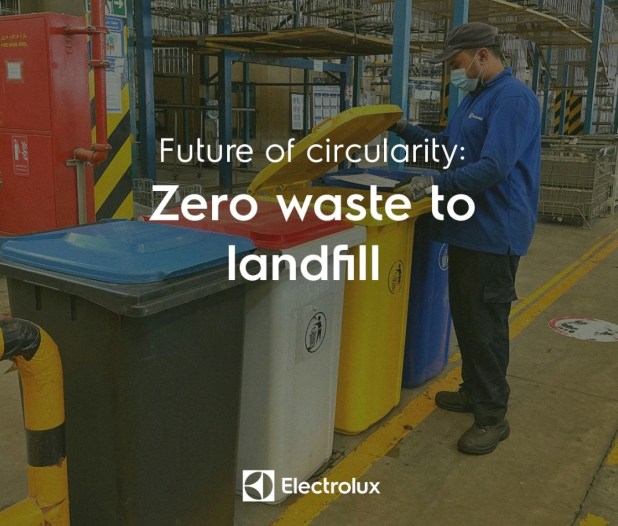
The Truth About Laundry” (European study on Electrolux laundry habits  , with 12,000 adults surveyed), despite being encouraged to wash clothes at 30 ° C or below for over a decade, nearly two-thirds of Europeans (63%) still washed at 40 ° C or above. As part of its “Better Living” program, Electrolux has bold sustainability goals in apparel care with the goal of making clothes last twice as long with half the environmental impact by 2030. To help To achieve these goals, the survey was conducted to understand current attitudes and behaviors when it comes to how people care for their clothes and to what extent people view the environment. The survey finds that laundry habits are out of step with climate problems and modern capacities. Nearly six in ten people (59%) are more or less on autopilot when it comes to washing clothes, claiming to do laundry the way previous generations have taught them. The report includes a detailed analysis to show that reducing the washing temperature from 40 ° C to 30 ° C would save over 27 kg of CO2 equivalent, per family, per year. Across Europe, this would amount to an equivalent saving of 4.9 million tonnes of CO2, equivalent to removing more than one million cars from the road. If 15% of households across Europe who regularly wash their clothes at 50 ° C or more also change, the equivalent total CO 2 savingsit could reach 6 million tons per year. When it comes to wash temperatures, sex seems to play a role, but it’s not as significant as the influence of age. Women, for example, are more likely to wash at 40 ° C than men (50% vs 45%) and men are more likely to wash at 60 ° C (13% vs 8%). However, across Europe, 45% of adults between the ages of 18 and 34 wash their clothes at 30 ° C compared to only 31% of 45-54 years and only 28% of 55+ years. As for the main reasons why more people do not choose to wash at lower temperatures, nearly half (47%) said they are unsure whether their laundry would be clean. 39% expressed particular concerns about a colder wash’s ability to remove stains and 21% said it was purely out of habit. Habitual laundry practices could also explain why over half of all adults (53%) are unaware of a link between washing at higher temperatures and lasting longer. The reason this is important, according to the research, is that the key to changing laundry habits for the good of the planet may lie in turning the conversation towards fashion

Webcast ahead of the Annual General Meeting with Electrolux Chairman

A webcast ahead of the Annual General Meeting with Electrolux Chairman and CEO is now available on www.electroluxgroup.com.

As previously communicated, the Annual General Meeting on March 25, 2021 will due to the coronavirus pandemic be held without physical presence of shareholders. In addition to the information already published ahead of the Annual General Meeting, Electrolux Chairman of the Board Staffan Bohman and President and CEO Jonas Samuelson share their reflections on 2020 and the strategy forward in a webcast. The webcast is available here http://www.electroluxgroup.com.

Electrolux has ranked top of the Sustainable Brand Index

Electrolux has ranked top of the Sustainable Brand Index™ for the Home Appliances & Consumer Electronics industry in Sweden.

The Sustainable Brand Index™ is Europe’s largest brand study on sustainability, with more than 23,000 Swedish consumers being surveyed for this year’s ranking.

Sustainable Brand Index™ is Europe’s largest brand study on sustainability. The study measures the perception of stakeholders on a brand’s sustainability across industries and countries. With the help of more than 60 000 consumers across 8 countries, the study measures and analyses over 1 400 brands across 34 industries on sustainability.

SUSTAINABLE BRAND INDEX (sb-index.com)

Electrolux posts 4Q beat on home-improvement boom

Electrolux AB on Tuesday posted a forecast-beating fourth-quarter net profit as customers continued to allocate more of their household budgets to home improvement, but cautioned that visibility this year remains limited.

The Swedish home-appliance manufacturer posted net profit of 1.86 billion Swedish kronor ($220.7 million) in the quarter, up from SEK560 million last year, as sales rose 5.9% to SEK33.9 billion.

Electrolux’s partnership with BIMobject gives architects and designers the ability to transfer digital Electrolux, AEG and Zanussi models

https://www.bimobject.com/en/product?brand=electrolux

Electrolux’s partnership with BIMobject gives architects and designers the ability to transfer digital Electrolux, AEG and Zanussi models, such as ovens, hobs, dishwashers and refrigerators, directly into their projects.

With the most comprehensive range of appliances on the platform, designers can find all the products they need, complete with installation drawings, full product specifications and 3D models, helping them plan their whole project in the most accurate and efficient manne

Electrolux raises market outlook after profit beats forecasts

A pick-up in demand for fridges and washing machines amongst housebound buyers throughout the pandemic helped Electrolux beat earnings forecasts on Friday and submit its easiest quarterly margin ever.

The Swedish domestic equipment maker, whose competitors encompass Whirlpool, LG Electronics and Samsung Electronics, suffered early on in the coronavirus crisis, as lockdowns in various massive markets precipitated a sharp drop in demand and hit production.

“Sales additionally benefited from shoppers spending extra time at home, the usage of their home equipment extra intensively and allocating extra of their family budgets to domestic improvement,” CEO Jonas Samuelson stated in a statement.

The maker of manufacturers such as Frigidaire, Zanussi and Anova stated running revenue rose to 3.22 billion Swedish crowns ($367 million) from 1.06 billion, beating the 2.44 billion predicted by using analysts, Refinitiv Eikon records showed.

Net income rose to 32.0 billion crowns, with natural income growing by way of 15.2%, versus 30.9 billion predicted by way of analysts. Operating margin rose to 10.1%, the best ever quarterly margin for the firm.

Electrolux presents vacuum cleaner made of 100% recycled and reused materials

Electrolux takes a new important step on the journey towards circularity with a prototype for change. Together with Stena Recycling, Electrolux has developed a vacuum cleaner made of 100 percent recycled and reused materials. The plastic and components originate from consumers electronic products, such as used hairdryers, vacuum cleaners and computers. The project addresses some of today’s key recycling challenges while exploring circularity in household appliances.

More than 400 million metric tons of plastic are produced globally every year, but less than 12% of this comes from recycled materials. Therefore manufacturers have difficulty finding enough safe and consistently high-quality recycled material. As a pioneer, Electrolux was first in the industry in 2010 to raise awareness about the global shortage of recycled plastics through the Vac from the Sea project. The volume of products containing recycled material has since increased across the industry but remain at low levels.

To step up the pace, Electrolux is partnering with Stena Recycling in the collaboration Circular Initiative. The goal is to learn more about how to make the market for recycled plastics function as well as for virgin materials. The first concrete result is a visionary vacuum cleaner made of 100 percent recycled plastic and reused components from electronic consumer products. The prototype is developed to explore circularity in household appliances.

“We at Electrolux have a strong commitment to reduce our climate impact by 2030 and circularity is a key dimension of this. The partnership with Stena Recycling is one of the important initiatives we engage in to push ourselves and the industry forward through knowledge sharing and innovation. We want to support consumers in making sustainable choices, and to succeed we need a solid approach to circularity”, says Jonas Samuelson, CEO at Electrolux.

Henrik Sundström, Head of Sustainability at Electrolux, adds: “This project has highlighted many of the considerations we take into account as we seek to become more circular. From product design and material use to new business models, there are regulatory requirements as well as quality and safety questions that need to be addressed. We have to strike a good balance in increasing the amount of reused and recycled materials when making products that are optimized for further recycling at the end of life”.

The material from used products such as hair dryers, vacuum cleaners and computers originates from Nordic households. The focus on consumer products has enabled the project to study the lifespan of the recycled products and components to gain insights about consumer recycling behaviors and attitudes.

“The Swedish industry has all the right conditions to become a pioneer in circular flows. We have the know-how, we have the technically advanced processing plants needed, and we have companies willing to take the lead in circular production. I’m proud of what we have achieved together in the partnership with Electrolux. It’s a crucial step towards a future where circular materials will play a significant role in manufacturing. Through the Circular Initiative we provide our expertise when collaborating with our partners to create world leading circular solutions”, says Kristofer Sundsgård, CEO at Stena Recycling.

By 2030 all Electrolux product ranges will contain at least 50% recycled materials. On the journey towards circularity, the learnings from developing the prototype will provide important knowledge for Electrolux future innovation.

Stena Recycling collects discarded electronic consumer products and breaks them down into raw materials for new products or for energy recovery. Read more about the Circular Initiative here.

The prototype vacuum cleaner is an action within the Electrolux Better Living Program, a plan to enable better and more sustainable living for consumers around the world through 2030.

Management change in AB Electrolux

Electrolux today announced that Jan Brockmann, Chief Operations Officer and Executive Vice President of AB Electrolux, has decided to resign from his position to pursue an external opportunity.

Jan Brockmann will remain with the company until September 30, 2020. The succession planning has been initiated.

“I want to thank Jan for many important contributions during his 10 years with Electrolux. During his tenure, with a strong focus on developing a global approach to modularization and automation, Global Operations have driven outstanding efficiency, product quality and innovation at Electrolux,” said Jonas Samuelson, President and CEO of the Electrolux Group.

Jan Brockmann joined Electrolux in 2010 as Head of R&D Major Appliances and has been part of the Group’s management team since 2011, first as Chief Technology Officer and since 2015 in his current role.