
Since 2015, ESCOLO has focused on commercial refrigeration solutions for supermarkets, bakeries, restaurants, hotels, and food service businesses. We know commercial buyers need more than good-looking equipment. They need stable performance, practical structure, dependable production, and a supplier who understands daily operation. That is why ESCOLO provides a wide range of refrigeration equipment, including display coolers, open chillers, kitchen refrigerators, freezers, and customized cooling solutions. With a 50,000㎡ automated facility in Foshan, OEM/ODM capability, and strict quality control, we support businesses looking for professional, long-term refrigeration partners.
Category Archives: OEM
Rethinking White Goods: The Modular Power Shift in Kitchen Design
For decades, we’ve built major domestic appliances—especially cooktops—as self-contained “boxes.” You buy a cooktop, and the heating elements, UI, and power boards are all crammed together under a single pane of glass.
But what happens when you separate the coils from the brain?
By decoupling the physical induction coils from the heavy-duty power control boards, we are witnessing a massive architectural shift in kitchen design. This modular separation is redefining what “white goods” can actually do.
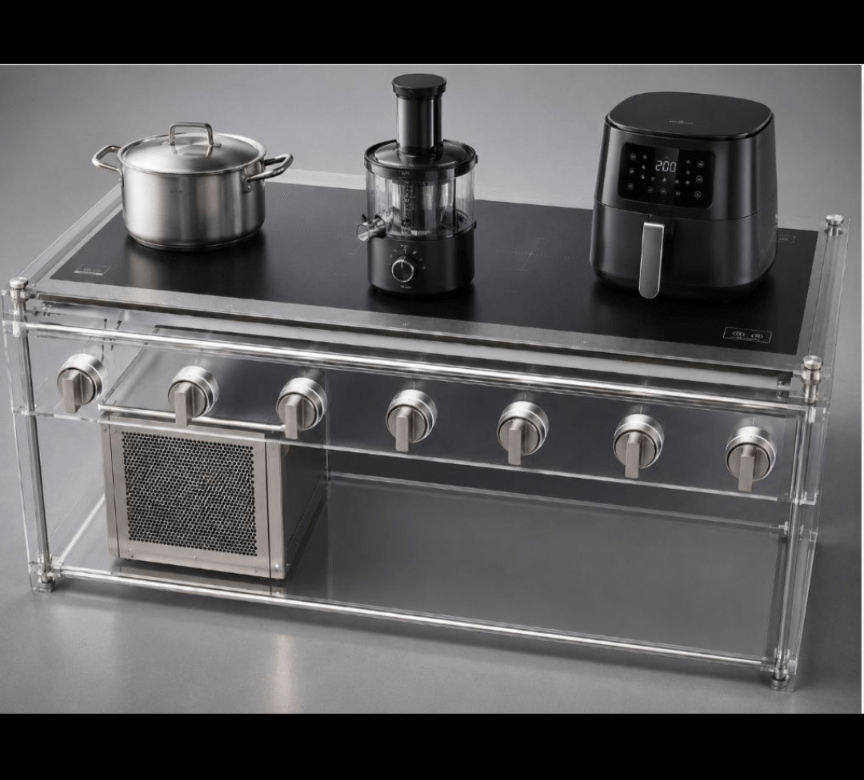
Novanest is a China-based OEM and ODM manufacturer focused on invisible and full-zone induction cooking solutions.
Why This Architecture is a Game-Changer
1. Ultra-Slim, “Invisible” Aesthetics
When you remove the bulky power boards from beneath the countertop, the space needed directly under the stove is slashed to almost nothing. This allows designers to create paper-thin kitchen islands with fully usable drawer space right beneath the cooking zone.
2. A Giant Leap for Right-to-Repair & Maintenance
Traditionally, if a power board fails, the entire glass cooktop has to be pried out of the counter. Under this new layout, the main electronic units live in an easily accessible side cabinet. Technicians can service or swap the “brain” of the appliance in minutes without ever touching the countertop seal.
3. Infinite Customization (1 to 8+ Zones)
Because the cooking zones are modular, manufacturers aren’t locked into rigid 30-inch or 36-inch footprints. Kitchens can be configured with two zones, six zones, or even irregular layouts spanning across an entire island, scaling effortlessly from high-end residential homes to demanding commercial kitchens.
4. Turning the Countertop into a Wireless Power Grid
The real magic happens when you pair this modular design with wireless power standards. Suddenly, the same glass or stone slab doesn’t just heat pots—it serves as a wireless energy hub. Homeowners can place a blender, cordless kettle, or air fryer directly on the surface, drawing power without a single messy cord in sight.
The Takeaway: The next generation of white goods isn’t about selling standalone appliances. It’s about turning the kitchen island into a unified, flexible energy platform.
C.A.E.M Marks Sixty Years of Innovation in Component Engineering
C.A.E.M is celebrating sixty years in the appliance components sector — a milestone that highlights its long-standing commitment to precision engineering, product reliability and forward‑looking innovation. Founded in 1966, the company has grown from a small specialist manufacturer into a trusted global supplier for major appliance brands.
Over six decades, C.A.E.M has expanded its portfolio across motors, switches, sensors and customised electromechanical solutions, supporting the evolution of modern white goods from early mechanical designs to today’s connected, energy‑efficient appliances. The anniversary also marks a renewed focus on R&D investment, sustainability and next‑generation component platforms designed for future manufacturing needs.
As the industry continues to shift toward smarter, quieter and more efficient appliances, C.A.E.M’s sixty‑year legacy positions it as a stable, innovation‑driven partner for OEMs worldwide.
Homa Accelerates AI‑Driven OEM Manufacturing
Homa is pushing ahead with a major digital transformation, integrating AI, robotics and full‑process digitalisation across its operations. The company’s No. 9 factory — focused on premium no‑frost refrigeration — now acts as a model for intelligent OEM production, combining automation, AI vision, AGVs and digital‑twin systems to boost efficiency, quality and manufacturing stability.
CEO Michael Yao says industrial intelligence is now central to Homa’s global competitiveness, while Homa Europe GM Federico Rebaudo highlights the growing need for OEM partners who can deliver cost‑effective, high‑quality, digitally enabled production at scale.
Homa’s continued investment in smart manufacturing strengthens its position as a leading global OEM for next‑generation refrigeration.
Changhong Meiling Hits Pause on Industrial Park Investment
Changhong Meiling has suspended investment in its planned appliance industrial park project, according to a disclosure published on May 19. While the filing provides limited detail, the decision underscores the increasingly cautious stance Chinese manufacturers are taking as demand softens and capital becomes more selective.
The industrial park — positioned as part of the company’s long‑term capacity and technology roadmap — now appears to be on hold as Meiling reassesses its investment priorities. The move aligns with a broader trend across the sector: expansion projects are being slowed, deferred, or re‑scoped as brands focus on stabilising margins, tightening inventory, and improving operational efficiency.
For Meiling, the suspension may signal a pivot toward more flexible production strategies or a recalibration of its growth model amid heightened competition in refrigeration and smart home appliances. With several Chinese appliance makers already trimming capital expenditure, the pause reflects a market recalibrating after years of aggressive build‑out.
Home Appliance Market Faces 2026 Squeeze as Costs Rise and Demand Softens
Global appliance demand continues to cool in early 2026, with inflation, weak consumer confidence and heavy oversupply putting pressure on margins across major categories. Raw material costs — from copper to plastics — remain elevated, while manufacturers struggle to lift prices in a saturated market.
China’s retail market is forecast to fall 6.7% this year, with utilisation rates below 70% and air‑con capacity far outstripping sales. Leading brands are responding with AI‑driven product upgrades, overseas expansion and tighter cost control, but trading conditions remain challenging.
The key question for the sector: who can innovate fast enough to stay ahead in a market where supply and demand no longer align?
Homa at the 139th Canton Fair

This edition of the Fair carried particular significance.
Fresh from receiving an IF Design Award for Homa Design Magazine and launching Issue No. 8, Homa demonstrated once again that its ambitions extend far beyond manufacturing. The company is shaping the broader conversation around refrigeration innovation, design culture and the future direction of the global Major Domestic Appliances (MDA) industry.
Every year, millions of refrigerators and cooling appliances produced within Homa’s advanced manufacturing ecosystem enter homes across the world. These products — built on a foundation of quality, innovation and long-term industrial reliability — reach consumers through partnerships with many of the most respected global appliance brands.
Why do these brands continue to choose Homa?
Because the expectations of buyers searching for refrigerator manufacturers in China have evolved. Cost efficiency alone is no longer the deciding factor. Today’s partners seek innovation capability, industrial stability, food preservation expertise, design culture and strategic, long-term collaboration.
Homa represents this new generation of China-based refrigeration manufacturing: globally connected, design-driven and innovation-oriented.
This is the space where Homa continues to expand its role — evolving from a high-performance appliance manufacturer into a global platform for refrigeration innovation, OEM collaboration and product development.
At the Canton Fair, this evolution took physical form. More than an exhibition stand, Homa’s booth — introduced this year as The Homa Squares — became a genuine meeting point for the global appliance ecosystem. Retailers, distributors, sourcing managers, OEM partners, designers, product developers and industry leaders gathered not only to conduct business, but to exchange perspectives, explore market shifts and discuss the future of refrigerators, freezers and cooling appliances.
The idea behind The Homa Squares emerged from a simple but powerful insight: throughout history, the world’s great squares have never been merely physical spaces. They are cultural stages — places where people meet, ideas circulate and new directions take shape.
Homa brought that spirit to the Canton Fair, transforming its presence into a space for dialogue, discovery and shared vision — a reflection of the company’s growing influence in the global white goods landscape
Haier and Jiaxipera
Jiaxipera compressor was honored with the Strategic Partner Award at the Haier Smart Home Global Supplier Conference, recognizing our strong global delivery capabilities and technological innovation.
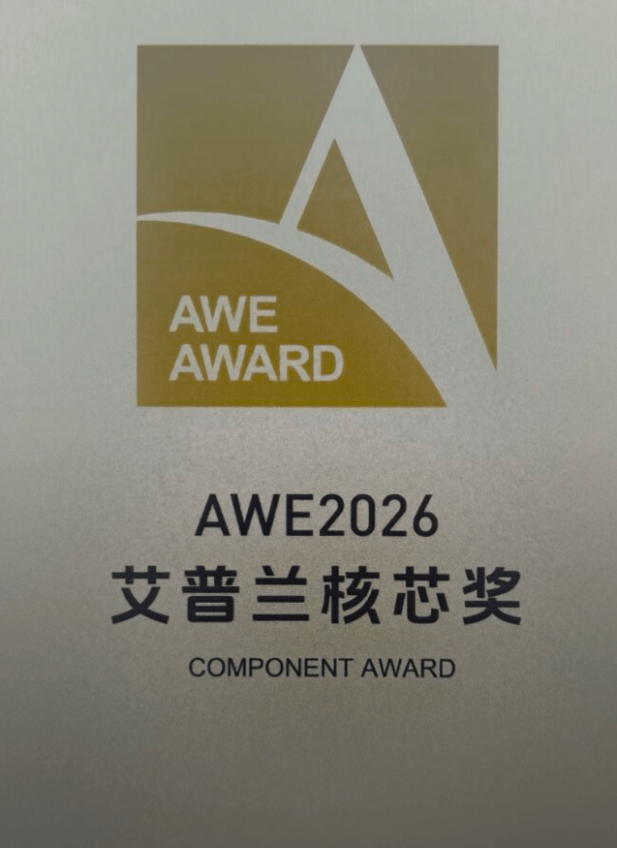
Jiaxipera AWE COMPONENT Award,
During AWE 2026, Jiaxipera’s flagship VNW1113Y variable speed compressor received the prestigious AWE COMPONENT Award, widely regarded as one of the highest honors in the home appliance and consumer electronics industry and often referred to as the sector’s “Oscar.” The award recognizes products that represent the highest technological standards and key innovation trends of the year.In addition, the VTL1116YL and VND3168U compressors were honored with the GOLDEN NAIL Award, one of the most influential professional awards in China’s home appliance upstream industry. This recognition highlights outstanding technical strength and proven innovation capabilities across the supply chain.
Together, these honors reaffirm Jiaxipera’s leadership in advanced refrigeration technology and its commitment to delivering high-performance, energy-efficient solutions worldwide.
Elica Closes 2025 with Modest Revenue Growth but Pressured Margins Amid Strategic Transformation
Elica has released its fourth‑quarter and full‑year 2025 results, offering a clear snapshot of a company in the middle of a major strategic shift—from a traditional range‑hood specialist to a broader cooking‑appliance player. The transition is underway, but it’s not without financial friction.
Steady Revenue Growth in a Challenging Market
For the full year 2025, Elica reported revenues of €461 million, a 1.6% increase compared to 2024. The final quarter contributed €111 million, with organic growth of 1.7%, signalling that demand held firm despite a competitive and promotion‑heavy environment.
This growth was supported by:
– Strong promotional activity across key markets
– The rollout of new product lines
– Continued investment in expanding the cooking‑appliance portfolio
Margins Under Pressure as Transformation Continues
While top‑line performance remained positive, profitability took a hit.
Elica’s EBITDA declined from €31 million to €28 million, bringing the margin down to 6%.
The company attributes this margin squeeze to:
– Heavy promotional spending across the sector
– Costs linked to launching new products
– Significant investments required to evolve from range hoods into full cooking solutions
This shift is central to Elica’s long‑term strategy, but the financial impact is clearly visible in the short term.
From Profit to Loss: A Difficult Bottom Line
The most striking figure in the 2025 results is the bottom line.
Elica closed the year with a net loss of nearly €5 million, a sharp reversal from the €2.6 million profit recorded in 2024.
The company remains confident that its transformation will strengthen its competitive position, but 2025 underscores the cost of that evolution.
What This Means for the Appliance Sector
Elica’s results reflect broader trends we’re tracking across the white‑goods industry:
– Brands expanding into full cooking ecosystems
– Higher promotional intensity as competition tightens
– Margin pressure as companies invest in innovation and product diversification
Elica’s pivot toward integrated cooking appliances positions it well for future growth, but 2025 shows that the transition phase will require resilience—and continued investment.

