
Falmec S.p.A., a Treviso-based company specializing in the production of design range hoods for kitchens, has finalized the acquisition of 100% of Friulana Accessori S.r.l. and Metaldomus S.r.l., companies historically active in the production of accessories and technical items for kitchens and bathrooms.
With over 50 years of expertise in the market and an internationally recognized brand Falmec proved to be the ideal partner to ensure the generational transition to the acquired Companies.
Category Archives: Manufacturing
Copreci new factory
Copreci signed an agreement with local partners Fresh Electric, EBDA and El Araby to invest $7.6 million in the first plant in Egypt, which will produce 15 million safety valves for gas stoves. This new plant will start serial production in April 2023. This new plant will be added to those already established worldwide and will enable the company to expand its product portfolio in the region, an increasingly interesting market.
Egypt has 105 million inhabitants and an annual growth of 3 million people, a country that is moving towards industrial modernization, where the white goods sector is a priority in this development.
Copreci has been working for many years and has been the reference for gas stove solutions in Egypt. Now, hand in hand with its local partners, it is taking a further step to provide local support for the technical and growth challenges faced by companies in the domestic appliance sector in the country
Midea on the Board of Connectivity Standards Alliance
Midea Group announces that it has joined the Connectivity Standards Alliance , becoming a new member of the Board of Directors, to live up to its vision of improving consumers’ lives through universal and interconnected technology. In this context, Midea Group hopes that more and more companies will join in supporting the integration with Matter, the unique protocol of the Connectivity Standards Alliance that allows the most diverse IoT devices and smart appliances to communicate effectively.By joining the Connectivity Standards Alliance team, Midea Group will be at the forefront of promoting collaboration between all consumer electronics and smart home appliance brands, so that everyone can experience universal connectivity. As an industry leader, it is imperative that all of our brands’ smart appliances work effectively in tandem with connected devices from other global brandsMidea Group joins the Connectivity Standards Alliance together with other important companies in the sector and will collaborate in the creation of a universal connectivity protocol for all operators in the sector. Founded in 2002, the Connectivity Standards Alliance has been a leader in creating global open standards like Matter, building the foundation and future of IoT. With a broad membership of more than 500 different companies contributing market-proven technologies and best practices, and the 29 companies on the Board of Directors, the members of the Connectivity Standards Alliance have worked together for nearly two decades to simplify and increase the compatibility of the ‘IoT and concretely improve people’s lives.
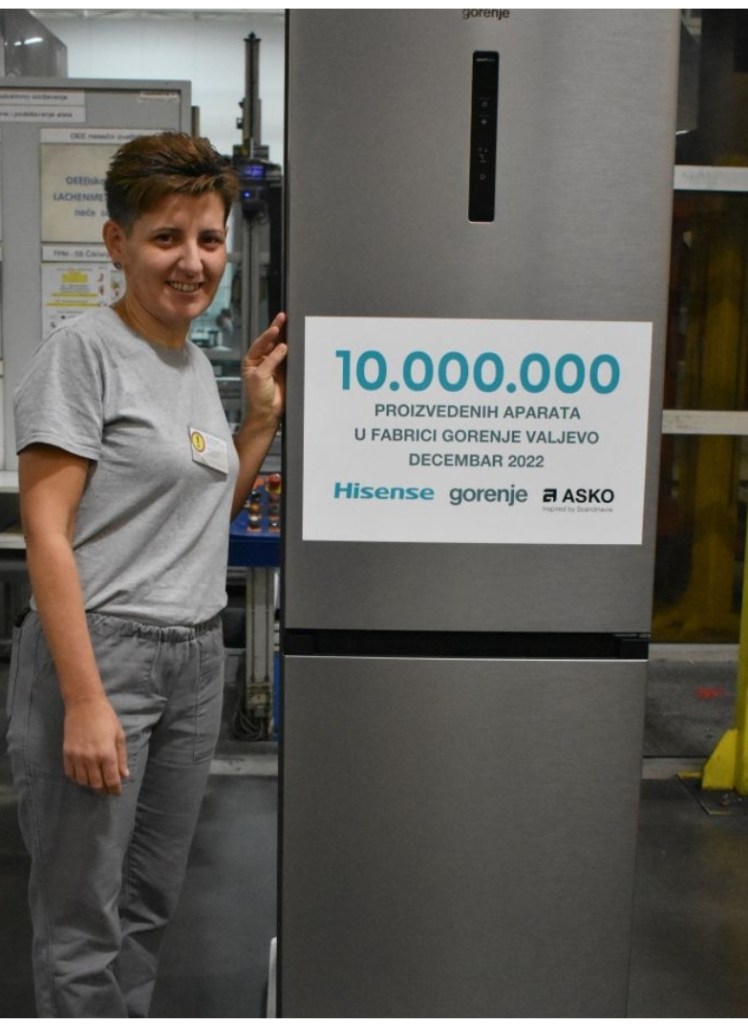
Ten millionth refrigerator Hisense factory in Valjevo
The ten millionth refrigerator was produced in Hisense factory in Valjevo, Serbia. The ten millionth refrigerator came off factory line at the beginning of December. According to the factory’s tradition, this jubilee refrigerator is not intended for sale, but for one of the employees, Mara Veselinović, who contributes to the company’s success every day with her commitment, hard work, and dedication. Mara Veselinović, the winner 🏆 of the jubilee device, did not hide her happiness for the gift given to her: “I try to give my best every day in my work, and I am glad that the company recognized my effort. The device I received will be useful for my daughter, who became a mother two months ago. I am very grateful to the company for the gift.”
SEVERIN TAKES THE NEXT STEPS IN THE REALIGNMENT OF THE BRAND COMPANY
Important milestones reached in the development and expansion of the brand business in Europe.
Ulrich Cramer, CFO for many years, is leaving the company at his own request.
CEO dr Joyce Gesing drives realignment with strong leadership team.
In 2022, SEVERIN once again reached important milestones in the transformation process. The product portfolio was streamlined and realigned. Several high-end products and innovations have been successfully brought to market, with a high level of acceptance among end consumers and trading partners. The e-commerce business was successfully expanded across Europe in a difficult year. In addition, cooperation with specialist retailers in the electronics, grilling and hardware stores sectors was intensified. Important investments were made at the company’s headquarters in Sundern, Sauerland, as well as in processes and IT systems. All of this forms the basis for the international expansion of the manufacturer of electrical household appliances over the next few years.SEVERIN is a leading international manufacturer of intuitive, innovative and sustainable electrical household appliances. As a German quality brand with a 130-year history, SEVERIN stands for reliable and durable products that make everyday life easier for customers. With its headquarters in Sundern (Germany), six of its own sales companies in Europe and a long-standing presence in Asia, SEVERIN is globally active and supplies customers all over the world.
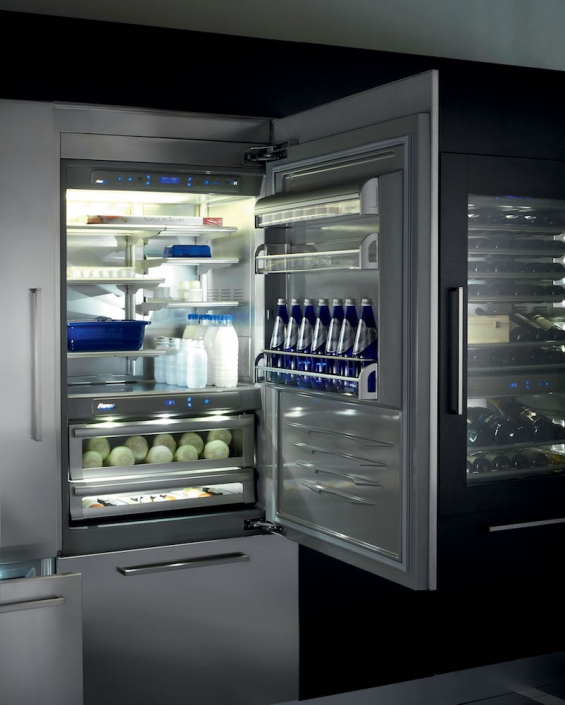
Fhiaba sells 25% to the Swiss V-Zug
Fhiaba and V-Zug announce that they have signed a strategic partnership aimed at growing Fhiaba ‘s potential as an emerging manufacturer in the high-end domestic refrigeration segment and to strengthen V-Zug ‘s role as a reference appliance supplier for high-end kitchens level.The partnership, which has seen V-Zug acquire 24.99% of the shares of Fhiaba, will increase the production capacity of the Azzano Decimo-based company, allowing it to meet the growing demand for luxury refrigeration with the Fhiaba and V-ZUG, and with OEM customers.
Massimo Baron Toaldo will remain as president and CEO of Fiaba, and will be joined on the Board of Directors by Alberto Bertoz , chief international officer of V-Zug, and by Federico Zoppas , general manager of Zoppas Industries, as an independent member of the board.Production capacity should double by mid-2023.

Arçelik Egypt factory
Arçelik celebrate laying the foundation stone for their first factory in Egypt.
Located in Cairo’s 10th of Ramadan Industrial Zone, the factory is projected to start manufacturing in Q4 of 2023 with an annual capacity of 1.5 million household appliances.
The state-of-the-art manufacturing site, with a total area of 114.000m2, will produce eco-friendly cookers and refrigerators in the first phase of production.
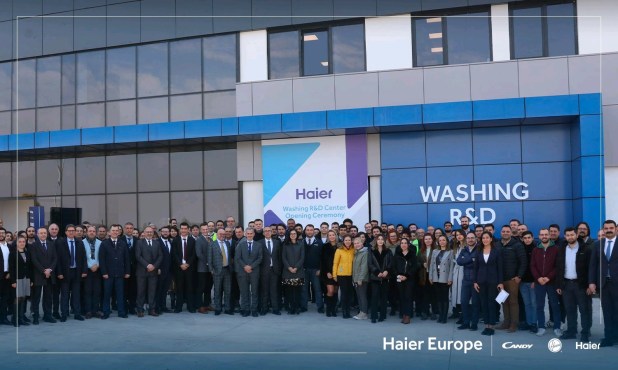
Haier Washing R&D center
Haier is pleased to share that they recently inaugurated the new washing R&D center in Eskişehir, Turkey.
Located in a 190,000 square meter space within Haier’s New Green Field Production Campus, the new R&D office is home to over 150 people.
Opening of the Washing R&D center represents another important milestone in our growth journey, and will support us in our plans to build an even stronger presence in Turkey, further strengthening Haiers capabilities in developing cutting-edge solutions and technologies.
Carla De Luca, Sustainable Procurement, on how we’re helping our suppliers become more sustainable Electrolux
Carla De Luca, Sustainable Procurement, on how we’re helping our suppliers become more sustainable
December 1, 2022
As a sustainability leader, Electrolux Group aims to reach net-zero emissions across the value chain by 2050. To make this happen, it is vital our suppliers are on board. Carla De Luca, Sustainable Procurement Senior Program Manager at Electrolux, explains how we’re working with them to improve their environmental performance.
Tell us a bit about your role.
I’m a sustainability leader, focused on responsible and environmentally-conscious business practices and decision making. My role was created four years ago to create a center of excellence within purchasing at Electrolux and I work with our top 300 suppliers to improve their environmental performance.
How does your team work with sustainability?
We have had a responsible sourcing program for over 15 years at Electrolux with some awesome activities. But what we’ve done over the last three years is to strengthen the environmental assessment of our suppliers. This has created a more holistic approach to supplier relationship management and sustainable procurement that ensures we take better informed decisions to make our sustainability goals a reality.
Why is sustainability so important in purchasing?
With supply chain emissions being on average 12 times higher than operational emissions, we recognize that working with suppliers is vital to reducing our overall carbon footprint to reach our 2050 goal.
We have to work closely with both our purchasing teams and our suppliers in order to achieve our sustainability objectives. In fact, I see our supply chain as an extension of our own business and we are ultimately asking our suppliers to work with their business in the same way as we run our own operations. We have committed suppliers, but they sometimes need our help and support to improve their sustainability performance.
How do you promote sustainability among suppliers?
Our initial priority was to get our suppliers to start measuring their carbon footprint and to set their emissions reduction targets. This was a huge task but essential in enabling them to reduce their emissions.
We also worked to change the misconception that sustainability increases cost – to introduce a “value-based approach”. In our supplier training sessions, we raise awareness that sustainability can leverage cost reductions, for example through energy and resource efficiency. Our value-based approach to purchasing takes a much broader perspective on value than just cost, which is good for business and a more sustainable world.
How have our supply chain partners responded?
I’m really proud of our suppliers who I have spent a lot of time engaging with to make sure they are on board with our sustainability approach. We actually receive messages of thanks from suppliers, and they really see Electrolux as a change agent that contributes toward their shift to becoming more sustainable.
What are the success factors that make Electrolux a world leader in sustainable procurement?
Besides our holistic and value-based approach to sustainability, I would say it’s our dedication to supplier engagement and collaboration.
In 2022, we are the only CDP member company in the world with a 100% supplier response rate (among 250+ customers with over 150 suppliers engaged). As companies have an average response rate of 65-70%, we have a clear advantage when we engage with our supply chain.
We also collaborate and share best practice. For example, we are planning to roll out our Green Spirit program, which is our internal initiative to reduce environmental impact in our own operations, to some of our suppliers. At Electrolux, we have so much expertise and experience and we want to help bring our suppliers along on our sustainability journey
Electrolux redundancies
Electrolux announces redundancies: there will be 76 in Porcia and 25 in Susegana. Not renewed 300 expiring workers
The union: only voluntary and incentivized exits. In Italy the total number is 222 cuts. Redundancy fund risk in 2023
There are 222 redundancies announced by Electrolux for Italy during a meeting with the trade unions. The most substantial personnel cuts will be absorbed by the Porcia plants which will see the exit of 40 employees and 36 workers (10 of whom in the spare parts warehouse), and Forlì which will instead see a cut of 19 employees and 77 workers. Redundancies for 25 employees in Susegana while the cuts will affect 10 employees in Solaro in the province of Milan. The site is also the protagonist of an investment process which in the next few years will see the company spending around 102 million euros to modernize the production lines. In Cerreto there will be 5 outgoing employees while in Assago there will be two redundancies.
The operation aims to be concluded within the first quarter of 2023 and provides for the use of the incentived Naspi instrument. The negotiation will continue in the individual plants.

