
Vestel plans to support its rapid expansion in emerging regions, such as Oceania, with a US$180 million investment in increased production capacity.
Identifying Australia and New Zealand as two important emerging high-growth markets, the ODM/OEM technology giant has committed the spend to keep up with demand across all major domestic appliance (MDA) product categories. These include cooking, refrigeration, dishcare and laundry products, which make up most of its current, soon-to-increase MDA production capacity of 13.5 million units..
Author Archives: whitegoodsnow
Electrolux Professional has reported global growth for 2021
Electrolux Professional’s international headquarters in Stockholm, Sweden, has reported that its overall group financials have been positive in 2021.
The catering equipment manufacturer stated that the recovery of the hospitality industry has been faster than anticipated with its sales growing by 10% and its profit by 50%. This represents a net sales total of SEK7,862m (£635.3m).
60% of global net sales were from the food and beverage segment, with the remaining 40% from laundry. By region, 69% of net sales were from Europe, 16% from the Americas and 15 from Asia-Pacific, Middle East and Africa.
A Taste for Design from Gaggenau
Gaggenau created an extraordinary short film and event series called “A Taste for Design,” designed to laud the intersection of architecture, design and the culinary arts. Each event pairs a MICHELINy the first videos of the series here https://www.gaggenau.com/us/for-professionals/news-and-events/a-taste-for-design

GE launch Arden
GE Appliances, a Haier Company, announces the launch of a very innovative product: Arden, a pellet barbeque smoker that’s been transformed to be used indoors instead of out. New kind of small appliance, it enables anyone to easily create mouthwatering barbecue from the kitchen, thanks to a unique smoke elimination system first innovated at FirstBuild for the Monogram Smart Hearth Oven. This system allows Arden to be used in any indoor setting.
The FirstBuild product generates fresh smoke from wood pellets, and make it circulate throughout the appliance. Temperature can be controlled in a precise way throughout the cooking process. Moreover, the Arden’s smoke-elimination technology requires no additional filters to clean or replace.
In addition, maximizing countertop space, Arden can feed a family without having to fire up the big smoker outside. Arden can smoke up to three racks of ribs at a time, or a brisket, or a pork butt, as well as spices, cocktail garnishes, sauces and more. Arden’s remarkable smoke generation system also means it only needs a fraction of the amount of wood pellets when compared to an outdoor smoker.
Arden changes what it means to barbecue – said André Zdanow, executive director of both FirstBuild and Small Appliances at GE Appliances -. Arden is more than a revolutionary new product; it redefines in-home cooking. Arden will both delight experienced pitmasters and make smoking food and ingredients accessible to a whole new audience.
About FirstBuild
FirstBuild invents what’s next for the home. Rapidly taking product concepts from mind to market, FirstBuild’s global Co-Creation mission enables anyone to submit appliance product ideas or contribute to the ideas of others and participate in its hands-on process with its in-house team of world-class engineers and design experts. FirstBuild strives to launch a dozen new products or features each year, with the ultimate goal of launching them at scale—often to their parent company, GE Appliances, a Haier Company. Whatever you’re passionate about, come make it here. For more information on how to get involved, visit FirstBuild.com.
Small Domestic Appliances market to expand at CAGR of 5.8% from 2020 to 2030
Transparency Market Research repprts the global small domestic appliances market is estimated to reach €61.8 billion by 2030, developing at a CAGR of 5.8% during the forecast period from 2020 to 2030, according to new research.
The research firm says factors such as expanding middle class population, discretionary money, and better goods are likely to drive the global small domestic appliances market in the years to come.
Anurag Singh, CEO at Transparency Market Research, says urbanisation and rapid industrialisation play an important role in boosting economic growth all over the world
The trend of adopting multifunctional appliances to replace conventional appliances is likely to support the growth of the global small domestic appliances market,” said Mr Singh.
“With the development of artificial intelligence in floor care applications, the small home appliance industry is undergoing substantial transformation. AI recognises typical robot trapping barriers and the smart robot technology in vacuum cleaners allows users to clean floors with fewer concerns than before.”
Mr Singh added that cold-pressed juices are becoming increasingly popular among millennials, and they are one of the main growth drivers for the global small domestic appliances market.
“As a result, small domestic appliance manufacturers are beefing up their R&D capabilities in order to provide strong engines in juicers that save energy.”
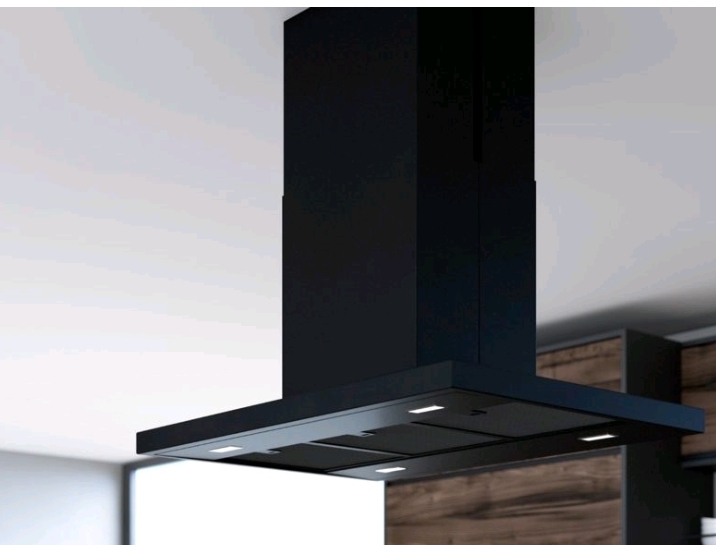
Nero from Miro
The new Nero 900mm black island hood by Miro.
– Laquered black finish (RAL 9005)
– Touch control
– Black lacquered aluminium filters
– Powerful 1100GP Silence Motor
– Motor with sound absorbing material
– AC System (balanced extraction)
– LED lighting
Kenwood Red Dot Awards
Kenwood are thrilled to announce they been awarded Red Dot Design Awards for both of their Entries. Into the
Red Dot Awards: Product Design [2022] Winners:
Quickmix + / Chefette (Hand & Stand Mixer)
Multipro Express Weigh + (Food Processor)

CamCook from Electrolux/AEG
Electrolux/AEG commitment to help consumers simplify and personalise their cooking journey is often enabled by innovative connected technologies, and CamCook® – our new food recognition feature for smartphones – is an industry first.
Using an artificial intelligence algorithm to recognise 20 predefined dishes and then send the optimal settings to the oven, the user can also build their own library of favourite dishes within the app.
CamCook® is now live in the MyAEG Kitchen and MyElectrolux Kitchen Apps in Europe. https://www.electroluxgroup.com/en/electrolux-launches-ai-feature-camcook-for-smartphones-33735/

AQ Sense Range of Hoods from Franke
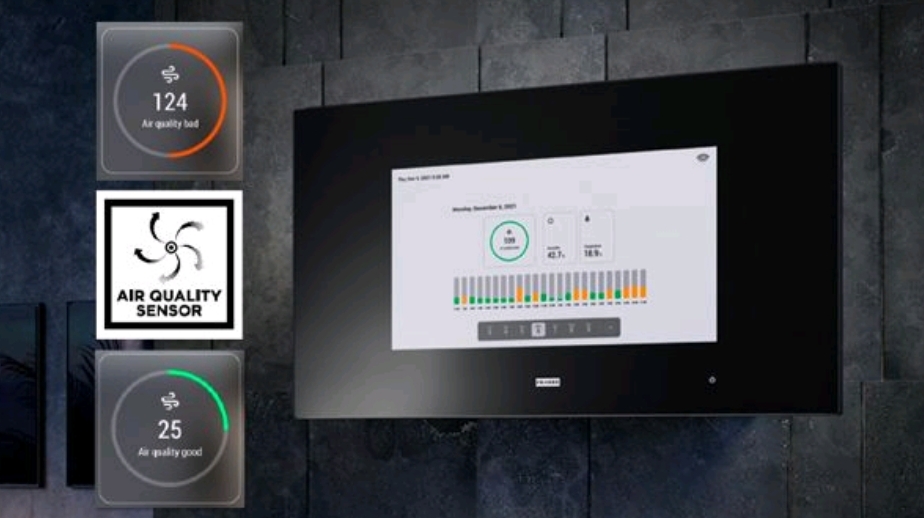
The new AQ Sense Range of Hoods from Franke Home Solutions is a step forward in keeping the kitchen air quality safe and bringing smart technology into the home.
Thanks to its AQ Sense technology, the hoods are equipped with an air quality sensor that constantly monitors the air quality, temperature and humidity. The hood automatically activates when unsafe levels of VOCs (volatile organic compounds) are detected, ensuring that the indoor air quality remains safe and healthy in your kitchen.
Everything can be controlled from your phone through the Franke App, and the AQ Sense Range is also compatible with Amazon Alexa. Furthermore, there is also a built-in browser, so recipes, music, videos and much more can be enjoyed while keeping the kitchen safe. A truly smart solution that every house
LG factory
World Economic Forum Recognizes LG for Innovative Digital Transformation of Its Home Appliance Manufacturing Facility in South Korea LG Smart Park, a production base of LG Electronics (LG), has been selected as a Lighthouse Factory by the World Economic Forum (WEF).
Shaping the future of manufacturing, WEF “Lighthouse” facilities implement Fourth Industrial Revolution technologies, such as the Internet of Things, big data, artificial intelligence and robots, into manufacturing and supply chain operations to deliver a wide range of benefits, from increased production efficiency to enhanced environmental sustainability.
LG Smart Park, LG Electronics’ home appliances factory in Changwon, Republic of Korea
‘Digital twin’ technology enables the operation system to analyze the production processes in virtual reality.
Refrigerator door attachment based on 3D vision recognition technology
Overhead conveyor system
“As the world grapples with many challenges, it is remarkable to see how Lighthouses are yielding sustainability benefits while achieving business goals, which we call eco-efficiency,” said Francisco Betti, Head of Shaping the Future of Advanced Manufacturing and Value Chains, World Economic Forum. “We need them to continue illuminating the way forward for the global manufacturing community by shaping a responsible future of manufacturing that works for people, society and the environment.”
Over the past five years, LG has transformed its factory complex in Changwon, South Korea into LG Smart Park, a futuristic hub of home appliance manufacturing. The key elements of the transformation are a digitally-enabled end-to-end three-dimensional logistics system, an advanced analytics system based on edge computing technology and machine learning that predicts defects, and state-of-the-art facilities that can mass-produce multiple models to respond flexibly to customer requirements.
The newly implemented “digital twin” technology enables the operation system to analyze production processes in virtual reality. It can predict if any issues will occur within the next 10 minutes and provide exact parts and materials for the assembling of each appliance with an accurate, up-to-the-minute status of the facility’s logistics operations. Sensors utilizing deep learning technology are installed throughout the factory to monitor each phase of production in real-time, helping factory workers to preemptively identify and resolve any possible issues. As a result, the cost of defective product returns dropped by 70 percent from 2020 to 2021 while overall quality competitiveness[1] and production efficiency[2] were both significantly strengthened.
Floors one, two and three at LG Smart Park employ an overhead conveyor system that quickly transports boxes containing refrigerator parts to the required production lines. Attached to each line is an intelligent warehouse that monitors inventory in real-time, enabling automated materials management, including the request of additional parts and supplies.
On the ground, automated guided vehicles (AGVs) leveraging stable 5G network connectivity transport parts and materials to wherever they are needed on site. Through its three-dimensional logistics automation system, the company can minimize the amount of warehouse space needed by 30 percent compared to conventional logistics systems, and shorten the time required for hourly materials transportation by 25 percent.[1]
LG Smart Park has also adopted the use of robots featuring an AI engine and camera to make the home appliance production process faster and safer. The robots undertake dangerous and complicated tasks, such as welding and the lifting of heavy parts and equipment.
LG plans to apply the innovative, smart production technologies pioneered at LG Smart Park to a total of 26 LG production facilities in 13 countries, accelerating the digital transformation of its global manufacturing network by 2025.
“LG Smart Park illustrates our strong commitment to adopting the revolutionary technologies as the leader of the global premium home appliance market,” said Lyu Jae-cheol, president of the LG Electronics Home Appliance & Air Solution Company. “We are presenting a blueprint for the future of manufacturing, one that delivers better outcomes across environmental, economic and employment aspects.”
For more information, please visit https://www.lgnewsroom.com/2022/03/lg-smart-park-named-lighthouse-factory-for-futuristic-manufacturing-technology/
[1] Comparing the figures from the year 2020 to 2021 according to the lighthouse site visit report by World Economic Forum.
[2] Units produced per hour has increased by 17 percent, comparing the year from 2020 to 2021 according to the lighthouse site visit report by World Economic Forum
About LG Electronics Home Appliance & Air Solution Company
The LG Home Appliance & Air Solution Company is a global leader in home appliances, smart home solutions, air solutions as well as visionary products featuring LG ThinQ AI. The company is creating various solutions with its industry leading core technologies and is committed to making life better and healthier for consumers by developing thoughtfully designed kitchen appliances, living appliances, HVAC and air purification solutions. Together, these products deliver enhanced convenience, superb performance, efficient operation and compelling health benefits.
SOURCE LG Electronics,

