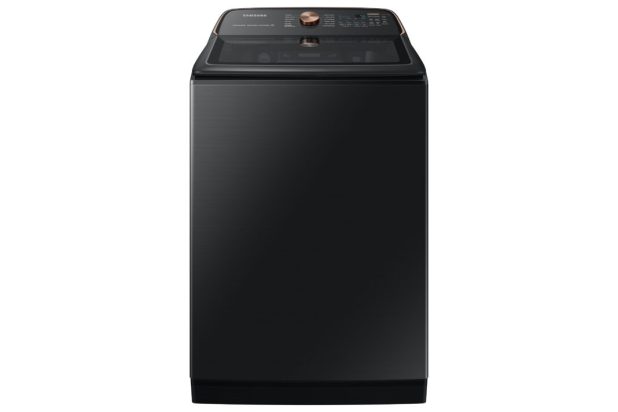
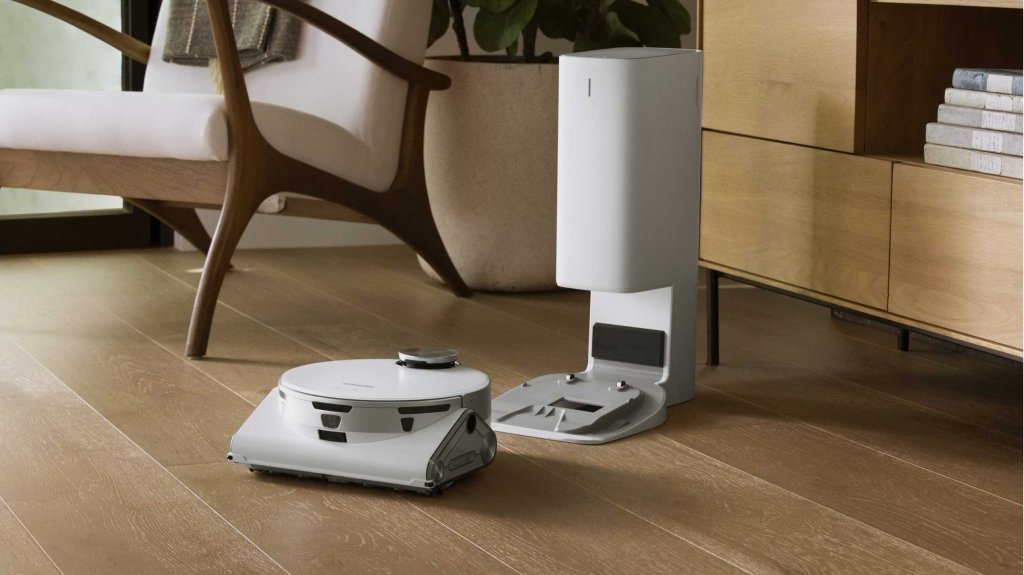
Samsung’s Bespoke home appliance shipments passes 1 million units

Samsung Electronics announced on Wednesday that global shipments of its lifestyle home appliance brand Bespoke exceeded 1 million units as of the end of the year, an achievement in 20 months since the company launched its first Bespoke refrigerator model in June 2019.

Refrigerators topped the list of Bespoke home appliance sales, accounting for 75% of its customizable home appliances. Bespoke refrigerators accounted for 67% of refrigerators sold in Korea last year. It was well-received in Europe, China and Central Asia and will launch in North America this year. The refrigerator is best known for its customized module where customers can choose among 27 door panels according to their taste and preference.

Bespoke dishwashers, which debuted in June last year, was also hugely popular and grew in sales. Samsung Electronics is applying the Bespoke concept to its home appliance selection which includes electric stoves, induction cooktops, commercial air conditioners and air purifiers. Samsung Electronics included Bespoke home appliance models in its “Samsung Electronics Sales Festa” promotion held for this month in celebration of the 1 million unit milestone.

Samsung’s AirDresser is a Life-changing Home Appliance

These days, keeping our clothes, outerwear and other fabrics clean and pollutant-free is a concern that is top of mind for many of us all around the world.

This is where Samsung’s revolutionary AirDresser comes in. The Samsung AirDresser is a garment refreshing device that provides users with effective and efficient care for their personal belongings. Check out the infographic below to learn more about the Samsung AirDresser and just what exactly it can do for you.

Samsung tipped to log strong Q3 earnings on solid chip biz, mobile sales recovery

Samsung Electronics Co. is expected to report strong third-quarter earnings, analysts here said Monday, as its mainstay semiconductor business remained solid despite a decline in memory prices, while its mobile and home appliance sales soared on pent-up demand amid the pandemic.

Samsung was projected to log 63.95 trillion won (US$54.5 billion) in sales in the July-September period, up 3.1 percent from a year earlier, while operating profit was estimated to surge 33.7 percent on-year to 10.4 trillion won over the period, according to Yonhap Infomax, the financial news arm of Yonhap News Agency, which compiled data from 17 brokerage houses.

Should Samsung meet the consensus, the tech giant will post its best quarterly performance since the fourth quarter of 2018, when it logged an operating profit of 10.8 trillion won.

An outdoor sign of Samsung Electronics Co. at the company's office building in Seoul (Yonhap)
This file photo taken Aug. 7, 2020, shows Samsung Electronics Co.'s Galaxy Note 20 smartphones displayed at a store in Seoul. (Yonhap)
This file photo taken April 29, 2020, shows a customer looking at Samsung Electronics Co.'s QLED TVs at a store in Seoul. (Yonhap)

An outdoor sign of Samsung Electronics Co. at the company’s office building in Seoul (Yonhap)1 of 4hide caption

Compared with the previous quarter, the estimated figure suggests Samsung seeing a 20.7 percent increase in sales and a 27.6 percent jump in operating profit.

Samsung, the world’s leading memory chip and smartphone producer, is expected to announce its third-quarter earnings guidance next week.

Analysts have been raising their earnings outlook for Samsung in recent weeks after they assessed that its chip business is not likely to suffer a big drop in sales despite a decline in memory prices prompted by an excess in inventory.

Server DRAM products in the third quarter were projected to suffer a 10-15 percent price drop in the third quarter, according to market researcher TrendForce, which also estimated that prices for mobile DRAM and consumer DRAM chips to see up to an 8 percent and maximum 10 percent decline, respectively.

However, rush orders from Huawei Technologies Co., the world’s top telecom equipment maker and No. 2 smartphone producer, apparently helped Samsung’s chip business to stay afloat.

Analysts predicted Samsung’s chip business to post an operating profit of around 5 trillion won in the third quarter of the year.

Huawei, one of Samsung’s five largest customers, has been aggressively procuring semiconductors ahead of the U.S. export restrictions that have been in place since Sept. 15.

“Bit growth for DRAM and NAND flash is expected to mark 3 percent and 12 percent quarter-on-quarter increases, respectively, better than its previous guidance,” said Kim Kyung-min, an analyst at Hana Financial Investment.

“Rush orders from its Chinese client, along with a better yield rate and increased wafer input from the expansion of its Xian plant, pushed up the growth,” she said.

Analysts also predicted that Samsung’s foundry business logged growth in the third quarter. The company reportedly secured orders from Qualcomm and Nvidia to manufacture their latest chips.

Samsung’s mobile business was tipped to see a big improvement in its earnings with increased smartphone sales and reduced marketing costs.

Many analysts here predicted that Samsung’s mobile business logged 4 trillion won in operating profit in the third quarter, more than double its second-quarter operating profit of 1.95 trillion won.

Samsung’s Galaxy smartphone sales were estimated to be around 80 million units in the third quarter, about a 50 percent increase from the previous quarter, while that of tablets reached 10 million units, roughly 45 percent higher than the second quarter, analysts added.

“It appears that Samsung has performed well amid Huawei’s struggle and Apple’s new iPhone launch delay, while its tablet sales benefited from a stay-at-home trend,” said Song Myung-sub, an analyst at Hi Investment & Securities. “With decreased marketing costs amid the pandemic, the mobile business unit’s operating margin is expected to be around 10.5 percent in the third quarter.”

Samsung’s home appliance business was also tipped to get a boost from pent-up demand amid the pandemic-driven stay-at-home economy with a sharp increase in its TV sales.

Some analysts even predicted the company’s consumer electronics unit to post over 1 trillion won in operating profit in the third quarter, its best quarterly performance since the second quarter of 2016.

“Considering TV shipments in July and August, it appears that Samsung’s third-quarter TV shipments have posted a better growth than the company’s earlier estimate of a 40 percent increase from the previous quarter,” said Lee Seung-woo, an analyst at Eugene Securities.

According to a recent report from market tracker Omdia, the global QLED TV market, led by Samsung, was projected to grow to 2.44 million units in the third quarter, up 83.9 percent from a year earlier.

Samsung’s display business was projected to post mediocre earnings in the third quarter due to the delayed launch of Apple’s new iPhone 12 series.

Samsung at IFA

Samsung Electronics Co. on Wednesday unveiled a set of new home appliances and gadgets for the European consumers that highlight human-centered solutions amid the pandemic.

At the Life Unstoppable online event, Samsung introduced its latest innovations, from washing appliances to smartphones, with a goal of delivering “connected, seamless experiences” to consumers.

The South Korean tech giant usually showcases its new home appliance products in the second half at the IFA, Europe’s largest tech expo.

But this year, Samsung decided not to participate in the IFA due to the COVID-19 pandemic and instead hosted its own event that allows users to experience its latest products through an interactive virtual world

This year has seen us completely re-evaluate our relationship with technology, in a way that no one could have expected,” said Benjamin Braun, chief marketing officer at Samsung Europe. “At Samsung, we not only embrace these changes, but aim to stay one step ahead, already innovating with the future in mind.”

Hoping to ride on the pandemic-driven stay-at-home trend, Samsung unveiled a new home cinema projector, the Premiere, for the first time. The product’s high-end model uses triple laser technology to deliver 4K picture quality.

The Terrace, Samsung’s outdoor lifestyle TV that was first unveiled in the United States in May, made its European debut. The Terrace will be available in 55-, 65- and 75-inch models in Europe, according to the company.

For gamers, Samsung unveiled its new curved monitor, the Odyssey G5 series, offering more display options in addition to its Odyssey G9 and G7 products. The Odyssey G5, boasting 144Hz refresh rate, comes in 27-inch and 32-inch models.

Samsung also introduced laundry appliances with upgraded artificial intelligence (AI) solutions and refrigerators highlighting customization features.

Samsung hopes its Bespoke refrigerator range can deliver brisk sales in Europe. The Bespoke refrigerator is built under the company’s Project Prism, which aims to reflect consumers’ lifestyles and allows them to personalize the materials, colors, shapes and designs of the products.

When it comes to mobile devices, Samsung showcased the Galaxy Tab A7 tablet with a 10.4-inch screen and the Galaxy A42 5G smartphone with a 6.6-inch screen and quad-camera setup.

The Galaxy Fit 2 wristband with upgraded features for fitness tracking was also unveiled.

To better assist consumers who use multiple mobile gadgets, Samsung introduced the Wireless Charger Trio that can charge three devices all at once.

Samsung and Hanssem

Samsung Electronics Co. on Sunday signed a partnership agreement with South Korea’s leading furniture maker Hanssem Co. to expand business opportunities amid the pandemic-driven stay-at-home trend.

Under the deal, Samsung will cooperate with Hanssem in the home interior remodeling business. The tech giant will provide its latest home appliances such as refrigerators and dishwashers that fit with Hanssem’s furniture in interior remodeling.

The two sides will also collaborate in the smart home solutions business and will share retail infrastructure, such as displaying products from each company at its stores.

The latest deal comes as Samsung seeks to become a lifestyle brand with customizable products amid the COVID-19 pandemic.

Lee Jae-seung, who heads digital appliances at Samsung, recently said the company is “recalibrating” its strategy in the era of the pandemic. He added that home has become more important than ever as people practice social distancing and that home appliances need to reflect the change.

The collaboration with Hanssem is expected to help Samsung launch more products under its Project Prism, which reflects consumers’ lifestyles and allows them to personalize the materials, colors, shapes and designs of products.

So far, the company has introduced refrigerators and laundry appliances under Project Prism.

LG to stay number one

LG Electronics is relied upon to hold the No. 1 spot in the worldwide home apparatus showcase for the second successive quarter, flaunting its strong grasp in the division in the midst of the COVID-19 pandemic.

As per the business, LG Electronics second quarter income in the home apparatus area is anticipated to record between 5.2 trillion won to 5.3 trillion won. This is around 300 billion won more than the past pioneer, Whirlpool.

The U.S. home machine monster said it recorded 4.93 billion won deals in the subsequent quarter, down 22 percent contrasted with a similar period a year ago. Regardless of the decay, its presentation is better than many expected after the COVID-19 pandemic constrained the shutdown of gadgets retailers, for example, Best Buy in the United States.

LG is relied upon to beat Whirlpool for the second continuous quarter subsequent to outperforming it in the principal quarter by 255.7 billion won on income of 5.41 trillion won.

The underlying standpoint for LG Electronics’ Q2 execution was negative because of the pandemic; yet changed with the resumption of tasks at significant retail locations in the U.S. what’s more, Europe.

In the household showcase, LG gained by its recently discharged top of the line apparatuses including garments dryers, dishwashers and its steam attire care framework, “Styler.” Starting June, benefit rose with an expansion in deals of forced air systems.

Whirlpool just earned 94 billion won in working benefit among April and June, a sizeable drop contrasted with a similar period a year ago when it recorded 222.8 billion won.

Electrolux recorded lost 7.8 billion won in the subsequent quarter.

KB Securities gauges the Korean firm to record up to 650 billion won in benefit for the subsequent quarter.

In contrast to Whirlpool, whose working benefit fell 6 percent in the principal quarter and 1.9 percent in the second, LG Electronics is relied upon to save its benefit stable for a similar period.

Samsung Electronics is likewise expected to do well in the home apparatus area.

Hana Financial Investment predicts Samsung’s deals in the home and clinical apparatuses segment to arrive at 4.7 trillion won in the subsequent quarter, up 50 billion won from the first.

Samsung’s working benefit is required to bounce from 88 billion won to 293 billion prevailed upon a similar period.

Samsung may acquire the appliances unit of Philips

Samsung may acquire the Philips’ appliances unit soon. The same possibility is also applicable to the other South Korean Giant LG. Both these Korean brands may come up with their small home electronics product offerings. Though there is no official confirmation from their side.

The Dutch company, Philips already announced its plan to sell its domestic appliances business in 2021, and as per a report of Pulse, Samsung might be planning to take that division. The uncertainty is also there because Samsung generally focuses on high-end products and white goods.

Philips is actually trying to focus on the healthcare sector. As a result, it is on the way to sell the audio and video business as well as the lighting department.

Philips Business chart_TechnoSports.co.in
by Pulse

Same as Samsung, there is also a high possibility for LG, as I told earlier. We all know that Samsung is currently selling refrigerators, ovens, washing machines, and some other under its home appliances section. If it acquires the Philips’ part, then it can reach to the small home electronics products as well.

At present, Philips has its research and development centers in India, Hong Kong, Singapore, and Italy having around 4,700 employees. Other than that, there are factories in Austria, Brazil, and China.

Samsung Globally Launches Bespoke: A Customizable Refrigerator that Caters to Various Consumer Lifestyles

Samsung Electronics today announces the launch of its new Bespoke refrigerator in select markets around the world. After first launching in China, Bespoke will be introduced in Europe and the CIS region.

The Bespoke refrigerator ushers in a new era of customizable home appliances, underlining Samsung’s dedication to creating products that truly reflect evolving consumer lifestyles. Customizable according to user preference, Bespoke allows consumers to tailor their own configurations by material, color, and module to match various lifestyles and interior design concepts.

“Samsung is creating new kitchen innovations with Bespoke by catering to individual preferences across a wide spectrum of consumer lifestyles,” said Eugene Chung, Vice President of Digital Appliances, Samsung Electronics. “We are excited to offer consumers around the world the opportunity to satisfy their lifestyle needs through our aspirational Bespoke refrigerator.”

Personalized Design Details
The lineup includes three models: a 24” 1-door module; an 18” 1-door module, and a 2-door BMF module.1 With these three different modular units, users can simply add a new model to their existing combination without the need to discard or replace the current model when adjusting to a lifestyle change or new décor. The product types can be mixed and matched to best reflect the user’s lifestyle, dietary habits, family size and kitchen layout. All models are identical in depth and height to allow a uniform look when installed side-by-side.

Aside from its modular design, each Bespoke comes with an innovative door panel that can be personalized with a unique color-material-finish (CMF) based on the user’s design preferences. With up to 11 colors2 and three textures to choose from, consumers can mix and match to reflect user’s personal taste.

The color offering ranges from lavender and pink to burgundy and navy, delivering a diverse color palette for a wider variety of choice. The three textures – Satin Glass, Color Cotta, and Glam Mirror – further extends the customizability of Bespoke, with each texture radiating a subtle luster that is also pleasant to the touch. The polished feel of Satin Glass strikes the right balance between matte and glossy, while Color Cotta conveys the warmth of a freshly baked clay pot. Meanwhile, the Glam finish exquisitely highlights the space it occupies with a soft sheen.

Fresh Food Management
The Bespoke refrigerator helps vitalize all aspects of kitchen life by allowing consumers to maintain a healthy home environment that stems from proper food management using advanced refrigeration technologies.

Bespoke is equipped with a comprehensive range of features that provide consistent and efficient cooling to keep food fresher for longer.

All Around Cooling cools each compartment of the fridge evenly from corner to corner by consistently checking the temperature and circulating cool air through strategically placed vents. This means food is kept at the optimum temperature to preserve freshness for longer.
Metal Cooling also contributes to keeping food fresh, even when users frequently open and close the door. A Metal Cooling plate, Metal Shelf and Flat Metal Duct retains the cold, preventing the loss of cool air when the door is opened.
No Frost technology helps maintain optimal temperature in every corner of the refrigerator by enhancing air circulation. It stops the buildup of ice on fresh food, like vegetables, and prevents the need to defrost the fridge.
Users can also use the Power Freeze function to automatically set the freezer temperature to the lowest level to create a rapid blast of intensely cold air. It’s great for freezing or firming up frozen food, like ice cream, and making ice quickly.
The Freezer/Fridge Convertible3 is an adjustable compartment, so users can easily switch back and forth between a freezer and a regular fridge compartment based on their refrigeration needs.

Samsung and LG close factories

Samsung Electronics Co. will shut down its manufacturing plant in Campinas, Sao Paulo, in southeastern Brazil for two weeks from March 30 to April 12.It already closed its plant in Manaus in northern Brazil. It initially planned to keep it closed from Tuesday to Sunday this week but has decided to extend the shutdown period to April 12.Its factories in Brazil produce smartphones, TVs and home appliances.Its office employees in Brazil and other regions in Central and South Americas began remote working on Monday. The company’s retail stores and service centers in Brazil have stayed closed since Tuesday.In India, the electronics giant has shut down its smartphone factory at Noida and home appliance factory in Chennai this week. The company plans to extend the shutdown to next week.It also has announced to suspend TV factory in Slovakia for a week, and halting TV production in Hungary due to supply issues caused by the virus outbreak.LG Electronics, another big home appliance maker, is also suspending overseas production.The company on Thursday said it will close washing machine factory in Tennessee, in the U.S. from March 30 until April 12. The Tennessee produces 100,000 units a month and has around 600 workers.LG Electronics also shuttered its smartphone and home appliance plants in India. They will be kept closed until April 14.ZKW, the company’s automotive light maker subsidiary in Austria recently decided to scale down output after its finished car making client shuttered production lines temporarily.Rechargeable battery markers are also closing factories due to widespread virus.LG Chem stopped operating its battery plant in Michigan, the U.S. on Wednesday after Michigan state government issued an administrative order, directing all residents to “stay at home.” The plant will be closed until April 13.Its rival Samsung SDI is also closing its two battery pack plants in Michigan until April 13