Samsung Electronics will collaborate with Seoul National University to develop key components that will be applied to future home appliances. Through the partnership, Samsung will secure technologies for improved energy efficiency, low vibration, low noise, and enhanced durability of compressors and motors.
Samsung said in a statement on September 10 that it signed a memorandum of understanding with Seoul National University to jointly develop next-generation technologies for compressors and motors. They will form a research team specialized in various fields such as electronic engineering, mechanical engineering and material engineering.
Compressors and motors are key parts of white goods mainly used in the kitchen and the laundry. The durability and performance of the moving parts are key marketing points promoted by many global consumer electronics makers. To attract more customers, Samsung started providing lifetime warranty services for appliances that house digital inverter compressors and motors in 2021. Samsung said it will strengthen the quality of key components to provide differentiated services to consumers.
The Korea Intellectual Property Office said on Aug. 26 that its analysis of U.S. patent applications related to washing machines and refrigerators has found that Samsung Electronics and LG Electronics excel their competitors.
From 2011 to 2020, LG Electronics applied for the largest number of patents in the U.S. with 1,102 applications in the washing machine sector. Samsung Electronics and WINIA Electronics came in fourth and sixth with 493 and 184 applications, respectively. During the same period, LG Electronics topped the list with 764 applications for refrigerator patents. Samsung Electronics ranked second with 355 applications
Analysts say that Korean companies’ technology development for the past 10 years led to their high market shares. Samsung Electronics (21 percent) and LG Electronics (19 percent) ranked first and second in the U.S. electric home appliance market in the first quarter of this year, said North American market research company Trackline. Whirlpool, a U.S. company, accounted for 16.5 percent. In particular, LG Electronics’ sales reached 13.5 trillion won in the first half of this year, surpassing its archrival Whirlpool’s 11.9 trillion won.
However, patent applications by Chinese home appliance companies has recently surged, posing a threat to Korean makers. Chinese home appliance manufacturers ranked first and second in patent application rankings in the five major countries of Korea, the United States, Europe, China and Japan. In fact, China’s leading home appliance companies, Haier Group and Midea, are sweeping first place in patent applications in the electric home appliance sector in the top five IP countries between 2011 and 2020. Haier stood first in patent applications in the washing machine category. Midea claimed the No. 1 spots in the refrigerator and air conditioner sector
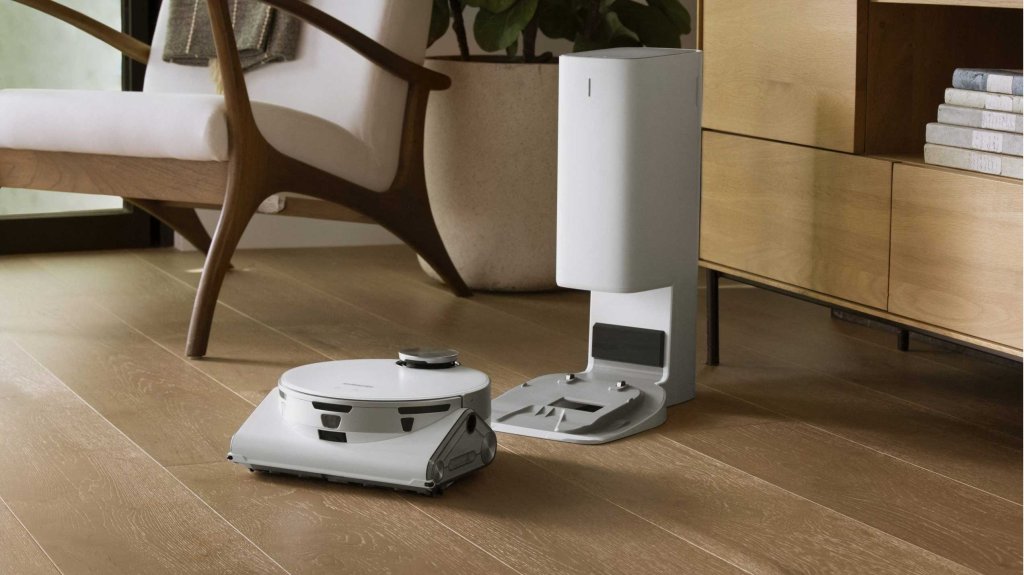
Samsung presents its new Bespoke Jet Bot AI+, a sleek and smart robot vacuum that can be programmed to clean. Moreover, this model can help to monitor pets: it can recognize pet excrement and will simply maneuver right around it to prevent any unwanted spreading or secondary contamination. Bespoke Jet Bot AI+ is equipped with object detection and recognition technologies that not only make floor cleaning more intelligent and convenient, but also more personalized and even pet-friendly. The appliance can identify and classify the objects it encounters on the floor by mapping out their location. This allows it to clean closely around furniture, home appliances and items such as lamps or plants.h electrical cables, and avoid them accordingly. This Samsung robovac is powered by an Intel AI solution and equipped with an active stereo-type 3D sensor. This enables it to think and make decisions on its own and gauge the layout of the living space in order to drive more efficiently throughout home and navigate around objects with no need for manual supervision
This photo provided by Samsung Electronics Co. on Wednesday, shows the company’s new cooking appliance BESPOKE Qooker. (Samsung Electronics Co.)Samsung Electronics Co. on Wednesday unveiled a new multifunctional cooking appliance to target consumers who enjoy meal kits and home meal replacement (HMR) products amid the stay-at-home trend.
The BESPOKE Qooker was launched in South Korea with a price tag of 590,000 won ($510). An overseas launch of the product has not yet been confirmed, according to Samsung.
“Qooker” comes from the word “cooker,” with the letter Q representing “quality” and “quick,” the company said.
The BESPOKE Qooker is a four-in-one product that can serve as a microwave, a grill, an air fryer and a toaster.
With a 22-liter capacity, the product has four cooking zones inside, allowing users to cook four kinds of food at the same time.
The latest cooking appliance also supports a “scan cook” feature with Samsung’s SmartThings Cooking mobile app, which allows users to have the right settings on the BESPOKE Qooker for pre-prepared meals by just scanning the packaging’s barcode. With this feature, any kind of food can be cooked within 18 minutes, according to Samsung.
The South Korean tech giant said it worked with eight major food companies here, including Ottogi and Dongwon, for six months to develop its scan cook algorithms and establish related services.
Such food companies have introduced 117 recipes for the BESPOKE Qooker, with some ready to launch meal kits and HRM products dedicated only for Samsung’s new cooking appliance. Hotel Shilla, South Korea’s leading luxury hotel and duty-free shop operator, will also join the program to release meal kits for the BESPOKE Qooker.
Samsung said it will partner with more food and service companies to expand its ecosystem for the BESPOKE Qooker.
To boost the product’s sales here, the company has also launched My Qooker Plan, in association with Samsung Card and local food companies. The marketing program allows users to purchase the BESPOKE Qooker at a discounted price when they sign up for a monthly food subscription service provided by the companies.
Samsung Electronics faces production difficulties at its home appliance manufacturing facility in Ho Chi Minh City, Vietnam. Samsung is one of the many companies that operate manufacturing plants in the city, and it’s not alone in its decision to suspend operations due to the recent wave of new COVID-19 cases recorded in Vietnam.
Samsung’s operating rate at its home appliance manufacturing facility in Ho Chi Minh City has reportedly dropped below 40% because of the new COVID-19 wave. The facility is responsible for churning out TVs and monitors, as well as home appliances including refrigerators, vacuum cleaners, and washing machines. Samsung’s home appliance facility employs roughly 7,000 people.
Samsung Electronics announced on Wednesday that global shipments of its lifestyle home appliance brand Bespoke exceeded 1 million units as of the end of the year, an achievement in 20 months since the company launched its first Bespoke refrigerator model in June 2019.
Refrigerators topped the list of Bespoke home appliance sales, accounting for 75% of its customizable home appliances. Bespoke refrigerators accounted for 67% of refrigerators sold in Korea last year. It was well-received in Europe, China and Central Asia and will launch in North America this year. The refrigerator is best known for its customized module where customers can choose among 27 door panels according to their taste and preference.
Bespoke dishwashers, which debuted in June last year, was also hugely popular and grew in sales. Samsung Electronics is applying the Bespoke concept to its home appliance selection which includes electric stoves, induction cooktops, commercial air conditioners and air purifiers. Samsung Electronics included Bespoke home appliance models in its “Samsung Electronics Sales Festa” promotion held for this month in celebration of the 1 million unit milestone.
These days, keeping our clothes, outerwear and other fabrics clean and pollutant-free is a concern that is top of mind for many of us all around the world.
This is where Samsung’s revolutionary AirDresser comes in. The Samsung AirDresser is a garment refreshing device that provides users with effective and efficient care for their personal belongings. Check out the infographic below to learn more about the Samsung AirDresser and just what exactly it can do for you.
Samsung Electronics Co. is expected to report strong third-quarter earnings, analysts here said Monday, as its mainstay semiconductor business remained solid despite a decline in memory prices, while its mobile and home appliance sales soared on pent-up demand amid the pandemic.
Samsung was projected to log 63.95 trillion won (US$54.5 billion) in sales in the July-September period, up 3.1 percent from a year earlier, while operating profit was estimated to surge 33.7 percent on-year to 10.4 trillion won over the period, according to Yonhap Infomax, the financial news arm of Yonhap News Agency, which compiled data from 17 brokerage houses.
Should Samsung meet the consensus, the tech giant will post its best quarterly performance since the fourth quarter of 2018, when it logged an operating profit of 10.8 trillion won.
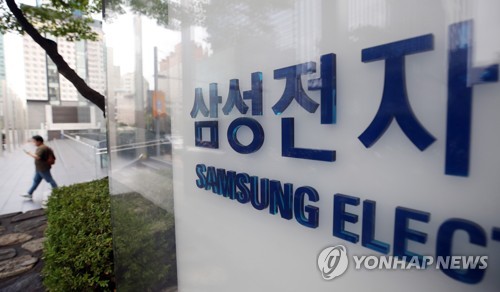
An outdoor sign of Samsung Electronics Co. at the company’s office building in Seoul (Yonhap)1 of 4hide caption
Compared with the previous quarter, the estimated figure suggests Samsung seeing a 20.7 percent increase in sales and a 27.6 percent jump in operating profit.
Samsung, the world’s leading memory chip and smartphone producer, is expected to announce its third-quarter earnings guidance next week.
Analysts have been raising their earnings outlook for Samsung in recent weeks after they assessed that its chip business is not likely to suffer a big drop in sales despite a decline in memory prices prompted by an excess in inventory.
Server DRAM products in the third quarter were projected to suffer a 10-15 percent price drop in the third quarter, according to market researcher TrendForce, which also estimated that prices for mobile DRAM and consumer DRAM chips to see up to an 8 percent and maximum 10 percent decline, respectively.
However, rush orders from Huawei Technologies Co., the world’s top telecom equipment maker and No. 2 smartphone producer, apparently helped Samsung’s chip business to stay afloat.
Analysts predicted Samsung’s chip business to post an operating profit of around 5 trillion won in the third quarter of the year.
Huawei, one of Samsung’s five largest customers, has been aggressively procuring semiconductors ahead of the U.S. export restrictions that have been in place since Sept. 15.
“Bit growth for DRAM and NAND flash is expected to mark 3 percent and 12 percent quarter-on-quarter increases, respectively, better than its previous guidance,” said Kim Kyung-min, an analyst at Hana Financial Investment.
“Rush orders from its Chinese client, along with a better yield rate and increased wafer input from the expansion of its Xian plant, pushed up the growth,” she said.
Analysts also predicted that Samsung’s foundry business logged growth in the third quarter. The company reportedly secured orders from Qualcomm and Nvidia to manufacture their latest chips.
Samsung’s mobile business was tipped to see a big improvement in its earnings with increased smartphone sales and reduced marketing costs.
Many analysts here predicted that Samsung’s mobile business logged 4 trillion won in operating profit in the third quarter, more than double its second-quarter operating profit of 1.95 trillion won.
Samsung’s Galaxy smartphone sales were estimated to be around 80 million units in the third quarter, about a 50 percent increase from the previous quarter, while that of tablets reached 10 million units, roughly 45 percent higher than the second quarter, analysts added.
“It appears that Samsung has performed well amid Huawei’s struggle and Apple’s new iPhone launch delay, while its tablet sales benefited from a stay-at-home trend,” said Song Myung-sub, an analyst at Hi Investment & Securities. “With decreased marketing costs amid the pandemic, the mobile business unit’s operating margin is expected to be around 10.5 percent in the third quarter.”
Samsung’s home appliance business was also tipped to get a boost from pent-up demand amid the pandemic-driven stay-at-home economy with a sharp increase in its TV sales.
Some analysts even predicted the company’s consumer electronics unit to post over 1 trillion won in operating profit in the third quarter, its best quarterly performance since the second quarter of 2016.
“Considering TV shipments in July and August, it appears that Samsung’s third-quarter TV shipments have posted a better growth than the company’s earlier estimate of a 40 percent increase from the previous quarter,” said Lee Seung-woo, an analyst at Eugene Securities.
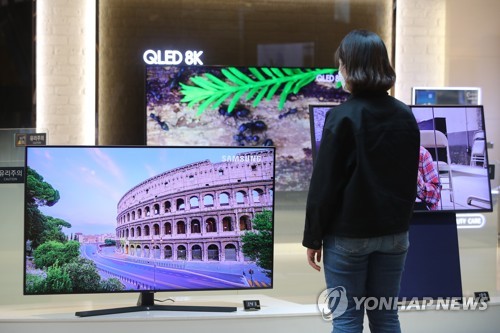
According to a recent report from market tracker Omdia, the global QLED TV market, led by Samsung, was projected to grow to 2.44 million units in the third quarter, up 83.9 percent from a year earlier.
Samsung’s display business was projected to post mediocre earnings in the third quarter due to the delayed launch of Apple’s new iPhone 12 series.
Samsung Electronics Co. on Wednesday unveiled a set of new home appliances and gadgets for the European consumers that highlight human-centered solutions amid the pandemic.
At the Life Unstoppable online event, Samsung introduced its latest innovations, from washing appliances to smartphones, with a goal of delivering “connected, seamless experiences” to consumers.
The South Korean tech giant usually showcases its new home appliance products in the second half at the IFA, Europe’s largest tech expo.
But this year, Samsung decided not to participate in the IFA due to the COVID-19 pandemic and instead hosted its own event that allows users to experience its latest products through an interactive virtual world
This year has seen us completely re-evaluate our relationship with technology, in a way that no one could have expected,” said Benjamin Braun, chief marketing officer at Samsung Europe. “At Samsung, we not only embrace these changes, but aim to stay one step ahead, already innovating with the future in mind.”
Hoping to ride on the pandemic-driven stay-at-home trend, Samsung unveiled a new home cinema projector, the Premiere, for the first time. The product’s high-end model uses triple laser technology to deliver 4K picture quality.
The Terrace, Samsung’s outdoor lifestyle TV that was first unveiled in the United States in May, made its European debut. The Terrace will be available in 55-, 65- and 75-inch models in Europe, according to the company.
For gamers, Samsung unveiled its new curved monitor, the Odyssey G5 series, offering more display options in addition to its Odyssey G9 and G7 products. The Odyssey G5, boasting 144Hz refresh rate, comes in 27-inch and 32-inch models.
Samsung also introduced laundry appliances with upgraded artificial intelligence (AI) solutions and refrigerators highlighting customization features.
Samsung hopes its Bespoke refrigerator range can deliver brisk sales in Europe. The Bespoke refrigerator is built under the company’s Project Prism, which aims to reflect consumers’ lifestyles and allows them to personalize the materials, colors, shapes and designs of the products.
When it comes to mobile devices, Samsung showcased the Galaxy Tab A7 tablet with a 10.4-inch screen and the Galaxy A42 5G smartphone with a 6.6-inch screen and quad-camera setup.
The Galaxy Fit 2 wristband with upgraded features for fitness tracking was also unveiled.
To better assist consumers who use multiple mobile gadgets, Samsung introduced the Wireless Charger Trio that can charge three devices all at once.
Samsung Electronics Co. on Sunday signed a partnership agreement with South Korea’s leading furniture maker Hanssem Co. to expand business opportunities amid the pandemic-driven stay-at-home trend.
Under the deal, Samsung will cooperate with Hanssem in the home interior remodeling business. The tech giant will provide its latest home appliances such as refrigerators and dishwashers that fit with Hanssem’s furniture in interior remodeling.
The two sides will also collaborate in the smart home solutions business and will share retail infrastructure, such as displaying products from each company at its stores.
The latest deal comes as Samsung seeks to become a lifestyle brand with customizable products amid the COVID-19 pandemic.
Lee Jae-seung, who heads digital appliances at Samsung, recently said the company is “recalibrating” its strategy in the era of the pandemic. He added that home has become more important than ever as people practice social distancing and that home appliances need to reflect the change.
The collaboration with Hanssem is expected to help Samsung launch more products under its Project Prism, which reflects consumers’ lifestyles and allows them to personalize the materials, colors, shapes and designs of products.
So far, the company has introduced refrigerators and laundry appliances under Project Prism.