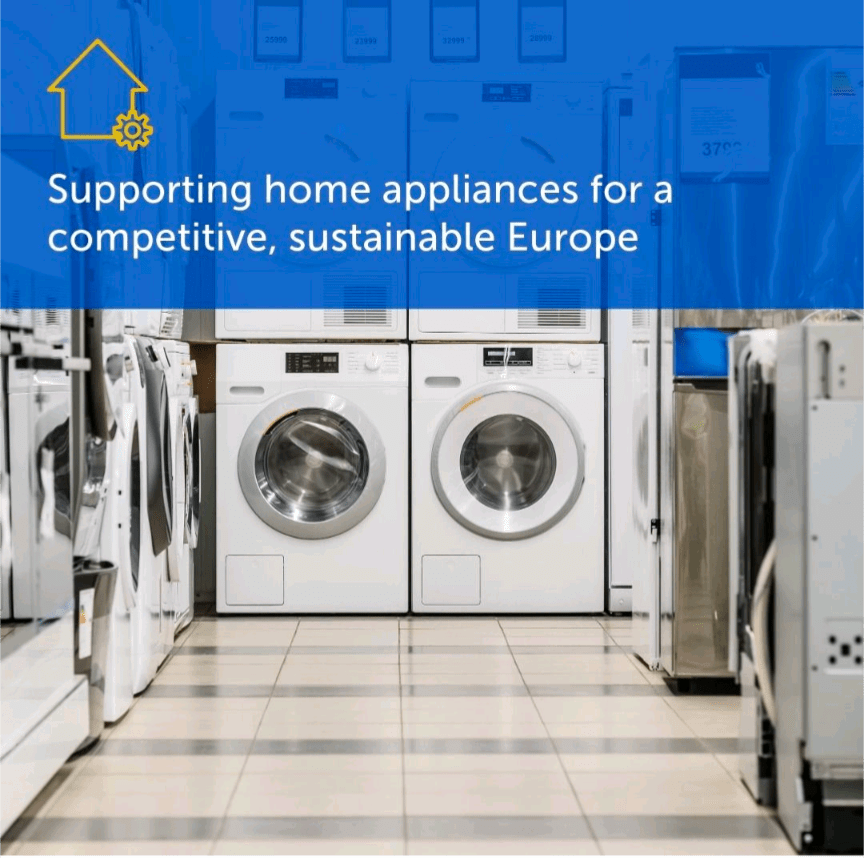
In a recent statement, leaders from 25 top European home appliance brands have united to emphasise the crucial role the industry plays in Europe’s economy and society.
The industry contributes €79 billion to the EU GDP and supports over 1 million jobs. As Europe’s industrial future is shaping, now is the time to address key challenges. The priorities are: ✅Mitigate rising cost pressures ✅Streamline the regulatory environment ✅Enhance the Single Market ✅Ensure a competitive global market
Samsung and LG Electronics are reportedly considering relocating some of their home appliance production from Mexico to the U.S., according to South Korean media outlet The Korean Economic Daily, as cited by the Central News Agency.
This move is in response to U.S. President Donald Trump’s announcement of a 25% tariff on products imported from Mexico and Canada, starting February 1. Samsung may move its dryer production line to South Carolina, while LG is considering transferring its refrigerator production line to its Tennessee factory.
Samsung states it will monitor the situation closely and adapt as needed. LG plans to adjust its production systems and locations to respond to market changes effectively.
Data from the General Administration of Customs showed that China exported 383.6 million household appliances in December 2024, a year-on-year increase of 16.1%; the cumulative exports from January to December were 448.144 million units, a year-on-year increase of 20.8%.
6.36 million refrigerators were exported, a year-on-year increase of 10.7%; the cumulative exports from January to December were 80.32 million units, a year-on-year increase of 19.7%.
In December, 2.82 million washing machines were exported, up 18.3% year-on-year; from January to December, the cumulative exports reached 32.86 million units, up 14.2% year-on-year.
The home appliance industry is a cornerstone of Europe’s economy, contributing €79 billion to the EU’s GDP and supporting over 1 million jobs across 130 factories in Europe. Appliances such as fridges, washing machines and irons by sit in the homes of every European household, highlighting the importance of these products in our everyday lives and to the success of Europe’s decarbonisation and housing plans. With the new EU mandate, the sector strongly supports the following recommendations as in line with the ‘Draghi Report’: ⭐ Promote innovation in energy-efficient home appliances to help drive decarbonisation while lowering costs for consumers ⭐ Support the growth of a competitive and sustainable home appliance industry to maintain European leadership in technology ⭐ Safeguard jobs and ensure fair competition within the European market
Negotiations between the Italian Government and Beko Europe have hit a substantial deadlock regarding the planned closure of several factories and production lines acquired from Whirlpool in Italy. During a hearing before the Chamber of Deputies’ Productive Activities Committee, Maurizio David Sberna, Beko Europe’s head of external and institutional relations, expressed the company’s commitment to evaluate all potential industrial operations. He emphasized that any actions taken to mitigate the impact of these closures would only proceed if they do not alter the economic impact of the current plan, which aims to halt unsustainable financial losses.
The factories in Siena, Comunanza (Ascoli Piceno), and Cassinetta (Varese) are particularly affected, with each incurring over €50 million in annual losses. This situation is exacerbated by the overall decline in demand for household appliances in Europe and increased competition from Chinese manufacturers. Beko Europe estimates a loss of €224 million in the large household appliances sector in Europe for 2024 alone.
Beko Europe also reiterated that their plan complies with the requirements notified under the Golden Power regulations. Consequently, there are no grounds for government intervention to alter Beko Europe’s actions, with the government’s role limited to monitoring the implementation methods.
According to Chinese media outlet Lanjinger News, several individuals claiming to be Hisense employees have taken to social media to allege that Hisense Group is undergoing significant layoffs. Reports suggest that the company’s workforce is being reduced from 110,000 to 80,000, with an estimated layoff rate of 20 to 30 percent. One verified employee of Hisense Home Appliances mentioned that the layoffs would occur in two phases, before and after the Lunar New Year, with an overall reduction of 30 percent.
Lanjinger News contacted multiple Hisense employees, who confirmed awareness of the rumors but were unclear about the specific plans or scale. An employee from Qingdao Hisense Network Technology Co. noted that many employees had already been informed. Another employee suggested that online reports might be exaggerated and that the actual number of layoffs could be lower, although demand and orders this year were significantly weaker compared to previous years.
When Lanjinger News reached out to Hisense Home Appliances Group and Hisense Visual Technology as investors, a representative from Hisense Home Appliances indicated that large-scale layoffs were unlikely but not yet confirmed, advising investors to make their own judgments while noting that the circulating information was inaccurate. A representative from Hisense Visual Technology stated that no related notices had been received.
Attempts to verify the information with Hisense Group’s public relations department went unanswered at the time of publication.
The report also recalled similar rumors from early 2020, when Hisense faced allegations of a large-scale layoff involving 10,000 employees. At that time, the company acknowledged workforce reductions as part of a performance optimization strategy but denied the scale of the layoffs being as high as reported.
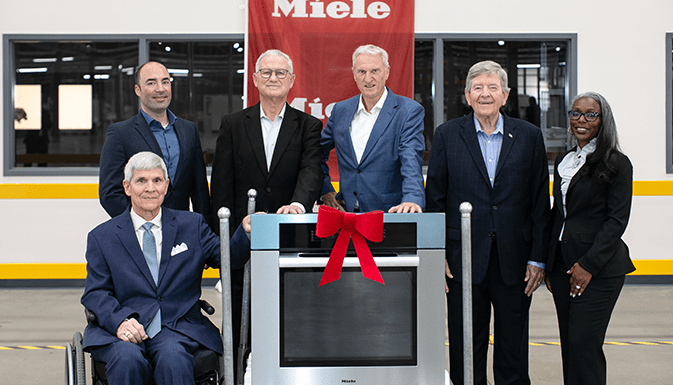
Miele, the world’s leading manufacturer of premium domestic home appliances, has officially commenced production at its first-ever US-based production plant. Located in Opelika, Alabama, the facility has begun producing its Generation 7000 built-in ovens, designed specifically for the North American market.
This Opelika facility will produce appliances for the neighboring US, Canada and Mexico markets, which will greatly reduce the delivery time from weeks to just a few days, while also lowering the impact on the environment. This much improved turnaround time is important as the US market continues to be a key growth market for Miele.
“The facility is up and running as part of the first phase of development,” said Uwe Brunkhorst, Senior Vice President of the Business Unit Cooking at Miele. “We are especially pleased that despite the tight timeline, the team has achieved their goal and production has started ahead of schedule – the first oven has officially come off the assembly line.”
“Collaboration between the production sites in both Germany and the US together with the newly hired and thoroughly trained staff played a crucial role in this success,” said Ulf M. Kranz, Managing Director of the Opelika production plant in the United States.
The first American employees were trained at the Oelde plant in Germany, and those members of the team are now taking on both assembly tasks as well as the training of new colleagues in Opelika. The thirty-five person on-site team is growing exponentially and in the first phase, the plant is slated to employ up to 150 people.
The Turkish White Goods Manufacturers Association (TÜRKBESD) has raised alarms about the potential repercussions of ongoing anti-dumping investigations on essential materials such as stainless steel and sheet metal. These investigations could lead to increased production costs and inflation.
Taxes on crucial materials, including stainless steel, sheet metal, and polystyrene, which constitute 17-18% of production costs, might elevate product prices by 5% and diminish international competitiveness.
This scenario could shrink Turkish manufacturers’ global market share and export capacity. In September, Turkey’s domestic white goods market experienced a 15% decline
Midea has launched its second home appliance factory in Brazil, now with an annual production capacity of over 1 million units, marking a new milestone in #manufacturing capabilities. 🎉
With an integrated system for production, R&D, and sales, Midea has created a nationwide network of sales and after-sales channels to meet local market needs and foster #innovation.
Moving forward, Midea will continue to focus on product innovation and market share growth in Brazil, while deepening local production capacity and supply chain, further enhancing competitiveness across South America


 WHITEGOODSNOW