
World Economic Forum Recognizes LG for Innovative Digital Transformation of Its Home Appliance Manufacturing Facility in South Korea LG Smart Park, a production base of LG Electronics (LG), has been selected as a Lighthouse Factory by the World Economic Forum (WEF).
Shaping the future of manufacturing, WEF “Lighthouse” facilities implement Fourth Industrial Revolution technologies, such as the Internet of Things, big data, artificial intelligence and robots, into manufacturing and supply chain operations to deliver a wide range of benefits, from increased production efficiency to enhanced environmental sustainability.
LG Smart Park, LG Electronics’ home appliances factory in Changwon, Republic of Korea
‘Digital twin’ technology enables the operation system to analyze the production processes in virtual reality.
Refrigerator door attachment based on 3D vision recognition technology
Overhead conveyor system
“As the world grapples with many challenges, it is remarkable to see how Lighthouses are yielding sustainability benefits while achieving business goals, which we call eco-efficiency,” said Francisco Betti, Head of Shaping the Future of Advanced Manufacturing and Value Chains, World Economic Forum. “We need them to continue illuminating the way forward for the global manufacturing community by shaping a responsible future of manufacturing that works for people, society and the environment.”
Over the past five years, LG has transformed its factory complex in Changwon, South Korea into LG Smart Park, a futuristic hub of home appliance manufacturing. The key elements of the transformation are a digitally-enabled end-to-end three-dimensional logistics system, an advanced analytics system based on edge computing technology and machine learning that predicts defects, and state-of-the-art facilities that can mass-produce multiple models to respond flexibly to customer requirements.
The newly implemented “digital twin” technology enables the operation system to analyze production processes in virtual reality. It can predict if any issues will occur within the next 10 minutes and provide exact parts and materials for the assembling of each appliance with an accurate, up-to-the-minute status of the facility’s logistics operations. Sensors utilizing deep learning technology are installed throughout the factory to monitor each phase of production in real-time, helping factory workers to preemptively identify and resolve any possible issues. As a result, the cost of defective product returns dropped by 70 percent from 2020 to 2021 while overall quality competitiveness[1] and production efficiency[2] were both significantly strengthened.
Floors one, two and three at LG Smart Park employ an overhead conveyor system that quickly transports boxes containing refrigerator parts to the required production lines. Attached to each line is an intelligent warehouse that monitors inventory in real-time, enabling automated materials management, including the request of additional parts and supplies.
On the ground, automated guided vehicles (AGVs) leveraging stable 5G network connectivity transport parts and materials to wherever they are needed on site. Through its three-dimensional logistics automation system, the company can minimize the amount of warehouse space needed by 30 percent compared to conventional logistics systems, and shorten the time required for hourly materials transportation by 25 percent.[1]
LG Smart Park has also adopted the use of robots featuring an AI engine and camera to make the home appliance production process faster and safer. The robots undertake dangerous and complicated tasks, such as welding and the lifting of heavy parts and equipment.
LG plans to apply the innovative, smart production technologies pioneered at LG Smart Park to a total of 26 LG production facilities in 13 countries, accelerating the digital transformation of its global manufacturing network by 2025.
“LG Smart Park illustrates our strong commitment to adopting the revolutionary technologies as the leader of the global premium home appliance market,” said Lyu Jae-cheol, president of the LG Electronics Home Appliance & Air Solution Company. “We are presenting a blueprint for the future of manufacturing, one that delivers better outcomes across environmental, economic and employment aspects.”
For more information, please visit https://www.lgnewsroom.com/2022/03/lg-smart-park-named-lighthouse-factory-for-futuristic-manufacturing-technology/
[1] Comparing the figures from the year 2020 to 2021 according to the lighthouse site visit report by World Economic Forum.
[2] Units produced per hour has increased by 17 percent, comparing the year from 2020 to 2021 according to the lighthouse site visit report by World Economic Forum
About LG Electronics Home Appliance & Air Solution Company
The LG Home Appliance & Air Solution Company is a global leader in home appliances, smart home solutions, air solutions as well as visionary products featuring LG ThinQ AI. The company is creating various solutions with its industry leading core technologies and is committed to making life better and healthier for consumers by developing thoughtfully designed kitchen appliances, living appliances, HVAC and air purification solutions. Together, these products deliver enhanced convenience, superb performance, efficient operation and compelling health benefits.
SOURCE LG Electronics,
New Miele Australia headquarters
Miele co-proprietor and executive director, Dr Reinhard Zinkann and executive director for marketing and sales, Dr Axel Kniehl have officially opened the new Miele Australia headquarters in Melbourne’s Hawthorn East, alongside Miele ANZ managing director, Yves Dalcourt.
Bpifrance Announces Acquisition of a Stake in Groupe SEB, World Leader in Small Domestic Appliances
By acquiring a stake in Groupe SEB (Paris:SK), Lac1 fund, managed by Bpifrance on behalf of French and international investors, is making its fifth investment since its creation in 2020.
This investment in a family-owned company that embodies the French industrial know-how is fully in line with the Lac1 fund’s investment strategy: to support French listed world leaders that offer strong value creation potential while addressing today’s environmental and societal challenges. With this investment, Lac1 asserts its commitment to the Group’s strategy.
Groupe SEB is the leading global player in small domestic appliances with solid market positions in kitchen appliances. This family-owned company with over 150 years of history has become a French champion with a worldwide presence in more than 150 countries, thanks to a global and competitive industrial tool, a broad portfolio of 31 local and international brands offering more than 30,000 products, and strong innovation capabilities based on a thorough knowledge of consumers. In 2021, the group achieved a turnover of 8.1 billion euros and employs more than 33,000 people.
Currys close HQ
Currys plc is permanently closing the doors of its west London HQ after signing a deal with flexible office space group WeWork, allowing its 1,400 staff to work from 50 locations across the country.
With its workforce steering away from the “old normal” way of working, the retailer is looking to shift to a more creative, agile workplace strategy that provides greater flexibility.
The deal is one of the first times that a major company has permanently closed its headquarters and switched entirely to a flexible office provider.
Currys take over?
Shares in the FTSE 250 Currys the electronics retailer jumped 8 per cent, or 7.45p, to 100.3p after financial news blog Betaville suggested a mystery buyer, possibly private equity, was circling the group.Currys shares have fallen by around a third over the last 12 months, meaning the firm could potentially be eyed as a cut-price acquisition opportunity.
Electrolux Sustainability 2021 report
Release of the new Electrolux Sustainability Report 2021, which shows that we’ve reduced our greenhouse gas emissions in operations by 78% compared to 2015. That’s four years ahead of our 2025 target of an 80% reduction.
As well as highlighting the progress made with our ambitious climate goals, the report also details the results from our other important sustainability issues, as we strive toward our purpose to shape living for the better.
Find the full report here: https://www.electroluxgroup.com/sustainabilityreports/2021/
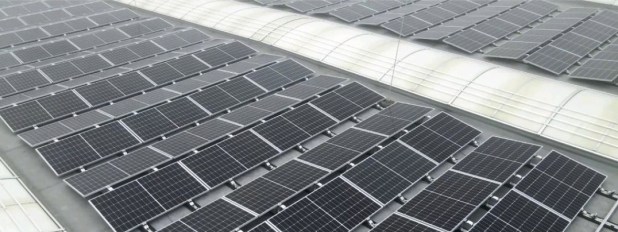
Photovoltaic system at the Liebherr Ochsenhausen factory
With the construction of the new photovoltaic system at the Ochsenhausen production site, Liebherr appliances is taking an essential step towards even more climate-friendly production. A total of 5,333 modules on the roof of the logistics center at the site will supply 1,996,000 kWh per year in the future, which corresponds to a saving of 790 tonnes of C02. The photovoltaic team erected the plant within 12 weeks and has been in operation since February 2022.
BSH Refrigerators Are Guardians of Your Food
Did you know that there are 1.14 million bacteria including 1,900 species per cm² in a normal fridge?
To prevent food from spoiling, Bosch China came up with the idea of the Bosch “Triple Hygiene Guard Refrigerator”, which eliminates up to 99.99% of all bacteria and removes 90% of odors.
The Triple Hygiene Guard refrigerator includes the latest hygiene features to guard our consumers’ healthy diet. A patented gas sensor on top of the cooling area timely monitors the decay of food. Once it recognizes certain gases – so-called volatile organic compounds (VOC) – the refrigerator starts the purification process, equipped with active oxygen and negative oxygen ions. In combination, they eliminate more than 99 percent of all bacteria and viruses, sterilizing the fridge and removing 90 percent of all odors, thereby guarding your food.
Wow, it’s exactly like a Guardian! How does it work in more detail?
Liu Xiaodong: Active oxygen – or ozone – is a gas that can break apart many things, such as protein and DNA. The latter are essential components of bacteria and chemicals that make up various odors, like trimethylamine and methane thiol for example. This process is called oxidation. Since the affected bacteria cannot recover, the gas is a highly effective disinfectant and deodorizer. And after neutralizing the odors, the gas automatically becomes oxygen.
Ozone sounds scary! Do consumers have to be afraid of losing healthy nutrition?
Liu: Definitely, not! Our consumers do not have to worry a bit! The low level of ozone in the new fridge does not influence their food items in a negative way. The oxidation effect on foods only occurs at very high densities above 1,000ppb, which the Smart Hygiene module does not reach. In fact, the low level of active oxygen may even have some small benefits for freshness because it can eliminate the ethylene gas.
Which challenges did you face when integrating both the sensor and the oxygen into the fridge and how did you overcome them?Liu: The biggest bottleneck within our development project was optimizing the software algorithm for the gas sensor’s sensitivity. We had to ensure that it correctly triggers the sterilization process, considering different using habits. Another challenge was finding suitable purification times for different odor levels to guarantee efficient sterilization. Finally, the active oxygen has a potential influence on the sensor. Thus, we had to balance detection function and oxygen concentration very carefully. In order to overcome all these challenges, we first worked out the basic algorithm. Afterwards, we simulated and tested it with various types of food, including not only fresh vegetables, fruits, and leftovers but also spoiled food items. Moreover, we conducted qualitative household tests with consumers, to get real feedback and to perfect the algorithm. So odors don’t stand a chance, right? Is there anything that the hygiene guard can’t tackle?
Allen: While the smart hygiene module can eliminate 90 percent of the standard odors, it can’t do magic! If consumers forget to dispose of a large amount of rotten meat, for example after the holidays, the fridge continually works on odor removal but can’t eliminate the cause. That’s why the fridge can also send push messages to consumer phones to notify them of any abnormal situations.
We just launched the new Bosch refrigerators in China. What happens next?
Allen: Well, we are very excited about the recent launch and we hope, that our innovative cooling solution will be a hit with our local consumers. Once we know more, our global marketing and development teams will discuss further international rollouts. We can’t make any promises at the moment, though.
Electrolux reduces sea transport emissions by 15% in 2022
Electrolux will now use more sustainable fuels for 25% of its total sea freight. By partnering with shipping companies Maersk and CMA CGM Group to use biofuel based on waste oils and LNG (Liquefied Natural Gas), Electrolux will reduce its sea transport greenhouse gas emissions by 15 percent already in 2022.
Electrolux is working toward halving its transport emissions by 2025. To reach this target two important agreements have been signed with shipping companies Maersk and CMA CGM. With the new agreements in place, 25% of Electrolux Group’s total sea freight will be transported using the most effective solutions for decarbonizing available in the market right now. 80,000 twenty-foot equivalent containers (TEU) will now be transported by using Maersk’s biofuel, which is based on certified waste oils such as used cooking oil, and CMA CGM’s solution based on LNG (Liquefied Natural Gas) and guarantee of origin biomethane.
“These partnerships put Electrolux at the forefront in terms of the percentage of the total volume of products being transported in a more sustainable way. As we continuously contract increasing volumes of biofuel for sea transportation, we are also supporting the overall market development toward more sustainable practices for shipping goods across the world”, says Carsten Franke, Electrolux Chief Operating Officer
Haier introduces new, smarter tumble-dryers
Haier’s Series 5 Tumble Dryer promises “Professional results at home”, at the core of this range. Thanks to the power of Haier Connectivity and Artificial Intelligence enhanced by the hOn App, users will receive superior and customised performances never seen before.
The model can also be connected to the user’s smartphone for complete control. By downloading the hOn App, users can get full access to their tumble-dryer, from picking the right cycle and controlling its status, to receiving personalised notifications and suggestions for ad-hoc results.
Haier Connectivity and the advances of artificial intelligence are at one’s fingertips for every need, the company claims.
For example, the Synchro Wash + Dry allows users to connect the tumble-dryer to a Haier washing machine, and automatically suggest the perfect drying program for one’s laundry.
The Tumble Dryer can also activate the Artificial Intelligence cycle, that automatically adapts

