KONKA Group Acquires Beko Changzhou Plant and Reaches a Strategic Cooperation with Arcelik

Jiangsu KONKA Smart Electrical Appliances Co., Ltd. acquired Beko Changzhou Plant and entered into a strategic cooperation agreement with Arcelik (the parent company of Beko).

By signing this agreement, both parties agree to share their developments related to systematic washing machine design. This will help make up for KONKA’s engineering capacity shortcoming for KONKA drum washing machine manufacturing, facilitate the export of KONKA washing machines to Europe, America and other regions, and further promote the globalization of KONKA white goods and the KONKA brand.

In 2021, the forecasted annual sales volume of KONKA drum washing machine is over 500,000 sets, reaching a level near first-tier brands. In the next 3 years, the planned annual total sales volume of KONKA washing machine will surpass 1 million sets. By then, KONKA will become one of the first-tier washing machine brands in China.

The strong alliance with Arcelik, as one of the major measures of KONKA’s Ten-billion-sales-volume Strategy for White Goods, marked the beginning of a new phase for KONKA drum washing machine: a shift from OEM to independent R&D, design, production and manufacturing. In the future, led by KONKA Group’s strategic transformation, KONKA white goods will continue to update its products targeting consumer pain points, such as intelligence and healthcare, and enhance its core competitivenes

Vestel has bought two British home appliance brands to

Turkish white goods firm Vestel has bought two British home appliance brands to strengthen its position in the global market.

According to a company statement Wednesday, the new deal with U.K.-based Crosslee PLC will help Vestel get a foothold in new markets while strengthening its presence in Europe and the U.K.

The deal was for the acquisition of the Hostess and White Knight business trademarks, intellectual property rights, domain names and equipment related to the trademarks.

Vestel CEO Turan Erdoğan said the company was focused on increasing its competitive advantages with strategic market-oriented business cooperation and brand acquisitions, supporting Vestel’s strength in production and exports.

With this latest acquisition, Erdoğan said, “We will strengthen our position in the U.K. as well as increase our contribution to the country’s exports by focusing on different markets.”

The registration process for the trademark transfer is being completed in the EU, while the process continues in some non-EU countries.

LG Launches New Home Appliance Brand with Upgraded Customization Features

LG Electronics Inc. on Thursday launched a new home appliance line with enhanced customization options as the South Korean tech firm targets more consumers who seek their own home interior styling.

LG Objet Collection allows consumers to select their own colors and materials for home appliances so that they can create harmony with interior design in their homes.

The new brand is an upgraded version of LG Objet, which was introduced in 2018 under a concept of “private appliance” that blends home appliances and artfully designed furniture.

LG said it partnered with U.S.-based Pantone Color Institute to offer more color options for LG Objet Collection appliances.

For material selections, the company included FENIX, a high-tech material developed by Italy’s Arpa Industriale known for its resistance to scratches and abrasion.

LG said 11 products are currently available under the LG Objet Collection brand, which includes refrigerators, a dish washer, a light wave oven, a washer-dryer combo and a clothing refresher, but the lineup will be expanded in the future.

For refrigerator doors, consumers can choose from 13 colors, along with various materials, including FENIX, stainless, glass and metal. There are a maximum of 145 design combinations for its three-door bottom-freezer refrigerator, according to LG.

Of the LG Objet Collection appliances, light wave oven, water purifier and dish washer are compatible with each other through its Internet of Things (IoT) platform, LG ThinQ.

For instance, when users select a cooking option on the oven, the water purifier automatically sets the right amount of water needed for the dish.

LG Electronics signs partnership with Italian luxury furniture brand Molteni&C

LG Electronics Inc. said Monday it has signed a partnership with Italian luxury furniture maker Molteni&C S.P.A. to better promote its high-end brand LG Signature.

Under the deal, the two sides will collaborate in marketing, promotion and product development related with LG Signature home appliances, Molteni&C residential furniture and Dada kitchen furniture for the next three years

The South Korean tech firm said the collaboration will create synergy between their premium brands and deliver more opportunity for consumers to experience an “innovative, luxurious lifestyle.”

Molteni&C, founded in 1934, is a renowned designer furniture maker. It runs some 530 stores in 23 countries, including South Korea.

LG recently installed the LG Signature OLED 8K TV at the Molteni Museum in Italy, displaying how its premium electronics appliances can be in harmony with Molteni&C furniture. It will also display the luxury TV at Molteni&C’s flagship store in Paris set to open next month.

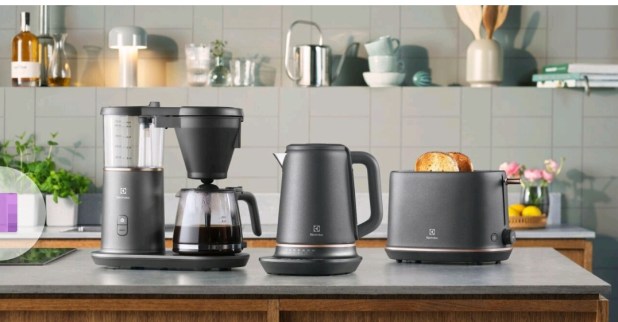
Electrolux presents vacuum cleaner made of 100% recycled and reused materials

Electrolux takes a new important step on the journey towards circularity with a prototype for change. Together with Stena Recycling, Electrolux has developed a vacuum cleaner made of 100 percent recycled and reused materials. The plastic and components originate from consumers electronic products, such as used hairdryers, vacuum cleaners and computers. The project addresses some of today’s key recycling challenges while exploring circularity in household appliances.

More than 400 million metric tons of plastic are produced globally every year, but less than 12% of this comes from recycled materials. Therefore manufacturers have difficulty finding enough safe and consistently high-quality recycled material. As a pioneer, Electrolux was first in the industry in 2010 to raise awareness about the global shortage of recycled plastics through the Vac from the Sea project. The volume of products containing recycled material has since increased across the industry but remain at low levels.

To step up the pace, Electrolux is partnering with Stena Recycling in the collaboration Circular Initiative. The goal is to learn more about how to make the market for recycled plastics function as well as for virgin materials. The first concrete result is a visionary vacuum cleaner made of 100 percent recycled plastic and reused components from electronic consumer products. The prototype is developed to explore circularity in household appliances.

“We at Electrolux have a strong commitment to reduce our climate impact by 2030 and circularity is a key dimension of this. The partnership with Stena Recycling is one of the important initiatives we engage in to push ourselves and the industry forward through knowledge sharing and innovation. We want to support consumers in making sustainable choices, and to succeed we need a solid approach to circularity”, says Jonas Samuelson, CEO at Electrolux.

Henrik Sundström, Head of Sustainability at Electrolux, adds: “This project has highlighted many of the considerations we take into account as we seek to become more circular. From product design and material use to new business models, there are regulatory requirements as well as quality and safety questions that need to be addressed. We have to strike a good balance in increasing the amount of reused and recycled materials when making products that are optimized for further recycling at the end of life”.

The material from used products such as hair dryers, vacuum cleaners and computers originates from Nordic households. The focus on consumer products has enabled the project to study the lifespan of the recycled products and components to gain insights about consumer recycling behaviors and attitudes.

“The Swedish industry has all the right conditions to become a pioneer in circular flows. We have the know-how, we have the technically advanced processing plants needed, and we have companies willing to take the lead in circular production. I’m proud of what we have achieved together in the partnership with Electrolux. It’s a crucial step towards a future where circular materials will play a significant role in manufacturing. Through the Circular Initiative we provide our expertise when collaborating with our partners to create world leading circular solutions”, says Kristofer Sundsgård, CEO at Stena Recycling.

By 2030 all Electrolux product ranges will contain at least 50% recycled materials. On the journey towards circularity, the learnings from developing the prototype will provide important knowledge for Electrolux future innovation.

Stena Recycling collects discarded electronic consumer products and breaks them down into raw materials for new products or for energy recovery. Read more about the Circular Initiative here.

The prototype vacuum cleaner is an action within the Electrolux Better Living Program, a plan to enable better and more sustainable living for consumers around the world through 2030.

Beko’s first-of-its kind household product line eliminates more than 99% of bacteria and viruses

Today saw Beko launch its new HygieneShield™ range at a global virtual press conference. A ground-breaking portfolio of household products created in response to emerging needs in the post-lockdown era.

The new portfolio includes seven appliances with in-built disinfection programmes and functions to disinfect packaged food and belongings to help people adjust to the ‘new normal’ at home. Developed as a result of in-depth global consumer research and with innovative new technology, the HygieneShield™ product line has the power to kill more than 99% of bacteria and viruses (including coronavirus), providing a level of reassurance unrivalled in the market place.

Beko research, across 31 countries revealed that one of the primary concerns is hygiene. Many of us are disinfecting supermarket purchases when we get home, worrying about handling mobile phones and keys, or not bringing coats into the house. People have increased the amount of cleaning and laundry in their homes, with some disinfecting bedding for the first time. 75% of people are cleaning the house more often, 64% are doing more laundry and 68% are paying more attention to the cleanliness of the packaging on purchased products.

The new HygieneShield™ range takes inspiration from nature and uses methods such as steam and heat to enable you to achieve excellent hygiene results at home. It will be available to buy from December 2020.

Hisense Plans To Open Washing Machine Factory in Africa

Hisense has made public its plans to open a washing machine manufacturing plant in South Africa by February 2021.

This will be the company’s second manufacturing plant in the continent, following the opening of a KES 2.2 Billion plant back in 2013 that is used to produce TVs and fridges. In 2019, Hisense added an additional production line that saw it start assembling smartphones in the Atlantis factory.

“Since launching washing machines in the country three years ago, Hisense has achieved a 12% market share in that segment,” the group said.

The new factory, which will also be in Atlantis, north of Cape Town in South Africa, will add an additional 200 jobs into the country’s economy. Hisense says that they currently employ more than 800 people and reach over 3000 people through their outreach programmes that train and uplift the wellbeing of people in communities around South Africa.

In 2019, Hisense managed to put out more than 530,000 TVs and 331,000 fridges from their factory in the country. “In 2019, one in four TVs or fridges sold in South Africa was a Hisense,” said the company.

Hisense has also made significant inroads in Africa, with products also being exported to 13 other African countries, including Kenya, South Africa, Namibia, Mozambique, Zimbabwe, Malawi, Zambia, Botswana and Lesotho.

Midea overcomes COVID-19 challenge to continue overseas expansion

Despite the challenges posed by the COVID-19 pandemic, Midea Group, a Chinese home appliance maker, will expand its global footprint this year, strengthen the layout of its supply chain, and increase its investment in Thailand, Egypt and Brazil.

Although overseas orders increased by 10 percent year-on-year in the first half of this year, that was not enough to avoid declines in both revenue and net profit.

First-half net profit was 13.90 billion yuan ($2 billion), down 8.29 percent, on a revenue of 139.70 billion yuan, down 9.47 percent. More than 40 percent of its revenue came from overseas markets as Midea added more than 11,000 sales outlets abroad.

The company underlined its e-commerce business. Its products now cover major online retail websites in Italy, the United Kingdom and France.

“We are more willing to build joint ventures in overseas markets, especially countries and regions taking part in the Belt and Road Initiative,” said Fang Hongbo, chairman and president of Midea.

Fang noted that growing market demand in emerging countries and regions, along with an improving domestic demand for smart home appliances, will help boost sales in the years ahead.

“We need to rethink the layout of overseas manufacturing bases,” Wang Jianguo, vice-president of Midea, said.

The company will also look for suitable places to establish a manufacturing base in North America.

Established in 1968, the Foshan, Guangdong province-based Midea makes air conditioners, refrigerators, laundry appliances, kitchen appliances and various small home appliances. It has 28 research and development centers and 34 major production bases around the world.

Its orders from overseas markets rose by 26 percent on a yearly basis in the first quarter. Wang has strong confidence that the company’s performance in the second half of this year will improve despite COVID-related changes and uncertainties.

The company will strengthen its global supply chains and increase investment in Thailand, Egypt and Brazil. In April, Midea began to build an air conditioner factory in Thailand. It is also preparing to build a manufacturing base in Egypt, its 18th overseas.

First-half retail sales of home appliances in China were worth 369 billion yuan, down 14 percent year-on-year, due to COVID-19, said a report released by the China Center for Information Industry Development, which is part of the Ministry of Industry and Information Technology.

The CCIID report also said the market for most of home appliances has shrunk and sales fell in the first half of the year.

“The growth rate of the domestic home appliance market is dropping, so major players should accelerate steps to expand in overseas markets such as North America, South America, Africa and Europe as they continue to show huge growth potential in low, medium and high-end products,” said Liang Zhenpeng, a consumer electronics analyst.

Liang noted in the past most of the Chinese enterprises adopted the original equipment manufacturer or OEM model, but nowadays they tend to build their own brands to be competitive globally.

Midea’s more than 150,000 staff members man its 17 production bases in overseas markets, with its products sold in more than 200 countries and regions. Midea has set up overseas 18 R&D centers in the United States, Japan, Italy, Germany, Singapore, Austria, Israel and other countries.

Since the establishment of its first overseas plant in Vietnam in 2007, Midea has efficiently expanded its operations. The company has stepped up its go-global push in recent years through mergers and acquisitions.

Midea acquired a 32.5 percent stake in Egypt-listed air conditioner manufacturer Miraco. It took a majority stake in German industrial robotics manufacturer Kuka in 2016, marking another important step in the company’s bid to expand into automation and smart manufacturing.

In 2017, it purchased more than a 50 percent stake in Israeli motion solution provider Servotronix Motion Control. Midea also acquired an 80 percent stake in Italian air conditioner maker Clivet SpA and bought the white home appliance products business of Japanese home appliance manufacturer Toshiba Corp in 2016.

The traditional home appliance market is almost saturated and companies need to seek new growth points, said Dong Min, an independent researcher of the home appliances sector.

“Expansion into overseas markets could not only relieve the pressure of high inventory in the domestic market but increase the international influence of Chinese home appliance companies.”

Midea announced in 2018 it would invest 13.5 billion Indian rupees over the next five years to set up a science and technology park in India. Covering an area of roughly 270,000 square meters, the project is estimated to generate direct and indirect employment opportunities for more than 2,000 people.

The park will produce 500,000 refrigerators, washing machines, water purifiers and water heaters respectively, 1.5 million household air conditioners, 250,000 commercial air conditioners, and 4.5 million air conditioner compressors annually.

Hisense and Gorenje committed to protect their staff from the virus

Hisense Europe Group (HEG) management and representatives of trade unions at the plants in Slovenia (Velenje), Serbia (Valjevo) and the Czech Republic (Mariánské údolí) are united and committed to their intention to protect the health of all employees across Europe during the coronavirus pandemic. HEG management and representatives of trade unions at plants in Slovenia, Serbia and the Czech Republic have urged their employees to strictly abide by the preventive measures against spreading of COVID-19 that were imposed to benefit each individual employee as well as the entire company. HEG continues to work closely with healthcare authorities in all countries it operates in, strictly following all the measures imposed by local authorities.

«Our common response to the current pandemic – reads the statement signed by the HEG management and trade unions in all three countries – is the zero-tolerance approach to the violation of prescribed measures. Behaving responsibly is the only way that can help us maintain our health during the pandemic, which is a major challenge the entire world is facing. We have been investing all our efforts in making sure our employees are well-educated about the importance of strict implementation of all measures, both in the plants and outside them. Together, we urge all employees to practice discipline, physical and social distancing even outside the plants, and thus help contain the spreading of the virus.»
The Group ensures that “HEG plants, as well as all other organizational units throughout Europe, have been following strict preventive measures since day one of the pandemic: physical distancing, mandatory use of disinfection barriers, regular disinfecting of hands and work areas, measuring body temperature at the entrance, and wearing protective masks provided by the company. Protective barriers have been installed in all our plants; they prevent physical contact wherever possible, premises are regularly disinfected, and meetings are held online or with mandatory proper physical distancing.”