
In the second quarter, Arçelik Group—the parent company of Beko and majority shareholder of Beko Europe—reported a year-on-year revenue decline of 11.5%, falling from 137 billion Turkish lira to 121 billion. Despite the downturn, the multinational remains balanced in its geographical revenue distribution: one-third from Turkey (where the market remains resilient), one-third from Europe (facing notable headwinds), and one-third from global markets (where strategic investments are beginning to pay off).
– 📊 Regional volume shifts:
– Italy: +5%
– Spain: +10%
– France & Germany: Declines
– 🌍 Total European sales rose just 1.4% in volume, indicating modest recovery amid operational challenges.
Financial Snapshot: Margins Up, Debt Weighs
While operating costs continue to strain profitability, a weaker U.S. dollar—used to purchase raw materials and components—boosted gross margin from 27.2% to 28.4%.
– ⚖️ EBITDA increased from 4.9% to 5.9%, reflecting operational efficiency.
– 🧾 Arçelik reports progress on its workforce restructuring, having completed two-thirds of planned office staff reductions.
– 📉 However, a debt burden of 7 billion Turkish lira led to a net quarterly loss of 3 billion.
Category Archives: Brand’s
European Home Appliance Leaders Urge Brussels to Back Sector-Wide Action Plan
Fifteen leading European home appliance manufacturers, in collaboration with Applia Europe, have issued a joint appeal to European Commission President Ursula von der Leyen, calling for a comprehensive European strategy to support the sector. The signatories include Ariston, Beko Europe, BSH Home Appliances, Daikin Europe, De’Longhi Group, Dyson, Electrolux Group, Groupe Atlantic, LG Electronics, Liebherr, Miele, Samsung Electronics, Groupe SEB, Smeg, and Vorwerk.
Collectively, the industry powers 130 factories and sustains over one million jobs across Europe, contributing a robust €79 billion to the continent’s economy. Through ongoing innovation, these companies play a vital role in helping households reduce their consumption of energy, water, and other resources.
However, Applia Europe warns that rising energy prices, inconsistent regulations, and escalating global trade tensions are threatening the sector’s stability. Without a coordinated policy response, companies may be forced to relocate manufacturing operations outside of Europe—jeopardizing jobs, investment, and sustainability progress.
Reliance Buys Kelvinator from Electrolux
Reliance Industries has acquired Swedish brand Kelvinator, known for home appliances, through its retail arm—strengthening its position in India’s fast-growing consumer durables
De’Longhi Group Hosts Global Sales & Marketing Conference to Drive Strategic Growth
The De’Longhi Group recently welcomed over 200 global managers to its annual Global Sales & Marketing Conference—an event designed to energize strategic initiatives and reinforce the Group’s leadership ambitions. The gathering spotlighted strong consumer response and commercial success across several recent product launches, enhancing brand positioning across all business units.
Key innovations celebrated at the conference included multiple award-winning products recognized with both Red Dot and iF design distinctions. De’Longhi unveiled its new coffee machines—Prima Donna Aromatic, La Specialista Touch, and Dedica Duo—each reflecting the brand’s commitment to quality and user experience. Kenwood expanded its popular “Go Collection” and launched the new Cooking Chef, advancing its footprint in the food preparation space. Braun introduced new models to its air fryer range and elevated its premium ironing segment with the CareStyle 9 and QuickStyle 7. Meanwhile, Nutribullet broadened its reach with the Flip portable blender, entering new categories while reinforcing its presence in blending.
Looking ahead, the conference also showcased the upcoming product portfolio—merging technological innovation, iconic design, and the trademark “joy of use” that defines the De’Longhi Group. These future launches reflect a meticulous process where consumer insights, advanced industrial design, and manufacturing excellence converge under the “Made by De’Longhi” philosophy, promising to enrich everyday life for users around the world.
LG Teams Up with Chinese Manufacturers to Boost Budget Appliance Strategy in Europe
LG Electronics Inc. is forging an unexpected alliance with former rivals in a bid to strengthen its position in the budget appliance market and fend off growing competition from Chinese brands.
Industry insiders revealed on Monday that LG will introduce co-developed washing machines and refrigerators under its own brand across Europe later this month. The South Korean giant partnered with Skyworth Group Co. to design a 9-kilogram drum washing machine, and worked with AUCMA to produce a top-freezer refrigerator.
This marks the first time LG has collaborated with Chinese companies to develop home appliances. While LG led the product design and development, its partners will handle manufacturing under a joint development manufacturing (JDM) agreement. This structure contrasts with traditional OEM deals, as LG retains control of design while outsourcing production responsibilities.
By leveraging these partnerships, LG aims to offer competitively priced appliances without compromising its reputation for quality—particularly within its mid- to low-end product range.
ASKO Experience Centre in Poland,
ASKO proudly unveils its first Experience Centre in Poland, located in the vibrant Warsaw Wola district at 6 Kasprzaka Street..lIt showcases the brand’s wide range of innovative home appliances, and it is complemented by a curated selection of furniture by swallows tail furniture and @ceramika paradyz, giving the interior a unique character.
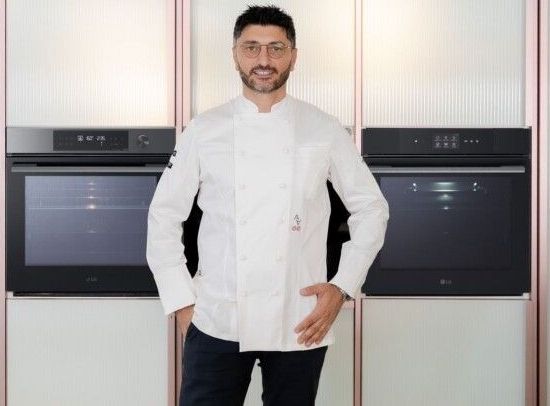
LG Names Michelin-Starred Chef Andrea Aprea as Ambassador for LG & SKS
LG Electronics Group has appointed acclaimed Michelin-starred chef Andrea Aprea as the new ambassador for its premium built-in appliance brands, LG and Signature Kitchen Suite (SKS).
Chef Aprea epitomizes the dual spirit of LG’s built-in line—blending innovation with simplicity. Like LG, he is driven by the goal of enhancing everyday life through advanced tools and techniques that make even the most complex culinary creations accessible. His philosophy aligns seamlessly with SKS’s True to Food ethos, which celebrates a deep respect for ingredients by honouring their quality, origin, and full potential
MDA Company Acquires Iconic Faure Brand
MDA Company has acquired the historic French brand Faure from Electrolux, marking a major strategic move. President Michel Vieira calls it “an honor” to continue Faure’s legacy.
Faure will gradually integrate into MDA’s 500-store network under the MDA and Pulsat banners. The goal: reposition Faure as an affordable, eco-conscious brand aligned with modern consumer values. With private labels now dominating over 40% of the market, MDA is leveraging Faure’s heritage to stand out and build lasting customer loyalty
China’s Home Appliance Giants: Global Expansion & Market Dominance
Chinese home appliance giants like Midea, Haier, and Hisense have spent years acquiring international brands to expand globally. Previously, they kept their original brands domestic, but since the pandemic, they’ve embraced a more visible global presence—Hisense and Haier even sponsor major sporting events.
Many leading brands now belong to Chinese corporations, including Toshiba, Sanyo, Candy, and GE Appliances. This strategy has propelled them to industry dominance—Hisense and TCL rank among the top three global TV brands, and Haier leads in total revenue.
Younger consumers prioritize quality over brand reputation, boosting trust in Chinese products. However, managing multiple brands brings challenges—Hisense and Haier’s premium positioning may eventually lead to internal pricing competition.
Samsung Partners With Jamie Oliver
Samsung Electronics Co., Ltd. today announced a partnership with chef, restaurateur and cookbook author Jamie Oliver, which will bring an exclusive new range of simple, easy-to-make, family-friendly recipes to Samsung’s Bespoke AI appliances and smart devices.
Jamie designed the new recipes with Samsung’s AI technology in mind, and how it can help us live smarter; from ovens that cook two dishes at two different temperatures at once, to refrigerators that suggest recipes based on the ingredients you already have at home.

