
Once upon a time, European homes were filled with trusted brands like Indesit washing machines and Hoover vacuum cleaners—hallmarks of engineering excellence. These names still exist, but their origins have shifted dramatically.
Over the past decade, the European consumer electronics landscape has undergone a seismic transformation. Asian conglomerates have systematically acquired household European brands, reshaping the market’s dynamics.
According to data from Euromonitor International and GfK, Chinese brands—both native and those acquired—now hold 42% of the European consumer electronics market, up from **18%** in 2015. A closer look reveals:
– **Pure Chinese brands** (Haier, Midea, Hisense, TCL) – **22% share (€47bn)**
– **Chinese-owned former European brands** (Candy, Gorenje) – **20% share (€43bn)**
Meanwhile, Turkish powerhouse **Arçelik (Beko)** controls **15%** of the market (€32bn), acquiring brands such as Grundig, Indesit, and Whirlpool’s European operations.
Korean giants **Samsung and LG** maintain **28%** combined market share (€60bn), predominantly leading the premium segment.
What remains of truly European brands—**Electrolux, Miele, Liebherr, Bosch-Siemens**—accounts for just **15%** market share (€32bn). However, their survival strategy hinges on a **strategic retreat to the premium market**, where profit margins soar **3-4 times higher** than the mass segment.
The Shift to Premium: A Temporary Haven?
European brands are no longer battling for dominance in lower price tiers. According to McKinsey’s 2024 European Appliance Report, **78%** of European brand revenue now stems from step-up and premium products (€300+ price points), a segment where Chinese competition remains limited.
But the real question remains—can European brands maintain their stronghold in the premium space? Or is this merely delaying the inevitable?
Category Archives: Brand’s
Tough Being Beautiful: Electrolux Redefines Swedish Elegance with Bold New Campaign
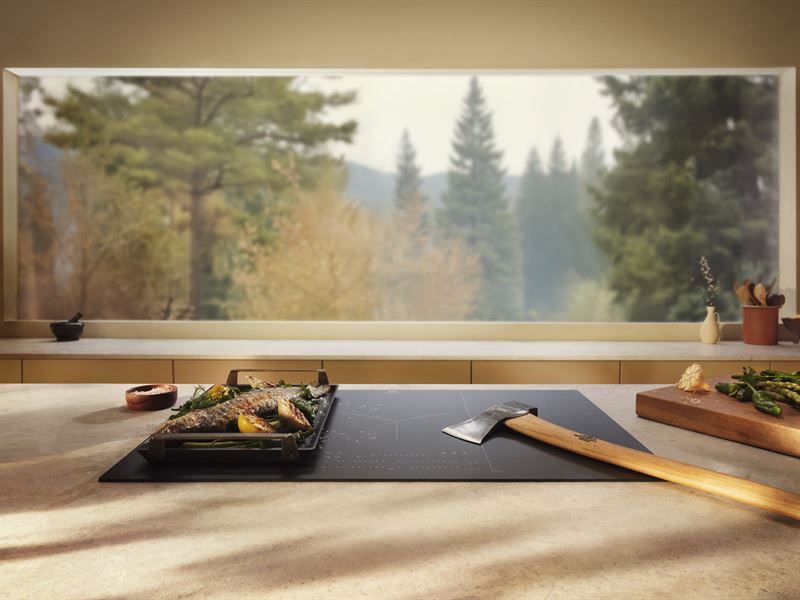
Electrolux is unveiling a striking new brand identity, inspired by the core values of Swedish culture—togetherness, practicality, a deep love and respect for nature, and a refined simplicity. At the heart of this transformation is the launch of its latest campaign, Tough Being Beautiful, which embodies these Swedish ideals through the lens of the award-winning SaphirMatt Hob.
Rolling out this month, the campaign will make its mark across multiple platforms, including television, social media, print, digital spaces, retail environments, and e-commerce, reaching audiences in key European markets and Australia.
“Tough Being Beautiful is more than just a campaign—it’s a powerful reflection of our Swedish heritage,” says Nikos Bartzoulianos, Electrolux Group Chief Marketing Officer. “While this campaign centers around the award-winning SaphirMatt Hob, its bold and stylish interpretation of our roots resonates with everyone who has Electrolux in their home. With a fresh, dynamic approach, this initiative not only cuts through in an unexpected way but also sets the stage for an exciting brand journey ahead.”
Africa domestic appliance market
The domestic appliances market in Africa is set for steady expansion, fueled by growing consumer demand. Forecasts indicate a compound annual growth rate (CAGR) of 1.6% in unit sales and 2.9% in market value from 2024 to 2035. By the end of this period, the industry is projected to reach 366 million units in sales, with a total market valuation of $25.5 billion. This upward trend reflects the region’s increasing appetite for modern appliances and economic development driving household investments.
Beko UK sales director retirement
After 20 incredible years at UK Beko plc, we’re saying a fond farewell to Kevin Wackett as he retires from his role as Sales Director.
Kevin’s Beko journey began in 2004 as Key Account Director and since then he’s been a driving force behind our growth, leading the Sales team with passion, purpose, and a whole lot of heart. Under his leadership as Sales Director since 2011, Beko became the UK’s number one appliance brand, a milestone we’re proud of and one Kevin helped make possible.
But Kevin’s legacy goes far beyond business results. He’s been a mentor, a motivator, and a constant source of positivity. His integrity and warmth have left a lasting mark on everyone fortunate enough to work alongside him.
Kevin, you will be sadly missed and always remembered as a big part of the Beko story.
De Dietrich Returns to Australia After Over a Decade
Luxury appliance brand De Dietrich is making a grand comeback in the Australian market after more than 10 years. This re-entry is marked by a significant shift in strategy, as De Dietrich’s parent company has established a dedicated subsidiary to manage direct sales in both Australia and New Zealand—completely bypassing traditional distribution or agency partnerships.
As part of this multi-million-dollar investment, a state-of-the-art Sydney Experience Centre is currently under construction in Rozelle, near the heart of Sydney’s CBD. The centre is set to open its doors this May, offering consumers an immersive introduction to De Dietrich’s innovative products. Further plans are underway to launch additional Experience Centres across major cities, including Melbourne, Brisbane, and Perth, solidifying De Dietrich’s presence in the region.
Haier Smart Home Unveils AI-Driven Global Innovation Roadmap at 2025 Ecosystem Conference
Shanghai, March 19, 2024 – Haier Smart Home hosted its highly anticipated 2025 Ecosystem Conference at the Shanghai World Expo Center under the theme “AI for Home, AI for You.” This landmark event showcased breakthrough technologies and outlined the company’s strategic vision to redefine intelligent living enabled by artificial intelligence (AI).
In front of thousands of customers, business leaders and media representatives, Mr. Li Huagang, Senior Vice President of Haier Group and Chairman & President of Haier Smart Home, opened the conference with an insightful analysis of 2024’s market dynamics. He unveiled the company’s global innovation and digital transformation roadmap, emphasizing AI-powered solutions co-designed with the users to address the real needs. “There are millions of active users cocreating smart home experiences every day”
A key highlight of the conference was the debut of the AI Vision technology series, the result of Haier’s decade-long strategic investment in smart home ecosystems.
Mr. Shu Hai, Vice President of Haier Group and General Manager of Haier Smart Home R&D, emphasized the company’s accelerated development of home service robots, creating the “Unmanned Housework” era.
Globalization Through Localization
Haier Smart Home reinforced its commitment to a globalization strategy centered on localized innovation.
“Haier Smart Home is present everywhere there’s user demand.” the company emphasized.
In Europe, AI-driven consumer insights inform a fully integrated AI R&D process—spanning planning, research, and quality control—resulting in best-selling products like the very successful X11 washing machine.
In India, Haier has established world-class local manufacturing capabilities, superior online and offline user experiences and highly efficient service responses.
In Australia, the company has implemented the Agency Model, getting closer to their users and delivering historic results.
In the United States, with its SmartHQ platform, appliances become evolutionary AI machines, also creating a digital lifecycle twin, enabling the company to accelerate innovation, improve delivery, elevate usage, provide seamless service and delight users when they decide to replace their current appliances.
Mr. Li Pan, Vice President and Overseas Market General Manager of Haier Smart Home, emphasized: “In this new age, we continue to lead with innovation”. He added: “Join us to grow and win together in the AI era.”
Since pioneering the smart home strategy a decade ago, Haier Smart Home has consistently led the industry. With the launch of AI Vision, the company has transcended traditional smart appliances, advancing towards truly intelligent homes
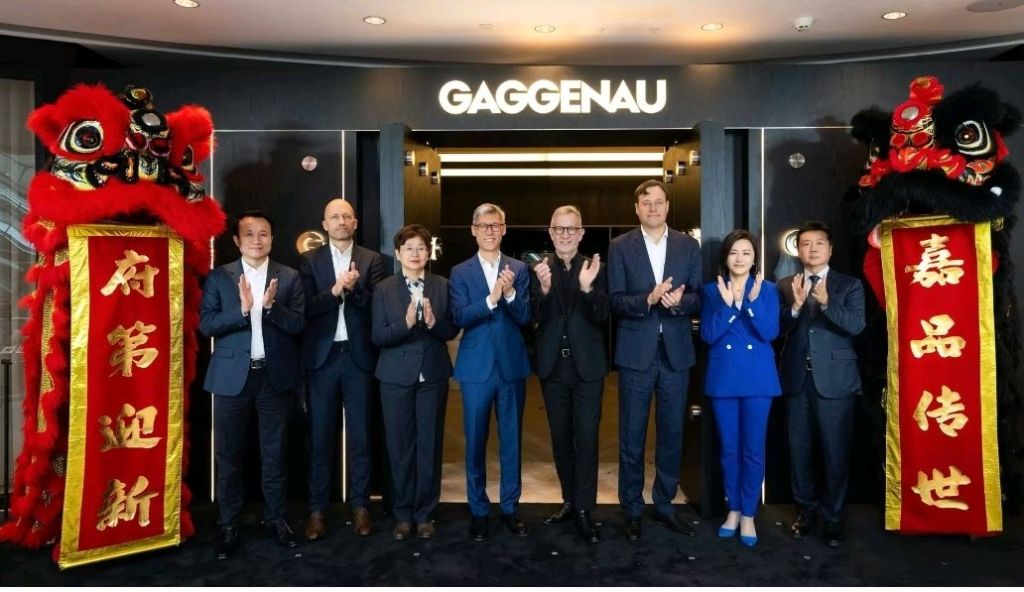
Introducing Gaggenau Beijing.
Situated in Beijing’s prime city centre, Gaggenau has unveiled its latest showroom – a space where tradition and innovation converge.Visit Gaggenau Beijing at SL4001, 4F, China World Mall, Beijing and schedule an appointment via +86 10 8535 1058.

Miele continues to invest
Miele closed 2024 with revenues of €5.04 billion, up 1.7% from the previous year, thanks to the acquisition of the SteelcoBelimed joint venture , which specializes in medical technologies. Without the acquisition, sales would have fallen by 2.9% and the number of employees would have fallen by 4.2%.
According to Markus Miele , managing partner, the market presents itself as a “ mosaic ” with variable trends in the sectors of floor care, linen care and household appliances.Miele’s transformation program, with a total investment of 500 million euros , has so far been implemented at 50 percent . A significant point is that, according to Rebecca Steinhage , Head of Human Resources and Corporate Affairs, the threat of forced layoffs no longer looms over regular employees. Instead, the company has opted for a socially sustainable reduction in staff , through early retirement and voluntary resignations.
Regarding the partial relocation of washing machine production to Poland, which will lead to the reduction of around 1,400 jobs in Germany in the coming years , Steinhage emphasizes that the other German plants are not at risk . Overall, the company is more optimistic about 2023/2024 and looks confidently into the new fiscal year.
500 million euros for growth and development
Despite the market challenges, Miele is focused on growth and maintains a positive attitude. The first half of 2024 was particularly difficult, with a recovery in the second half. The built-in appliance sector has yet to recover, while the free-standing appliance sector only recovered in the third and fourth quarters of 2024.
Hisense research centre
Hisense officially opens the new EU Home Appliances Research Center of HVAC in Milan! Hisense has opened its “EU Home Appliances Research Center of HVAC” (HARC), a center dedicated to the research, design and innovation of HVAC solutions for the European market. Located within Hisense’s offices in Milan, the center covers an area of 500 square meters and represents a key strategic step to strengthen Hisense’s global presence.
Samsung lags behind LG, Bosch in Consumer Reports
Samsung has fallen behind its competitors in Consumer Reports’ sixth annual appliance brand reliability rankings.
Consumer Reports (CR), the largest nonprofit consumer organization in the U.S. with six million members, is known for its independent product testing based on consumer feedback and expert assessment. Unlike institutions and influencers who receive free products for reviews, CR’s testing is highly trusted and credible.
According to a CR report released last month, Samsung Electronics was ranked 21st out of 26 appliance brands. Speed Queen, an American laundry machine manufacturer, claimed the top spot, followed by LG Electronics in second place. Other brands that outperformed Samsung include Whirlpool (12th), GE Appliances (13th), and Bosch (15th).
The rankings were based on survey data collected from CR members, covering 417,629 kitchen and laundry appliances purchased between 2013 and 2023. The ratings considered consumer satisfaction and predicted reliability, including the frequency of appliance breakdowns.
Samsung’s kitchen appliances, in particular, scored poorly. In a consumer satisfaction survey covering dishwashers, ranges, double-door refrigerators, French-door refrigerators, and cooktops, Samsung products received scores between 15 and 19 out of 100, placing them at the bottom. Even in other kitchen categories, Samsung’s highest score was just 46, significantly trailing its competitors.
Frequent breakdowns also hurt Samsung’s predicted reliability scores, with half of its kitchen appliances scoring below 50 in this category. Notably, Samsung’s dishwashers, which ranked last, had high rates of issues such as poor washing and drying performance, drainage failures, and defective dish racks. In contrast, Bosch and Miele’s dishwashers had the lowest rates of performance issues and breakdowns.
Samsung’s robot vacuum cleaners received a consumer satisfaction score of just 9 out of 100, while its washing machines scored in the low 20s to 40s, and dryers landed in the low 30s, placing Samsung well below many of its competitors.

