
LG posts the strongest home‑appliance quarter in its history
LG Electronics reported Q2 2026 consolidated revenue of 23.83 trillion won (approx. €15 billion) and operating profit of 1.58 trillion won (approx. €1 billion). Year‑on‑year, revenue increased 14.9%, while operating profit surged 147%, driven by a stronger premium mix and improved cost efficiency across the business.
The Home Appliance Solution division delivered the best quarter in its history, surpassing 7 trillion won (approx. €4.5 billion) in revenue for the first time. Operating profit reached 686 billion won (approx. €430 million). Growth came from both premium categories and high‑volume segments, supported by supply‑chain optimisation and tighter cost controls. LG’s subscription‑based service model also contributed to more stable, recurring revenue.Why this matters for the global appliance sector
– Premium appliances continue to be the main driver of margin expansion.
– LG’s results highlight the impact of aggressive operational efficiency in a high‑cost environment.
– Subscription models are becoming a structural stabiliser for revenue in home appliances.
Tag Archives: Premium appliances
Bring the Café Home
La Pavoni Unveils the New Cellini Espresso Range
If you’ve been dreaming of taking your morning coffee to the next level, Italian espresso icon La Pavoni has some fantastic news for you.
Unveiled at the World of Coffee event, the legendary brand has officially launched its brand-new Cellini range—a sleek, semi-professional lineup designed specifically for the booming “home barista” movement. Rather than settling for a standard quick brew, more of us are treating coffee making as an art. These gorgeous machines aim to make that professional, high-quality café experience something you can achieve right on your own kitchen counter.
Here is a quick look at the four standout models making up the new lineup:
1. Mini Cellini X
Perfect for tight kitchen spaces, this compact powerhouse features a heat exchanger (HX) and an integrated PID temperature control system. That means you can steam milk and pull a shot at the same time without losing thermal stability. It comes with a professional 58mm portafilter and is available in three stunning finishes: classic polished steel, matte white, and matte black.
2. Cellini EVO PID
Built for reliability and precision, the EVO PID offers incredibly stable temperature management thanks to its advanced PID system and dual-scale pressure gauge. Like the Mini, it’s a heat-exchanger machine available in steel, matte white, or matte black, but with a slightly larger profile designed for those who want effortless consistency cup after cup.
3. Cellini Dual
If you are looking for zero compromises, the Cellini Dual features a double boiler system with independent electronic PID controls. This gives you absolute control over both brewing and steaming temperatures separately. It also integrates a Brew Pressure Profiling Control (BPPC) system so you can manually monitor and manipulate your extraction pressure.
4. Cellini Specialty
The flagship of the range, the Cellini Specialty is designed for the ultimate home coffee enthusiast. It utilizes a dual-boiler configuration paired with dual PIDs to offer commercial-grade thermal stability. Pulling perfect double shots while steaming velvety microfoam for your lattes becomes entirely seamless and highly intuitive.
> “With the Cellini range, we wanted to bring professional technology and extraction standards directly into the home,” says Alessio Pezzoni, CEO of La Pavoni.
>
If you are looking to upgrade your coffee station, these Italian-built beauties perfectly balance high-end commercial tech with gorgeous kitchen aesthetics.

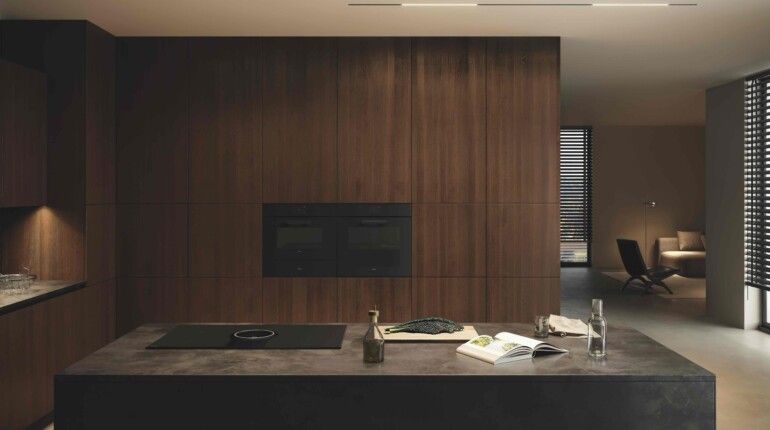
Elica’s Virtus Oven Line Wins Red Dot Award 2026 for Product Design
Elica has once again been recognised on the world stage, with the Virtus oven line winning the Red Dot Award 2026 – Product Design in the Kitchen and Household category. The achievement strengthens Elica’s position as one of the most design‑driven brands in the built‑in cooking sector, continuing a trajectory that consistently blends architectural styling with advanced performance.
The Red Dot Award remains one of the most influential international design competitions, judged annually by an independent panel of global experts. Products are evaluated on innovation, aesthetic quality, functionality, and the ability to elevate everyday use through thoughtful design. Winning in the Product Design category signals that the Virtus line not only meets these criteria but stands out among hundreds of global submissions.
Elica’s Virtus ovens reflect the brand’s ongoing commitment to refined materials, intuitive interfaces, and a cohesive design language that aligns with modern kitchen architecture. The Red Dot jury’s recognition highlights the continuity of Elica’s design philosophy — one that prioritises clarity, precision, and a premium user experience.
For Elica, the 2026 award reinforces a long‑term design path that continues to resonate with both consumers and the wider design community, further cementing its role in shaping the future of cooking appliances.
Midea Outlines Strategic Role for Küppersbusch in Its European Expansion
Midea has offered fresh clarity on how Küppersbusch—its German premium appliance brand acquired last year—will fit into the group’s broader European strategy. According to Ralph Kobsik, Managing Director of Midea Europe GmbH, the company intends to keep Küppersbusch operating as an independent, premium‑focused entity.
The move signals Midea’s ambition to strengthen its presence in the high‑end appliance market, an area where Küppersbusch has long held strong brand equity. Rather than folding the brand into Midea’s mainstream portfolio, the company plans to preserve its distinctive identity, design language, and market positioning.
Kobsik confirmed that the initial strategic focus will be on refrigeration and built‑in appliances, two categories where Küppersbusch has historically excelled. New product designs will remain aligned with the brand’s established aesthetic, ensuring continuity for loyal customers and retail partners.
However, one major shift is already underway: production will not return to the former Essen facility, which has now closed. While manufacturing will be relocated, Midea emphasises that the brand’s design DNA and premium positioning will remain intact.
This clarification offers a clearer picture of how Midea plans to balance scale with exclusivity—leveraging Küppersbusch’s heritage while integrating it into a broader European growth strategy.
WhiteGoodsNow will continue tracking developments as Midea refines its premium‑market ambitions.
Vanishing Icons: The Decline of European Home Appliance Brands
Once upon a time, European homes were filled with trusted brands like Indesit washing machines and Hoover vacuum cleaners—hallmarks of engineering excellence. These names still exist, but their origins have shifted dramatically.
Over the past decade, the European consumer electronics landscape has undergone a seismic transformation. Asian conglomerates have systematically acquired household European brands, reshaping the market’s dynamics.
According to data from Euromonitor International and GfK, Chinese brands—both native and those acquired—now hold 42% of the European consumer electronics market, up from **18%** in 2015. A closer look reveals:
– **Pure Chinese brands** (Haier, Midea, Hisense, TCL) – **22% share (€47bn)**
– **Chinese-owned former European brands** (Candy, Gorenje) – **20% share (€43bn)**
Meanwhile, Turkish powerhouse **Arçelik (Beko)** controls **15%** of the market (€32bn), acquiring brands such as Grundig, Indesit, and Whirlpool’s European operations.
Korean giants **Samsung and LG** maintain **28%** combined market share (€60bn), predominantly leading the premium segment.
What remains of truly European brands—**Electrolux, Miele, Liebherr, Bosch-Siemens**—accounts for just **15%** market share (€32bn). However, their survival strategy hinges on a **strategic retreat to the premium market**, where profit margins soar **3-4 times higher** than the mass segment.
The Shift to Premium: A Temporary Haven?
European brands are no longer battling for dominance in lower price tiers. According to McKinsey’s 2024 European Appliance Report, **78%** of European brand revenue now stems from step-up and premium products (€300+ price points), a segment where Chinese competition remains limited.
But the real question remains—can European brands maintain their stronghold in the premium space? Or is this merely delaying the inevitable?

