
KUALA LUMPUR: Panasonic, the latest manufacturer to have been hit by severe flooding in the country, announced today the temporary suspension of production at its factory near here.
Panasonic said it expected the plant in Shah Alam, Selangor, to be closed for at least a week, halting its production of vacuum cleaners, ceiling fans and exhaust fans for Southeast Asian markets
Category Archives: Manufacturing
B/S/H/ HOUSEHOLD APPLIANCES GMBH BAD NEUSTADT WINNER 2021: Smart & Sustainable
B/S/H/ Hausgeräte GmbH vacuum cleaners are in use in households all over the world: More than 9,000 appliances of different models and colors come off the production line at the Bad Neustadt factory every day, and a total of 2 million are sold worldwide every year.
The company responded to a decline in production volume for its most important product group by automating and digitizing the production of its vacuum cleaner blowers and large multi-component plastic parts. The focus was on using Industry 4.0 technologies to implement flexible, competitive and sustainable production “Made in Germany”.
In the course of the restructuring, horizontal and vertical integration took place across several stations of the value streams: From ordering the raw materials to booking the completion of a vacuum cleaner, many processes were automated and the machines, the transport via Automated Guided Vehicles (AGVs), and the products themselves were networked with each other. Essential information such as machine and process parameters is recorded and stored by a cloud solution.
Data on event-based information and the status of the autonomously controlled plants is now available at any time. All information can also be visualized quickly and comprehensibly on dashboards according to the user’s needs. However, the plant uses the technologies not only to continuously improve processes, but also to collect data that simplify energy management and, for example, reduce the values for water and heating consumption in the production halls.
The company uses several technologies to provide the information required from the collected data, depending on the application goal and field of use. Smartwatches inform employees about for instance machine settings – and data glasses are used for remote maintenance and training. In addition, a digital twin supports the work of product designers.
All process steps and relevant parameters of the material flow are recorded. This allows, among other things, the cycle times during injection molding to be autonomously adjusted to the downstream production process to ensure a stable quality level. In addition, each product is provided with a QR code via which it can be traced throughout its entire life cycle.
The energy efficiency of production is monitored around the clock and continuously improved. Energy management at the plant follows a holistic approach and uses Industry 4.0 technologies such as the “Siemens PAC”, a sensor that records energy data as for instance the power consumption of the plants.
Significant improvement in overall equipment effectiveness Reduction of manual effort and waste Reduction of energy consumption per unit producedIncrease in the number of product units manufactured per shiftFurther process optimizations through data transparency and data-driven decision making
B/S/H/ Household appliances GmbH
Dyson’s split with major supplier
Dyson is reportedly cutting ties with ATA IMS, one of Malaysia’s top providers of electronics manufacturing services, which supplies the UK firm with spare parts for vacuum cleaners and air purifiers, over labor-abuse allegations.
The step came after several current and former employees along with an ATA former executive alleged that the company used to hire mostly migrants who were forced to work up to 15 hours a day and to skip rest days to keep up with demand. Moreover, ATA reportedly coached its staff to hide real working and living conditions from Dyson and labour inspectors.
NEFF manufacturing record
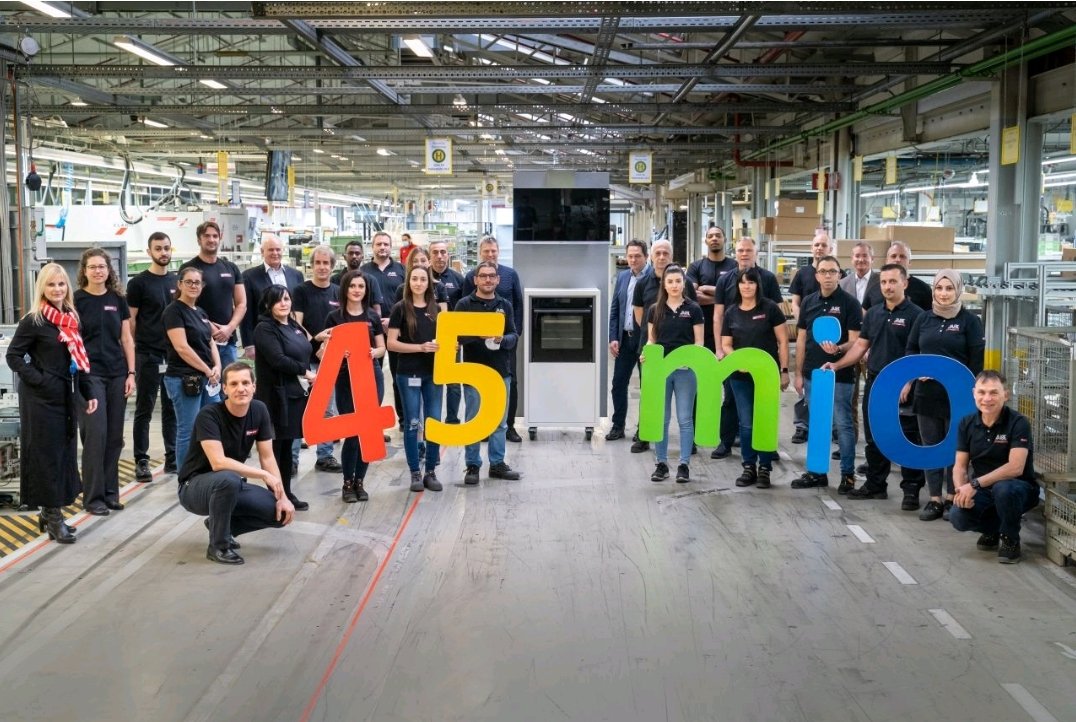
45 million home appliances produced: BSH Neff GmbH site in Bretten celebrated a manufacturing anniversary in the fall of 2021 – two milestones have been reached at once:
“15 million ovens and 30 million extractor hoods made in Bretten, these are proud figures,” notes Thomas Baumeister, the site manager. “A big thank you to the colleagues who are the basis of this success. They contribute with the greatest commitment, with passion, inventiveness, and the highest quality standards every day to continue writing this success story. And they do so even in times that are anything but easy and present us with major challenges.”
BSH Home Appliances Group to Open Its First, State-of-the-Art Factory in Africa
BSH Home Appliances Group announced that next year it will start the building of its first cooking factory on the African continent. The plant will be located in Egypt. The company will invest more thab 30 million euro to expand its business in Africa and the Middle East. The state-of-the-art factory will be in line with BSH’s high standards in efficiency and sustainability and achieve carbon neutrality.
Glem Gas
Glem Gas, the Italian company of cooking appliances, follows a path of sustainable development. Its industrial policy is strongly oriented towards environmental protection, via intensive research and experimentation aimed at continual improvements in appearance and performance that embraces the entire product life cycle, and thus also the eco-sustainable management of its components.
The forecasts for the future of our planet are becoming more and more alarming – said Glem Gas -: the greenhouse effect and the consequent climate changes may soon change the scenarios to the detriment of our ecosystem and thus our wellbeing. Like others, the household appliance industry is being called upon to review its production cycles and offer an active response to the need to increase responsibility for the environment. We must manage finite energy resources intelligently and make optimal use of the energy available from free, renewable sources, in a process that combines technological innovations with a great sense of social responsibility.
Glem Gas appliances are therefore manufactured with technologies that enable the recovery of their components – the company explained -, implementing a principle of reuse in line with a meticulous environmental strategy. The entire process is shifting towards environmentally aware design of products, built to last over time but also to be sustainable, using as many recyclable materials as possible and delivering more efficient, higher-performing solutions but with less energy consumption. Unused appliances and equipment enter a specific treatment process to recover most of their component materials and thus reduce environmental impact».
In addition, Glem Gas undertook a scrapping procedure on a lot of 112 tonnes of waste material. Each type of equipment was broken down into its various components and then recycled with impressive percentage results on the entire volume: 97% of raw materials reused 1% recovered in the form of energy. We like to think – the added from the company – that every cooker is is part of a shared project, avoiding waste and adopting reuse and self-recycling, aiding us on our way to a better future with optimal safeguards for the natural world
Miele artificial intelligence
“AI will be the new mechanical engineering.” In an interview with the Kompetenzzentrum Arbeitswelt.Plus, Dr. Stefan Breit, Managing Director Technology, explains the potential of artificial intelligence for the working world of tomorrow at Miele. One of our current flagship projects, for example, is an intelligent tool for human-centered personnel deployment planning in production. Further information at:https://youtu.be/HWQFHtnEC2U

Home Connect is BSH’s solution for a smarter household
Home Connect is BSH’s solution for a smarter household. From the washing machine to the oven, coffee machine or even the vacuum cleaner: consumers can improve quality of life at home with the touch of a button. Franziska Barnert, global partner manager in the Home Connect team, to shed some light on how consumers can use BSH’s solution in combination with renowned partners for an improved and more connected home.
Improving the quality of life at home is not just about designing and manufacturing high-quality appliances — it is also about keeping up with consumer trends and evolving needs. And what’s trendier than a smarter, connected life? That’s what Home Connect aims to provide: An easy-to-use app that lets consumers connect and control the home appliances from multiple BSH brands to simplify, optimize and personalize their daily household routines. In addition to that Home Connect is offering multiple partner solutions that can be used together with our connected appliances. However, there is more to it than meets the eye
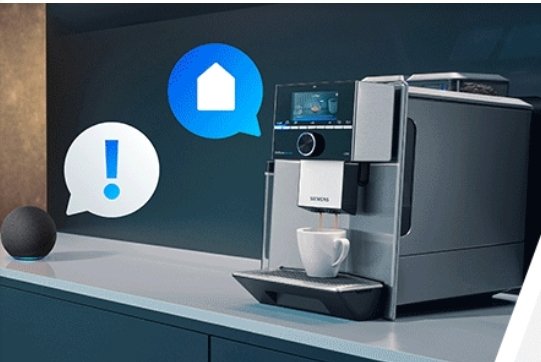
Among the large appliances, consumers can use it for washing machines, dryers, ovens, dishwashers, fridges, fridge-freezers, freezers, wine coolers, cooktops and hoods. So, basically for everything. And with regards to the small appliances, the app supports coffee machines, the Bosch Cookit, and also Roxxter, Bosch’s robot vacuum cleaner. We also want to give the consumers the possibility to use all those appliances with solutions from our partners.
Amazon Alexa our one of the global partners BSH are collaborating together with Amazon and discussing new functions for our Home Connect skill
Offering sustainable solutions is a key topic for BSH, and with Home Connect it’s no different. So just to give you an overview of the possibilities They offer consumers: They can, for example, check the estimated water and energy consumption of their selected appliance program directly via our app. Besides that, we are also constantly looking for partners in the smart home and energy segment. For instance, Home Connect recently went live with the smart home player Loxone in Europe, which also offers an energy solution. With their help, appliances can be started when the photovoltaic system produces enough energy.
Liebherr one million factory
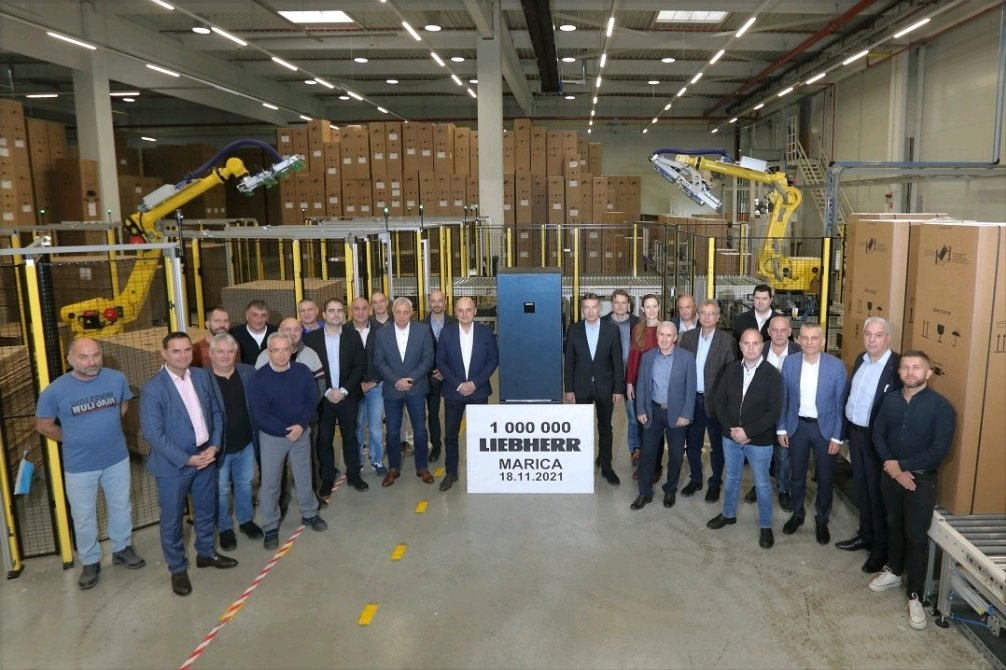
It has happened again, for the second time in the history of Liebherr factory in Marica, Bulgaria, they have produced 1 million units within one year! Congratulations to all who made this possible!
Bosch Dryer production record
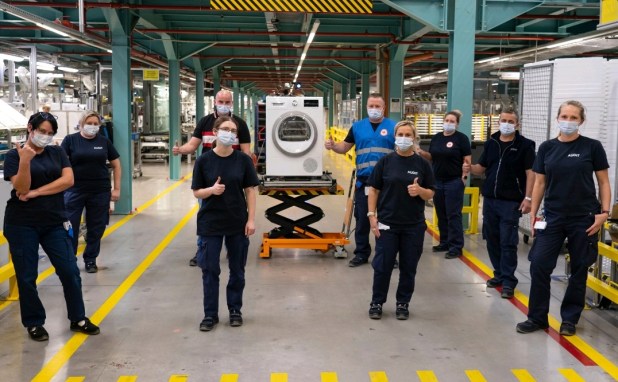
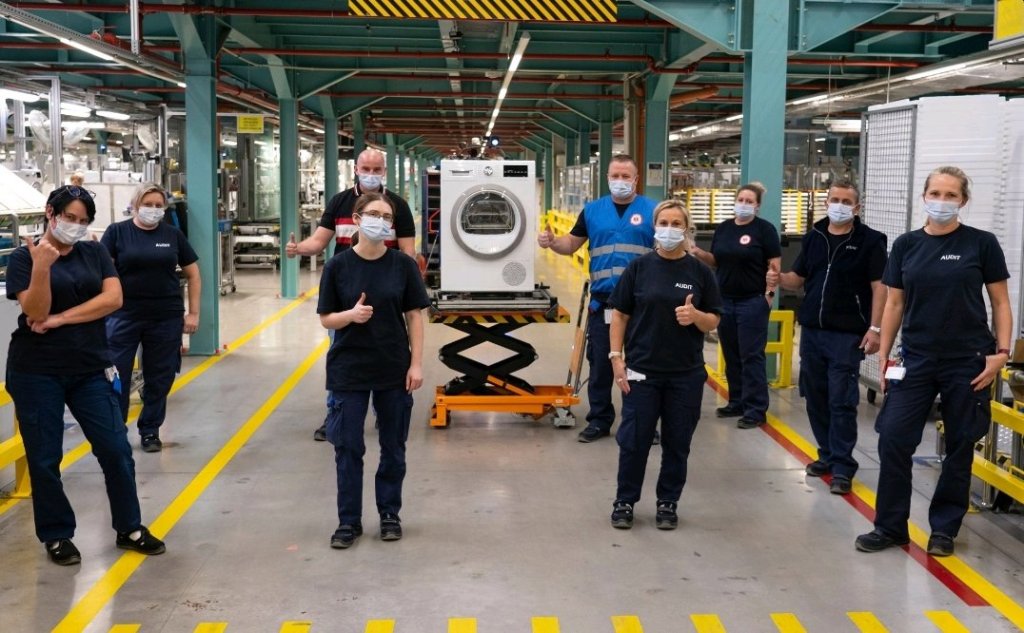
BSH celebrate the next production record: 20 million dryers manufactured at the groups factory in Lodz, Poland!
For many years, BSH have been developing technology, making the appliances not only energy-efficient but also climate-friendly and they are proud to be the market leader among drying appliances.
 WHITEGOODSNOW