
LG Electronics Inc. is forging an unexpected alliance with former rivals in a bid to strengthen its position in the budget appliance market and fend off growing competition from Chinese brands.
Industry insiders revealed on Monday that LG will introduce co-developed washing machines and refrigerators under its own brand across Europe later this month. The South Korean giant partnered with Skyworth Group Co. to design a 9-kilogram drum washing machine, and worked with AUCMA to produce a top-freezer refrigerator.
This marks the first time LG has collaborated with Chinese companies to develop home appliances. While LG led the product design and development, its partners will handle manufacturing under a joint development manufacturing (JDM) agreement. This structure contrasts with traditional OEM deals, as LG retains control of design while outsourcing production responsibilities.
By leveraging these partnerships, LG aims to offer competitively priced appliances without compromising its reputation for quality—particularly within its mid- to low-end product range.
Category Archives: Manufacturing
EGO relaunches DEFENDI product brand
The EGO-Group (EGO) will once again offer gas products under the DEFENDI product brand in the future. In 2013, the gas business was added to the BLANC & FISCHER Group through the acquisition of the DEFENDI Group. To better exploit synergies, the successful and innovative gas solutions of the former sister company DEFENDI were integrated into the product portfolio of EGO in 2020 and marketed under the EGO brand. On January 1, 2021, the site in Camerano officially became part of the EGO-Group: “Defendi Italy Srl” became “EGO Italia Srl”. EGO has decided that, starting from June 2025 it will once again offer its innovative gas solutions under the DEFENDI product brand – to strengthen its go-to-market approach as part of its growth strategy in the gas business. “The switch to the DEFENDI product brand will not involve any process or data changes for our business partners,” assures Karlheinz Hörsting Dr. , CEO of the EGO-Group. DEFENDI is a pure product brand of the EGO-Group. EGO remains the business and contractual partner. Camerano remains a site of the EGO-Group and will continue to operate under the name EGO Italia Srl.
Beko most sustainable
Beko has been named one of TIME Magazine’s World’s Most Sustainable Companies for the second year running, earning a place in the Top 20 and securing the #1 position in its industry.
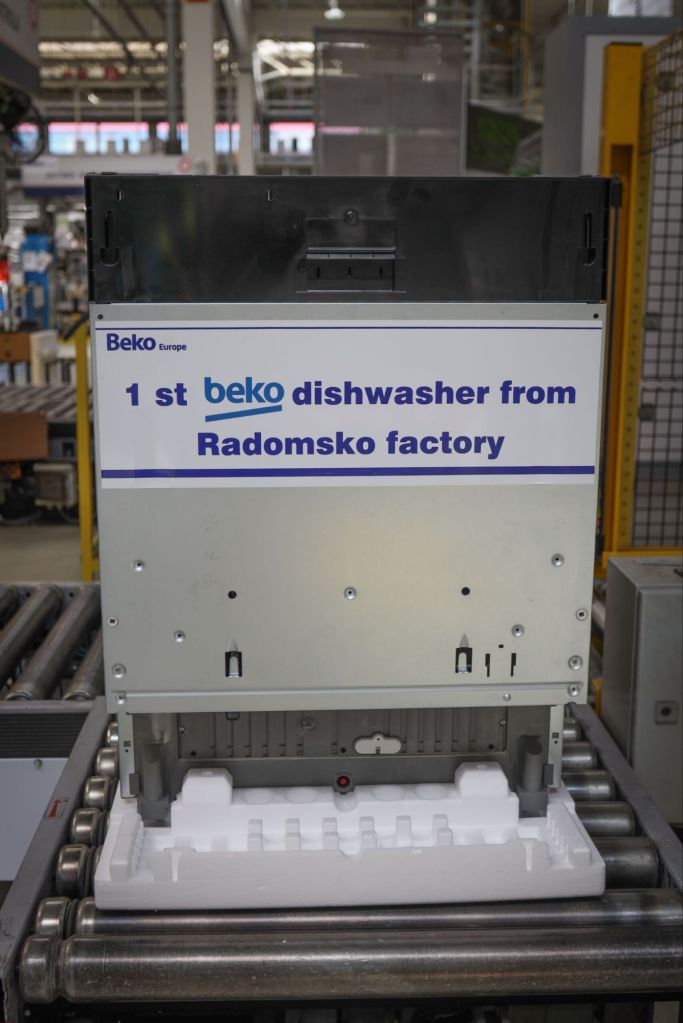
New production line of Beko dishwashers in Radomsko
New production line of Beko dishwashers in Radomsko
A new built-in model for the Polish market and regional exports
Poland remains a key country for Beko Europe in terms of logistics, human resources and production infrastructure.
After recently launching an oven production line in Wrocław, Beko Europe is consistently strengthening its presence in Poland. The company has just started production of a new model of built-in dishwasher at its plant in Radomsko. The first units will reach customers in the coming weeks.
The new dishwashers are intended mainly for the Polish market, as well as for export to Greece, the Czech Republic, Slovakia, Lithuania, Latvia and Estonia. The forecasted production for 2025 assumes the possibility of increasing the volume depending on market demand.
Elica increases its stake in Chinese subsidiary to 100%,
Elica increases its Chinese control to 100%. The household appliance manufacturer has acquired the remaining 0.56% of the share capital of Elica Home Appliances (Zhejiang, Putian) from Fuji Industrial Co., already its partner in the Japanese joint venture Ariafina.The price agreed with Fuji corresponds to the amount originally paid by the counterparty upon its entry in 2012, equal to 1.9 million euros, consistent with the initial agreements and with the path of the joint venture, managed independently by Elica, also through recapitalization operations

BSH open new factory
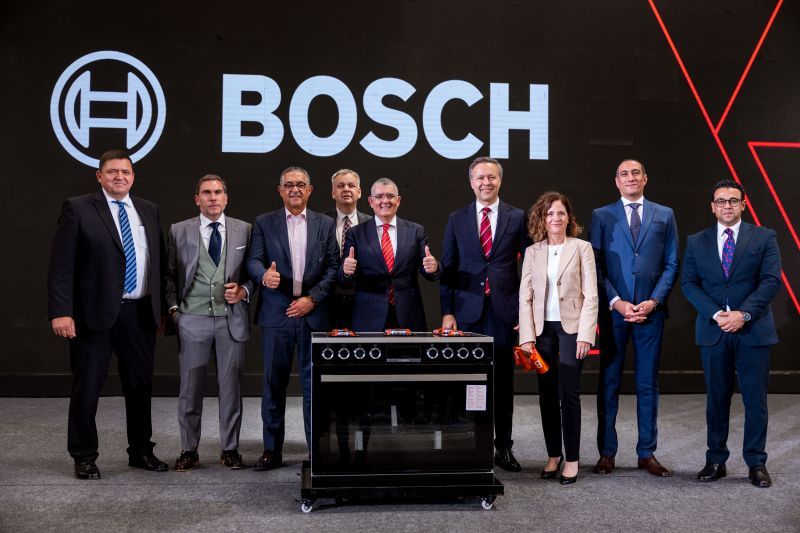
BSH open brand new, state-of-the-art factory in Cairo, Egypt! This is BSH Home Appliances Group’s first production site on the African continent, representing a significant investment in the region. The plant opening on Saturday 28th June marked this momentous occasion. The factory will produce high-quality range cookers and boasts top-notch production facilities to start a new success story for BSH.
Candy Brugherio Reinvents Itself as Haier Europe’s Service Powerhouse
The iconic Candy Brugherio plant isn’t closing its doors—instead, it’s entering a bold new chapter. Starting 1 July 2025, the historic Brianza site will become a European Service Hub for Haier Europe, specialising in distributing spare parts for household appliances.
🛠️ Strategic Transformation & Investment
Following the end of production in January, Haier will invest €8.3 million to repurpose the facility into a centre for logistics, regeneration, and packaging. This shift underscores the group’s commitment to long-term innovation across its supply chain.
👥 Workforce Transition with Support Measures
Out of the current 160 employees, 110 will remain in the new operation. The 30% reduction in staff will be handled through voluntary redundancies and social safety nets, coordinated with trade unions, the Lombardy Region, Italy’s Ministry of Labour, and Assolombarda.
🇮🇹 Brianza: Still the Heart of Haier Europe
The region will continue to house Haier Europe’s headquarters, alongside its IoT R&D Centre, Design Centre, and the Candy outlet—maintaining its strategic importance in the company’s European operations.
🎉 Candy at 80: A Brand with Momentum
As the Candy brand celebrates its 80th anniversary, it now accounts for 40% of Haier Europe’s regional turnover and remains a focal point for future investments.
📦 A New Era for Haier’s European Supply Chain
While marking the end of Brugherio’s industrial production legacy, this transformation opens a new phase for Haier’s European logistics strategy—anchored in innovation and sustainability
Atlant Unveils New Refrigeration Solution for African Market
Atlant, a frontrunner in Belarus’s household appliance industry, continues to strengthen its global reach. According to Leonid Pinchuk, Deputy General Director for Commercial Affairs, more than 85% of the company’s products are destined for export. Key markets include Russia, Kazakhstan, Armenia, and Kyrgyzstan, with growing demand from Uzbekistan and other post-Soviet nations.
Atlant’s manufacturing facility is equipped with advanced, high-tech machinery and has achieved notable milestones—among them, the development of the nation’s first medical-grade freezers. These innovations aren’t just profitable—they’re essential. They equip Belarus’s healthcare system with the tools to operate independently and effectively.
One standout development is a serial-production blood component freezer engineered for the Ministry of Health. Capable of maintaining temperatures as low as –40°C, it also features data-logging technology that monitors door openings and ensures consistent temperature control.
Atlant’s growth strategy hinges on geographic expansion. The company has built a reputation for reliable quality and stylish design since its founding in 1959, always staying ahead of consumer expectations and industry trends.
Most recently, Atlant launched a special line of refrigerators tailored for the African market. Designed to withstand frequent power outages, these units run efficiently on solar energy—underscoring the company’s commitment to adaptable, sustainable solutions.
At its core, Atlant exemplifies the role of industry in driving economic progress. Its successes reflect not only innovation and resilience but also a coordinated effort to contribute meaningfully to Belarus’s development.
Whirlpool Expands U.S. Investment and Manufacturing
Whirlpool CEO Marc Bitzer reaffirmed the company’s commitment to domestic production, crediting supportive trade policies for encouraging new investments. The brand is launching products that affect 30% of its range, with a focus on U.S.-based manufacturing. Despite missing Q1 2025 forecasts, Bitzer remains confident that boosting factory output will drive profitability
Celebrating 20 Years of Excellence at the Lodz Tumble Dryer Plant
In June 2005, the BSH Lodz Tumble Dryer Plant officially opened its doors, marked by the presence of Polish Prime Minister Marek Belka and BSH Home Appliances Group CEO Kurt-Ludwig Gutberlet. Over the past 20 years, the plant has achieved remarkable milestones:
⚡ *Pioneering innovation and environmentally friendly products*
⚡ *Sixfold increase in production output since our first year* 🚀
⚡ *More than 26 million satisfied customers across the globe* ❤️
⚡ *Advanced heat pump manufacturing technologies at the cutting edge*
⚡ *Consistent benchmark-setting in quality and safety standards

