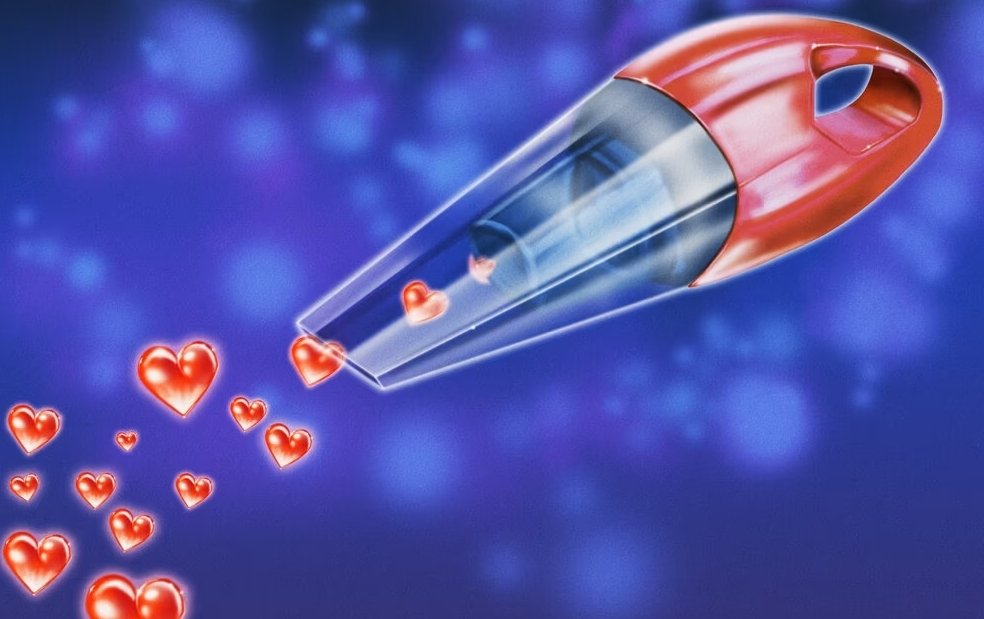
BISSELL’s “Little Green” was featured as part of a New York Times article that examined the rise of social commerce on the social media platform, TikTok.

Little Green was featured as the case study of sorts, in which they looked at the how the hundreds of videos featuring the device were driving clicks, views and ultimately, sales.

Click below to read the full article:https://www-nytimes-com.cdn.ampproject.org/c/s/www.nytimes.com/2021/10/02/style/tiktok-shopping-viral-products.amp.html

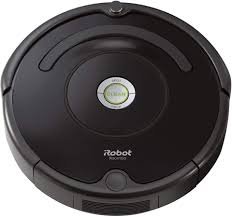
iRobot have solid second quarter 2021

The second quarter of 2021 iRobot reached a revenue of 365.6 million dollar, an increase of 31% from 279.9 million dollar in the second quarter of 2020. The growth primarily reflected healthy demand from retailers in North America and from the company’s retail and distribution partners in Emea. Revenue for the first half of 2021 recorded a 668.9 million dollar versus 472.4 million in the first half of 2020. The second-quarter 2021 revenue performance was highlighted by 40% growth in the U.S., 29% in Emea and 7% in Japan over the prior year period. Mid-tier and premium robots, which accounted for 82% of total quarterly robot sales, marked a 42% revenue growth.

iRobot®, the leading global consumer robot company, designs and builds robots that empower people to do more both inside and outside of the home. iRobot created the home robot cleaning category with the introduction of its Roomba® Robot Vacuum in 2002. Today, iRobot is a global enterprise that has sold more than 30 million robots worldwide. iRobot’s product line, including the Roomba and the Braava® family of mopping robots, feature proprietary technologies and advanced concepts in cleaning, mapping and navigation. iRobot engineers are building an ecosystem of robots and technologies to enable the smart home. For more information about iRobot, please visit www.irobot.com.

Vacuum cleaning and moping market surged fueled by coronavirus and product innovation

Hard hit by coronavirus, China’s retail sales market came to a market size of 705.6 billion Yuan in 2020, down by 11.3% year-on-year. Electric vacuum cleaning and mopping sector became one of the few categories that achieved fast growth amid the broad sluggishness with a market size of 24 billion Yuan in 2020, up by 20% year-on-year, according to All View Cloud. Behind the growth are two major factors. On one hand, the breakout of coronavirus raised the healthcare and cleaning awareness of consumers, which generated the demand for electric vacuum cleaning and mopping appliances. On the other hand, the rollout of innovative products such as smart wet dry vacuum cleaners and self-cleaning mopping and cleaning robots significantly optimized consumer experience and blazed the trail for the industry.

Changes in both supply and demand side fueled the growth

Different from European or American consumers, Chinese consumers mostly have hard floors at home, which means they have a stronger need for mopping. But traditional products, developed with vacuum cleaning as a priority, are weak in mopping performance and need to change the mop manually, making consumer experience falling short of consumer expectations. In 2020, enterprises including Tineco and Narwal rolled out innovative smart wet dry vacuum cleaners and self-cleaning mopping and cleaning robots. The products significantly upgraded the mopping performance and allowed consumers to free from washing mops manually. Targeting the pain points of consumers, the products blazed a trail for the industry and drove the sector to grow.

Online sales surged while offline sales sagged

Enterprises shifted from offline to online with a series of moves launched online including new product releases, live stream sales and promotion campaigns to boost online sales when offline sales got battered amid coronavirus in 2020. Online market accounted for 86% of the whole electric vacuum cleaning and mopping market by retail sales value in 2020, up by 8% year-on-year. As coronavirus gradually gets contained within China, offline market is expected to recover in 2021. But for the long term, online market is still believed to be the main battle field and is believed to take an increasingly larger share of the market.

In terms of reasons behind it, electric vacuum cleaning and mopping appliances do not need installation, which give them an edge in online sales. For enterprises, online marketing saves a great deal of expenses including rental fees and salaries. Plus, new sales modes including live stream sales and scenario-based sales allow consumers to get to know products better and therefore generate their purchase desire.

Average prices rose powered by the consumption upgrading trend

With the upgrading of technology, the market saw a rise in pricing, of which average prices of vacuum robots, cordless vacuum cleaners and smart wet dry vacuum cleaners went up compared to year 2019. When it came to pricing strategy of enterprises, it’s clear that mid- to high-end products priced above 2000 Yuan saw a significant rise in share of new products placed on the market. The price rise mainly came from the hardware upgrades of products including motors, chips and navigation system and the differentiation of new categories such as smart wet dry vacuum cleaners and self-cleaning mopping and cleaning robots compared with existing products.

Market concentration further grew

Brands with electric vacuum and mopping products sold on the market amounted to 482 in 2020, up by 74 compared to year 2019, according to monitored data of online market from All View Cloud. The increase in brand number intensified competition, but did not lower the market concentration of leading brands. In fact, leading brands achieved higher market concentration in 2020 due to consumers’ rising brand awareness and pursuit for product quality which drove them to choose trusted brands, and the competitive advantages of leading brands in product quality and brand recognition which powered them to gain ground from remaining brands and edged out weak brands.

Category wise, top 5 brands of vacuum robot market took a combined share of 83% at online market, and top 10 brands of cordless vacuum cleaner market a combined share of 86%. As a new category with few players, smart wet dry vacuum cleaner market was dominated by Tineco who alone took a share of more than two third.

Product iteration expedited

The number of new products placed on the market came to 1067 in 2020, according to monitored data of online market from All View Cloud. The fierce market competition and technology upgrades sped up the product iteration of enterprises especially before shopping festivals such as June 18 and November 11 (Singles’ Day) when new products including T8 of Ecovacs, T7 of Roborock and P7 of Midea were rolled out. These new products offered optimized performance, functions as well as user experience.

User demands were more valued to improve consumer experience

Products sold early on the market competed mostly on the ground of parameters and price with little concern with the actual scenarios of consumers. Now, enterprises stay close to consumer demands and upgrade products in multiple aspects including appearance, performance, operability and intelligence.

The development of smart wet dry vacuum cleaners and self-cleaning mopping and cleaning robots well address the pain points of consumers and therefore embrace an explosive growth. Cordless vacuums add magnetic charging function, display panel, automatic lighting, and tangle-free roll brush to make it more easy to use. Cleaning robots are getting smarter with more products adopt laser navigation and visual navigation. In 2020, cleaning robots with laser navigation accounted for 47% while those with visual navigation 16% of the category. Roborock and Ecovacs apply AI technology to cleaning robots ahead of the pack, allowing the products to be smarter to avoid obstacles.

It is estimated that the sector will embrace a further growth in 2021 with a market size exceeding 30 billion Yuan, up by 26% year-on-year, according to All View Cloud. Leading brands will continue to advance the structural upgrade of the industry through product iteration, and mid- and high-end products are expected to take a larger share of the market. Product wise, cleaning robots are expected to reach 11.2 billion Yuan in retail sales, up by 20% year-on-year; mainstream brands will successively roll out self-cleaning products that integrate cleaning and mopping functions; low-end robots without smart navigation will be phased out; smart wet dry vacuum cleaner sector will step up further to reach an estimated market size of 4 billion Yuan and more than 30 brands; cordless vacuum cleaner sector will remain the growth but in a limited way given the lack of mopping function

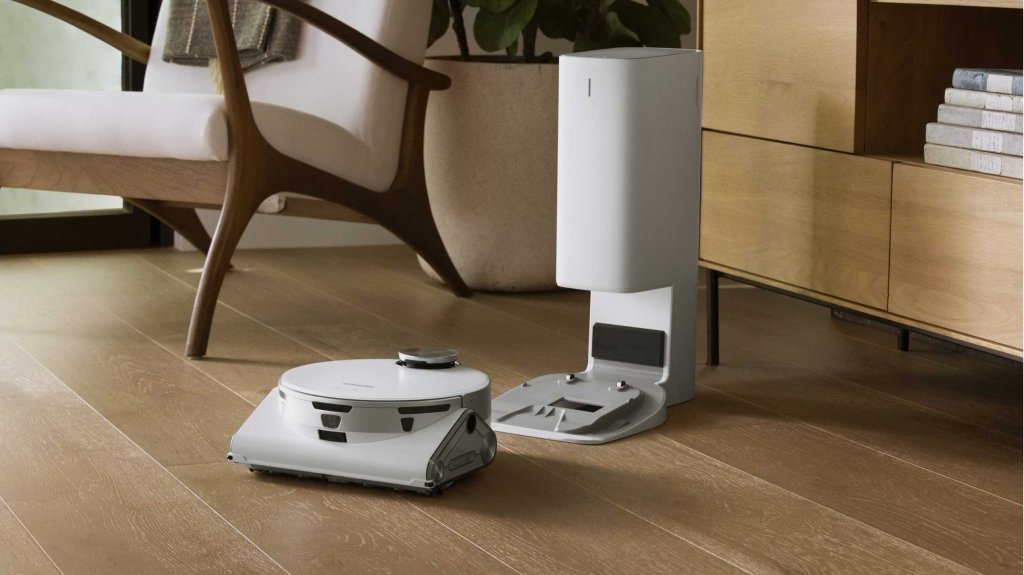
Bespoke Jet Bot AI+, the new smart robot by Samsung

Samsung  presents its new Bespoke Jet Bot AI+,  a sleek and smart  robot vacuum that  can be programmed to  clean. Moreover, this  model can  help to  monitor pets:  it can  recognize  pet excrement  and will  simply maneuver  right  around it to  prevent any  unwanted spreading or secondary contamination.
Bespoke Jet Bot AI+ is  equipped with  object detection and  recognition technologies that  not  only make  floor  cleaning  more  intelligent and convenient,  but  also  more  personalized  and even  pet-friendly. The  appliance can  identify and classify the  objects it encounters  on the  floor  by mapping out their location. This  allows it to  clean  closely  around furniture,  home  appliances and  items  such as lamps or plants.h  electrical cables, and  avoid them accordingly.
This Samsung robovac is powered  by an Intel AI solution and  equipped with an  active stereo-type  3D sensor. This  enables it to  think and make  decisions on its  own and gauge the  layout of the  living  space  in order to  drive  more  efficiently  throughout  home and navigate  around  objects  with no  need for  manual supervision

Taurus robot cleaners

Taurus Group launch its Homeland robot vacuum cleaners 

Specifications

  • Smart and elegant navigation with memory and laser
  • 10 Cleaning Modes
  • Mopping Function. Vacuum and scrub all types of floors at the same time
    Tiles, rugs, carpets and parquet with style and in the most technological way
  • Two side brushes and one central one. Bristle + silicone
    Capable of dragging the most stubborn dirt even from corners
  • 120 minutes of autonomy
  • Distinguished 2300PA motor with huge suction
  • With HEPA filtration

Program it and control it from your Smartphone
Voice control. Compatible with Alexa and Google Home
Because beauty and technology in Homeland go hand in hand

Electrolux presents vacuum cleaner made of 100% recycled and reused materials

Electrolux takes a new important step on the journey towards circularity with a prototype for change. Together with Stena Recycling, Electrolux has developed a vacuum cleaner made of 100 percent recycled and reused materials. The plastic and components originate from consumers electronic products, such as used hairdryers, vacuum cleaners and computers. The project addresses some of today’s key recycling challenges while exploring circularity in household appliances.

More than 400 million metric tons of plastic are produced globally every year, but less than 12% of this comes from recycled materials. Therefore manufacturers have difficulty finding enough safe and consistently high-quality recycled material. As a pioneer, Electrolux was first in the industry in 2010 to raise awareness about the global shortage of recycled plastics through the Vac from the Sea project. The volume of products containing recycled material has since increased across the industry but remain at low levels.

To step up the pace, Electrolux is partnering with Stena Recycling in the collaboration Circular Initiative. The goal is to learn more about how to make the market for recycled plastics function as well as for virgin materials. The first concrete result is a visionary vacuum cleaner made of 100 percent recycled plastic and reused components from electronic consumer products. The prototype is developed to explore circularity in household appliances.

“We at Electrolux have a strong commitment to reduce our climate impact by 2030 and circularity is a key dimension of this. The partnership with Stena Recycling is one of the important initiatives we engage in to push ourselves and the industry forward through knowledge sharing and innovation. We want to support consumers in making sustainable choices, and to succeed we need a solid approach to circularity”, says Jonas Samuelson, CEO at Electrolux.

Henrik Sundström, Head of Sustainability at Electrolux, adds: “This project has highlighted many of the considerations we take into account as we seek to become more circular. From product design and material use to new business models, there are regulatory requirements as well as quality and safety questions that need to be addressed. We have to strike a good balance in increasing the amount of reused and recycled materials when making products that are optimized for further recycling at the end of life”.

The material from used products such as hair dryers, vacuum cleaners and computers originates from Nordic households. The focus on consumer products has enabled the project to study the lifespan of the recycled products and components to gain insights about consumer recycling behaviors and attitudes.

“The Swedish industry has all the right conditions to become a pioneer in circular flows. We have the know-how, we have the technically advanced processing plants needed, and we have companies willing to take the lead in circular production. I’m proud of what we have achieved together in the partnership with Electrolux. It’s a crucial step towards a future where circular materials will play a significant role in manufacturing. Through the Circular Initiative we provide our expertise when collaborating with our partners to create world leading circular solutions”, says Kristofer Sundsgård, CEO at Stena Recycling.

By 2030 all Electrolux product ranges will contain at least 50% recycled materials. On the journey towards circularity, the learnings from developing the prototype will provide important knowledge for Electrolux future innovation.

Stena Recycling collects discarded electronic consumer products and breaks them down into raw materials for new products or for energy recovery. Read more about the Circular Initiative here.

The prototype vacuum cleaner is an action within the Electrolux Better Living Program, a plan to enable better and more sustainable living for consumers around the world through 2030.

LG solutions for a clean home without effort

LG Electronics offers a wide range of cleaning systems to keep hygiene at home.
LG CordZero A9 Stick Vacuum, for example, allow users to rid of dust and dirt on the floor. By switching from vacuum to mop – and back again – with ease, LG’s vacuum/mop combo allows to remove dust from all types of floors as well as sofas and chairs. With its interchangeable nozzles, every corner of the room – including tall ceilings – is within easy reach. A 5-Step Filtration System filters 99.99 percent of particulates measuring as small as 0.5-4.2㎛ in size 2 to reduce the presence of dust mites, dog and cat allergen to achieve better home hygiene.
With LG CordZero ThinQ R9 robotic vacuum, instead, is an intelligent robot equipped with deep learning technology and 3D DUAL EyeTM technology that utilizes a 3D View SensorTM and a 3D Laser SensorTM to read the environment and categorize obstacles to perfectly map out any room for accurate navigation.

Collaboration: Using LG’s patented technology, Miele will produce robot vacuum cleaners

LG Electronics Inc. and Miele & Cie. KG have entered into a long-term patent license agreement covering robot vacuum cleaner technologies. The terms of the agreement will allow Miele to produce and sell robot vacuum cleaners using patented technologies developed by LG R&D.

The license agreement includes the use of LG’s patented induction signal guide and infrared-induced signals to enable robot cleaners to accurately and precisely return to their docking stations for charging. Other LG patents being licensed relate to dust unit detection and agitator attachment technologies.

“LG has long and storied history of investing in home appliances,” said Jeon Saeng-gyu, executive vice president of LG’s Intellectual Property Center. “Patent licensing agreements with major brands allow more consumers to benefit from the collective innovation of the industry.”

Hoover H-FREE 500 is among the winners of the prestigious Red Dot Award,

Hoover H-FREE 500 is among the winners of the merchandise Design 2020 category of the planet famous and prestigious Red Dot Award, which annually brings together quite 18,000 entries from design professionals, companies and organizations from quite 70 countries.Considered the foremost important and prestigious design award, The Red Dot Award: Product Design, whose origins go back to 1955, evaluates the simplest products created annually through a world Jury made from some 40 members who evaluated quite 6,500 products.write the image description hereH-FREE 500 is that the compact, lightweight and functional cordless broom launched by Hoover in 2019: because of its slim silhouette and weight of just one .5 kg when utilized in handheld vacuum mode, H-FREE 500 reaches everyone corners of the house guaranteeing extraordinary cleaning results. additionally , its height of only 69 cm in storage mode makes the H-FREE 500 broom an object of desire for anyone seeking an unbeatable cleaning experience combined with minimized space for storing , and thanks also In parking mode, it allows the broom to face up without the necessity for extra support.H-FREE 500 may be a product that mixes compact dimensions, efficiency and results like a corded vacuum cleaner: the H-LAB brushless Inverter motor offers consistent suction power and outstanding leads to collecting dust, large particles, hair and hair from animals. additionally , its lithium battery guarantees an autonomy of up to 40 minutes of power without cable. With the H-FREE 500, everything is accessible and straightforward to succeed in , because of the on-board 3in1 accessory that creates cleaning all types of objects and surfaces in any position and space easier and easier . And with the special nozzle for animal hair removal, pet hair is faraway from round the home.In addition, the Hoover Wizard App constantly suggests the simplest thanks to use also as offering practical tips or statistics, which complete the set of solutions offered by HFREE 500 for a cleaning experience designed to always enjoy excellent performance. Hoover H-FREE 500 and therefore the other winners are going to be present at the Red Dot Award: Product Design 2020, which can happen in Essen, Germany, on June 22, 2020.