Hisense Europe Group (HEG) management and representatives of trade unions at the plants in Slovenia (Velenje), Serbia (Valjevo) and the Czech Republic (Mariánské údolí) are united and committed to their intention to protect the health of all employees across Europe during the coronavirus pandemic. HEG management and representatives of trade unions at plants in Slovenia, Serbia and the Czech Republic have urged their employees to strictly abide by the preventive measures against spreading of COVID-19 that were imposed to benefit each individual employee as well as the entire company. HEG continues to work closely with healthcare authorities in all countries it operates in, strictly following all the measures imposed by local authorities.
«Our common response to the current pandemic – reads the statement signed by the HEG management and trade unions in all three countries – is the zero-tolerance approach to the violation of prescribed measures. Behaving responsibly is the only way that can help us maintain our health during the pandemic, which is a major challenge the entire world is facing. We have been investing all our efforts in making sure our employees are well-educated about the importance of strict implementation of all measures, both in the plants and outside them. Together, we urge all employees to practice discipline, physical and social distancing even outside the plants, and thus help contain the spreading of the virus.» The Group ensures that “HEG plants, as well as all other organizational units throughout Europe, have been following strict preventive measures since day one of the pandemic: physical distancing, mandatory use of disinfection barriers, regular disinfecting of hands and work areas, measuring body temperature at the entrance, and wearing protective masks provided by the company. Protective barriers have been installed in all our plants; they prevent physical contact wherever possible, premises are regularly disinfected, and meetings are held online or with mandatory proper physical distancing.”
Samsung Electronics Co. is expected to report strong third-quarter earnings, analysts here said Monday, as its mainstay semiconductor business remained solid despite a decline in memory prices, while its mobile and home appliance sales soared on pent-up demand amid the pandemic.
Samsung was projected to log 63.95 trillion won (US$54.5 billion) in sales in the July-September period, up 3.1 percent from a year earlier, while operating profit was estimated to surge 33.7 percent on-year to 10.4 trillion won over the period, according to Yonhap Infomax, the financial news arm of Yonhap News Agency, which compiled data from 17 brokerage houses.
Should Samsung meet the consensus, the tech giant will post its best quarterly performance since the fourth quarter of 2018, when it logged an operating profit of 10.8 trillion won.
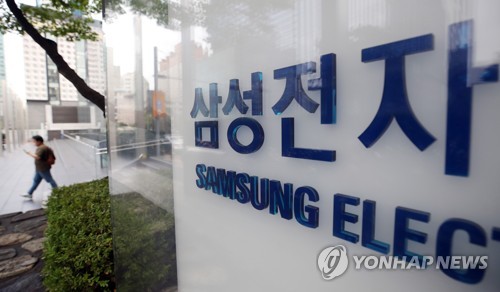
An outdoor sign of Samsung Electronics Co. at the company’s office building in Seoul (Yonhap)1 of 4hide caption
Compared with the previous quarter, the estimated figure suggests Samsung seeing a 20.7 percent increase in sales and a 27.6 percent jump in operating profit.
Samsung, the world’s leading memory chip and smartphone producer, is expected to announce its third-quarter earnings guidance next week.
Analysts have been raising their earnings outlook for Samsung in recent weeks after they assessed that its chip business is not likely to suffer a big drop in sales despite a decline in memory prices prompted by an excess in inventory.
Server DRAM products in the third quarter were projected to suffer a 10-15 percent price drop in the third quarter, according to market researcher TrendForce, which also estimated that prices for mobile DRAM and consumer DRAM chips to see up to an 8 percent and maximum 10 percent decline, respectively.
However, rush orders from Huawei Technologies Co., the world’s top telecom equipment maker and No. 2 smartphone producer, apparently helped Samsung’s chip business to stay afloat.
Analysts predicted Samsung’s chip business to post an operating profit of around 5 trillion won in the third quarter of the year.
Huawei, one of Samsung’s five largest customers, has been aggressively procuring semiconductors ahead of the U.S. export restrictions that have been in place since Sept. 15.
“Bit growth for DRAM and NAND flash is expected to mark 3 percent and 12 percent quarter-on-quarter increases, respectively, better than its previous guidance,” said Kim Kyung-min, an analyst at Hana Financial Investment.
“Rush orders from its Chinese client, along with a better yield rate and increased wafer input from the expansion of its Xian plant, pushed up the growth,” she said.
Analysts also predicted that Samsung’s foundry business logged growth in the third quarter. The company reportedly secured orders from Qualcomm and Nvidia to manufacture their latest chips.
Samsung’s mobile business was tipped to see a big improvement in its earnings with increased smartphone sales and reduced marketing costs.
Many analysts here predicted that Samsung’s mobile business logged 4 trillion won in operating profit in the third quarter, more than double its second-quarter operating profit of 1.95 trillion won.
Samsung’s Galaxy smartphone sales were estimated to be around 80 million units in the third quarter, about a 50 percent increase from the previous quarter, while that of tablets reached 10 million units, roughly 45 percent higher than the second quarter, analysts added.
“It appears that Samsung has performed well amid Huawei’s struggle and Apple’s new iPhone launch delay, while its tablet sales benefited from a stay-at-home trend,” said Song Myung-sub, an analyst at Hi Investment & Securities. “With decreased marketing costs amid the pandemic, the mobile business unit’s operating margin is expected to be around 10.5 percent in the third quarter.”
Samsung’s home appliance business was also tipped to get a boost from pent-up demand amid the pandemic-driven stay-at-home economy with a sharp increase in its TV sales.
Some analysts even predicted the company’s consumer electronics unit to post over 1 trillion won in operating profit in the third quarter, its best quarterly performance since the second quarter of 2016.
“Considering TV shipments in July and August, it appears that Samsung’s third-quarter TV shipments have posted a better growth than the company’s earlier estimate of a 40 percent increase from the previous quarter,” said Lee Seung-woo, an analyst at Eugene Securities.
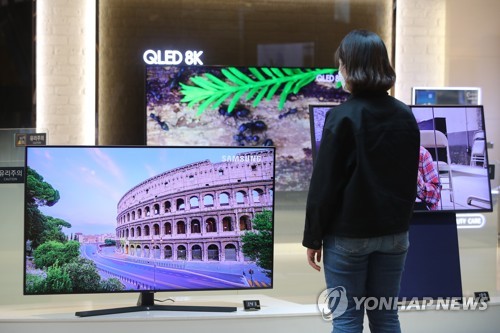
According to a recent report from market tracker Omdia, the global QLED TV market, led by Samsung, was projected to grow to 2.44 million units in the third quarter, up 83.9 percent from a year earlier.
Samsung’s display business was projected to post mediocre earnings in the third quarter due to the delayed launch of Apple’s new iPhone 12 series.
According to GfK data, small and major appliances faced the pandemic situation without significand drop. The Small Domestic Appliances (SDA) market grew by a solid +8.6 percent while the Major Domestic Appliances (MDA) market (including Air Conditioners) experienced limited losses of -8.6 percent in value terms. Excluding Air Conditioners the revenue loss was only -3.7 percent. «Although the pandemic had a significant negative impact on sales due to retail shutdowns – GfK experts explains – the increased focus on the at-home experiences drove a sales recovery in May and June. Sales of appliances addressing the new challenges generated by the enforced need to “eat at home”, “clean at home” and “groom at home” soared. This includes microwave ovens, vacuum cleaners, dishwashers, beard trimmers and multi-grooming kits. However, for some categories, entire seasons were lost due to COVID-19 – for example, Air conditioners. Overall, MDA (excluding Air Conditioners) only lost -3.7 percent in value terms – even less than the total -5.8 percent for the tech & durables (TCG) market. Whatever the appliance, the overall trends driving choice for consumers of performance, simplification, health hygiene and borderless shopping have become more relevant than ever.»
Looking at the regions, in the first half year of 2020 (H1 2020), the SDA market experienced a solid performance in the developed world. Europe (including CIS) grew by +9 percent. The MDA market was almost stable at -2 percent here. Developed Asian countries also saw a strong uptake of MDA products at an +2.7 percent uptick. While affluent countries were able to invest in appliances to makes their life easier in lockdown, this was less feasible in emerging economies due to the immediate impact of the pandemic on income and willingness to spend money. Consequently, the emerging Asian countries (including China) experienced a double-digit decline in value, weakening MDA market growth. However, the low price point of SDA products and the urgent need for cooking and cleaning products supported a rapid revival of SDA in emerging Asian countries (including China). Here SDA grew by +10.9 percent. Fortunately, in June total appliances growth recovered with double digit sales growth both in China and the rest of the world.
The old labelling concept involving A+++ to D efficiency classes has become cumbersome and less transparent for stakeholders so that EU has decided to come back to the original A–G class concept which for the future shall involve rescaling of label classes depending on technology and market development. To help in the smooth market transition towards the new energy labels, the Austrian Energy Agency coordinates the Label 2020 project, taking place in 16 EU member states. The project has received funding from the European Union’s Horizon 2020 research and innovation programme and will last until January 2023, with the objective to support: consumers and professional buyers by means of effective information campaigns, services and tools; retailers in the correct, efficient and effective implementation of the new label at the point of sale and in online sales channels; manufacturers in the provision of correct labelling and product information; policy makers, multipliers and other stakeholders in the use and promotion of the new label within national programs, initiatives and schemes. Among the most important news of the new regulation, we remember that there will be one common scale for all products including only class A to G. There will be no extension to A+ classes anymore. The label will be linked to a new EU product database via a QR-Code, that provides additional product information for all labelled products for buyers, retailers as well as for market surveillance. In 2021 new labels will be implemented in physical stores and on-line shops for 5 product groups: household refrigerators and freezers, washing machines and washer-dryers, dishwashers, TVs and displays, light sources. For other labelled product groups like air conditioners, tumble dryers, vacuum cleaners, water heaters etc. the new labels will be implemented as soon as the relevant EU regulations will be in force
LG SIGNATURE has partnered with international style icon Olivia Palermo for a new digital campaign showcasing the brand’s sophisticated products in line with the premium brand’s philosophy, “Art Inspires Technology, Technology Completes Art.” Through its collaboration with Palermo, LG SIGNATURE will actively engage millennial consumers worldwide, sharing its message of sophisticated luxury with the digital generation.
LG SIGNATURE partners with international style icon, Olivia Palermo
The digital campaign features Palermo sharing how her philosophies of luxurious lifestyle, personal mission, and achievements coincide perfectly with LG SIGNATURE. Just as LG SIGNATURE does with its innovative and artistically inspired appliances, the international style authority and entrepreneur strives for perfection in everything she does, whether it’s styling an outfit for a fashion event or creating a new collection of clothing.
Olivia Palermo has cultivated a global community of fans and followers, engaging them with her warmth, wit and inimitable style. A Lifestyle Endorser for LG SIGNATURE, her participation in the digital campaign will highlight the brand’s value and authenticity to millennials, who are rapidly emerging as the world’s largest and most influential group of consumers.
A fashion creative director, model, entrepreneur and style icon, New York-based Olivia Palermo is the founder and Chief Creative Officer of the Olivia Palermo Group. With her finely-honed ability to curate and harmonize diverse elements, Palermo will curate how art and technology affects her lifestyle, defining herself as an intuitionist, curator, expressionist, and multi-tasker. Synonymous with premium living at its best, Olivia Palermo is a perfect match for LG SIGNATURE.
“I am thrilled with the honor of working with LG SIGNATURE,” said Palermo. “A premium lifestyle is one where you can always feel like the best version of yourself. It’s a feeling of luxuriousness found in the appreciation of simplicity and efficiency, that technology makes a possibility – and LG SIGNATURE seamlessly enables all of that without having to sacrifice beauty.”
“We are delighted to be partnering with Olivia Palermo, as she represents exactly what LG SIGNATURE stands for. Her elegant style and drive to bring perfection to everything she does makes her a wonderful ambassador for the brand,” said Kim Jin-hong, head of LG’s Global Marketing Center. “Working with such an influential fashion-world icon once again highlights how we are bringing art and technology together.”
LG SIGNATURE offers a diverse and growing lineup that includes new 88- and 77-inch 8K OLED TVs, the Wine Cellar, InstaView Door-in-Door™ refrigerator, TWINWash™ washing machine, and more. Uncompromising quality and a focus on the essentials are built into every one of the brand’s innovative products. To learn more about LG SIGNATURE, please visit www.LGSIGNATURE.com.
South Korea’s two tech giants — Samsung Electronics Co. and LG Electronics Inc. — on Friday said they will release new home appliance products in Europe to boost sales in the region amid the pandemic.
Samsung said it will begin launching a new laundry appliance with upgraded artificial intelligence (AI) solutions and a new refrigerator highlighting customization features in major European markets, such as Britain, France and Germany, late this month.
The WW9800T washer cuts washing time by up to 50 percent and energy usage by 20 percent compared with its previous models, according to Samsung. Its latest washing machine also comes with EcoBubble technology, which maximizes the effectiveness of detergent by turning it into soft bubbles and allows for faster penetration into fabrics, Samsung said.
With its AI Control technology, Samsung said its new washer can automatically suggest the optimal wash cycle.
“AI Control eliminates the need for users to scroll through cycles to find the right one, or to input their individualized settings each time,” it said. “The AI Wash feature uses sensors to detect the laundry load’s weight and soilage, to determine the optimal amount of water and detergent to dispense.”
Samsung’s new RB7300 refrigerator will make its debut in Europe. The bottom-mount freezer (BMF) refrigerator boasts thinner interior walls, offering a larger internal capacity of 385 liters, 18 liters larger than the previous model, the company said.
Samsung’s Bespoke refrigerator range will also make its first appearance for European consumers. The product will be first sold in Nordic countries in October and will be available in other European nations over the next year.
The Bespoke refrigerator is built under the company’s Project Prism, which aims to reflect consumers’ lifestyles and allows them to personalize the materials, colors, shapes and designs of the products. The refrigerator has already been launched in other nations, including South Korea and China.
Samsung said its latest refrigerators and laundry lineup will be further explained at its “Life Unstoppable” virtual event Wednesday. The company will host the online event as a replacement for IFA 2020, Europe’s largest tech expo, which it decided to skip due to the pandemic.
LG said three new refrigerator models highlighting better hygienic and AI features will hit the shelves in Europe. Starting with Sweden next month, the refrigerators will be launched in more than 20 European countries by the first half of the next year, according to the company.
LG said its InstaView Door-in-Door refrigerator with UVnano utilizes ultraviolet LED light technology and can disinfect the water dispenser outlets once every hour to remove up to 99.9 percent of bacteria and germs.
The 569-liter refrigerator is also equipped with advanced technologies that can minimize temperature fluctuations and make entire fridge space cooler by distributing airflow from strategically placed vents, LG said. Its ice maker located in the freezer drawer can produce two-inch spherical ice balls.
LG’s updated Fridge and Freezer pair is comprised of a 386-liter fridge and a 324-liter freezer. They can be purchased separately, but consumers can buy both of them and connect them to look like a single refrigerator.
“They are designed to fit easily into standard kitchen cabinetry for a clean, minimalist look,” LG said. “Their flat door design and zero-clearance hinges are ideal for installing right next to a wall for a seamless, built-in appearance.”
Its latest InstaView ThinQ refrigerator boasts a consumer-centric AI platform, LG said.
Any food item placed inside or removed from the refrigerator is automatically tracked via its advanced vision recognition technology, LG said. The company’s AI technology also allows the refrigerator to offer meal suggestions after analyzing food items in the fridge and even inform other home appliances what to do.
“It can set a connected oven to the right cooking temperature based on the recipe and even choose the optimal wash cycle for the dishwasher based on the meal,” LG said.
Samsung Electronics Co. on Sunday signed a partnership agreement with South Korea’s leading furniture maker Hanssem Co. to expand business opportunities amid the pandemic-driven stay-at-home trend.
Under the deal, Samsung will cooperate with Hanssem in the home interior remodeling business. The tech giant will provide its latest home appliances such as refrigerators and dishwashers that fit with Hanssem’s furniture in interior remodeling.
The two sides will also collaborate in the smart home solutions business and will share retail infrastructure, such as displaying products from each company at its stores.
The latest deal comes as Samsung seeks to become a lifestyle brand with customizable products amid the COVID-19 pandemic.
Lee Jae-seung, who heads digital appliances at Samsung, recently said the company is “recalibrating” its strategy in the era of the pandemic. He added that home has become more important than ever as people practice social distancing and that home appliances need to reflect the change.
The collaboration with Hanssem is expected to help Samsung launch more products under its Project Prism, which reflects consumers’ lifestyles and allows them to personalize the materials, colors, shapes and designs of products.
So far, the company has introduced refrigerators and laundry appliances under Project Prism.
Midea Group, a leading Chinese home appliance manufacturer, reported declines in both revenue and net profit in the first half of 2020 (H1) as the COVID-19 epidemic hit its business.
Net profit attributable to its shareholders totaled 13.9 billion yuan (about 2 billion U.S. dollars) in the January-June period, down 8.29 percent year on year, Midea said in its interim financial report filed with the Shenzhen Stock Exchange.
During the six months, the company generated total revenue of 139.7 billion yuan, a year-on-year decrease of 9.47 percent, according to the interim report.
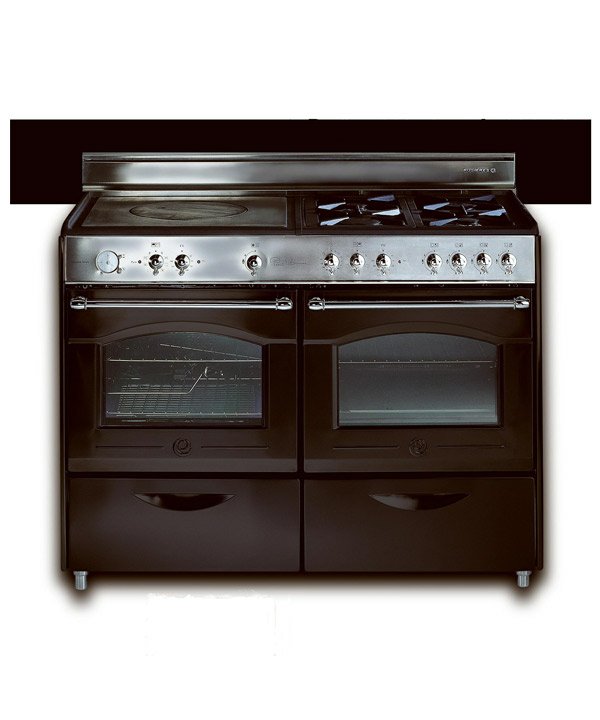
Haier, the largest household appliances producer in China and one of the largest in the world, will relocate the production of Rosières ovens to Romania,Haier Europe said “the intention to cease ovens’ manufacturing activities in Lunery (France) does not have any impact nor include any activity in Romania where Haier has started an investment of more than 50 million for a refrigerator production facility.”
This new production line will add to the refrigerator factory Haier is building in Romania.
Haier took the Rosières brand as part of the Italian group Candy last year. The Chinese group wants to close the factory in France, arguing that sales fell by 40% between 2016 and 2019, and the cost of assembly is too high – while the cost of labor in Romania is more attractive.
The factory in France employs 72 people. The first layoffs are expected early next year.
The relocation of production to Romania has generated protests in France, with about 500 people protesting in the neighboring town of Saint-Florent-sur-Cher, especially since, in addition to Rosières, lighting manufacturer Comatelec Schréder will move production to Spain.
Chinese group Haier announced earlier this year that it is building a refrigerator factory in Romania, on an area of 10 hectares in an industrial park in Prahova county (north of Bucharest).
The investment is estimated at some EUR 50 million and will create about 700 new jobs. The plant should be completed by early next year at the latest.
LG Electronics is relied upon to hold the No. 1 spot in the worldwide home apparatus showcase for the second successive quarter, flaunting its strong grasp in the division in the midst of the COVID-19 pandemic.
As per the business, LG Electronics second quarter income in the home apparatus area is anticipated to record between 5.2 trillion won to 5.3 trillion won. This is around 300 billion won more than the past pioneer, Whirlpool.
The U.S. home machine monster said it recorded 4.93 billion won deals in the subsequent quarter, down 22 percent contrasted with a similar period a year ago. Regardless of the decay, its presentation is better than many expected after the COVID-19 pandemic constrained the shutdown of gadgets retailers, for example, Best Buy in the United States.
LG is relied upon to beat Whirlpool for the second continuous quarter subsequent to outperforming it in the principal quarter by 255.7 billion won on income of 5.41 trillion won.
The underlying standpoint for LG Electronics’ Q2 execution was negative because of the pandemic; yet changed with the resumption of tasks at significant retail locations in the U.S. what’s more, Europe.
In the household showcase, LG gained by its recently discharged top of the line apparatuses including garments dryers, dishwashers and its steam attire care framework, “Styler.” Starting June, benefit rose with an expansion in deals of forced air systems.
Whirlpool just earned 94 billion won in working benefit among April and June, a sizeable drop contrasted with a similar period a year ago when it recorded 222.8 billion won.
Electrolux recorded lost 7.8 billion won in the subsequent quarter.
KB Securities gauges the Korean firm to record up to 650 billion won in benefit for the subsequent quarter.
In contrast to Whirlpool, whose working benefit fell 6 percent in the principal quarter and 1.9 percent in the second, LG Electronics is relied upon to save its benefit stable for a similar period.
Samsung Electronics is likewise expected to do well in the home apparatus area.
Hana Financial Investment predicts Samsung’s deals in the home and clinical apparatuses segment to arrive at 4.7 trillion won in the subsequent quarter, up 50 billion won from the first.
Samsung’s working benefit is required to bounce from 88 billion won to 293 billion prevailed upon a similar period.