
Hisense’s Velenje factory starts TV production in January 2021
The management of Hisense Group has confirmed the decision to establish a new TV set factory in Velenje.
The production of this product group will be established within the production site of Hisense Gorenje, in one of the existing production halls and will begin operating in January 2021.
Category Archives: Manufacturing
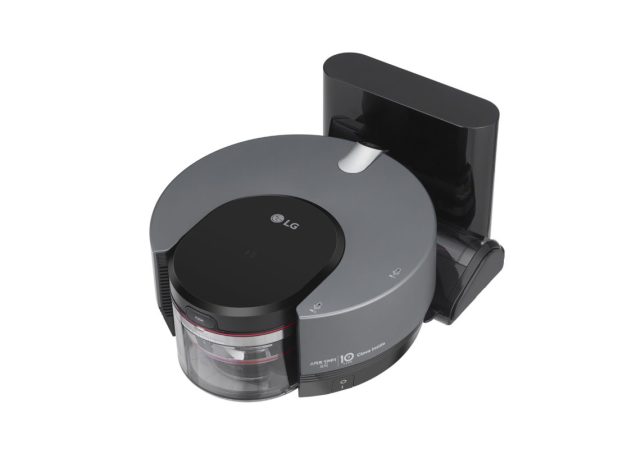
Collaboration: Using LG’s patented technology, Miele will produce robot vacuum cleaners
LG Electronics Inc. and Miele & Cie. KG have entered into a long-term patent license agreement covering robot vacuum cleaner technologies. The terms of the agreement will allow Miele to produce and sell robot vacuum cleaners using patented technologies developed by LG R&D.
The license agreement includes the use of LG’s patented induction signal guide and infrared-induced signals to enable robot cleaners to accurately and precisely return to their docking stations for charging. Other LG patents being licensed relate to dust unit detection and agitator attachment technologies.
“LG has long and storied history of investing in home appliances,” said Jeon Saeng-gyu, executive vice president of LG’s Intellectual Property Center. “Patent licensing agreements with major brands allow more consumers to benefit from the collective innovation of the industry.”
Romanian home appliance maker Arctic closes factory after 66 workers contract coronavirus
Romanian home appliances manufacturer Arctic, a unit of Turkey’s Arcelik, said that it has temporarily closed its factory in Gaesti, in Arges county, after 66 workers contracted the coronavirus infection.
Arctic aims to restart production of coolers on June 2, while the refrigerator lines are planned to resume operations on May 25, it said in a press release on Saturday.
In the meantime, the factory will go through an intense disinfection programme.
All 4,000 employees working in Gaesti have been sent into technical unemployment until production line resume activity.
Arctic confirmed the first coronavirus case at the factory on May 7. None of the infected Arctic employees had displayed any Covid-19 symptoms.
Arctic Gaesti, established in 1970, was acquired by Arcelik in 2002. The unit manufactures three main brands of refrigerators: Arctic for the domestic market and Beko and Grundig mainly for exports.
In October 2019, Arctic opened a washing machie factory in Ulmi, also in Dambovita county, with a production capacity of 2.2 million units per year.
Panasonic will shut down a large appliance factory
Panasonic will shut down a large appliance factory outside Bangkok as early as this fall and consolidate production to a larger facility in Vietnam for greater efficiency.
The Thai plant will stop producing washing machines in September and refrigerators in October. The building itself will be closed by March 2021, and a neighboring research and development centered will be shuttered as well.
The roughly 800 employees currently working at the Bangkok plant will be let go, but will receive help finding a different position within the group.
With the move to Vietnam, Panasonic seeks to reduce costs through consolidating parts procurement. The Vietnam plant, located outside Hanoi, is the company’s largest manufacturing hub for refrigerators and washing machines in Southeast Asia and has excess capacity.
The move also reflects a new phase in Southeast Asia’s manufacturing. Starting in the 1970s, Japanese electronics makers shifted domestic manufacturing to Singapore and Malaysia as the yen climbed rapidly after switching to a floating exchange rate, hurting Japan’s price competitiveness.
Later, production shifted to countries like Thailand, as Singapore’s wages grew to be too expensive. Now companies are looking for even cheaper locations, while also hoping to tap the massive potential demand for refrigerators, washing machines and microwaves in the largely populated countries of Southeast Asia, such as Indonesia, the Philippines and Vietnam.
Panasonic had been producing large household appliances in Thailand since 1979.
Total output will not decrease as a result of the change.
Panasonic currently employs about 8,000 people in Vietnam. In addition to large appliances, local units manufacture such products as TVs, cordless telephones, card payment terminals and industrial devices.
Panasonic is in the midst of restructuring efforts, with the goal of cutting costs by about 100 billion yen ($930 million) by the fiscal year ending March 2022. It is considering further changes to its appliance production.

Panasonic reported a 20.6 percent fall in group net profit due to weak sales of home appliances
Panasonic Corp. on Monday reported a 20.6 percent fall in group net profit from a year earlier to ¥225.71 billion for the year that ended in March due to weak sales of home appliances and auto electronic parts, as well as the effects of the coronavirus pandemic on a range of its operations.
Panasonic expects demand to pick up in the latter half of the current business year after consumption was dented amid the virus spread, but it did not release an earnings projection.
For the 2019 business year, Panasonic’s group operating profit sagged 28.6 percent to ¥293.75 billion on group sales of ¥7.49 trillion, down 6.4 percent.
Chief Financial Officer Hirokazu Umeda said in a telephone conference that he expects sales to get fully back on track in the second half of this fiscal year, as many countries have started reopening their economies.
In April, its sales declined about 20 percent from a year earlier, with the largest drop of 50 percent in North America. But sales in China, a country that resumed economic activity ahead of others, was nearly flat for the month, he said.
The television division remained unprofitable in 2019, with a loss of more than ¥10 billion. Umeda said the company aims to turn the business into the black in the 2021 business year through a range of measures, including a possible business tie-up.
For 2019, the company attributed the poor results to falling demand for home appliances, particularly in Europe. It also acknowledged weak sales of automotive equipment in China.
The company suspended production lines at domestic and overseas factories, including in China, Malaysia and India, as the COVID-19 pandemic disrupted supply chains and prompted authorities in many countries to issue stay-at-home requests.

Yate Factory closes as several staff test positive for Covid-19
Whirlpool Factory in Yate has closed after a number of staff tested positive for Covid-19
The factory has now been closed for over a week, following the outbreak of coronavirus amongst staff at the site.
The Whirlpool Factory was closed after the first employee tested positive on May, 3. Subsequent positive test results for Covid-19 of staff members, have since been reported .
In a statement, a Whirlpool spokesman said:
“On May 3, one of our colleagues at our factory in Yate, South Gloucestershire tested positive for Covid-19.
“As a precautionary measure, we decided to temporarily close the facility and carry out a deep clean and a range of other steps.
“Since then a small number of other staff members have also tested positive with the virus.
“Our thoughts are with all these colleagues and their families at this time and we wish them all a swift recovery.
“The factory has remained closed since and will not be reopening this week.”
Whirlpool said it would continue to monitor the situation daily.
“The plant will only reopen and resume production when assessments show it is safe to do so.
“People’s safety is always our top priority, especially that of our dedicated colleagues. We have been closely following official advice on workplace practices and social distancing in relation to Covid-19 at the Yate plant and all our other facilities around the world.
“We have created additional steps at Yate including provision of personal protective equipment (PPE), hand sanitiser and handwashing facilities and mandatory wearing of face masks.
“Temperature checks would be carried out for every employee before they are permitted on site and alterations would be made to the factory layout, workstations, offices and communal areas to allow greater social distancing.
“Production has been reduced and there are fewer staff on site, with those that can working remotely.”

Electrolux warned it expected to make a significant second-quarter loss due to headwinds from the COVID-19
Swedish home appliance maker Electrolux on Thursday warned it expected to make a significant second-quarter loss due to headwinds from the COVID-19 pandemic, after it beat earnings forecasts in the first three months of the year.
The rival of U.S. Whirlpool said first-quarter operating earnings were 122 million Swedish crowns ($12.42 million), up from a 53 million loss in the year-ago quarter, which was marred by large one-off costs, and above the 19 million profit seen in a Refinitiv analyst poll. ($1 = 9.8220 Swedish crowns)
Arcelik BEKO profit rise
Arcelik the white goods arm of Turkish industrial conglomerate Koc Holding said its consolidated net profit grew by 14.7% to 259.4 million lira ($36.5 million/33.6 million euro) in the first quarter of 2020.
Total revenue increased by 12.53% on the year to 7.77 billion lira in the January-March period, Arcelik said in an interim financial statement filed with the Istanbul bourse on Thursday.
The company’ gross profit from commercial operations rose by 10.3% year-on-year to 2.5 billion lira in the first quarter.
The cost of sales increased to 5.3 billion lira from 4.7 billion lira a year earlier.
Arcelik specialises in production, marketing, sales and after-sales customer service in the area of white goods, consumer electronics, small home appliances and kitchen accessories. The company has 21 production facilities in eight countries and 34 sales and marketing offices in 30 countries.
Arçelik, and its brands Beko and Grundig, received the TGC Awards for its sustainability policy
TCG Awards are given to the most innovative brands operating in the technical consumer goods sector, in the EMEA macro area. This year the Turkish multinational Arçelik, which also includes Beko and Grundig brands, was awarded with this recognition within the ‘Sustainability’ category. The winners are selected by a jury made up of top managers of the main EMEA technology dealers and a representative of GFK. The aim of the award is to search for brands in various sectors to be awarded as the brand of the year, the specialist with the most impactful category, the most relevant technological innovation, the brand that operates also thinking about sustainability.
“The power of nature concentrated in household appliances to make us live healthy”: «faithful to this mood – they comment from the company – Arçelik has always been careful to the environment and people’s health and is committed to contributing to the creation of a green future through products developed on the principles of sustainability and efficiency. This approach to production has been repeatedly recognized nationally and internationally, obtaining numerous prizes and awards in the field of sustainability. All activities and emissions deriving from production activities are carried out in accordance with international standards and verified by independent control bodies. ‘Respecting the World, Respected Worldwide’: this is the vision adopted by the Group that guides all production activities, aimed at saving energy and water and a responsible approach to production and consumption, from waste management to recycling.
Arçelik also interprets the sustainability theme for Beko and Grundig brands as a lifestyle and it is present in all the internal dynamics of the business models: a fundamental strategy for the Company to evolve and respond in a timely manner to the changing world and to always be different and in step with new economic needs, the environment and people.
For the same category, the company also won this year the gold medal and inclusion in the 2020 sustainability yearbook (2020samyearbook) which highlights the best performing companies in the various sectors in terms of attention to the environment, social responsibility and with significant financial governance (ESG).

Miele resumed production
Miele resumed production at all its German plants. The company has organized with different measures to ensure workers safety and healthy conditions, also helping families with home office and flexible working times.
«The company had justified the shutdown with the interruption of supply chains and a sharp drop in sales due to store closures in the retail sector. «The situation has eased somewhat for vendor parts, but is by no means stable – explains Stefan Breit, Executive Director Technology of the Miele Group -. We are producing for the foreseeable future, with a maximum of ten days to plan. Short-time work therefore cannot be ruled out in the coming weeks in individual plants or production areas. We are confronted with a very dynamic situation worldwide, characterised by many uncertainties. As many dealers are allowed to reopen their shops, we hope for an increase in demand.»
Production is also running again at all foreign plants. In some administrative areas, however, short-time working continues. In recent weeks, Miele had taken precautions to provide the best possible protection for employees against corona virus infection when they resume work. For example, face masks are being provided at all sites.
Short-time working continues to be in force in assigned departments – examples include administration and areas with public access (exhibitions, Miele Museum). Which departments are affected and to what extent will be adjusted weekly. However, all services important for customers and trade are guaranteed. These include logistics, customer hotline, trade marketing and Miele customer service, in particular professional customer service. Its technicians regularly maintain disinfection and sterilisation equipment as well as laundry machines in hospitals and nursing homes and help to ensure that these facilities can continue to operate.
A few weeks ago, the company had already created the legal and technical possibilities for extensive home office arrangements. This has proved successful and will be continued in order to reduce office occupancy. Miele supports parents in this difficult situation of closed day care centres by offering very flexible working hours wherever possible. In addition, the company offers release from work in the event of childcare shortages, as agreed between employers and trade unions in Germany
 WHITEGOODSNOW