Daikin Industries announced the intention to invest 300 million euros to establish a new factory for heat pump units at the Ksawerów Industrial Park in Lodz Province, Poland. The new production base will start operations in July 2024 to meet the rapidly increasing demand for heat pumps in Europe.
Over the past decade, the European heat pump heating market has grown by an average annual rate of 10% to achieve sales of 1 million units in 2021. The European Green Deal policy, which aims to eliminate greenhouse gas emissions in the EU region by 2050, has further accelerated the spread of heat pumps. Market expansion is forecast to hit annual sales of at least 3 million units by 2025.
Sub-Zero Group intends to invest more than $140 million to build a 400,000-square-foot plant in Cedar Rapids. The factory would create 192 jobs; 127 of those positions would be paid at or above the qualifying wage of $24.20 per hour.
Sub-Zero, based in Madison, Wisconsin, makes its flagship brand of refrigeration products as well as Wolf cooking appliances and Cove dishwashers. The Cedar Rapids plant would bolster the company’s overall manufacturing capacity; it currently operates factories in Fitchburg, Wisconsin, and Goodyear, Arizona.
State officials approved an incentive package worth $3.7 million to support the project
After four years of reconstruction, the future of the site is sustainably secured
Eight million euros invested in state-of-the-art production and logistics
Position as supplier of high-quality stainless steel components further strengthened
The Miele plant in Bürmoos near Salzburg has completely repositioned itself over the past four years – as a supplier of high-quality stainless steel components for almost all appliance plants in the Miele Group as well as for the Italian subsidiary Steelco Group. In addition, the new Miele subsidiary Otto Wilde Grillers has recently had its most established product range produced in Bürmoos. “Hardly a stone has been left unturned in our production halls,” says plant manager Dr. Hendrik Wermers. The necessary investments were made, for example, in a new cutting centre with laser processing and a fully automated high-bay warehouse, as well as in state-of-the-art production technology for surface processing When Miele set up its plant in Bürmoos in 1962, it was the first production site outside Germany. This step was originally intended to give Miele access to the EFTA free trade zone, which at the time existed parallel to the EU’s predecessor organisation, the EEC, and to which Austria also belonged. Initially, small-room washing machines, spin dryers, and waste compactors were produced, before the factory specialised more and more in the processing of stainless steel sheets and wires. From 2012 onwards, the production of sterilisers and so-called container washing systems was added, in which, for example, instrument trolleys or entire hospital beds are disinfected.
The next turning point followed in 2017, when Miele acquired a majority stake in the Italian medical technology specialist Steelco Group and bundled its entire hospital project business there. This was done to strengthen competitiveness in what was then, as now, a fiercely competitive market worldwide – and it also affected the manufacturing of the appliances produced in Bürmoos. Now the challenge was to compensate for this and at the same time further improve the cost structures. “A time frame of four years was defined for this, which our team used with great commitment and, above all, successfully,” says Hendrik Wermers. In the process, production on the 40,000 square metre site was largely dismantled and rebuilt, and the processes were completely restructured. What has remained is the focus on high-quality stainless steel components, which are now distributed among these three product segments:
Fascias and panels for washing machines, dryers and dishwashers, for example, as well for other built-in kitchen appliances from Miele (domestic and commercial),
baskets and inserts used in washer-disinfectors, disinfectors and sterilisers for medical facilities and laboratories
as well as complex assemblies for medical and laboratory technology, which are supplied in particular as large-scale appliance accessories to Miele’s subsidiary Steelco. In the past four years alone, Miele has invested eight million euros in Bürmoos, for example in a high-bay warehouse for the fully automated supply of production with sheet metal blanks as well as for the storage of finished parts which were previously cut or punched by laser. Another major investment concerns the production of front panels for Miele appliances, which the Bürmoos plant now produces more than twice as fast as before. This is ensured by a highly efficient automatic front panel machine, which brings together the stainless steel and plastic components and finally also applies the model- and country-specific printing.completely new manufacturing process for Miele in Bürmoos is surface treatment by means of so-called electropolishing. This refers to a multi-stage electrochemical process for the best possible smoothing of the surface to prevent the adhesion of viruses and bacteria. This is particularly important for baskets and inserts and other components for use in medical and laboratory technology.
“Unfortunately, about 80 jobs had to be eliminated in the course of the realignment,” reports plant manager Wermers, “but all colleagues who were affected at the time have for the most part found new jobs seamlessly, not least thanks to our good contacts with other companies.” In the meantime, Miele is expanding again in Bürmoos and currently employs around 220 people. “They have all done a great job over the past few years, for which I would like to sincerely thank each and every one of them,” says Hendrik Wermers, “and I would also like to thank the experts at the Miele Professional plants in Bielefeld and Lehrte, which are connected to us, for their support.”
The latest addition to Miele’s product portfolio in Bürmoos is the O.F.B. range from Miele’s new subsidiary Otto Wilde Grillers in Düsseldorf. This is a top-heat grill which, depending on the model, is heated with gas or electricity, operates at very high temperatures, and is largely made of high-quality stainless steel. This is why Hendrik Wermers had initially wanted to bring his factory into the game as a supplier of components, but then also won the final assembly for Bürmoos. “We have the expertise, the capacities and the flexibility for that.” A deal was quickly reached with the new customer: “We are counting on a long-term partnership, because the Bürmoos plant helps us to take the next steps in quality, scalability and further product optimisation, even for our most established product,” says Otto Wilde production manager Dr. Achim Schade. Furthermore, despite enormous cost pressures, the company is pleased to have found a partner in Bürmoos in the heart of Europe.
Whirlpool Corp. is selling off its operations in Russia.
The company’s Whirlpool EMEA SpA subsidiary inked a share purchase agreement to divest the operations to Arçelik A.Ş., a maker of household appliances and durable goods based in Istanbul, Turkey, according to a filing with federal securities regulators.
Under the deal, Whirlpool will sell its Russian operations to Arçelik for deferred payments that it expects the buyer to make over a 10-year period. The payments will be capped at the net asset value of the business at closing, which Whirlpool estimates at around 220 million euros, or about $232 million
The sale will include a manufacturing plant in Lipetsk, Russia, and a sales organization in Moscow, as well as sales operations in Kazakhstan and other nations in the Commonwealth of Independent States.
After the close of the deal, Arçelik will continue to make Whirlpool brands Indesit, Hotpoint and Stinol at the Lipetsk facility, according to the filing.
The Iowa Economic Development Authority also on Friday awarded $2.56 million in investment tax credits and sales and use tax credits to Sub-Zero, a Wisconsin-based refrigeration and appliance manufacturer, to build a 400,000 square-foot facility east of Cedar Rapids’ Eastern Iowa Airport.
Elica, Italian producer of kitchen hoods and electric motors for household appliances and heating boilers, is taking yet another step towards renewable energy and more sustainable production. After announcing last January the attainment of a suitability certification for hydrogen operation of motors manufactured in its subsidiary company EMC FIME, Elica has been continuing in its path towards environmental impact reduction, thanks to a new electrical energy supply agreement stipulated with Iberdrola, one of the world leaders in renewable energy.
For 2022 this choice will allow the company to reduce its own emissions by over 4,000 tons in Italy, which equals to 20% of the total emissions of the Group. Elica Group generates a turnover of over 500 million euros, with a production platform spread out over seven sites including, Italy, Poland, Mexico and China, employing over 3,200 employees. In Italy, where most of its high-end products are manufactured, the company uses about 50.4% of the energy consumed by the whole Group.
Elica – the CEO Giulio Cocci said – is by nature a sustainable company: we have always followed a strategy that adopts ESG principles, which, over the years, has brought us to identify areas in need of improvement and put real actions into place, geared towards reducing our environmental impact. The agreement with Iberdrola comes into play in this specific scenario: we have already started the process in our Italian production sites, therefore we will significantly reduce emissions in our country.
Whirlpool Corporation is planning to conduct “voluntary, temporary layoffs” at its Marion manufacturing plant, according to a statement issued by the company.
The Benton Harbor, Michigan-based appliance manufacturer recently wrapped up what the company termed as “scheduled down days for all hourly employees” in early June at the Marion plant due to supply chain issues.
In March of this year, production was temporarily halted at the Whirlpool plant in Clyde for the same reason
Midea partially confirms the rumors that were circulating. It will proceed with disposals, plant closures and layoffs but not in the household appliances sector which remains one of the 5 divisions on which the Chinese giant (165,000 employees, 51 billion dollars in sales) intends to focus its future. The shareholders’ meeting on May 20, President Paul Fang announced that the company has decided to keep the home appliance business and to give up the categories of products for mom and baby and for pets.
The group is concentrating investments on B2B sectors with a higher technological content such as robots and industrial automation, batteries, technologies for construction
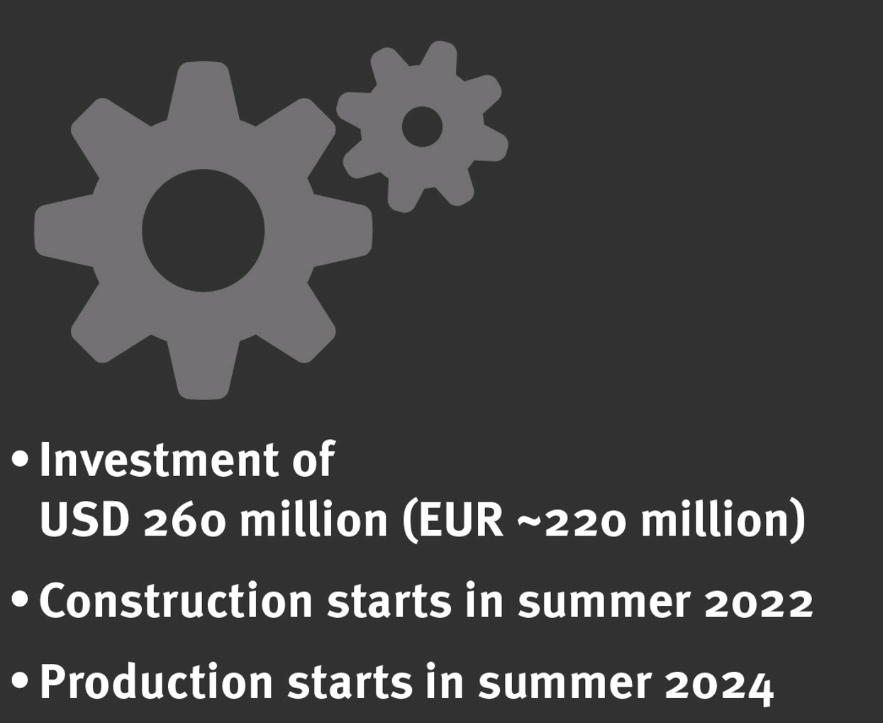
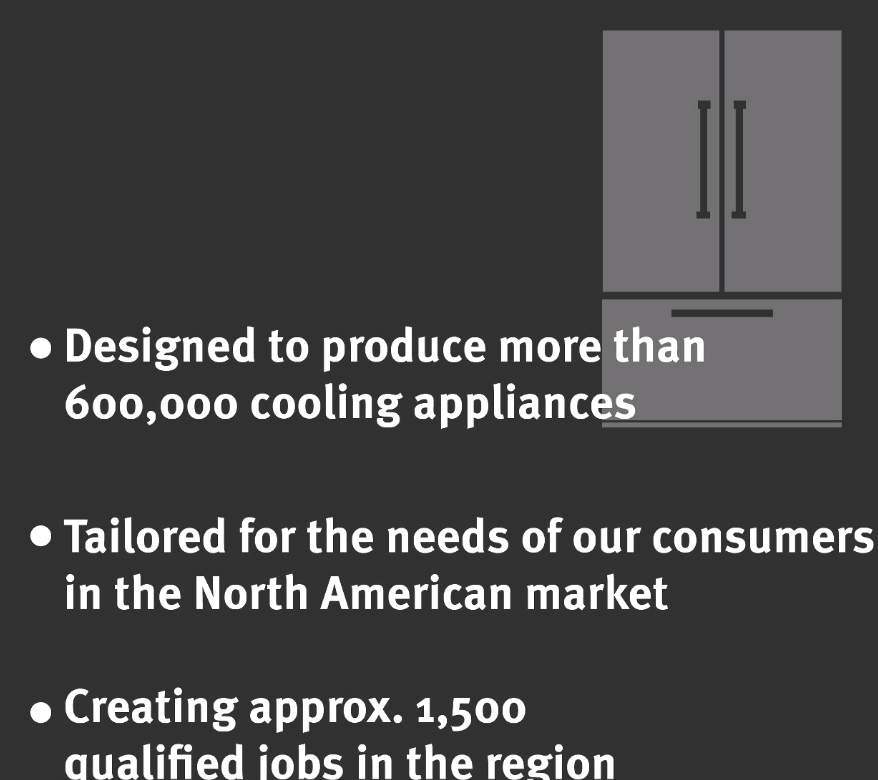
BSH new manufacturing in Mexico, we will meet high standards in sustainability and efficiency, not only regarding the construction and materials they use but also in the factory operations”, says Michael Neumann, CTO of BSH Mexico.



 WHITEGOODSNOW