
Since 1954, Liebherr have been manufacturing high-quality refrigerators and freezers and selling them worldwide. However, Theyare still a family business at heart and rooted in Germany. This is where they still develop our products, in addition to our locations in Austria, Bulgaria, Malaysia, and India.
Liebherr Corporate Global YouTube Channel the company share many how-to videos about various product features, as well as little factory tours of some of our production sites. https://www.youtube.com/channel/UCoc3Z76Rxg_gkVMlReQ0GLg
Author Archives: whitegoodsnow
BSH products that were ahead of their time
Sometimes we have to take a look at the past to plan the future. When it comes to home appliances, BSH has always demonstrated a profound spirit of innovation, continually refining its innovative technologies and products.
Here’s a brief and selective look at the past decades in the history of home appliances that have improved the everyday lives of countless people around the world.
1926: Serving up the first electric oven
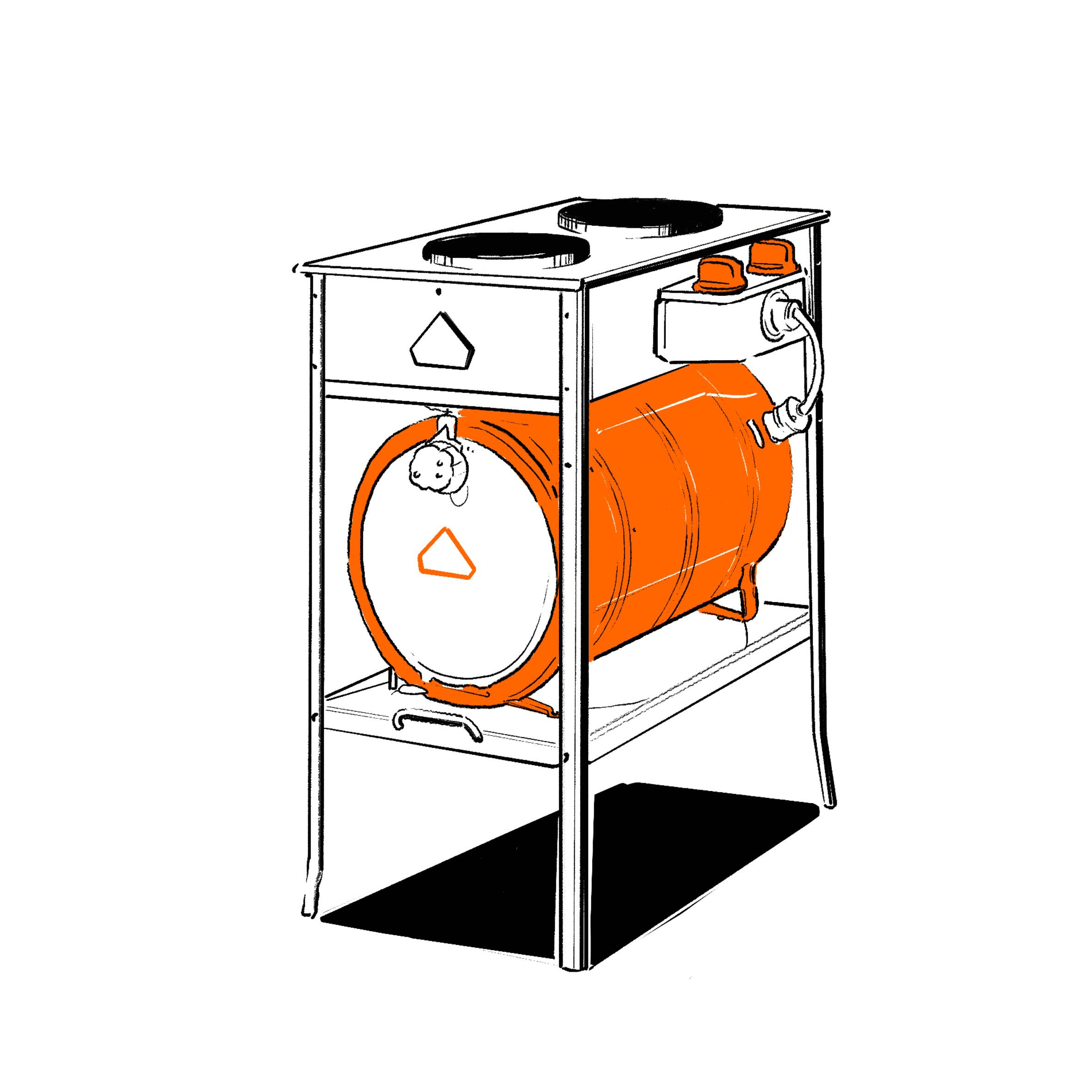
Whether it’s cakes, bread, or Sunday roasts, many a dish – sweet as well as savory – owes its success to having the right ingredients, which include an electric oven, the right recipe, and a little bit of practice. And of course, life is even better if the cook can get the meal on the table in the shortest time possible. Can you imagine having to gather wood, stack coal, or start a fire before you could pop your dish into the oven?
Up until the mid-1920s, these time-consuming steps were a normal part of everyday life in most households. In 1926, Siemens produced the first electric oven, offering a safer alternative to wood and coal. It was suddenly a lot easier and faster to prepare a wide variety of foods.
The electric oven was definitely a hot item when it came to convenience in the kitchen.
1973: A self-cleaning oven
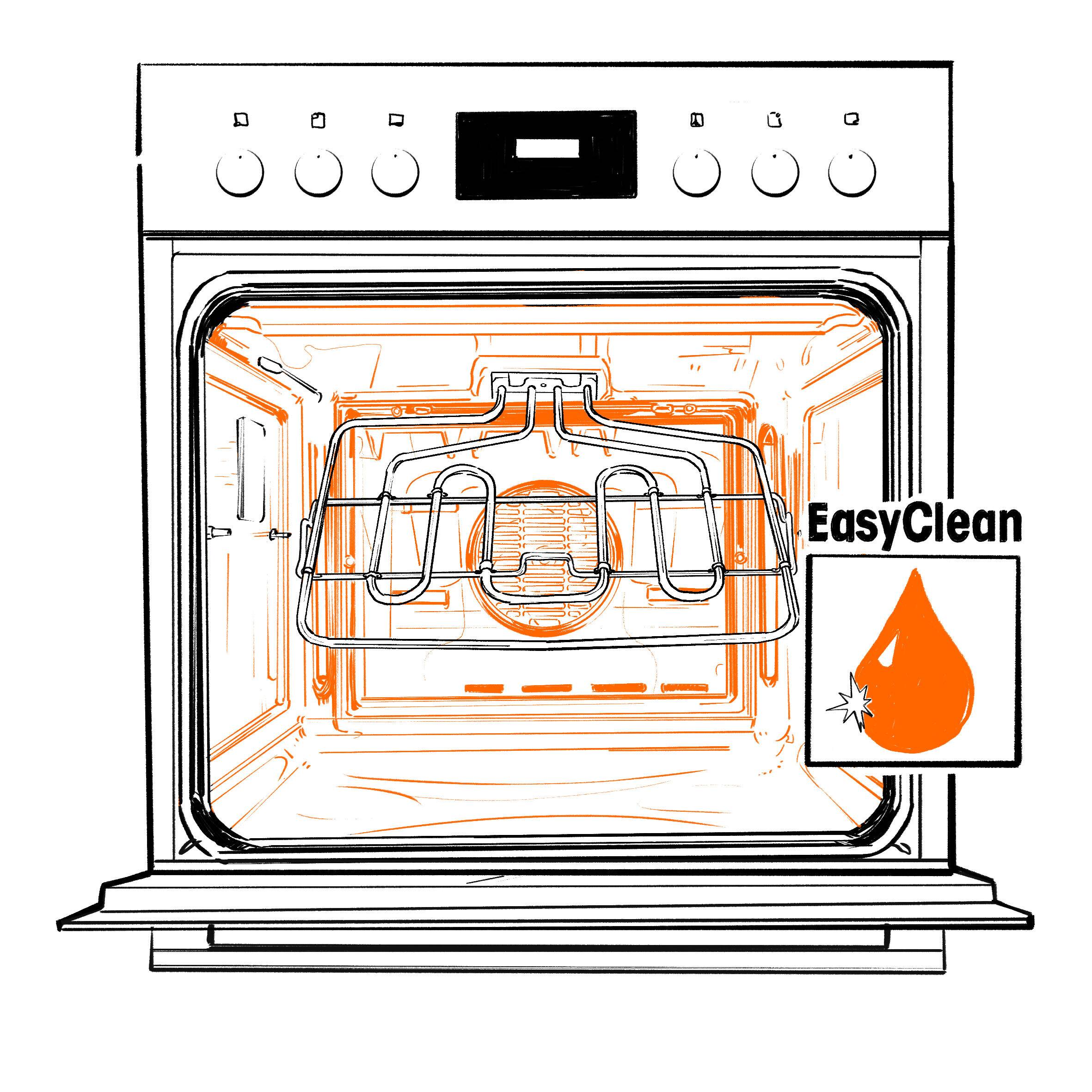
After electric ovens became common in many households in the 1950s, housewives spent a lot of time removing burned-on food by applying aggressive detergents and considerable elbow grease. So it’s no wonder that BSH really cleaned up in the 1970s with the launch of its electric oven with a pyrolytic self-cleaning feature.
Just like oven cleaning today, the process involved three steps: First, the oven was heated to 290°C in order to make the dried-on residue even dryer. This residue was then broken down at around 500°C. Finally, the temperature was lowered, and the ash that remained was then a cinch to remove. Tedious scrubbing became a thing of the past, because the cleaning process was practically automatic.
As far as ovens go, it was a very bright idea.
1985: Worry-free dish washing
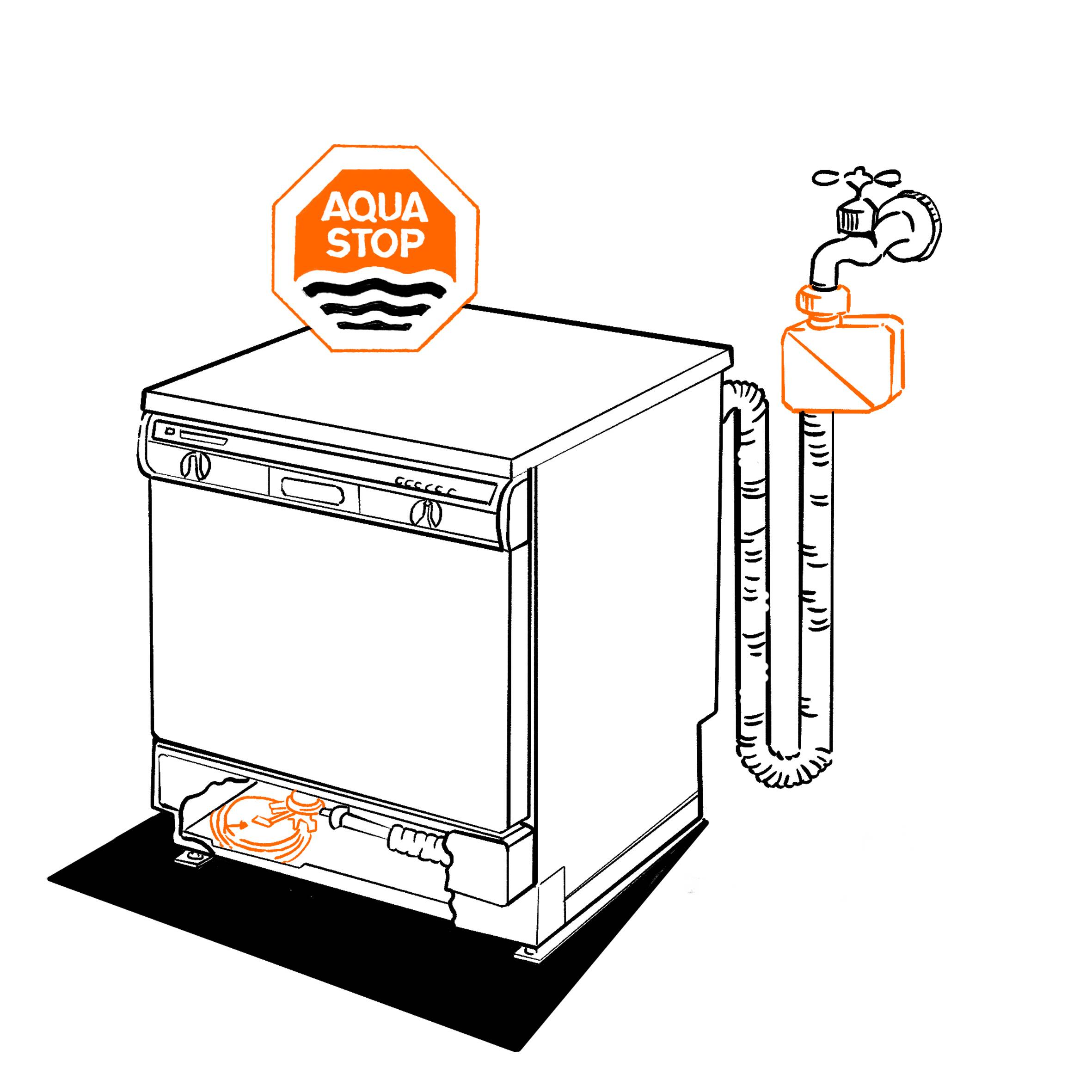
Speaking of bright and shiny, ovens weren’t the only appliance that were catching on at that time. In the late 1960s, dishwashers were also making their way into modern households. Once loaded, they washed the dishes nearly on their own, eliminating one of the routine chores.
The only drawback was that the user had to monitor the machine and manually stop the inflow of water after every wash cycle in order for insurances to pay for possible water damage. It wasn’t until BSH launched its AquaStop system in 1985 that dishwasher owners were finally able to sit back and truly enjoy some extra leisure time while the dishwasher ran on its own.
It’s no surprise that the sales figures for the first year exceeded the production capacity.
1997: Fresh, fresher, VitaFresh
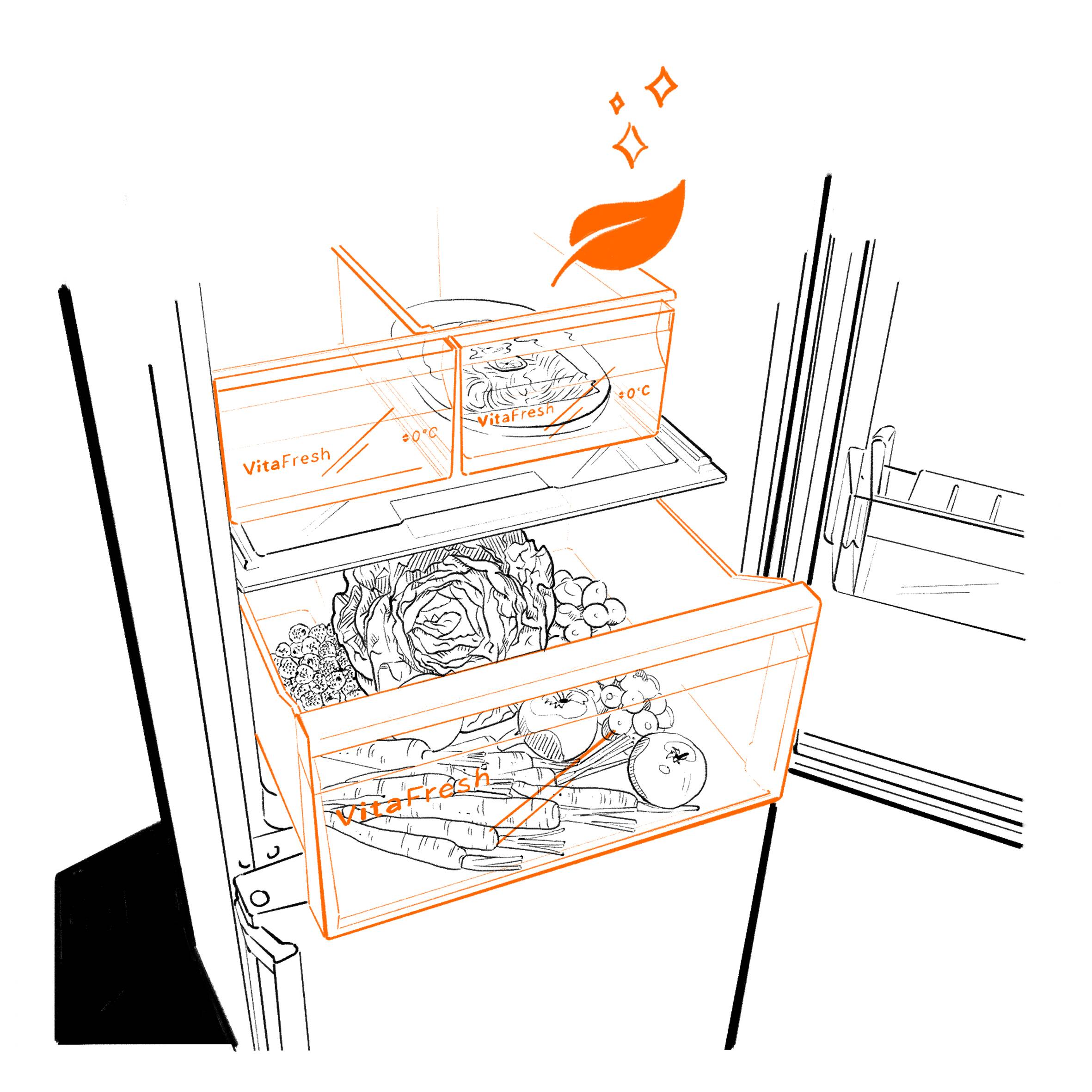
Is your freezer too cold and your refrigerator too warm? That could happen. After all, the optimal temperature setting for keeping perishable foods crisp and fresh is around 0°C, but commercially available refrigerators in the 1980s only offered a temperature range from 2°C to 8°C.
This led BSH to introduce its revolutionary 0°C refrigeration technology, the precursor to VitaFresh technology, in 1988. Since 1997, VitaFresh has been delivering even greater freshness, in two separate temperature zones. With separate drawers for meat and fish as well as for fruits and vegetables, it also offers exactly the right humidity level to meet the different requirements of perishable foods.
And with the latest generation, VitaFresh Pro, BSH refrigerators keep foods fresh three times longer. How cool is that?
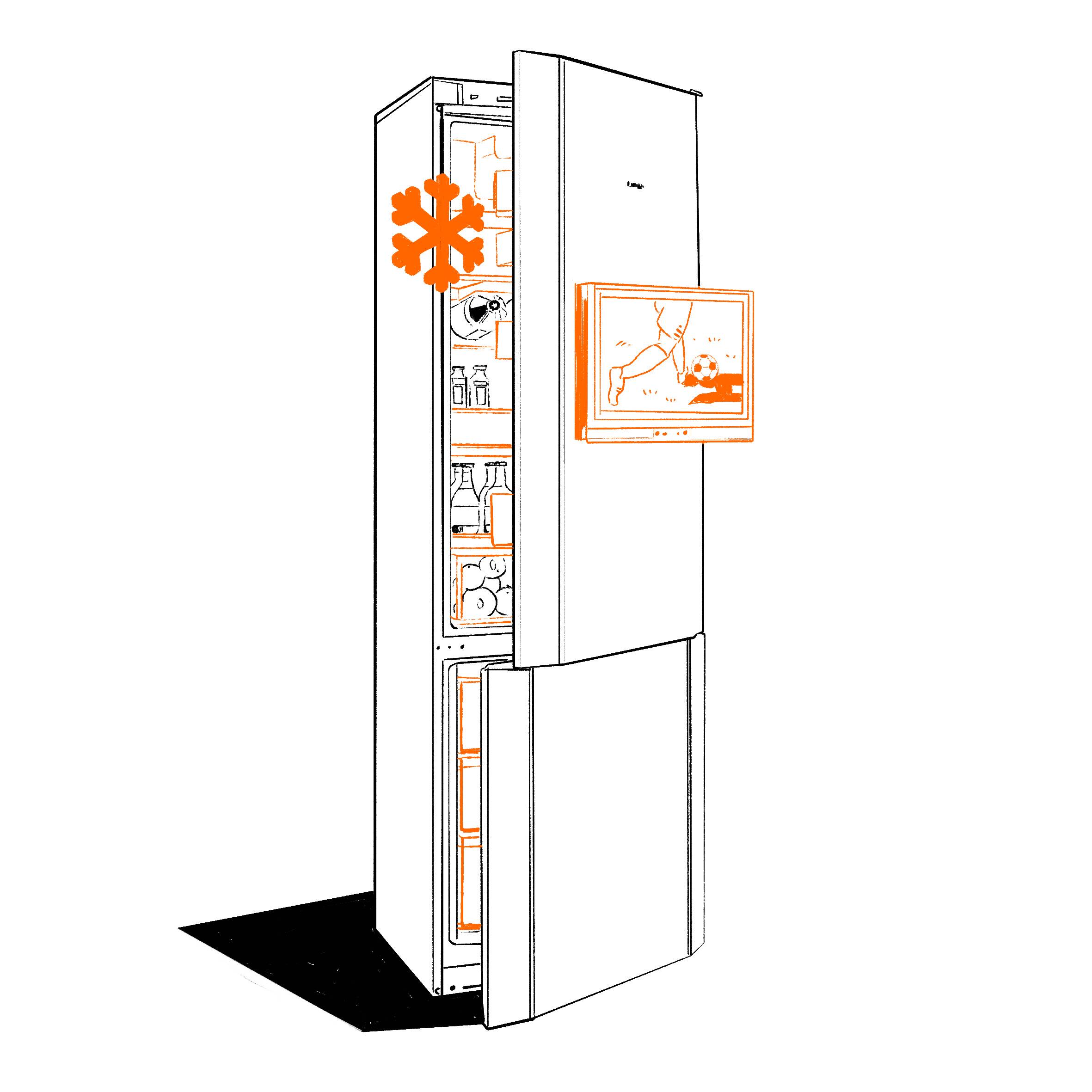
2004: A TV that can also chill your beer
Who says a refrigerator can’t be informative?
Owners of the coolMedia model could enjoy their breakfast while watching the latest news on the LCD TV integrated into their refrigerator door. And on the day of the big game, the tiltable 15-inch flat-screen allowed them to keep their eye on the ball while enjoying their favorite beverages.
It’s hard to believe that BSH was already offering this smart appliance in 2004, three whole years before the smartphone took the market by storm.
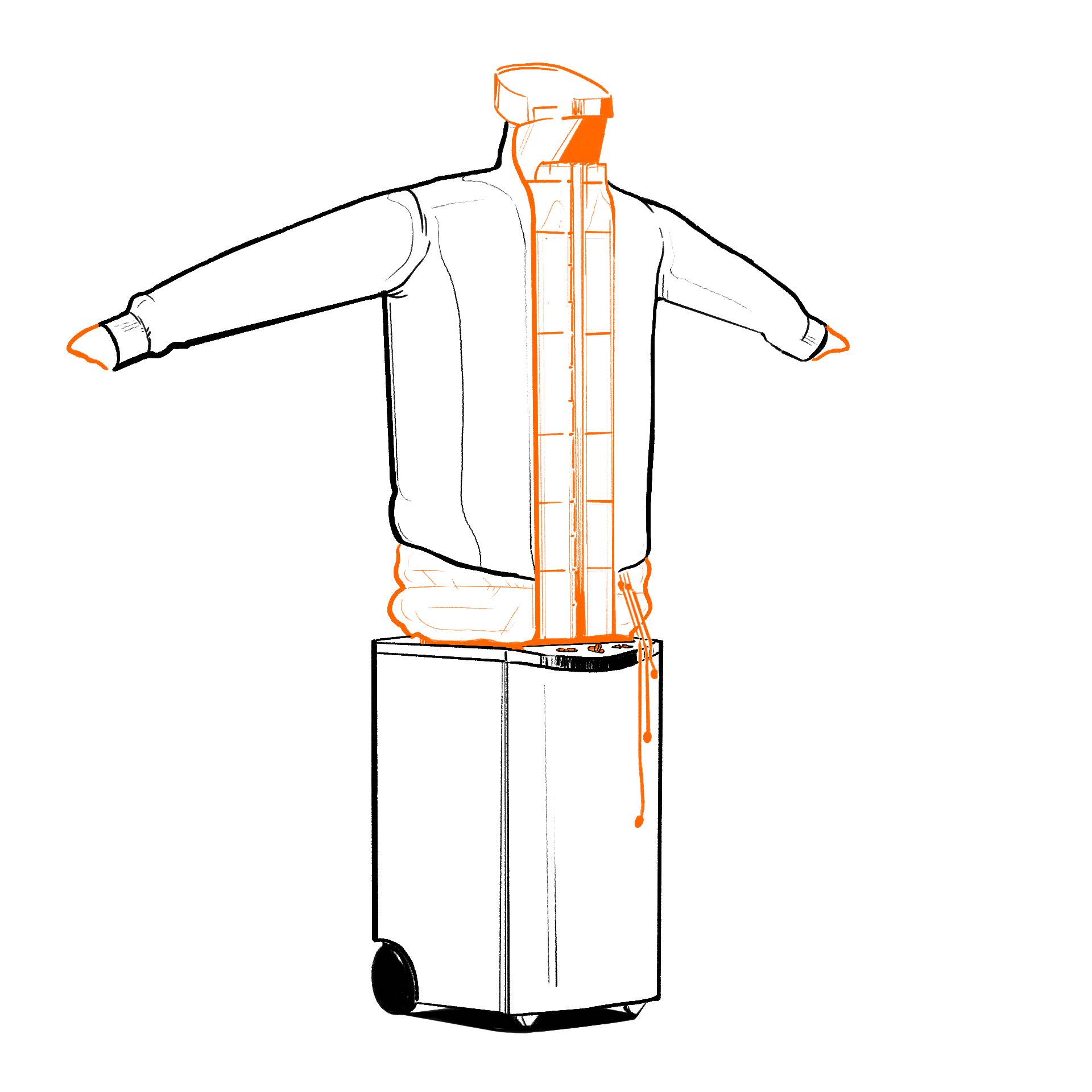
Can you imagine reading a book while ironing shirts?
That’s exactly what BSH was aiming for in 2004, when it revolutionized ironing with its dressman. This shirt presser for home use automatically ironed and dried any spun-dry shirts and blouses made of non-stretchable fabric.
You just put the shirt on the inflatable dummy, and hot air did the rest. According to the ads, consumers were now able to read a book while ironing. Unfortunately, this BSH innovation quickly ran out of steam on the market and did not become an economic success.
2008: It doesn’t get any drier
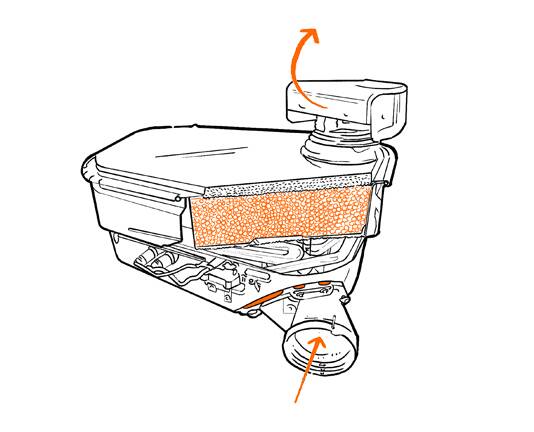
Do your glasses fog up when you open the dishwasher or do you have to hand-dry some of the dishes to remove spots?
Once BSH harnessed the benefits of zeolith silicate for drying dishes in the dishwasher, these scenarios, as well as problems with excess water, vanished into thin air. When silicate comes into contact with water, it emits heat. Due to its porous structure, it’s also able to absorb up to 30 percent of its weight in liquid.
Thanks to these properties, even plastic dishes come out super-dry, and the dishwasher consumes much less power – an energy-efficient innovation that makes dishwashing even easier.
2010: Precision washing
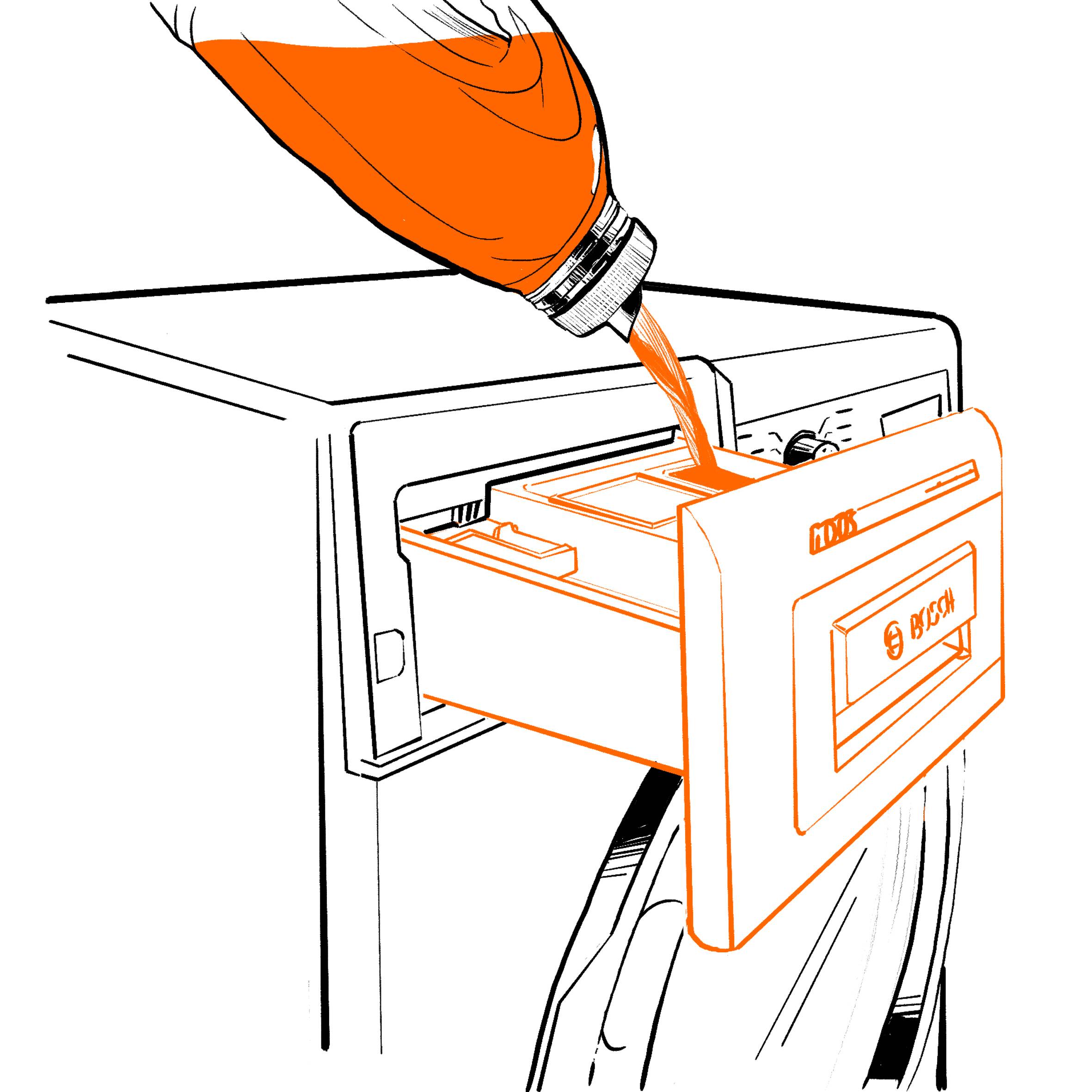
How much detergent does your washing machine actually need?
It’s often difficult to tell. Since 2010, BSH’s solution to this problem has been the iDOS automatic dosing system. Just fill the chambers with detergent and fabric softener – and wash up to 20 loads. Sensors automatically detect the load size, type of fabric, and soil level. Taking into account the hardness of the water, this enables the washing machine to dispense exactly the right amount of detergent and water.
On average, this enables consumers to use up to 38 percent less detergent and up to ten liters less water per wash cycle. Life just got easier!
2011: Unlimited flexibility on the cooktop
Does a modern cooktop have to have defined cooking zones or are there more flexible solutions?
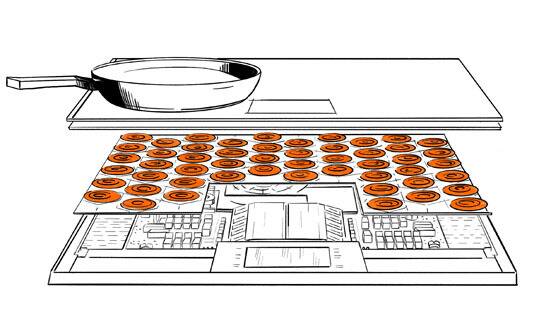
BSH developers answered this question in 2011 with the world’s first full-surface induction cooktop. With this technology, 48 small inductors transform the entire cooktop into one big cooking zone. The cooktop detects the number, size, and shape of your cookware and automatically adapts. Move a pot to the right, to the left, or to the rear and the cooking zone follows.
Consumers can heat up to six pots and pans at once, for the ultimate in flexibility!
2015: The first alternative to dry cleaning – at home
Can you remove odors without washing or dry cleaning?
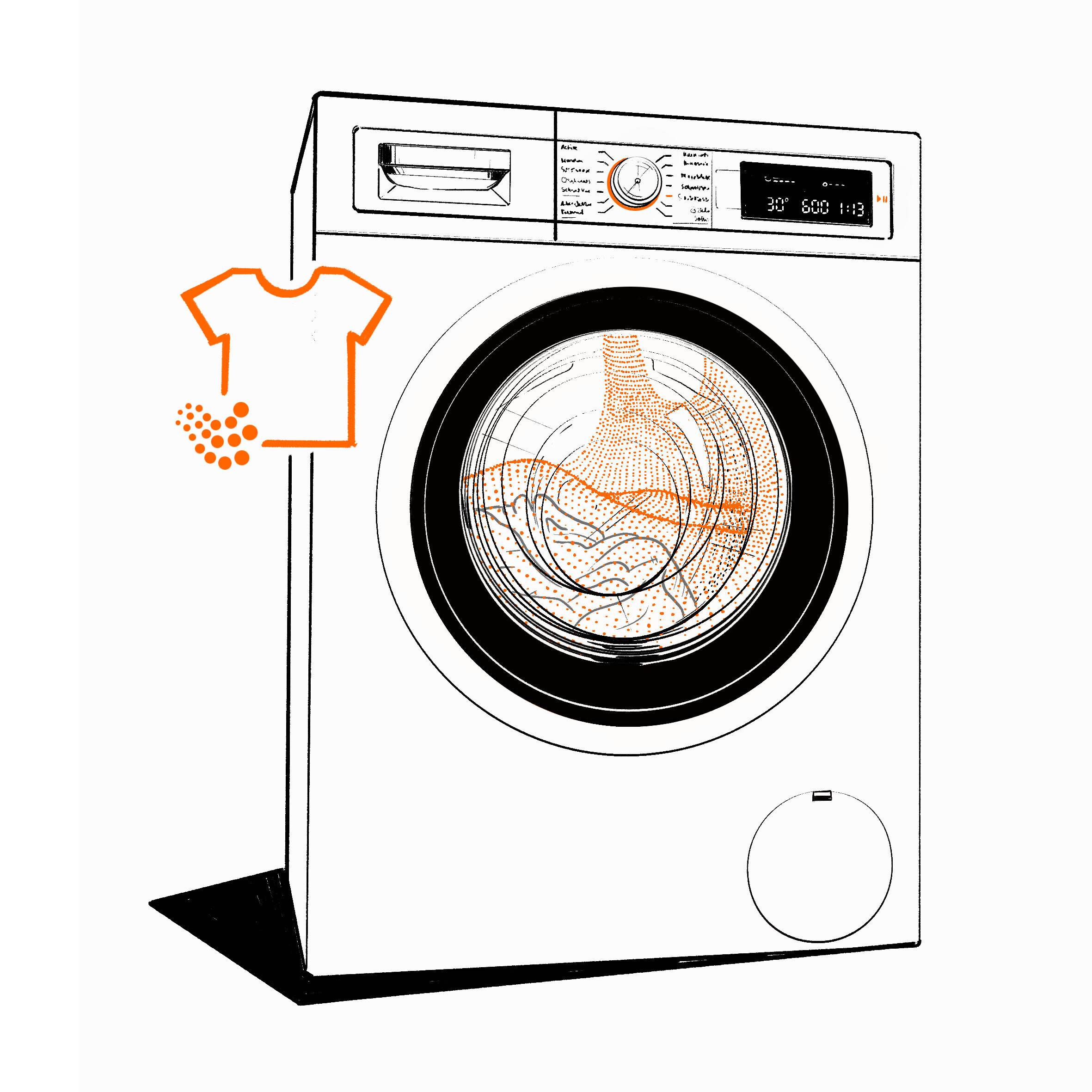
It’s no problem if you have a BSH washing machine with the sensoFresh program. The technology permeates fabrics with a cool fog of active oxygen, which draws the odor molecules out of the fabric, breaks them down, and transports them to a carbon filter where they’re neutralized. All that remains is freshness!
And sensoFresh even freshens fabrics that are labeled dry clean only, like cashmere, wool, and silk crepe de chine – gently, without chemicals, and without a single drop of water.
2020: Design and technological finesse
Can a single appliance be both aesthetically and functionally pleasing?
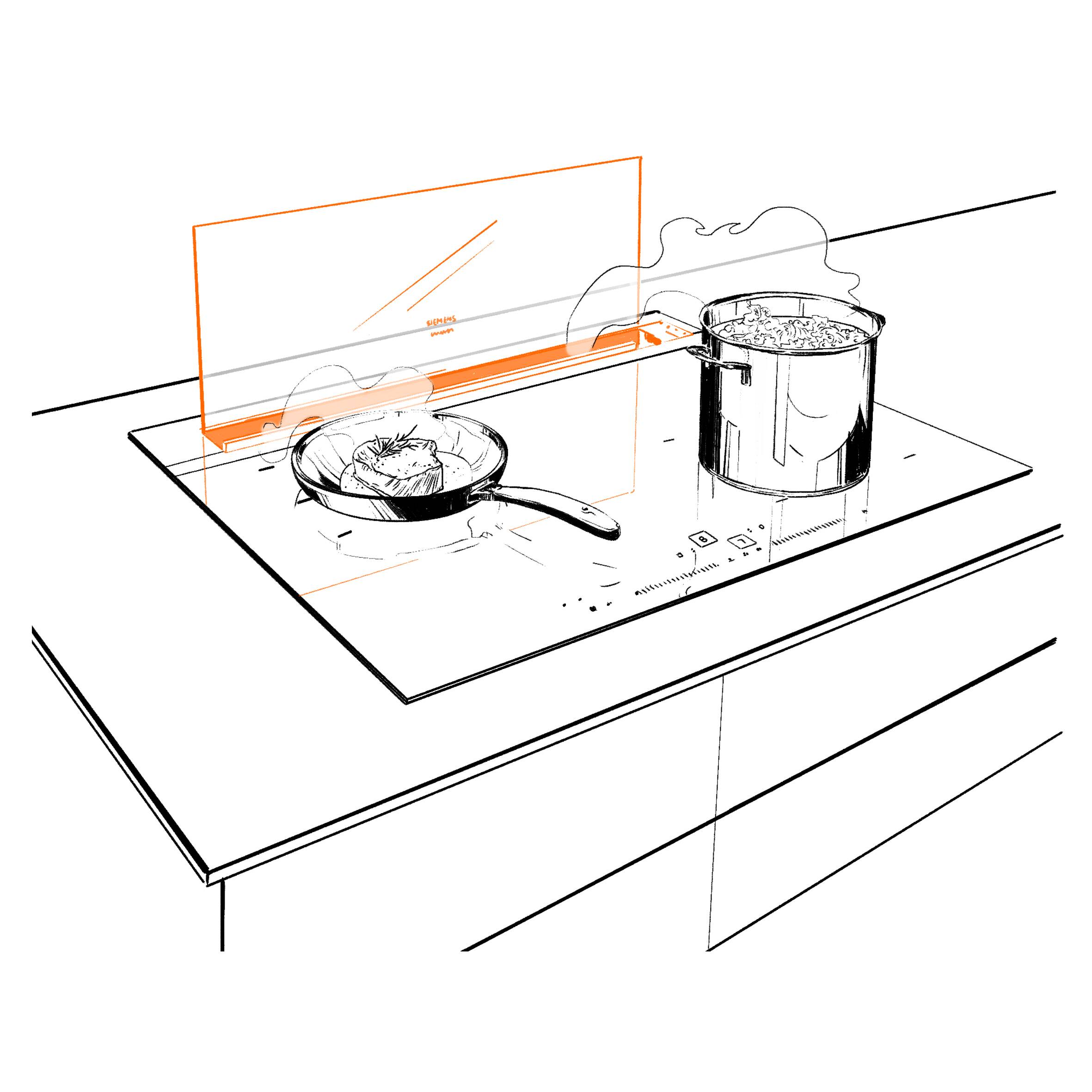
In 2020, BSH developed the GlassDraftAir downdraft extractor solution with customized lighting for consumers who are passionate about design. The powerful downdraft extractor located behind the cooktop quietly suctions off all fumes. Thanks to innovative guided-air technology, a curtain of air forms behind the glass panel, which optimizes the air stream and extracts fumes directly from the more distant cooking zones.
A built-in air quality sensor also detects the volume of vapors and automatically adjusts the extraction rate as needed. An additional highlight: At the press of a button on the countertop, the glass panel disappears into the counter when not in use, leaving an unobstructed view of your open kitchen.
It’s ingenuity with style!
These 11 home appliances are just a small sample of the many innovative solutions that the BSH developer team has been producing since 1967, fueled by great ideas, a good measure of curiosity, and even more persistence.
Their ingenuity has shaped the history of BSH products and improved the everyday lives of many consumers – from technological firsts like the patented AquaStop, which is now integrated into dishwashers and washing machines worldwide, to experimental solutions like coolMedia, which may have been just a little too far ahead of its time.
Since 2014, BSH has been offering Home Connect, a platform that enables consumers to connect their home appliances with a digital ecosystem. This enables them to take advantage of many new services and functions that make household chores a lot easier, such as controlling home appliances by voice, downloading cooking recipes or automatically re-ordering dishwasher tabs.
The long-standing innovative spirit of BSH’s product developers forms the basis for these new solutions, which pave the way for the company to move into the digital future.
Gorenje’s Boštjan Pečnik talks Hisense alliance
Boštjan Pečnik, Executive Vice President of manufacturer Gorenje discusses the companies alliance with Hisense and the key developments of the home appliances market ahead of 2022.How has Europe’s major appliance industry fared amid the pandemic?
Following the first half of 2021, there was a positive development in all the European markets. Market demand is still strong in the second half of the year and above our expectations. We expect it to continue during the Christmas period. On the cost side, like all industries, major appliances are also facing a raw material price increase and the growth of logistics and energy costs. Consequently, this is also driving a price increase for the end users. There’s also the challenge of shortages of some materials and components like microprocessors. But I think this price increase will be done step by step and it will not immediately affect performance over the Christmas period.
Which of your recent products have been the most game changing?
In this Covid period, end consumers are searching for appliances that improve convenience. They are looking for appliances that are more environmentally friendly. Therefore, the most interesting ones are those that allow connectivity with smart functions and automation, and also energy efficiency, hygiene and function support. Supporting healthy lifestyles like steam cooking is very interesting. In general sustainability is becoming more and more interesting and important. Legislation in some areas, let’s say it is supporting the launch of sustainable products. But we are also seeing our end consumers really starting to care about sustainability in a positive way. And of course, this is good for our environment.
How have your product lines evolved during the collaboration between Hisense and Gorenje? Has the integration been easy?
We are constantly improving our product competitiveness by adding new products and new product platforms to our product range. We are of course also using product synergies inside Hisense Group, especially in the field of refrigeration and laundry appliances. In 2021 all our main product lines have been growing, which is a good sign. We are aware that good products are key to succeeding on the market and therefore we are increasing investment in R&D. The majority of our integration activities were done in 2019. On the sales side, there’s been the consolidation of sales business units on the European markets, in R&D and product management areas, the implementation of global organisation, and the responsibilities for product development. On the production side, the biggest benefit of this integration has been the integration of global sourcingSo global sourcing has been the main strength of your alliance with Hisense?
It is definitely one of our main strengths. In this time of Covid it has been even more important. In terms of branding, sourcing has been very important. R&D capability is also definitely one of our main strengths, particularly the development of electronics and connectivity. In the field of products, I would also mention our big sized refrigerators, especially for the Gorenje brand, and kitchen appliances for the Hisense brand, because they complement each other’s ranges. On a global scale, we also have new market access and the synergies that come out of that. There’s also our marketing resources and sponsorship of big sporting events like the UEFA Euro 2020 and FIFA World Cup 2022. In terms of branding, we have a clear strategy for the brand portfolio on the global market, and in the field of major domestic appliances, we will further develop Hisense, Gorenje’s brand, and in the premium segment, the ASKO brand.
Are you launching any new products in preparation for the holiday season?
Yes, we are launching a lot of new products. If I start with refrigeration, we will be launching our new wi-fi combi and a retro style combi, our flagship product. Our new laundry products with a refreshed look and improved performance are also important. The biggest novelties are a totally new plug for built-in ovens for the Hisense and Gorenje brands we call Celsius cooking. It’s a premium induction smart cooking ecosystem. That brand will also be launched during this period, and many others will follow in the first quarter of 2022.
Finally, what are your mid-to-long term goals in Europe?
We are improving our position in all product categories and we will continue to strengthen our market position. Our goal is to become one of the leading manufacturers of major appliances and solutions in the global market. And as I mentioned we will further develop our brands Hisense, Gorenje and ASKO.
For more information on Gorenje, click here. Listen to Mr Pečnik’s full IFA Tech Talk, the Official IFA Podcast interview here and also available on:
Apple Podcasts
Spotify
Google Podcasts
Electrolux recognised for climate leadership by CDP
CDP, a non-profit organisation helping companies disclose their environmental impact, has recognised Electrolux for its climate leadership, just as the company signed a new €1bn credit line linked to its sustainability aims.
For the second year in a row, the Swedish home appliance manufacturer has earned a place on CDP’s elite “A List” for tackling water security. The non-profit runs a global system for investors, companies, cities, states and regions, and each year thousands of companies submit their annual climate disclosures for independent assessment against its scoring methodology.Electrolux was among just 118 companies to make the CDP’s shortlist for 2021, picked from more than 3,000 leaders in the market. CDP also awarded it an “A-” score for its climate change work.
Otto Wilde Grillers first flagship store
Otto Wilde Grillers inaugurated its first flagship store on Düsseldorf’s ‘Kö’ boulevard, a sales floor covering around 130 m². The young Düsseldorf company, which has been in the majority ownership of the Miele Group since earlier this year, is an innovative specialist in the field of ambitious outdoor grilling.
Directly above Miele’s brand store and opened at the same time, Otto Wilde presents its range of grills, outdoor kitchen modules, accessories and premium cuts of meat, and stages its show cooking events. Founded in 2015 in Düsseldorf, Otto Wilde now employs a workforce of 40 and is above all known among barbecue fans for its versatile and adjustable O.F.B top-heat grill. Plans for the future include the launch of a modular outdoor kitchen which can be configured and extended to cater for customer preferences. The heart and soul of this outdoor kitchen is the connectivity-enabled G32 Connected Gas Grill.
Moreover, for perfect grilling results, the outdoor kitchen can be planned and configured individually to include for example the G32 Connected Plus premium gas grill with top heat, a powerful gas cooker and modules providing storage space. In addition to this, the Otto Wilde store offers high-quality


AHAM President and CEO Joseph M. McGuire as its 2022 Association Executive of the Ye
Association of Home Appliance Manufacturers, headquartered in Washington) has communicated that Association Trends has named AHAM President and CEO Joseph M. McGuire as its 2022 Association Executive of the Year. The award, presented annually, recognizes a CEO who has made vital contributions to the leadership of a well-recognized association and whose leadership serves as an example in the association industry. The award will be presented March 11 during the Association Trends Salute to Association Excellence in Washington, D.C. “During McGuire’s time as CEO, AHAM has secured high-profile legislative accomplishments and gained a reputation as an influential and pragmatic voice for its members, both in Washington, D.C. and in state legislatures
Groupe SEB tie with the Moroccan company
Groupe SEB has signed an agreement with Preciber, a family-company in Morocco owned by Mohammed Berrada and Precima. The partnership led to the creation of the joint venture Groupe SEB Maroc, which is 55% controlled by Groupe SEB.the same time, Groupe SEB has invested via SEB Alliance in the CathayAfricInvest Innovation fund to identify start-ups active on the African continent in line with its innovation policy. This fund is one of the largest of its kind in Africa. After the establishment of a joint venture in Egypt in 2018, Groupe SEB thus confirms its desire to have a strong foothold in Africa.
RKW creates 80 new jobs after securing eight-figure investment from HSBC

A company which designs, manufactures and sells domestic appliances for big-name brands is creating dozens of new jobs after securing an eight-figure funding package from HSBC.
RKW, the trading division of Sutton Venture Group, says the investment is being used to created 80 new roles at the business and turn its huge warehouse, based on Stone Business Park, into 24 hour operation
The family-owned company already employs more than 500 staff across three distribution centres, its Stoke-on-Trent headquarters in Fenton, and offices in Hong Kong, India and China.Established in 1989, RKW designs, manufactures and distributes small domestic appliances and housewares for leading brands including Black and Decker, Lavazza, Morphy Richards, Tower, Smeg, Swan, Russell Hobbs and Breville. It supplies leading UK retailers – including Next, Amazon, Tesco, Currys and Argos – from its Staffordshire distribution centre, while international customers are supplied directly from its offices in China.

Samsung Stackers: reducing food waste block by block
Samsung has announced a collaboration with The Tetris Company to launch Samsung Stackers , a range of limited edition pieces inspired by the Tetris® puzzle video game, aimed at preserving food to reduce waste. of food at home.
It is the first design of its kind, which will include the seven iconic shapes and colors of the famous tetrominos (light blue, yellow, purple, green, blue, red and orange), which will facilitate efficient and safe food storage more than ever. in the fridge or freezer in a fun and unique way. In addition, all the profits obtained from its sale will go to the European Federation of Food Banks .The new Samsung Stackers will be available in the following European countries: Romania, Serbia, Croatia, Slovenia, Spain, the Czech Republic, Slovakia, Italy, Hungary, Greece, France and the United Kingdom.
People who want to buy a set of pieces can do so for 25 euros and all profits will go to the European Federation of Food Banks , a non-profit organization that represents a network of 335 food banks https://www.samsung.com/es/explore/brand/making-food-storage-fun-with-tetris/
Thermex is Scandinavia’s largest brand in the field of extractor hoods
Thermex is Scandinavia’s largest brand in the field of extractor hoods and air exchange. The Danish company Thermex was founded in 1958, in Rødovre by Thorkild Christensen. Today Thermex Scandinavia A/S is still a Danish family business with a head office north of the Limfjord in Hjørring, where there is sea on all sides, high ceilings and lots of fresh air. In addition, Thermex has subsidiaries in Copenhagen, Sweden, Norway, Finland, Spain and now also in the Netherlands!


