
At KBIS 2025, LG is set to captivate and inspire attendees with its rebranded SKS (SIGNATURE KITCHEN SUITE) ultra-premium built-in kitchen solutions. Visitors will experience the passion and authenticity behind SKS’s True to Food philosophy through the brand’s latest innovations, including the SKS 36-inch Cook-zone-free Induction Pro Range and the revolutionary Island System concept.
Executive Chef Nick Ritchie, from the SKS Experience & Design Center in Napa Valley, Calif., will host live culinary demonstrations featuring the SKS Pro Range and Combi Wall Oven. These cutting-edge appliances feature Gourmet AI™, which analyzes available ingredients and suggests optimal recipes and cooking modes for an elevated cooking experience.
The SKS showcase will also highlight “Technicurean” concept kitchens – where culinary expertise meets advanced technology. Designed for different facets of the Technicurean lifestyle, these kitchens seamlessly integrate SKS’s latest innovations, including the 24-inch column wine cellar with LG ThinQ™-enabled wine curation and the stylish SKS Transitional package.
Tag Archives: LG
Samsung lags behind LG, Bosch in Consumer Reports
Samsung has fallen behind its competitors in Consumer Reports’ sixth annual appliance brand reliability rankings.
Consumer Reports (CR), the largest nonprofit consumer organization in the U.S. with six million members, is known for its independent product testing based on consumer feedback and expert assessment. Unlike institutions and influencers who receive free products for reviews, CR’s testing is highly trusted and credible.
According to a CR report released last month, Samsung Electronics was ranked 21st out of 26 appliance brands. Speed Queen, an American laundry machine manufacturer, claimed the top spot, followed by LG Electronics in second place. Other brands that outperformed Samsung include Whirlpool (12th), GE Appliances (13th), and Bosch (15th).
The rankings were based on survey data collected from CR members, covering 417,629 kitchen and laundry appliances purchased between 2013 and 2023. The ratings considered consumer satisfaction and predicted reliability, including the frequency of appliance breakdowns.
Samsung’s kitchen appliances, in particular, scored poorly. In a consumer satisfaction survey covering dishwashers, ranges, double-door refrigerators, French-door refrigerators, and cooktops, Samsung products received scores between 15 and 19 out of 100, placing them at the bottom. Even in other kitchen categories, Samsung’s highest score was just 46, significantly trailing its competitors.
Frequent breakdowns also hurt Samsung’s predicted reliability scores, with half of its kitchen appliances scoring below 50 in this category. Notably, Samsung’s dishwashers, which ranked last, had high rates of issues such as poor washing and drying performance, drainage failures, and defective dish racks. In contrast, Bosch and Miele’s dishwashers had the lowest rates of performance issues and breakdowns.
Samsung’s robot vacuum cleaners received a consumer satisfaction score of just 9 out of 100, while its washing machines scored in the low 20s to 40s, and dryers landed in the low 30s, placing Samsung well below many of its competitors.
LG fit & max
LG Electronics (LG) is set to showcase its “Fit & Max” kitchen solution at the 2025 Kitchen and Bath Industry Show (KBIS) in Las Vegas, offering a design that seamlessly fits into spaces while maximizing both capacity and performance. Boasting Zero Clearance™ technology, the company’s cutting-edge kitchen appliances are an ideal fit for any kitchen


Half a Million LG Stoves Recalled Over Fire Risk
Over 500,000 LG ranges have been recalled, according to the U.S. Consumer Product Safety Commission.
On February 6, the agency issued a statement to consumers warning that there have been at least “86 reports of unintentional activation of the front-mounted knobs” — meaning the knobs were accidentally bumped or pushed, causing the appliance to turn on. These incidents have led to more than 28 fires, including five that caused “extensive property damage.” At least eight resulted in minor injuries, such as burns, and tragically, three involved pet fatalities https://lgecares.com/rangerecall/
LG Introduces PuriCare AeroHit, a Compact Home Solution for Cleaner Air
LG Electronics (LG) is introducing the LG PuriCare™ AeroHit, an advanced air care solution designed to seamlessly integrate into any living space while delivering superb indoor air quality. Boasting advanced purification capabilities, convenient features and a modern, minimalist aesthetic, the AeroHit brings both comfort and style at home.
The LG PuriCare AeroHit delivers fresher, safer air at home with its Aero Series H Filter – a multi-layer “360-degress” filtration system that effectively reduces dust particles, odors, viruses and allergens while also absorbing various airborne pollutants. In addition, its Particulate Matter (PM) 1.0 sensor* detects ultrafine dust as small as 0.01 micrometers, enabling real-time air quality monitoring. The AeroHit automatically adjusts its purification performance to maintain optimal indoor conditions
LG drop in profit
LG Electronics logged 6.4 percent drop in operating profit due to slow demand recovery in global home appliances and surge in logistic costs last year, the company said.
The Korean electronics giant posted 3.4 trillion won ($2.4 billion) in operating profit for the full year of 2024, according to its earnings announcement on Thursday, falling short of 3.7 trillion won market consensus compiled by FnGuide.
Its revenue marked a record high of 87.7 trillion won during the same period.
Growth of home appliance and vehicle solutions businesses contributed to the record-high generation of revenue in 2024, the company explained. Its TV and business-to-business sales also improved its sales last year.
Samsung manufacturing relocation
Samsung and LG Electronics are reportedly considering relocating some of their home appliance production from Mexico to the U.S., according to South Korean media outlet The Korean Economic Daily, as cited by the Central News Agency.
This move is in response to U.S. President Donald Trump’s announcement of a 25% tariff on products imported from Mexico and Canada, starting February 1. Samsung may move its dryer production line to South Carolina, while LG is considering transferring its refrigerator production line to its Tennessee factory.
Samsung states it will monitor the situation closely and adapt as needed. LG plans to adjust its production systems and locations to respond to market changes effectively.
LG Opens ThinQ API to Foster Smart Home Innovation
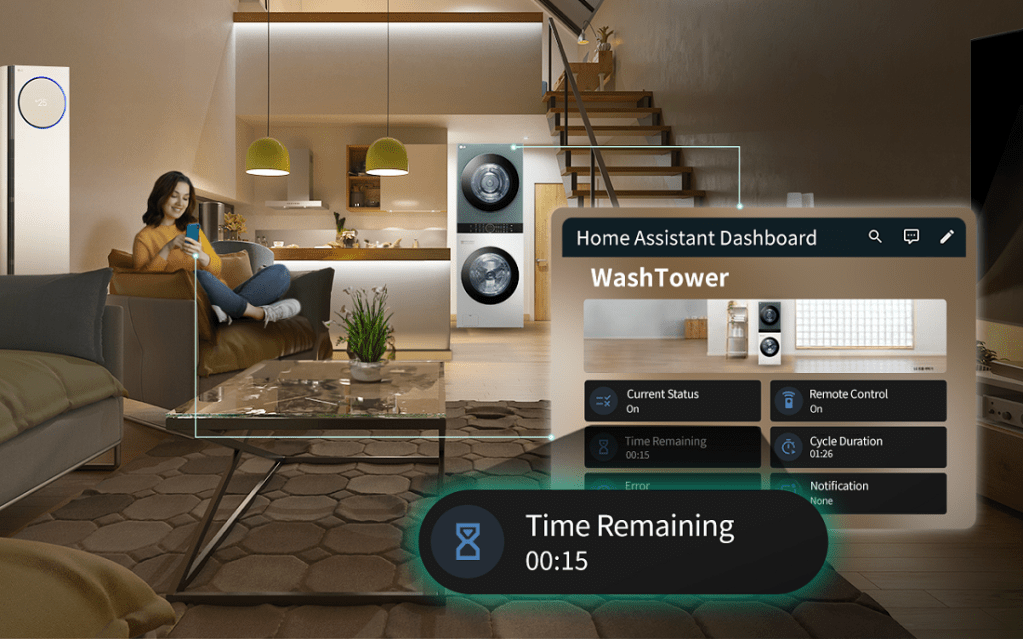
LG Electronics (LG) has fully opened the Application Programming Interface (API) of its smart home platform, LG ThinQ, enabling developers to easily create smart spaces with LG appliances.
Recently, LG launched the LG Smart Solution API Developer website (smartsolution.developer.lge.com) to officially open up the LG ThinQ API. An API acts as a digital connector that allows different software to exchange functions seamlessly. Developers can utilize the open API to integrate various features from LG AI appliances into their programs or systems, enhancing their services.
The LG ThinQ API is divided into two categories: the ThinQ API for individual users and the ThinQ Business API for corporate partners. The ThinQ API allows for remote control of LG devices installed in homes or buildings and facilitates integration with various platforms.
For individual users, the ThinQ API supports the control and monitoring of AI appliances registered in the LG ThinQ app from various smart home platforms. By utilizing the ThinQ API, anyone can easily create a customized smart home that fits their lifestyle. For example, users of the global smart home platform Home Assistant can now connect and control 26 types of LG AI appliances, including refrigerators and washing machines, within their existing smart home environment. Home Assistant is a community-based open platform with about one million users worldwide who collaboratively develop various smart home functions such as device automation and feature expansion.
For enterprises, the ThinQ Business API supports partners operating office or residential buildings in integrating and managing various LG products, from appliances to commercial equipment like HVAC and signage, with their existing apps. For instance, large residential buildings can integrate LG appliances with their existing management apps for more convenient use. Residents can reserve the use of LG washers and dryers in common areas through the building management app, or administrators can detect abnormal conditions in the building using LG’s temperature and humidity sensors and quickly respond to issues through alert functions.
LG and Apartmentary Revolutionize Home Design with AI Integration
LG Electronics has teamed up with the interior design startup Apartmentary to advance its AI home business. This partnership aims to commercialize space solution products and services by integrating AI appliances and solutions into the early stages of interior design planning. This approach is a departure from the traditional method, where consumers typically buy appliances after completing their home renovations.
The collaboration will center on LG’s upcoming AI home hub, ThinQ ON, to develop comprehensive AI home solutions. This hub will integrate LG’s AI appliances and Internet of Things (IoT) devices, providing customers with a seamless and intelligent home experience.
For instance, when a customer opts for an AI home interior package, the design will be tailored to their lifestyle, home layout, and design preferences. Various LG AI appliances and IoT devices, centered around ThinQ ON, will be included in the plan
LG revolutionizes its structure and divides itself into independent companies
The home appliance division will be renamed Home Solutions. The HVAC area will enter a new independent company: Eco Solutions in
addition, display-based operations, including TV, monitor and signage, will be integrated to promote synergies and expand platform-based service businesses. New growth drivers will be strategically transferred to companies with greater corporate relevance, ensuring more stable support and creating synergies between business areas.
Going forward, all four companies will incorporate the word ‘Solution’ into their names, reflecting LG’s evolution into a smart living solutions provider that connects and enhances customer experiences across various environments, including homes, commercial spaces, mobility and virtual platforms.
 WHITEGOODSNOW