
LG Electronics has absolutely shattered its own records, posting its most successful second quarter in company history. Driven heavily by core premium home appliances and a clever pivot into appliance subscriptions, the South Korean tech giant is proving that high-end white goods can still carry a company to massive heights despite shaky global markets.LG brought in a massive 23.83 trillion South Korean Won (KRW)—roughly €13.6 billion—in consolidated revenue for the second quarter of 2026 alone.
Even more impressive is the bottom line. Operating profit for the quarter landed at 1.58 trillion KRW (€920 million). To put that into perspective, LG’s operating profit for just the first half of 2026 has already completely eclipsed its total operating profit for the entirety of 2025.What’s Driving the White Goods Boom?
While LG has expanded into automotive components and software solutions, the foundation of this record-breaking surge remains firmly rooted in the kitchen and utility rooms.
Premium Appliance Domination: High-margin built-in appliances, smart refrigerators, and signature laundry setups are leading the charge. Consumers are opting for durable, premium appliances even during macroeconomic uncertainty.
The Seasonal Air Con Boost: Sweltering seasonal temperatures globally created a massive wave of demand for LG’s air conditioning units, locking in rock-solid sales.
Appliance Subscriptions & Software: LG is successfully changing how it sells. By scaling up their appliance subscription models and expanding webOS platform features into connected home devices, they’ve created highly lucrative, recurring revenue streams.
By doubling down on efficiency, keeping supply chain costs tight, and focusing heavily on premium tech, LG has managed to more than double its operating profit year-over-year. For the white goods industry, it’s a clear signal: the smart, high-end market is where the real growth is happening.
Tag Archives: LG
Xiaomi Set to Disrupt Indian White Goods Market with Massive Large Appliance Push
The global white goods landscape is bracing for a major competitive shake-up. Tech giant Xiaomi has officially confirmed its entry into India’s large home appliances market, locking its sights directly on entrenched market leaders like Samsung, LG, and Voltas This is not a tentative trial run. In a significant corporate reshuffle, Xiaomi has officially elevated India to its formal South Asia Regional Headquarters. The newly established hub will take over direct command of operational strategies across India, Bangladesh, Nepal, and Sri Lanka—territories that were previously managed straight out of Beijing.
To spearhead this operational offensive, Xiaomi has brought in Alex Tang as the new General Manager for the South Asia region. Tang’s appointment is highly calculated: he previously commanded Xiaomi’s Southeast Asia division, where he successfully executed the company’s first large-scale appliance localization and rollout outside of mainland China.
LG Unveils Korea’s Largest‑Capacity AI Washer‑Dryer Lineup
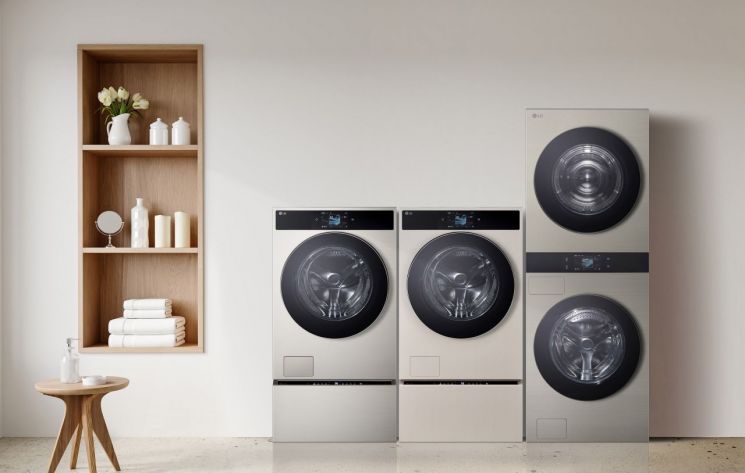
LG Electronics has announced a major expansion to its premium laundry portfolio with the launch of two new LG Tromm AI Objet Collection models — the WashTower and WashCombo — both delivering the largest combination washer‑dryer capacities currently available in Korea.These new additions strengthen LG’s position in the fast‑growing combo‑laundry segment, blending high‑capacity performance with advanced AI‑driven care.Record‑Breaking Capacities for Bigger LoadsWashTower: 25kg wash / 25kg dryWashCombo: 25kg wash / 21kg dryThis scale makes it possible to handle bulky items — including winter duvets — in a single cycle, a key selling point for households seeking convenience without compromising on performance.⚙️ Core LG Technologies Meet AI IntelligenceLG has integrated decades of component engineering into the new lineup, including:AI DD Motor — selects the optimal drum motion from six patterns based on fabric type, soil level, and load size.Dual inverter heat pump — improves drying efficiency and reduces energy consumption.AI Time Sensing — detects load and displays estimated cycle time within three seconds.AI Time Guidance — learns user habits to deliver increasingly accurate drying‑time predictions.Despite their size, both models achieve Grade 1 energy efficiency, thanks to optimised drum movement and compressor control. Faster Cycles and Improved User Convenience customer feedback has shaped several upgrades:Quick Small Load Cycle: Wash and dry up to 3kg in approx. 64 minutes — over 30% faster than the previous 99‑minute cycle.MiniWash Integration: Users can control both the WashCombo and MiniWash from a single display, reducing bending and improving accessibility.Push‑to‑open detergent drawer: A cleaner, more premium exterior design. Enhanced Care & Maintenance Services LG is also expanding its after‑sales support with a new Direct Water High‑Pressure Cleaning service. This includes:Internal and external drum cleaningUV sterilisationEndoscopic inspectionSteam cleaning of detergent drawer, slot, and gasket These additions aim to reassure customers who prioritise hygiene and long‑term appliance care. Premium Colour Options LG continues to lean into design‑led laundry appliances with new finishes:Luxe SilverSteel BlackThe WashTower is available in seven colours, while the WashCombo comes in four, giving retailers more scope to target style‑conscious buyers.
Tech Giants Are Now Building Whole Houses: Inside the Samsung vs. LG Modular Home Wars
For decades, the battle between Samsung and LG took place in your kitchen and laundry room. They fought over who had the smartest refrigerator, the quietest washing machine, or the sleekest air conditioner.
But the rivalry just breached a massive new frontier. They aren’t just trying to sell you the appliances anymore—they want to build the entire house.
With the rise of “workcations” and people looking for weekend getaways, the modular housing market is absolutely exploding. It’s projected to hit a massive 4.4 trillion won (around $3.2 billion USD) by 2030. Now, Korea’s tech titans are racing to drop fully built, AI-powered smart homes straight onto your empty plot of land.
LG’s Play: The Affordably Luxury “Smart Cottage”
LG struck first with its LG Smart Cottage, a modular home packed to the brim with their premium appliances and high-tech heating, ventilation, and air conditioning (HVAC) systems.
Recognizing that cost is the biggest barrier for people wanting a second home, LG just changed the game. They launched the MONO Core 27, a 27-square-meter (about 290 sq. ft.) open-plan, single-story layout featuring a living room, bedroom, kitchen, and bathroom.
The kicker? It costs 100 million won (roughly $72,000 USD)—slashing the price of their previous model exactly in half. It’s essentially a plug-and-play designer tiny home backed by one of the biggest tech brands on earth.
Samsung Fires Back: The Factory-Integrated AI Home
Not one to be outdone, Samsung just announced its official entry into the market, partnering with wooden modular housing specialist Gongganjegaeso to launch the Samsung AI Modular Home.
While LG is focusing on lowering the price barrier, Samsung is flexing its SmartThings ecosystem ecosystem.
When you order a Samsung modular home, over 20 smart devices—including heat pump boilers, refrigerators, TVs, smart lighting, and security cameras—arrive pre-installed and pre-registered directly from the factory floor. You don’t have to spend days setting up Wi-Fi, pairing devices, or hiring installers. You just turn the key, and your entire house is alive and connected.
Samsung has opened massive showrooms in South Korea ranging from tiny-home scale up to a sprawling 330-square-meter luxury layout, and they are already planning to scale this tech up to four-story apartment buildings.
The Big Picture: Why You Should Care
We are moving past the era of the “smart appliance” and entering the era of the “native smart home.” Instead of buying a house and trying to make it smart with aftermarket gadgets, tech companies are building homes from scratch where the walls, the air, the security, and the appliances act as a single, unified machine
LG’s new built‑in products
LG’s new built‑in products were developed specifically for European homes, with a focus on platforms, user experience, and seamless integration.
Highlights include:
– Minimalist exteriors with reduced parting lines
– Matte finishes designed to harmonise with European cabinetry
– Top‑mounted freezer refrigerators, redesigned with multi‑level shelving and easy‑clean drawers
– Fit&Max design philosophy — optimising space and usability (Fit) while maximising smart functionality and efficiency (Max)
This approach positions LG to compete more directly with established European built‑in specialists.


LG Unveils New Dishwasher Lineup with One‑Hour Wash & Dry at EuroCucina 2026
LG Electronics is set to debut its next‑generation dishwasher lineup at EuroCucina 2026, headlined by a new one‑hour wash‑and‑dry cycle engineered to boost everyday kitchen efficiency without sacrificing cleaning performance.
The platform brings together LG’s core technologies — QuadWash Pro, Dynamic Heat Dry+ and TrueSteam — to deliver stronger soil removal, improved drying and more consistent results across a range of load types.
A key upgrade is AI SenseClean, an intelligent wash system that detects soiling levels and automatically adjusts water pressure, cycle time and temperature for more tailored, resource‑efficient operation.
Developed specifically for European households, the new lineup achieves A‑grade energy efficiency across major models, spanning both premium and high‑volume segments. LG positions the range as a meaningful step forward in performance, sustainability and real‑world usability for the modern European kitchen


LG EuroCucina 2026
LG showcases new built‑ins, AI‑enhanced dishwashing and energy‑efficient kitchen solutions at EuroCucina 2026


LG Introduces Fit & Max: A New Generation of Space‑Smart, Style‑Driven Fridge-Freezers
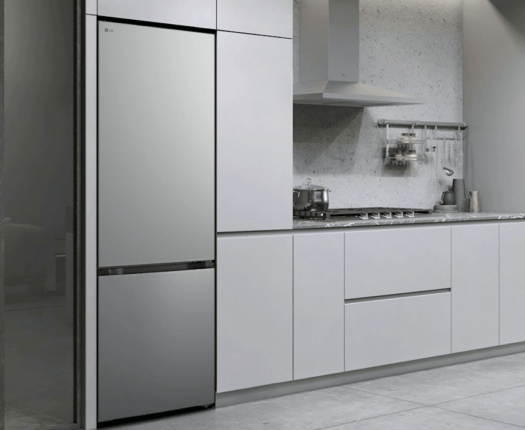
LG is expanding its refrigerator-freezer lineup with the launch of the new Fit & Max series, designed to combine generous capacity with a sleek, built‑in look. The range comes in 60 cm and 70 cm widths, each available in 2 m and 1.8 m heights, and offered in a selection of modern colours to suit different kitchen styles.
Clean Lines, Smarter Design
A standout feature of the Fit & Max collection is its flush-fit installation, which creates a seamless, minimalist aesthetic. LG’s Zero Clearance hinges allow the doors to open up to 110° without requiring extra side space—eliminating the typical gap between the appliance and the wall. Thanks to a double-hinge system, the doors stay perfectly aligned with the fridge body even when fully open. The look is completed with refined Metal Fresh interior finishes.
More Space Than Meets the Eye
Despite their standard footprint, the Fit & Max models offer impressive storage capacity:
- 465 litres in the 70 cm versions
- 375 litres in the 60 cm versions
Inside, the layout is flexible and thoughtfully organised. Adjustable shelves accommodate larger containers, while a bottle rack, space‑saving drawers, and My Box—a retractable, anti‑odor drawer ideal for cheese—add practical versatility.
AI‑Driven Efficiency
LG equips the range with its AI Inverter Compressor, which learns daily usage patterns to maintain stable cooling performance while reducing energy consumption. Smart features such as AI Fresh and AI Saving Mode automatically adjust the temperature by 1°C depending on how frequently the doors are opened, helping optimise efficiency throughout the day.
Freshness Technologies Working Together
The Fit & Max series integrates LG’s signature freshness systems:
- Door Cooling+ rapidly cools the door area to prevent cold air loss.
- Linear Cooling minimizes temperature fluctuations inside the fridge.
- Fresh Balancer and Fresh Converter drawers fine‑tune humidity and temperature based on the type of food stored.
Energy Performance and Smart Control
Throughout the year, models in the Fit & Max lineup will reach high energy ratings, up to A‑40%. For added convenience, the entire range supports remote control and monitoring via the LG ThinQ app, allowing users to manage settings and receive alerts directly from their smartphone.
LG’s CLOiD Robot Promises a “Zero Labor Home” at CES 2026
CLOiD is expected to integrate seamlessly with LG’s broader smart home ecosystem, including ThinQ-enabled appliances. Imagine a home where your robot communicates with your smart fridge, oven, and washer to anticipate your needs and act on them autonomously. That’s the future LG is betting on—and showcasing at CES.
🔍 Why It Matters for the Appliance Industry
For appliance manufacturers and retailers, CLOiD signals a shift in consumer expectations. It’s no longer just about smart features—it’s about full-service automation. As AI and robotics become more sophisticated, the line between appliances and assistants continues to blur.
At WhiteGoodsNow, we’ll be watching closely as LG reveals more about CLOiD’s capabilities, pricing, and availability. One thing’s clear: the race toward the zero labor home is officially on.
LG’s profits rise, but sales decline in Q3
LG Electronics today announced its global financial results for the third quarter of 2025, reporting consolidated revenue of €13.2 billion and operating profit of €420 million. In the third quarter of 2024, sales were €14.76 billion. However, profit was significantly lower: in euros, it was only €50 million.
The Home Appliance Solution (HS) and Vehicle Solution (VS) divisions posted particularly strong performances, despite external challenges posed by U.S. tariffs and the slowdown in the electric vehicle market. The results reflect the ongoing transformation of LG’s business portfolio and commitment to qualitative growth, which includes B2B solutions such as vehicle and HVAC systems, the expansion of non-hardware businesses such as subscription services and the webOS platform and new direct-to-consumer business models.LG Home Appliance Solution (HS) Company
The HS division posted revenues equivalent to €4 billion and an operating profit of €220 million. This division also reported a decline in sales, which had been 8,340 billion won compared to 6,580 billion won in 2025, and profits fell from 527 billion to 366 billion won. Optimization of production sites and improved operational efficiency largely absorbed the impact of the U.S. tariffs, ensuring higher profitability than the previous year.
For the fourth quarter, the global home appliances market remains challenging, with demand recovery still weak and competition increasing. The division aims to continue expanding its subscription and digital businesses, strengthen qualitative growth, and improve profitability through cost review and fixed expense reduction

