

SEB group Chinese Factories back up and running

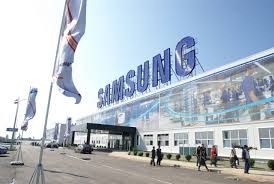
Samsung Electronics Co. will shut down its manufacturing plant in Campinas, Sao Paulo, in southeastern Brazil for two weeks from March 30 to April 12.It already closed its plant in Manaus in northern Brazil. It initially planned to keep it closed from Tuesday to Sunday this week but has decided to extend the shutdown period to April 12.Its factories in Brazil produce smartphones, TVs and home appliances.Its office employees in Brazil and other regions in Central and South Americas began remote working on Monday. The company’s retail stores and service centers in Brazil have stayed closed since Tuesday.In India, the electronics giant has shut down its smartphone factory at Noida and home appliance factory in Chennai this week. The company plans to extend the shutdown to next week.It also has announced to suspend TV factory in Slovakia for a week, and halting TV production in Hungary due to supply issues caused by the virus outbreak.LG Electronics, another big home appliance maker, is also suspending overseas production.The company on Thursday said it will close washing machine factory in Tennessee, in the U.S. from March 30 until April 12. The Tennessee produces 100,000 units a month and has around 600 workers.LG Electronics also shuttered its smartphone and home appliance plants in India. They will be kept closed until April 14.ZKW, the company’s automotive light maker subsidiary in Austria recently decided to scale down output after its finished car making client shuttered production lines temporarily.Rechargeable battery markers are also closing factories due to widespread virus.LG Chem stopped operating its battery plant in Michigan, the U.S. on Wednesday after Michigan state government issued an administrative order, directing all residents to “stay at home.” The plant will be closed until April 13.Its rival Samsung SDI is also closing its two battery pack plants in Michigan until April 13

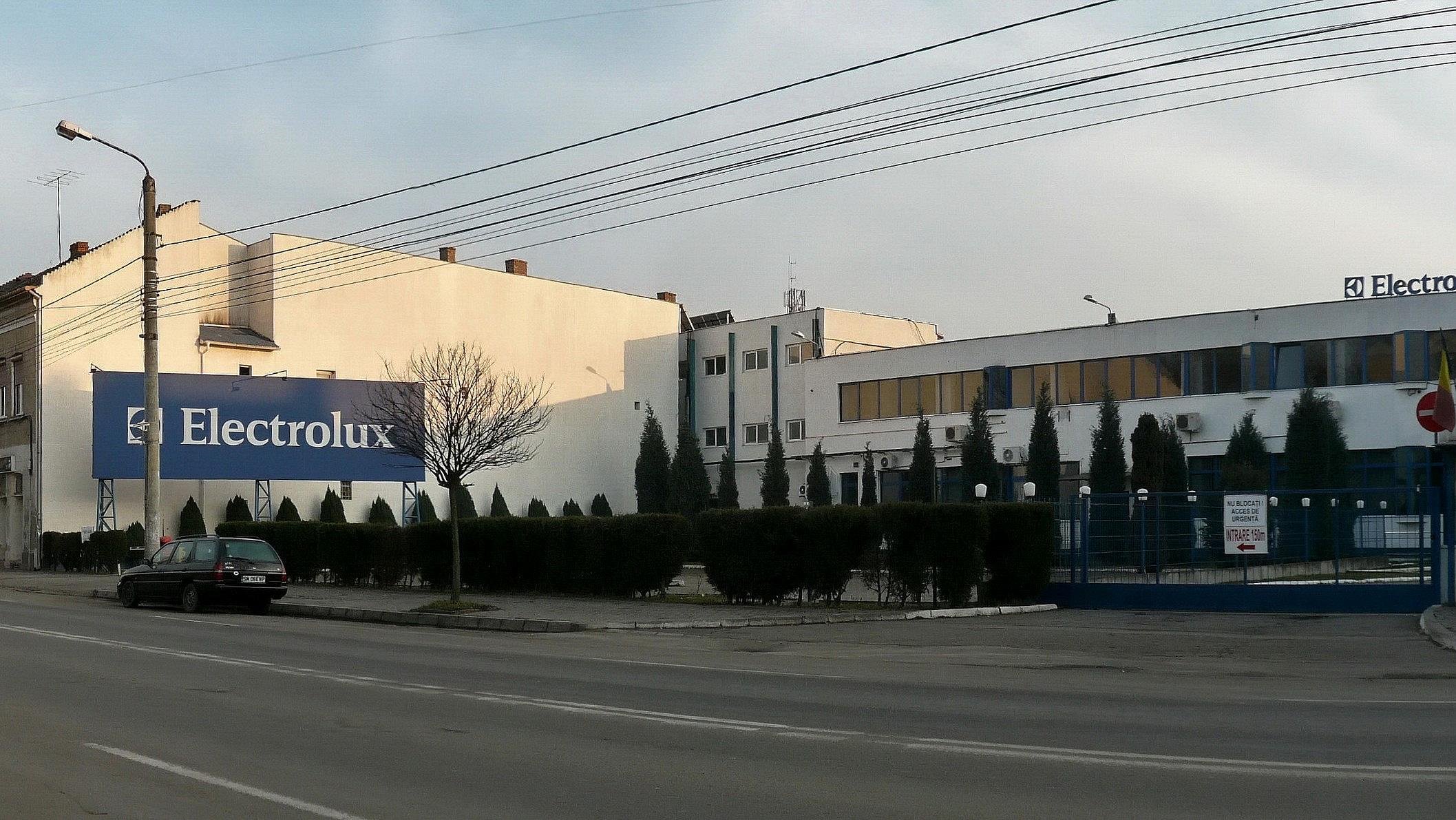
Electrolux has temporarily closed its gas oven factory in Satu Mare, northwestern Romania, where it has 850 employees, due to lack of orders, Ziarul Financiar reported.
Company officials say this is a short-term measure.
“This is a short-term measure, which allows us to adjust our production schedules according to the sales expected in the near future. After the fine tuning of the stocks of resources in line with the smooth operation of the factory and the volume of orders, we will relaunch the production,” company’s officials said.
Danby is currently working with other local companies to design and manufacture ventilators to help support our healthcare system, which is currently in short supply. At Danby we have devoted most of our engineers and designers to this project. We, along with many others, are simply trying to do the right thing.
“We have no ego here – we are trying to do what’s right. So we are working with a consortium of companies to try to come up with solutions. We are going down parallel paths. Design our own. Use open source. License someone else. Whatever it takes” – Jim Estill, CEO of Danby
 Arctic Company, the leader of the Romanian home appliance market, supports the fight against the crisis generated by Coronavirus and donates 50 washers and dryers and 25 refrigerators to hospitals in Romania and to first line medical staff.
One of the situations faced by the medical personnel in the country is the cleaning of the medical uniforms in safe conditions, without this becoming a source of infection for them and their families. The washers and dryers and the refrigerators offered by the Arctic company will go to the Romanian Red Cross, who will distribute them to hospitals in Bucharest and in the country, helping doctors protect themselves against Coronavirus epidemic.The transport of the products to the Romanian Red Cross was made in complete safety conditions, using hygienic cars, from the company’s own fleet, and the drivers who operated these transports were equipped with gloves and protective masks during this time.Being a major player in the home appliance market, Arctic Company is actively involved in the communities in which it operates. The solidarity and the responsibility for the safety of the employees, partners, clients and all the members of the community are one of the company’s top priority. Arctic Company is following the official recommendations made by the Romanian local health authorities and is adapting constantly required changes to its internal policies and actions plans through the Crisis Management team.***About ArcticArctic, the leader of the Romanian household appliances market, is one of the strongest companies in Romania and at the same time one of the most important employers and exporters of Romania. With approximately 4,300 employees, the company exports 83% of the total production to over 85 countries.With a history of almost half a century, Arctic has been part of the Arçelik group since 2002, a period in which both its turnover and production capacity increased significantly.The company owns the largest home appliance factory in continental Europe, with the Gaesti unit producing up to 36 million refrigerators to date. It also owns the only Industry 4.0 factory in Romania and one of the few in Europe, the factory in Ulmi, Dambovita, with a production capacity of 2.2 million units per year after the end of the investment.About ArçelikFounded in 1955, Arçelik is one of the leading players in the electronics and home appliances industry. The company is present in 146 countries, has 30,000 employees, 23 production units in 9 countries (Turkey, Romania, Russia, China, South Africa, Thailand, Pakistan, India and Bangladesh) and 35 sales and marketing offices worldwide.The company owns 12 brands (Arçelik, Beko, Grundig, Blomberg, ElektraBregenz, Arctic, Leisure, Flavel, Defy, Dawlance, Voltas Beko, Altus) and is listed on the Istanbul Stock Exchange.www.arcelikglobal.com.
Electrolux AB, the Swedish maker of Frigidaire appliances, has announced that it’ll incur a bigger-than-expected financial hit from merging fridge and freezer factories within the U.S. amid delivery disruptions. This plant reorganization, combined with accounting adjustments and destocking at a key U.S. client, cut $70 million off fourth-quarter 2019 operating income, compared with a previous estimate of $25 million. Savings targeted for this year also will take until 2021 to materialize, with just a fraction coming in 2020.
Electrolux sees a price reduction of 200 million Swedish kronor ($21 million) next year, down from a previous estimate of about 800 million kronor. The savings are a part of a much bigger decide to revamp the factory setup, an attempt that has shutting a plant for cooking products in Memphis, moving U.S. refrigerator-production to a replacement site in Anderson, SC, and outsourcing production of vacuum cleaners in Hungary. the corporate still expects the measures to yield about 3.5 billion kronor in annual savings by 2024.
DNB analyst Christer Magnergard says the postponement of savings will cut about 8 percent from this year’s operating profit, which the issues Electrolux has encountered within the U.S. increase the danger of further disruptions to the efficiency plan. He said it’s “alarming” that the corporate was unaware of issues earlier which there’s a “clear risk” that the weak performance will still impact earnings through the primary half this year.
Electrolux is investing $250 million in automation and digitization of the plant in Anderson to exchange one nearby, and another slated for closure in St. Cloud, MN. The transition led to temporary capacity constraints that affected deliveries to some customers, which are expected to be resolved within the half , it said.
Europe’s largest appliance maker, Electrolux has been working to offset higher costs and currency moves by increasing prices and selling more higher-margin appliances. At an equivalent time, it’s investing heavily in new and more efficient manufacturing facilities with increased automation. within the third quarter of 2019, Electrolux took a charge of 1.6 billion kronor to finance cost-cutting measures that include almost 1,700 job cuts.
Korean companies operating in India have stopped their local production lines in line with the Indian government’s efforts to prevent the spread of COVID-19.
“Abiding by the Indian government’s decision, we will halt the operation of Noida Plant which produces smartphones and Chennai Plant that produces home appliances until the end of this month,” Samsung Electronics said on March 23.
The Indian government issued an emergency administrative order to temporarily suspend the operations of all business sites in Chennai except essential places such as hospitals and public offices. The deadline is the end of this month. However, the order may be extended pending the proliferation of the COVIOD-19 virus.
Samsung Electronics has steadily expanded Noida Plant, saying it will increase the annual smartphone production at the plant to 120 million units in 2020. Industry watchers expect that the plant shutdown will disrupt production of Samsung’s budget smartphones targeting India, including the “Galaxy M.”
LG Electronics will also stop operating production plants in Noida and Pune until the end of March. These plants produce home appliances such as washing machines. The plant in Pune also produces some smartphones.
Consumer electronics companies such as Samsung and LG have also hit a snag in overseas sales. “We will temporarily stop sales in stores for the safety of our customers and employees,” announced Best Buy, which operates more than 1,000 consumer electronics stores throughout the United States, on its website on March 23. “Instead, we have introduced a door-to-door delivery service for customers in an untact manner.” Best Buy does not provide installation services for large TVs and refrigerators by professional technicians due to virus infection concerns, which will hinder its normal sales activities.
Europe’s largest consumer electronics store, MediaMarkt, has also shuttered more than 850 stores in major countries since the middle of March. “In North America and Europe, not many customers use installation services for large home appliance unlike Korea, but if offline stores are closed, there will deal a blow to promotions of large home appliances and new products,” said an official at a household appliance company
Hyundai Motor also stopped operating the first and second factories in Chennai on the day. Hyundai’s Chennai plant produces 680,000 units of the Crete, the Santa Fe, the Eon, and the i20 annually. Kia Motors is also considering discontinuing production at its plant in Andhra Pradesh, India. Andhra Pradesh is not included in the Indian government’s business suspension, but Kia Motors is responding by reviewing a shutdown of the plant as it may be designated later depending on the spread of the novel coronavirus in the future.
The shutdown order sounded the alarm for POSCO. “We are placing in place a remotely working system and cooperating closely with the government of India,” said POSCO which decided to stop a processing center in Delhi and a processing center in Pune by the end of this month. Hyundai Steel’s coil mill and steel pipe manufacturing plant in Tamil Nadu, India, will also put production on hold during the same period
BSH, the consequences of coronavirus spread also are impacting. the corporate is experiencing a big drop by demand, affecting most product categories and markets. during this context, the BSH Group’s Board of Directors has decided to suspend production for an expected period of three weeks. Thus, BSH Hausgeräte GmbH will temporarily suspend its production operations in its factories in Europe, Turkey and North America. the corporate still has the power to deliver products to consumers.
Disruption of production at factories in Europe will begin on March 28, 2020. this might even have an impression on employees who aren’t directly linked to production or other functions and locations.
This measure is being coordinated and implemented with the respective workers’ representatives counting on the country and site and in accordance with the present legal framework. BSH will still implement appropriate measures to make sure the simplest protection for all employees against the danger of infection by the coronavirus.
The company will inform customers, suppliers and other companies about the planned procedures.
BSH will employ this temporary suspension of production, to be prepared to satisfy the demand of its clients on time and within the absolute best way when the markets recover
Factories in China, struggling to reopen after the coronavirus shut down the economy, face a new threat from U.S. anti-disease controls that might disrupt the flow of microchips and other components they need.
The shock threatens to set back the ruling Communist Party’s efforts to revive the world’s second-largest economy after it declared victory over the outbreak. It would add to pressures on global business activity as Western countries close workplaces, limit travel and tell consumers to stay home.
Chinese manufacturers assemble more than 80% of smartphones for Apple, Samsung and other brands, half of the world’s personal computers and a big share of home appliances.


 WHITEGOODSNOW