
Singer Bangladesh returning to profitability while continuing to invest in Bangladesh’s manufacturing future.
The company recorded Tk 8.4 billion in revenue, a 3.4% year-on-year growth, and achieved a Profit Before Tax of Tk 141 million, reflecting improved operational efficiency and business resilience.
Our commitment to long-term growth remains stronger than ever. Through our global-standard Green Factory in the Bangladesh Special Economic Zone (BSEZ), over 90% local manufacturing, and the commencement of exports, we continue to strengthen Bangladesh’s industrial and export capabilities.
We remain focused on creating sustainable value through innovation, local manufacturing, and an enhanced customer experience.
Category Archives: Manufacturing
Groupe SEB Reports H1 2026 Recovery
Groupe SEB wants you to know their H1 2026 results are back in the green. Thanks to a new “Rebound plan,” the owner of Tefal, Rowenta, and Moulinex is reporting solid cash flow, simplified operations, and confirmed full-year growth. CEO Stanislas de Gramont expressed confidence in the group’s resilience despite tough global market conditions.
𝗘.𝗚.𝗢. 𝗖𝗿𝗼𝗮𝘁𝗶𝗮 𝗻𝗮𝗺𝗲𝗱 𝘁𝗼𝗽 𝗲𝘅𝗽𝗼𝗿𝘁𝗲𝗿 𝗼𝗻𝗰𝗲 𝗮𝗴𝗮𝗶𝗻
E.G.O. Elektro-komponente d.o.o. (E.G.O. Croatia) has once more been honored with the “Golden Key Award” as one of Croatia’s leading exporters. Matija Hržan, Head of Production – Switches and Injection Molding at E.G.O. Croatia, accepted the award during the 21st Convention of Croatian Exporters in Zagreb in late June.
Heatwaves Drive 43% Surge in Chinese AC Exports to Europe
Heatwaves Drive 43% Surge in Chinese AC Exports to Europe
By White Goods Now
Amid shifting global trade dynamics, China’s home appliance export sector delivered impressive H1 2026 numbers—led by a 43.2% year-on-year surge in air conditioner exports to the EU ($3.76 billion).
Driven by severe European heatwaves and structural supply shortages, demand was especially high for portable and mobile AC units (+70%), which suit Europe’s historic buildings, strict drilling bans, and high renter demographics.
Brand Highlights
* Midea: Led the market with its PortaSplit portable split AC (15-minute DIY setup). Shipments topped 200,000 units, driving a >70% sales surge across Germany, France, Spain, and the UK.
* Haier: Posted a 24% increase in residential AC brand sales in Europe—the highest among Chinese brands. Emergency orders from France and Spain alone exceeded 100,000 units.
* Gree: Doubled sales in Spain and saw a 50% rise in France, extending installation waitlists through late August.
* Hisense & TCL: Hisense AC sales in Europe soared 117% (up 900% in France), while TCL saw over 300% growth in France and the Nordic region.
Key Drivers
* Supply Chain Scale: China produces over 85% of global AC capacity and 90% of compressors, allowing rapid production scaling.
* Targeted Product Design: No-drill, portable units bypass high European installation costs and building regulations.
* Faster Logistics: Rail transport via the China-Europe Railway Express cut delivery times from 40+ days (sea) down to 15–20 days.
* Brand Value Growth: Chinese manufacturers are increasingly exporting under their own brand names rather than low-margin OEM contracts.
LG Electronics Publishes 2025–2026 Sustainability Report
LG Electronics has released its 2025–2026 Sustainability Report, confirming that the company has already met — and surpassed — several key ESG milestones originally set for 2030. The report highlights major progress in greenhouse‑gas reduction, resource circularity and responsible governance, positioning LG among the global leaders in sustainability performance.
LG reports that its Scope 1 and Scope 2 emissions for 2025 came in below its 2030 target, reflecting accelerated investment in energy‑efficient operations and renewable electricity. The company also exceeded its long‑term goal for waste‑recycling performance, achieving a rate above the 95% benchmark set for the end of the decade.
Alongside environmental gains, the report outlines advances in accessibility, responsible AI governance and board‑level transparency, reinforcing LG’s commitment to inclusive design and ethical technology development.
With continued recognition from major ESG rating agencies, LG’s latest report underscores the company’s position as one of the sector’s most consistent sustainability performers.
ESCOLO
Since 2015, ESCOLO has focused on commercial refrigeration solutions for supermarkets, bakeries, restaurants, hotels, and food service businesses. We know commercial buyers need more than good-looking equipment. They need stable performance, practical structure, dependable production, and a supplier who understands daily operation. That is why ESCOLO provides a wide range of refrigeration equipment, including display coolers, open chillers, kitchen refrigerators, freezers, and customized cooling solutions. With a 50,000㎡ automated facility in Foshan, OEM/ODM capability, and strict quality control, we support businesses looking for professional, long-term refrigeration partners.
BSH Explores New Ownership Model for Its Cooker Hood Production
BSH Explores New Ownership Model for Its Cooker Hood Production
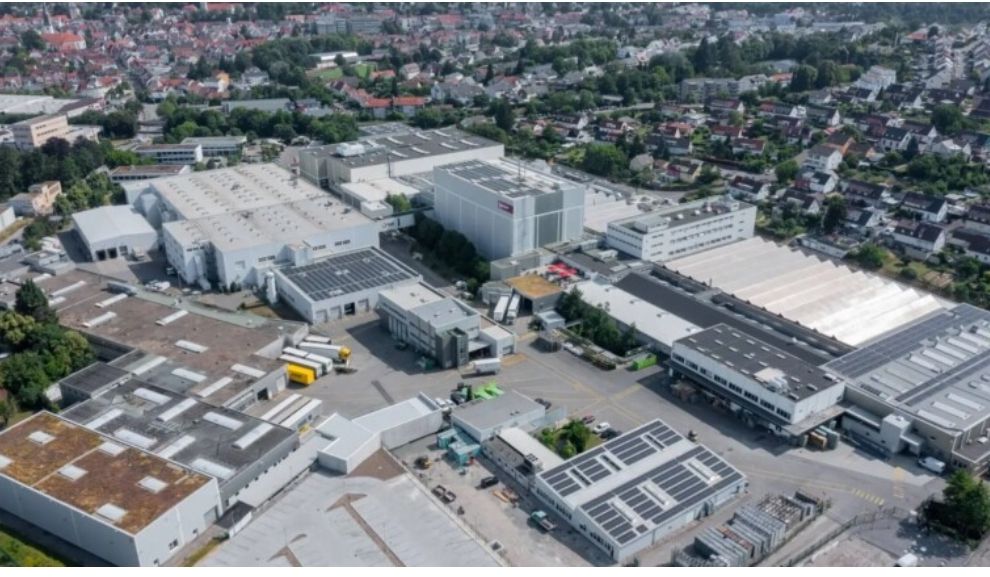
BSH Hausgeräte is evaluating a significant strategic shift: transferring ownership of its cooker hood manufacturing operations in Bretten, Germany, to an external partner. The move aims to secure the long‑term future of the site, which currently employs around 1,000 people, and to stabilise production volumes by opening the facility to third‑party customers.
🔧 A New Operating Model for Bretten
According to reporting from German industry sources, BSH has begun exploratory talks with potential partners who could take over the cooker hood production lines. Under this model, the Bretten plant would operate as an independent company supplying BSH brands—such as Bosch, Siemens, and Neff—while also serving additional clients across the appliance sector.
BSH believes this broader customer base could help the plant reach the production volumes needed to operate efficiently. As the company explained, expanding beyond a single customer would make the site “less dependent” and more resilient in a challenging market.
👷 Job Protection at the Forefront
The Bretten factory has faced uncertainty since BSH announced the closure of two German sites last autumn. Local resistance was strong, and the new proposal is seen as a way to preserve a substantial portion of the workforce.
The works council estimates that up to 600 jobs could be safeguarded if the cooker hood division becomes an independent entity with multiple customers. CEO Matthias Metz emphasised the plant’s expertise but acknowledged that structural and economic pressures require a “practicable solution” to secure its future.
🔄 Production Shifts Elsewhere in Europe
While cooker hood production may remain in Bretten under new ownership, BSH has confirmed that oven production will be relocated to other European factories. These facilities currently have spare capacity and are expected to absorb the workload gradually, with the transition scheduled to finish by Q1 2028.
📌 What This Means for the Industry
For the wider white goods sector, BSH’s move reflects a growing trend: manufacturers seeking flexible production models and partnerships to navigate cost pressures, supply chain challenges, and evolving market demand. An independent Bretten operation could emerge as a specialist supplier of cooker hoods to multiple brands—potentially reshaping sourcing strategies across Europe.
Shifts in the US Appliance Landscape: What the Electrolux-Midea Deal Means for Anderson’s 1,200 Workers
If you’ve been keeping an eye on the major players in the appliance industry, you know that the North American market has been a tough nut to crack lately. High manufacturing costs, shifting consumer demand, and biting import tariffs have forced many legacy brands to rethink how they operate.
Recently, we saw one of the biggest strategic shakeups in years. Electrolux Group, the Swedish appliance giant, announced a massive, long-term strategic partnership in North America with China’s Midea Group.
At the center of this deal is a major transition for Electrolux’s historic refrigerator plant in Anderson, South Carolina—a move that brings a temporary factory shutdown, layoffs for over 1,200 workers, and a complete reimagining of what the facility will produce.
Let’s break down exactly what is happening in Anderson, why Electrolux and Midea are teaming up, and what this means for the future of your laundry room and kitchen appliances.
The Anderson Plant: Out with Fridges, In with Laundry
For 37 years, the Anderson, South Carolina facility has been a cornerstone of local manufacturing, specializing in food preservation (refrigerators). However, under the new joint venture, that is about to change completely.
- The Timeline: Electrolux phased out refrigerator production at the Anderson plant in July 2026.
- The Retrofit: The plant is temporarily closing to undergo a massive overhaul. It is being completely repurposed from a food preservation factory into a state-of-the-art fabric care (laundry) factory.
- The Reopening: Fabric care production is slated to officially kick off in the first half of 2027.
What Happens to the 1,200 Anderson Workers?
A factory shutdown of this scale naturally raises immediate concerns for the local community. The transition affects approximately 1,200 local workers who are facing layoffs during the retooling period.
However, there is a silver lining. Because the facility is being repurposed rather than closed permanently, laid-off workers are being invited back to the revamped plant once it resumes operations. The new joint venture expects to gradually hire up to 1,200 employees across 2027 and 2028 as laundry production ramps up to full capacity.
The Big Picture: Why the Electrolux-Midea Partnership?
This isn’t just a localized factory change; it’s a massive corporate realignment. Electrolux and Midea are forming three distinct joint ventures in North America:
- A Sales Joint Venture (50/50 split): Co-developing and selling food preservation products across both companies’ brand portfolios in North America.
- Juarez, Mexico Factory JV (Midea owns 65%, Electrolux owns 35%): Operating the existing refrigerator plant in Mexico.
- Anderson, South Carolina Factory JV (Electrolux owns 55%, Midea owns 45%): Operating the newly retooled laundry plant.
What’s in it for Electrolux?
Electrolux’s North American division represents roughly a third of its global sales, but it has struggled heavily with high operational costs and underperforming factories. By bringing in Midea—known globally for highly efficient, automated manufacturing processes—Electrolux gets an infusion of operational expertise and shares the financial risk. The partnership is expected to yield massive fixed and variable cost savings.
What’s in it for Midea?
Midea is a global powerhouse (reporting over $63 billion in revenue), but they have lacked a major manufacturing footprint in North America. By buying into these joint ventures, Midea successfully circumvents steep US import tariffs, gains direct access to established local distribution networks, and can leverage Electrolux’s deeply trusted brand name.
What Does This Mean for Appliance Buyers?
If you are shopping for white goods over the next couple of years, you can expect a few key changes to flow from this deal:
- More Tech-Forward Laundry: With Midea’s heavy investments in digital features and smart home integration, the top-load and front-load laundry units coming out of the South Carolina plant in 2027 and beyond will likely feature advanced smart features and high-efficiency designs.
- Refreshed Refrigerator Lineups: The sales joint venture means we will see a wider, more feature-rich range of refrigerators hitting the market under both the Electrolux and Frigidaire labels, co-designed with Midea’s latest cooling technologies.
- A Competitive Market: By streamlining manufacturing, both brands hope to offer highly competitive pricing on mid-to-high-end appliances, meaning better value on the retail floor.
The transition period through 2026 will undoubtedly be a challenging time of adjustment for the workforce in Anderson, but the long-term investment ensures that South Carolina will remain a crucial hub for American-made home appliances for years to come.
The Cooling Shift: How Chinese AC Brands Swept the European Market This Summer
The Cooling Shift: How Chinese AC Brands Swept the European Market This Summer
Europe has been sweltering. Record-shattering heatwaves across France, Germany, Denmark, and the Czech Republic have completely caught the continent off guard. Historically, residential air conditioning has been relatively rare in European homes due to milder climates and strict local building regulations. However, this summer’s extreme weather transformed cooling from a luxury into an absolute necessity—triggering an unprecedented run on air conditioning units.
With supply chains scrambling, Chinese major appliance brands like Midea, Haier, Gree, Hisense, and TCL stepped up to fill the void, effectively taking home the “MVP” title for Europe’s summer cooling season.
The Massive Surge in Demand
According to recent data, the scale of this cooling boom is staggering. Customs data reveals that exports of air conditioning units from China to the EU reached a record high of $3.76 billion in the first half of 2026 alone—a massive 43.2% year-on-year increase. Notably, Chinese brands now command a 41% share of the European AC market, up from 27% just three years ago.
The brand-specific numbers reflect a true inventory sell-out:
* Gree: Wall-mounted units completely sold out in France, pushing installation wait times all the way into late August.
* Midea: Its flagship PortaSplit (a portable split-system unit designed for easy setups) saw sales double compared to last year, shipping over 200,000 units and helping the brand anchor itself deeply in the competitive German market.
* Haier: European AC sales grew 30% year-on-year, with the company utilizing its global manufacturing bases at full capacity to keep up with restocking.
* Hisense: Sales doubled in France and grew by over 20% across Western Europe, with portable units becoming nearly impossible to find in Italy and Spain.
* TCL: Total European orders grew by 68% in the first half of the year, driven by a 90% surge in demand for portable and inverter split-system units.
Why Did These Brands Win the Summer?
The success of these brands wasn’t just luck; it came down to a mix of clever product design and sheer supply chain muscle.
* Solving the Installation Bottleneck: European building codes and historic architecture make drilling holes for traditional split-system AC installations incredibly difficult and legally complicated. Chinese manufacturers anticipated this by flooding the market with no-installation portable units and innovative “plug-and-play” portable split systems. These units solved the consumer’s immediate pain point without requiring a professional installer or landlord permission.
* Supply Chain Agility: Backed by mature, end-to-end component ecosystems domestically, these brands displayed unmatched manufacturing flexibility, allowing them to ramp up production and ship units faster than regional competitors.
* Established Local Footprints: Brands like Haier and Midea have spent years acquiring local European heating, ventilation, and air conditioning (HVAC) firms. This established network of local warehouses and distribution channels allowed them to react instantly when the French government unexpectedly placed an emergency order for 30,000 AC units to be delivered within days.
The Long-Term Outlook: Risks and Opportunities
Despite the record profits, the industry faces an looming question: What happens when the weather cools down?
Much of this summer’s volume consisted of portable, low-margin units. This is a highly competitive, commoditized segment of the market. If European temperatures dip next summer, manufacturers could face a severe overcapacity problem. Furthermore, Europe’s aging electrical grids, surging energy prices, and tightening environmental regulations mean future products will have to meet incredibly strict efficiency standards.
However, the broader consensus is clear: Europe’s relationship with air conditioning has permanently shifted. The International Energy Agency (IEA) projects that the number of AC units in the EU will more than double from 110 million in 2019 to 275 million by 2050.
For brands like Midea, Haier, and Hisense, this summer wasn’t just a short-term cash injection. It was a massive footprint expansion. The true test moving forward will be whether they can convert this sudden surge in market share into long-term brand loyalty and successfully transition European consumers toward their premium, high-efficiency smart home systems.
Haier Europe Showcases Manufacturing Excellence at Eskişehir Industrial Hub
Haier Europe Showcases Manufacturing Excellence at Eskişehir Industrial HubHaier Europe has welcomed distributor partners to its industrial hub in Eskişehir, Turkey, offering an immersive look inside the advanced manufacturing operations that underpin the company’s growth across the region.Partners toured Haier’s dishwasher, dryer, and cooking factories, gaining firsthand insight into the technologies, quality systems, and production capabilities that support the brand’s expanding product portfolio. The visit highlighted Haier’s engineering depth, its disciplined approach to manufacturing, and the operational scale driving reliability and performance across categories.Operating under Haier’s global manufacturing standards — with continuous improvement embedded throughout — the Eskişehir hub plays a central role in delivering long‑term value for customers, consumers, and partners. The experience reinforced Haier Europe’s commitment to innovation, industrial excellence, and sustained market leadership.WhiteGoodsNow.com will continue tracking Haier’s manufacturing developments as the company strengthens its position across the European appliance sector


