
whirlpool are taking the most drastic steps in the shifting business by slashing production of its refrigerators, dish washers and other home appliances by more than a third to shrink inventories.
The company is among dozens of U.S.-based multinational companies confronting weakening consumer demand amid higher costs. Whirlpool says cutting production volume by 35% last quarter reduced inventories by $300 million.
The moves are among the many steps companies are taking to adjust to increasingly volatile consumer spending patterns. Household staples supplier Procter & Gamble is diversifying its production assortment to keep cash-crunched shoppers from switching to cheaper brands.
In its most recent quarter, higher commodity, materials and freight costs reduced P&G’s gross profit margin by 5.5 percentage points, which was fully offset by cost cuts and price increases.
Category Archives: Manufacturing
Whirlpool Europe update
In the conference call with analysts, the CEO does not reveal the names of the possible buyers of Whirlpool Emea and fails to stop the collapse of the stock after the disappointing results announced the previous day.
The things are clear to the 15,000 Whirlpool employees in Europe (especially Italy and Poland), Africa and the Middle East, to the related industries of the 10 factories (5 of which in Italy) and to the trade, in short, to those who try to understand what the destiny of Whirlpool EMEA. The little information shared by Whirlpool Corporation in presenting the data for the third quarter allows us to establish some fixed points 10 financial and industrial groups have proposed to acquire (it is not known whether in part or in whole) the assets of Whirlpool Emea.
Two of these groups, both industrial, remained ‘in the running’ and their offers are being evaluated.
The choice between one of the two offers and an internal solution will be submitted to a meeting of the Board of Whirlpool Corporation, probably before the end of the year, based on an analysis of the various market segments in which Whirlpool Emea operates.The markets in which the group intends to invest both to produce and to sell are other: obviously the USA and Canada, Brazil and Mexico and India.
Globally, Whirlpool Corp closed a bad third quarter disappointing analysts’ expectations. Whirlpool’s sales fell by 12.8%, in the third quarter by 7% net of the strengthening of the dollar. During the year, Whirlpool transferred $ 2.6 billion in dividends and buy backs to its shareholders
Whirlpool opens factory in Argentina with $52 million investment
Whirlpool Corp is set to inaugurate a new factory in Buenos Aires after a $52 million investment, with plans to export more than 70% of the local production, Joao Carlos Brega, the firm’s Latin America chief, said.
The plant, which will employ some 400 workers, will produce 300,000 washing machines each year and export $50 million worth of products around Latin America, mainly to Brazil.
Arçelik: well-deserved recognition
Arçelik’s washing machine factory in Ulmi, Romania, ranked among the most advanced in the world in terms of environmental sustainability. Indeed, Arçelik, a global appliance manufacturer and subsidiary of Turkey’s largest industrial conglomerate, Koç Holding, has been awarded Sustainability Lighthouse status by the World Economic Forum (WEF) for its manufacturing plant . ‘Ulmi, Romania. A recognition that rewards effective measures in terms of energy performance applied on the site. This follows the already existing statusArçelik as a Global Lighthouse awarded by WEF to its Ulmi plant in 2019 and Eskişehir plant in 2021 for the successful adoption of Fourth Industrial Revolution (4IR) technologies to improve productivity and performances.

Sustainability Lighthouse
The World Economic Forum’s Global Lighthouse Network (GLN) seeks to promote 4IR technologies to transform production facilities, value chains and business models. In 2021, GLN introduced Sustainability Lighthouse as a new designation to recognize manufacturers who apply innovative 4IR transformations to boost productivity while preserving the environment.
Arçelik shows the way
Arçelik’s washing machine factory in Ulmi, Romania, leads the way in efficient and sustainable manufacturing and uses state-of-the-art technologies for improved energy and water efficiency. The Ulmi plant is now designated as one of the Global Lighthouse Network’s ten sustainability flagship sites. A new recognition that Hakan Bulgurlu, CEO of Arçelik, commented saying: “ We are proud to be recognized as a pioneer in sustainable development by the World Economic Forum. This is a reflection of our deep commitment to environmental protection throughout our organization. We have ambitious environmental goals and we believe that theWe aim to achieve net zero emissions for all of our operations by 2050 through green investments in renewable energy, as well as energy efficiency in products and production. Our plant in Ulmi acts as a Sensitivity: Public laboratory and serves as an example for the entire Arçelik ecosystem. We set out to build not only an efficient Industrial 4.0 site in terms of production, but also a unit that reflects our commitment to contributing to a better future. And this recognition is well deserved, thanks to investments in advanced technologies and green production applications. I am proud of all my colleagues who have worked hard and with dynamism to achieve this. »
As a world leader in sustainability, the Arçelik washing machine factory in Ulmi stands out for the following achievements :
- The factory is the first and only production unit in Romania to hold LEED Platinum certification.
- The factory uses 100% green electricity. It has renewable energy systems for heating and cooling, such as rooftop solar (PV) panels (930 kWp) and concentrated solar power (700 kWth) and plans to increase the yield of the panels 160% solar power by the first half of 2023.
- The factory’s “digital twin” model automatically adjusts lighting and optimizes cooling and heating systems. The building management system uses an algorithm that leverages approximately 15,000 real-time data points from more than 650 energy-measuring devices and sensors.
- The lighting system uses 62.9% less electricity than a non-automated system , and the need for natural gas boilers is reduced by 34.5% for the preparation of domestic hot water.
- Due to the high level of water stress around the plant, an advanced treatment plant was installed, treating 100% of domestic and industrial wastewater, and recycling and reusing 68% of its water intake.
- All these efforts have resulted in a 17% energy saving per product, a 25% reduction in water consumption per product and a 22% reduction in scope 1 and 2 GHG emissions per product in production in one year , in accordance with company objectives.
- Since its commissioning, the plant has avoided the emission of 684 tons of CO2.
- The factory uses 100% green electricity. It has renewable energy systems for heating and cooling, such as rooftop solar (PV) panels (930 kWp) and concentrated solar power (700 kWth) and plans to increase the yield of the panels 160% solar power by the first half of 2023.

Electrolux Students design for single, compact living.
the fifth year running, Electrolux has collaborated with students from the Umeå Institute of Design (UID) to develop product ideas for the home of the future.
With more people living alone today than at any point in recorded history,* the majority in small urban apartments, demand for goods such as small appliances, flatpack furniture and foldable items is rising. That’s why the students this year were challenged to develop progressive premium product ideas for single people living in small spaces. The 14 students from the Master’s program in Advanced Product Design created concepts for so-called singletons living a micro-home lifestyle in four major cities – Hong Kong, Munich, Mumbai and New York.
“These students challenge conventional assumptions,” says Thomas Johansson, Design Director at Electrolux. “They envision the future and create concepts that harness the essence of our brand in a captivating way. It’s also a fantastic opportunity for Electrolux to reach the best emerging talent.”
The product ideas:HumiTex: a slim dehumidifier that hangs in a closet to ensure optimal conditions for clothing, with premium materials and connectivity to signal when it needs to be emptied. Designed for space-conscious singletons in humid Hong Kong. By Ellis Walker, Jinying Cheng, Mattias Nordin and Thilo Fiebig.
Adapted: a premium hub that uses the kitchen’s vertical space to organize small kitchen appliances either as a piece of furniture or wall-mounted. The modules are connected in an app. Designed for busy singletons in Munich looking to reduce visual and mental clutter. By Joel Sjödin, Corinna Diestel, and Silvester Kössler
Jodana: an ecosystem of cooktops that adapt to the user’s circumstances. Can be stored vertically and combined with others in a modular system when cooking for more than one. Connectivity enables couples to cook together while apart. Designed for the singleton in bustling Mumbai. By Luisa Ebeling, Indalecio Gaytan, Niklas Muhs, and Yash Saboo.
Sensea: offers a ritual-like and sensory drinking experience. AI-based ,the device becomes a nudging companion, using physical data readout to gauge needs, habits and moods to prepare suitable morning, midday and evening herbal blends. Designed for singletons in New York City who seek calm, comfort, and wellbeing. By Gerardo Soler, Nina Långström, and Niklas Andreasen.
Midea starts work on new heat pump plant in Italy

Chinese home appliance maker Midea Group began construction of a new base for the production and research and development of heat pumps in Feltre, a town of Veneto in northern Italy, on Friday, aiming to help facilitate its international market expansion.
The new base, with an investment of 60 million euros ($58.75 million), is located inside a production area of Italy’s Clivet, a European leading company that designs, produces and distributes systems for cooling, heating, air ventilation and air purification for residential, commercial and industrial markets.
Midea acquired an 80 percent stake in Clivet in 2016, aiming to expand its presence in the European central air conditioning market
Electrolux Agrees to Sell Idle Factory in Memphis
Electrolux, Europe’s biggest appliances maker, has agreed to sell its idle factory in Memphis in the United States for $82.5 million, it said in a statement.
The Swedish group said late on Wednesday it aimed to finalise the deal with an undisclosed buyer, and book a gain of around 740 million crowns ($65.3 million) from it, in the fourth quarter.
ThyssenKrupp will supply green steel for Miele
ThyssenKruppSteel Europe and the German producer of household appliances Miele Group have signed a memorandum of understanding on the supply of green steel from the iron direct reduction plant in Duisburg. The enterprise to be launched in 2026, reports the Thyssenkrupp website.
ThyssenKrupp will supply its patented Bluemint steel for the home appliance producer. In the following years, the volume of purchases will gradually increase. By 2030, Miele and Thyssenkrupp plan to switch 100% to Bluemint.
By 2030, the German producer of household appliances aims to reduce carbon emissions from its devices at the stage of use (Scope 3) by another 15% compared to 2019. Miele has already signed similar agreements for the supply of low-carbon steel with Germany’s Salzgitter AG (in 2021) and Sweden’s H2 Green Steel (in May 2022).

Arçelik singer new factory
Arcelik proud to share the news of the groundbreaking of Singer Bangladesh Ltd.’s very first state of the art production plant on 10 October, 2022 at the Bangladesh Special Economic Zone (BSEZ). From its architectural design to construction, from recycled material use to energy and water consumption, the production facility will be designed focusing on sustainability.Singer Bangladesh Limited said they would build their plant on 135,000 square metres of land at the special economic zone.
The company claimed that the plant would create some 4,000 jobs.
Singer will produce different home appliances, including television, refrigerator, washing machine and air conditioner, in the proposed plant.
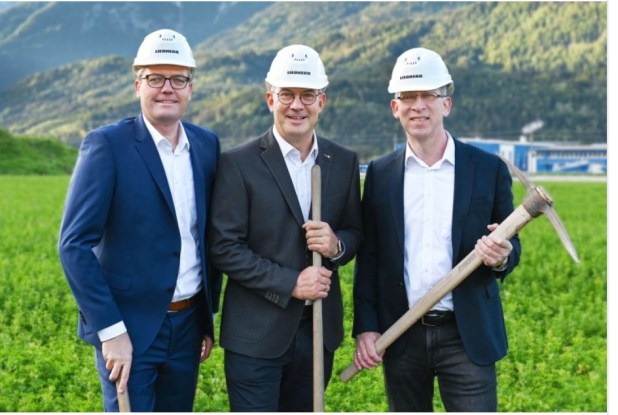
Liebherr production site grows
The production site for appliances of Liebherr Appliances – Lienz GmbH continues to grow 42 years after its foundation. The groundbreaking ceremony for a new 2000 square meter hall has just taken place in Lienz. An approximately 2,000-square-meter factory hall is planned for the eastern area of the Liebherr site. The site expansion will create space for a tool shop, a locksmith, a joinery, installers, and a forklift shop.
Stay tuned for more updates about this project.
 WHITEGOODSNOW