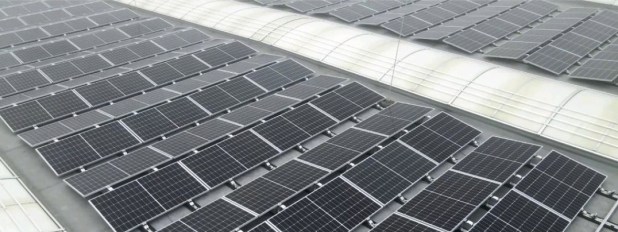
Photovoltaic system at the Liebherr Ochsenhausen factory

With the construction of the new photovoltaic system at the Ochsenhausen production site, Liebherr appliances is taking an essential step towards even more climate-friendly production. A total of 5,333 modules on the roof of the logistics center at the site will supply 1,996,000 kWh per year in the future, which corresponds to a saving of 790 tonnes of C02. The photovoltaic team erected the plant within 12 weeks and has been in operation since February 2022.

Electrolux reduces sea transport emissions by 15% in 2022

Electrolux will now use more sustainable fuels for 25% of its total sea freight. By partnering with shipping companies Maersk and CMA CGM Group to use biofuel based on waste oils and LNG (Liquefied Natural Gas), Electrolux will reduce its sea transport greenhouse gas emissions by 15 percent already in 2022.

Electrolux is working toward halving its transport emissions by 2025. To reach this target two important agreements have been signed with shipping companies Maersk and CMA CGM. With the new agreements in place, 25% of Electrolux Group’s total sea freight will be transported using the most effective solutions for decarbonizing available in the market right now. 80,000 twenty-foot equivalent containers (TEU) will now be transported by using Maersk’s biofuel, which is based on certified waste oils such as used cooking oil, and CMA CGM’s solution based on LNG (Liquefied Natural Gas) and guarantee of origin biomethane.

“These partnerships put Electrolux at the forefront in terms of the percentage of the total volume of products being transported in a more sustainable way. As we continuously contract increasing volumes of biofuel for sea transportation, we are also supporting the overall market development toward more sustainable practices for shipping goods across the world”, says Carsten Franke, Electrolux Chief Operating Officer

WHIRLPOOL CORP. OUTLINES PROGRESS ON NET ZERO TARGETS

Whirlpool Corporation today issued an update on progress towards achieving Net Zero targets the company first announced in May of 2021. As part of this update, Whirlpool Corp.—building on its long history of improved environmental performance—is accelerating its commitment to sustainable operations through investments in renewable energy, manufacturing plant retrofits, and on-going energy, water, and waste reduction projects.

“Our vision at Whirlpool is to improve life at home. We know fulfilling that vision requires us to think not just in terms of the four walls around us and the communities in which we live, but of the planet that sustains us,” said Marc Bitzer, chairman and CEO of Whirlpool Corp. “Over the course of our history we have consistently developed products and technologies that deliver on this vision.”

Demonstrating Action*
In 2021, Whirlpool Corp.:

Drove a 27 percent reduction of greenhouse gas (GHG) emissions globally for all Scope 1 and Scope 2 emissions compared to a 2016 baseline, accelerating the company’s progress to meet its Net-Zero target by 2030.Achieved 14 percent  Scope 3 Category 11 emissions reduction, in line with its target reduction of 20 percent by 2030, compared to 2016 levels.Issued its first Sustainability Bond, withthe proceeds allocated to drive positive environmental and social impacts.Continued to develop innovative technologies and products that reduce its environmental impact.

Whirlpool Corp.’s approach to fostering long-term, sustainably-resilient operations starts with innovative design and technology to improve energy and water efficiency, as well as recyclability. Continuous improvements as part of the World Class Manufacturing process have been rolled out in plants and operations across the manufacturing process and supply chain.

“Whirlpool takes a holistic, long-term approach to environmental sustainability,” said Ron Voglewede, director of sustainability. “It’s not too far into the future that we envisage manufacturing home appliances in plants that are 100 percent renewable-powered with off-site and expanded on-site wind farms and solar panels, and an end-of-life product recycling program which directly feeds into our own supply chain for new products.”Whirlpool Corp. is one of the largest onsite wind energy consumers among Fortune 500 companies in the U.S. Through expanding on-site renewables, additional Virtual Power Purchase Agreements (VPPAs), and green energy procurement, the company targets a nearly one-third reduction in its global carbon footprint in its operations.

The company is on track to achieve its Zero Waste to Landfill (ZWtL) goal for all manufacturing sites by the end of the year. Currently, 90 percent of its sites have achieved Gold or Platinum ratings using the UL ECVP 2799 Zero Waste to Landfill standard. The company has also recently joined the U.S. Department of Energy’s (DOE)  Better Climate Challenge, targeting a reduction of greenhouse gas emissions by 50 percent within 10 years and collaborating with the DOE and other organizations to cut carbon and save energy. Over the past five years, it has also achieved a 34 percent reduction in water consumption in its operations globally. 

Advancing a Sustainable Future Through Our Products
Whirlpool Corp.’s average refrigerators use less energy than a 60 watt light bulb, its clothes washers have 57 percent more capacity than they did in 1992, and they use 78 percent less energy1—all without compromising quality and function. Overall, Whirlpool Corp. has reduced by 60 percent its product emissions since 2005, and continues to invest in innovation to launch leading products that improve performance, while lowering their overall carbon footprint.

An initiative in Europe has led to the removal of expanded polystyrene (EPS) packaging from cooking products and dishwashers sold to one of its large retail customers. The company also considers how it can use its scale and its presence in approximately 70 percent of U.S. homes2, to drive sustainable behaviors—from educating consumers about not needing to pre-rinse dishes before placing them in the dishwasher, to using connected appliance features to run their appliances during the best times to lower their costs and have the least impact on the electrical grid.To learn more about Whirlpool Corp.’s progress, please view the recently released 2021 Sustainability Report http://whirlpoolcorp.com/2021SustainabilityReport/

Electrolux on the way to the target of zero waste

Electrolux on the way to the target of zero waste sent to landfill at all manufacturing sites by 2025. During 2021, other seven factories achieved zero waste to landfill certification issued by a third party: at Manaus and Curitiba in Brazil, Adelaide in Australia, Rosario in Argentina, Olawa and Zabrze in Poland, and Susegana in Italy. Together with the factories in Sao Carlos in Brazil, Solaro and Porcia in Italy and Cairo in Egypt that were certified before 2021, 32% of plants are now certified and the Santiago factory in Chile is expected to follow in the first quarter of this year. “Working toward climate neutral operations, doesn’t just involve

working with energy – it involves working with the efficient use of all kinds of resources – says Giuseppe Caiulo, VP Group Operations Sustainability and Lean Manufacturing -. By producing less waste, we can avoid creating emissions – both caused by their disposal and the sourcing of virgin materials”. When one of the Electrolux factories is third-party certified to the Electrolux Zero Waste to Landfill program, it means that it sends less than 1% of its total waste to landfill. Additionally, certified factories must send less than 3% of their total waste to energy recovery.

Beko sustainable

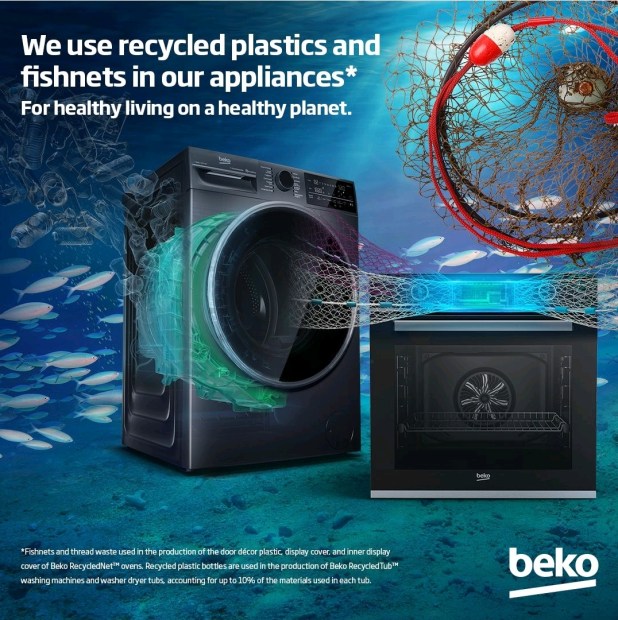
Over the past two decades, Beko has focused on innovation, developing appliances that make our consumer’s life easier. As a brand, we remain fully committed to developing more sustainable products that tackle the challenges facing our planet today, inspiring everyone to strive for a more sustainable future.

In line with this ethos, we are proud to launch our sustainability campaign for the second time, raising awareness of our latest technology, which transforms recycled waste materials into durable, high performance product parts used in our built-in ovens, washing machines, and washer dryers.Whilst our RecycledTub™ machines and washer dryers use recycled plastic bottles in their tubs*, our RecycledNet™ ovens feature parts made from recycled fishing nets and industrial thread waste.†

By transforming recycled materials into high performance materials, we can begin to take small steps to protect the health of our natural environment. Because a healthier planet, means a healthier future.

For more information,

https://www.bekoplc.com/news/beko-unveil-heavyweight-digital-campaign-showcasing-ongoing-commitment-to-sustainability/

AO recycles 5 million household goods

AO has reported passing a domestic appliances recycling landmark – with five million household goods finding their way into its dedicated AO Recycling facility in five years.

Based in Telford, AO Recycling opened its doors in spring 2017 with the goal of offering domestic appliances recycling services for fridges, washing machines, tumble driers, cookers, dishwashers, and other electricals.

An 80-tonne fridge crunching machine, called Bertha, supports AO with its domestic appliances recycling, with the retailer saying this equipment also collects any harmful gases released from the household goods.

Some of the electricals sent to AO Recycling’s facilities are refurbished to be sold on via trade and outlet shops – and the retailer said more than 200,000 appliances have received a new lease of life so far.

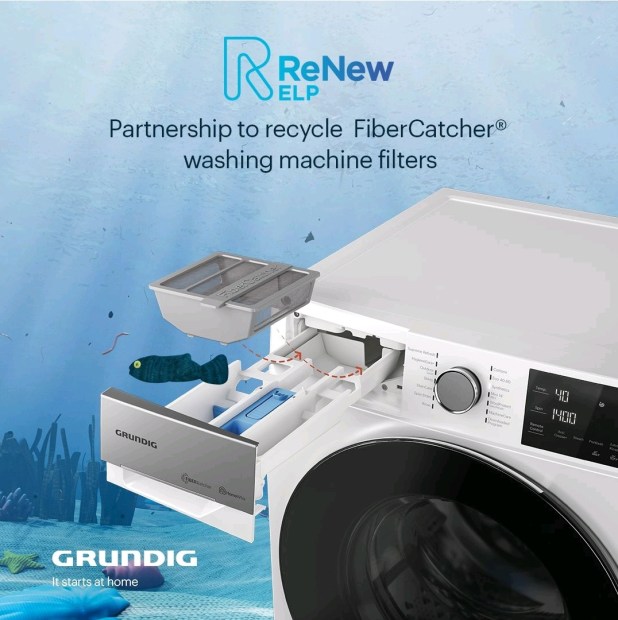
Grundig have formed an alliance with ReNew ELP

Grundig have formed an alliance with ReNew ELP to recycle our FiberCatcher® filter at the world’s first commercial-scale HydroPRS™ plastic recycling site.
 
Based in Teeside in North East England, this commercial scale hydrothermal advanced recycling site will be capable of recycling end-of-life plastic, converting mixed plastics back into fossil-replacement feedstock for use in the manufacture of new plastics and other products.

Whilst the Grundig FiberCatcher® filter is not suitable for traditional mechanical recycling via household collection, our partnership with ReNew ELP will allow users to recycle the filters, transforming used materials into repurposed plastic.
  
By partnering with ReNew ELP and utilising the world’s first commercial-scale HydroPRS™ plastic recycling site, we are able to prove Grundig’s commitment to the environment, minimising the environmental impact of our appliances in the process.

To discover more, please visit:https://www.bekoplc.com/news/grundig-announce-partnership-with-renew-elp/

Three ways new green refrigerant gases can protect the environment and boost your business

Technological innovation is the core of Electrolux Professional solutions, aimed at lowering energy consumptions and significantly reducing the impact on the environment through the implementation of F-Gas compliant natural refrigerants.
Learn how next-generation refrigeration products are helping drive sustainability, support environmental goals, and tackle the issue of climate change for customers. https://www.electroluxprofessional.com/benefits-of-green-refrigerant-gases/

Haier & AllianceHome Connectivity

At the most recent CES2022, Haier joined fellow global manufacturers to launch the Home Connectivity Alliance, a manufacturer-driven organization dedicated to driving innovation and providing the safest, most feature-rich connected home experience for consumers.

For more information, visit: https://homeconnectivityalliance.org/news-events/