
TCL Global Marketing Company Limited has officially launched operations in Bangladesh, partnering with local tech leader DX Group to handle marketing, distribution, and manufacturing. The announcement was made at an event at Hotel Sheraton, Banani, where TCL shared its investment plans and commitment to building robust local production capabilities.The company plans to produce a range of products locally, including televisions, air conditioners, refrigerators, and washing machines,
Tag Archives: washing machines
Top Energy-Efficient Washing Machines and Fridge Freezers for Europe in 2025
With energy prices still high across Europe and the EU pushing for greener homes, upgrading to an A-class (or better) appliance is one of the easiest ways to cut your bills and carbon footprint. The rescaled EU energy label (A to G since 2021) makes true top performers stand out – genuine Class A models can use 20-50% less electricity than a typical B or C rated one from just a few years ago.
At WhiteGoodsNow, we focus on appliances available across the UK and EU. These recommendations are drawn from the latest Topten.eu lists (updated May 2025), Which? tests, independent lab data, and the European Product Registry for Energy Labelling (EPREL). We prioritise real Class A efficiency, low running costs, reliability, and features that matter to European households.
Why Energy Efficiency Matters in Europe Right Now
Savings: A Class A washing machine typically costs just €12-18 per year to run (based on the EU’s 100-cycle eco programme and average €0.30/kWh rates).
EU Rules: New ecodesign regulations reward ultra-efficient models with inverter motors, precise dosing, and better insulation.
Rebates & Incentives: Many countries (e.g., Germany’s BAFA, France’s MaPrimeRénov’, UK boiler upgrade-style schemes) offer cashback on A-rated white goods.
Best Energy-Efficient Washing Machines for 2025 (EU/UK)
True Class A is now achievable and increasingly common in premium and mid-range models.
Bosch Serie 8 WGB244A40 / i-DOS models
Energy class: A (some variants A-10% or better)
Consumption: ~40-49 kWh/100 cycles
Why it wins: i-DOS automatic detergent dosing prevents waste, 4D Wash system for deep cleaning even in full loads, super-quiet iQdrive motor. Which? Best Buy in 2025 tests.
Capacity: 9-10 kg – ideal for families.
Price range: €850-1,200
LG F4X series (e.g., F4X7511TSB or Vivace A-30% models)
Energy class: A (up to A-30% in some markets)
Consumption: As low as 32-45 kWh/100 cycles
Standout features: AI DD fabric sensing, TurboWash 360 for 39-minute full cycles, Steam+ for allergen removal. Extremely low running costs and app integration.
Capacity: 9-11 kg
Price range: €700-1,100
Miele W1 series (e.g., WWR860 WPS)
Energy class: A
Consumption: ~49 kWh/100 cycles
The longevity champion: Tested for 20+ years, TwinDos auto-dosing, CapDosing for specials. Quietest in class and outstanding build quality.
Capacity: 9 kg
Price range: €1,200-1,800 (worth it if you keep appliances forever)
Honourable mentions: Siemens iQ700 equivalents to Bosch (same group), AEG 9000 series with SoftWater tech, and Haier i-Pro Series 7 (great value Class A performer).
Tip: Always check the QR code on the EU energy label in-store or online – it links directly to the official EPREL database for exact consumption figures.
Midea inaugurates its first wholly owned factory in Brazil
Chinese home appliance giant Midea Group has announced the opening of its new Brazilian factory in Pouso Alegre, a city in the southeastern state of Minas Gerais. The official inauguration was held on 9 December, reports Brazilian outlet Diário do Comércio.
The sprawling factory covers an area of 73,000 square metres and has the capacity to produce 700,000 refrigerators and 600,000 washing machines annually. Midea Carrier CEO Felipe Costa told reporters that the company aims to reach maximum production potential in two years.
While the factory will be employing 700 employees initially, Midea expects to increase this to 1,000 jobs by December 2025. Mayor Coronel Dimas said he believes the factory could transform the municipality into a hub for the home appliances, as the investment has already triggered conversations about similar manufacturers coming to Pouso Alegre.
The new factory will be Midea’s third in Brazil, following the Manaus (Amazonas) site, which produces household air conditioners and microwaves, and the Canoas (Rio Grande do Sul) site, which makes commercial air conditioners. While the previous two are operated in partnership with Carrier, Pouso Alegre
Electrolux Launch a Microplastic Filter Launch a Microplastic Filter
According to our consumer study into microplastics and laundry**, part of the problem is a lack of understanding of what ‘synthetic’ means, with 94% of all adults not knowing how much plastic is in clothes. Our study found 68% of European adults were unaware that Nylon is a plastic fiber while 62% did not know Polyester, the world’s commonly used fiber, is plastic.
With the launch of the Microplastic Filter, we can help consumers reduce their own environmental impact when it comes to clothing care. We estimate that the new filter for washing machines can help prevent up to two plastic bags worth of microplastic fibers from being released from laundry, per household, every year. The filter, designed to fit on the laundry wall and made from 50% recycled plastic, works with both Electrolux and AEG washing machines.
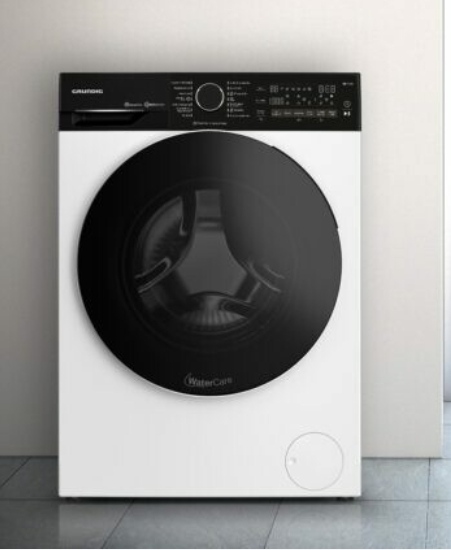
Grundig built-in microplastic filter to washing machines
Grundig expanding its sustainable product range, offering a solution to avoid microplastics in the water: the world’s first washing machines with built-in microplastic filter. The new technology filters up to 90% of textile microfibres from the washing water before they enter the wastewater and pollute the environment.With every wash, clothing and textiles release up to 3,000 fibres that reach our rivers, lakes and seas via wastewater. There, the microfibres are taken up by fish and other marine creatures, entering the food chain and ending up on our plates.
Grundig wants to stop this pollution cycle and brings the first washing machines with an integrated microplastic filter.
The first Grundig washing machines available with built-in microplastic filter technology are the models GW7P79419W for 9kg laundry and the 10kg model, GW7P510419W. The filter is located in the detergent compartment and is automatically activated in the Easy Care, Shirts and Outdoor/ Sport programmes. Several times during the washing cycle, the water is passed through the microplastic filter before it is pumped into the wastewater. Up to 90% of the synthetic microfibers are collected from the washing water inside the filter.
AEG appliances gain hygiene certification from Swissatest
AEG has gained certification for selected programmes across several of its appliances from leading test competence centre, Swissatest Testmaterialien AG.
The certification from Swissatest means consumers can have confidence that these programmes show an outstanding efficiency to remove bacteria and viruses. This certification applies to the following cycles on a number of AEG products including washing machines, tumble dryers and dishwashers, all of which will show the Swissatest logo:
For washing machines/washer dryers: The Anti Allergy/Anti Allergy Vapour programme removes more than 99.99% of bacteria and viruses including Staphylococcus aureus, Enterococcus faecium;
For tumble-dryers: The Hygiene/Duvet cycle removes more than 99.9% of bacteria and viruses including Candida albicans and Escherichia coli; and
For dishwashers: The ExtraHygiene function removes more than 99.9999% of bacteria and viruses including Micrococcus luteus and MS2 bacteriophage.
Luke Harding, general manager at Electrolux, said: “We know there are a great number of people who are concerned about bacteria and virus spread, particularly in light of the past 18 months.
“We are therefore delighted to be able to offer certified programmes which can remove up to 99.9999% of certain bacteria and viruses. This collaboration with Swissatest supports our company goal of helping to shape living for the better. It should also hopefully give some peace of mind to our consumers.”
recent research undertaken by AEG, tackling germs was very much front of mind with consumers. The research found that one in five of all Europeans polled had increased the number of times they were doing the laundry due to COVID-19 – 14% of all Europeans cited ‘getting rid of germs’ as the main reason for washing clothes.
Iain Wareham, Electrolux’s head of product line care, said: “This is an incredibly important piece of work with absolute relevance in the times we are now living in. In order to achieve it, we involved people across the business including from R&D, product, marketing, fabric care and dish care.
“We are proud to have met the challenging test requirements set by Swissatest and delighted to be able to share the news with consumers.”
Christian Portmann, chief executive of Swissatest, said: “While it is not uncommon for programmes to target the removal of bacteria, the high performance against virus removal within AEG products is remarkable.
“This is the very first time, that we, as a scientific test institute and test material producer, are able to share our comprehensive view on washing processes with the end user, taking cleaning performance, sustainability and hygiene aspects into account
 WHITEGOODSNOW