
The Nanterre Commercial Court has selected the Cafom Group as the buyer of the brands belonging to the Brandt Group. The deal, valued at €18.6 million, covers four well-known appliance brands—Brandt, Sauter, De Dietrich, and Vedette—along with their associated patents and existing inventory.
Following the acquisition, Cafom has already restarted distribution of these brands in both the French and international markets. The group has also outlined plans to progressively reindustrialize production, with a clear intention to maintain manufacturing activities in France 🇫🇷.
To support this strategy, Cafom has partnered with Arpa, an Alsatian company specializing in cooking appliances. Arpa will notably take charge of induction cooktop production and is expected to create over 50 jobs in the short term, rising to around 130 positions in the longer term as part of a new oven production and assembly line.
At the same time, EverEver, a start-up based in Brittany that had previously submitted its own bid for the brands, has been approached to help develop a new range of washing machines scheduled for launch in the coming months.
Cafom says the project represents a major step in strengthening the French appliance industry.
“We are proud to launch this ambitious project, which will create jobs in France, preserve national industrial heritage, and protect the purchasing power of French consumers,” the group stated. “This initiative also reinforces our position as a leading player in the distribution of home furnishings and household equipment.”
Through this acquisition and its industrial partnerships, Cafom aims to revitalize historic French appliance brands while rebuilding local manufacturing capacity—a move that could bring both economic and industrial benefits in the years ahead.
Tag Archives: De Dietrich
Groupe Brandt Liquidated After Rescue Plan Fails: A Stark Warning for European Appliance Manufacturing
The curtain has fallen on one of France’s most iconic appliance manufacturers. On Thursday, December 11, the Nanterre Commercial Court ordered the liquidation of Groupe Brandt, marking the end of a months-long effort to save the company through an employee-led cooperative. The decision spells the loss of approximately 700 jobs and halts production of legacy brands including Brandt, De Dietrich, Sauter, and Vedette.
This outcome underscores a broader and troubling trend: the continued erosion of European-based appliance manufacturing in the face of global competition, financial fragility, and investor hesitancy.
A Last-Ditch Effort That Fell Short
The final hope for Groupe Brandt rested on a bold proposal—a Scop (Société coopérative et participative), or employee cooperative, backed by Groupe Revive and entrepreneur Cédric Meston, co-founder of plant-based food brand HappyVore. The plan aimed to preserve local jobs and maintain production in the historic Loiret and Loir-et-Cher regions by turning employees into co-owners.
Despite strong political and regional support, including €17 million in public funding from the French state, Centre-Val de Loire region, and the city of Orléans, the plan ultimately collapsed. The court deemed the proposal financially unviable, citing a shortfall of €3–8 million that banks refused to cover.
Political Will Meets Financial Reality
The rescue effort drew unprecedented political attention. Industry Minister Sébastien Martin pledged €5 million in state aid, while regional leaders rallied to raise additional funds. Yet, even with this show of unity, the private sector’s reluctance to assume risk proved decisive.
With no viable path to cover the remaining funding gap—and no means to pay salaries beyond December 15—the court had little choice but to proceed with liquidation.
What This Means for the Industry
Groupe Brandt’s collapse is more than a corporate failure—it’s a symbolic blow to the European white goods sector. Once a pillar of French industrial pride, Brandt’s demise highlights the vulnerability of legacy manufacturers in a capital-intensive, globally competitive market.
For industry watchers, the case raises urgent questions:
– Can cooperative ownership models realistically rescue distressed manufacturers?
– What role should public funding play in safeguarding industrial heritage?
– And how can Europe retain its foothold in appliance production amid mounting global pressures?
As the dust settles, one thing is clear: the Brandt story will resonate far beyond France’s borders.
Groupe Brandt Seeks Strategic Lifeline Amid Market Turbulence
The European home appliance sector is once again facing tough headwinds, and this time, the storm has reached one of France’s last-standing giants. Groupe Brandt, a century-old manufacturer and a key player in the French appliance landscape, has entered creditor protection in a bid to stabilize its finances and attract a strategic investor.
🏛️ Court-Approved Restructuring
On October 1, the Nanterre Economic Court granted Brandt’s request for protection, enabling the company to freeze its debts and continue operations while actively seeking a financial partner. Owned by Algeria’s Cevital Group since 2014, Brandt’s leadership views this move not as a retreat, but as a strategic reset—an opportunity to accelerate talks with potential investors.
Production at Brandt’s facilities in Orléans and Vendôme remains uninterrupted, and local distributor Elmax Store reports no immediate impact on its operations.
🧩 Who Might Step In?
Brandt’s portfolio includes not just its namesake brand, but also De Dietrich, Sauter, and Vedette—making it a valuable acquisition target. With 750 employees across France and a service hub near Paris, the company is far from marginal. CEO Daniele Degli Emili has already reached out to business partners, assuring them that several “serious and well-negotiated” investor options are on the table.
🌍 A Broader Industry Reckoning
Brandt’s situation reflects a deeper crisis among Europe’s traditional appliance manufacturers. Market consolidation is no longer a possibility—it’s a necessity. Chinese conglomerates have been steadily acquiring European brands: Hisense took over Gorenje in 2018, Haier absorbed Candy Hoover in 2019, and Midea snapped up Teka earlier this year. Midea even held talks with Electrolux in 2023, though no deal materialized.
📉 Electrolux and the Financial Squeeze
Even Electrolux, long considered a pillar of European manufacturing, has felt the strain. Despite returning to profitability in 2025 after a sweeping restructuring, the Swedish company reported a negative operating cash flow of $405 million in H1, pushing net debt to nearly $3 billion. Analysts now anticipate a capital injection of at least $1.79 billion via a share issue, and S&P Global Ratings has downgraded its credit score to BBB-, teetering just above speculative grade.
🚨 Industry Survival at Stake
The pressure from Asian—particularly Chinese—competitors is mounting. With only a handful of independent European manufacturers left, the industry’s future looks precarious. In a rare show of unity, several appliance makers have issued an open letter to European Commission President Ursula von der Leyen, warning that the very survival of Europe’s home appliance sector is in jeopardy.
De Dietrich Returns to Australia After Over a Decade
Luxury appliance brand De Dietrich is making a grand comeback in the Australian market after more than 10 years. This re-entry is marked by a significant shift in strategy, as De Dietrich’s parent company has established a dedicated subsidiary to manage direct sales in both Australia and New Zealand—completely bypassing traditional distribution or agency partnerships.
As part of this multi-million-dollar investment, a state-of-the-art Sydney Experience Centre is currently under construction in Rozelle, near the heart of Sydney’s CBD. The centre is set to open its doors this May, offering consumers an immersive introduction to De Dietrich’s innovative products. Further plans are underway to launch additional Experience Centres across major cities, including Melbourne, Brisbane, and Perth, solidifying De Dietrich’s presence in the region.

Brandt 100th birthday
The Brandt Group has just celebrated its century of existence. An event celebrated as it should be. The opportunity for the managers of the company, which employs 750 people and is known for its 3 other brands – Dietrich, SAUTER and Vedette – to make a flattering assessment. Mauricio del Puerto -brand director for the Brandt Group -: “Producing in France has many advantages and allows us to be even more efficient, to continue to rub shoulders with excellence. French production is a value, which we express in our products. It is the expression of the know-how of our teams, factories, laboratories and engineers. Our pride lies in our ability to reconcile tradition and modernity.” Daniele Degli Emili – Managing Director – : “It’s an exceptional event! It’s 100 years of history, innovations and know-how! It’s also 100 years of serving customers, 100 years of passion with those who have contributed to making Brandt an essential brand of household appliances! (…) Brandt has always known how to innovate to meet the needs of consumers in France and internationally.” Frederique Guerel Josien , Director of Operations: “Our deliveries in France are therefore limited to a radius of 1000km. We also use local resources, 75% of the water used comes from the site’s wells, for example.” The group, which has a turnover of 260 million euros – 30% of which is international – wants to continue to develop: already present, notably in Italy, Germany, the Netherlands, Benelux, Egypt, UK, it is preparing to conquer Australia and Canada.
De Dietrich new collection
De Dietrich, a brand under the Brandt Group, has made a triumphant return by unveiling its cutting-edge “Philharmonie” collection. This collection embodies the essence of French craftsmanship, emphasizing design, quality, and performance.
The grand reveal took place in the desecrated chapel of Domaine Reine Margot in Issy les Moulineaux, a unique setting that resonates with the harmony and precision of culinary orchestration. Let’s delve into the details:
Heritage and Innovation:
De Dietrich, founded 340 years ago in 1684 near Strasbourg, has consistently championed innovation while upholding French expertise.
The Brandt Group currently operates two production sites in France—in Orléans and Vendôme—with a production capacity of 600,000 pieces. Their ambitious goal is to surpass one million units within the next 3 years.
Many of their product lines proudly bear the Origine France Garantie certification.
In 2023, their successful model yielded a turnover of €235M, with 25% of sales coming from exports to 15 countries.
The Philharmonie Collection:
This collection extends beyond cooking, signaling De Dietrich’s expansion into new markets.
While they lead in induction technology, they continue to advance in washing and refrigeration.
The collection includes:
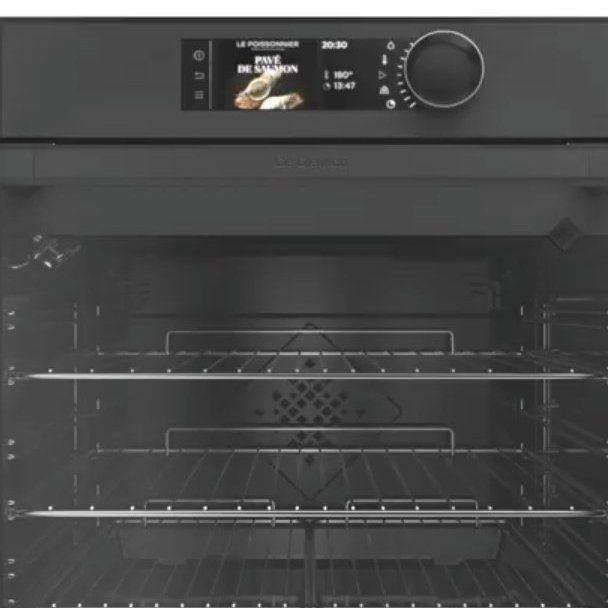
Ovens: Redesigned with full-width handles, large TFT displays (some up to 4.3’’), and a central selector for an enhanced user experience.
Notable features: AI Talent Sensor for autonomous cooking without an external probe, over 150 recipes, and professional-grade methods like low-temperature cooking, sous vide, dehydration, air frying, and world recipes.
A wireless, independent probe ensures precise cooking.
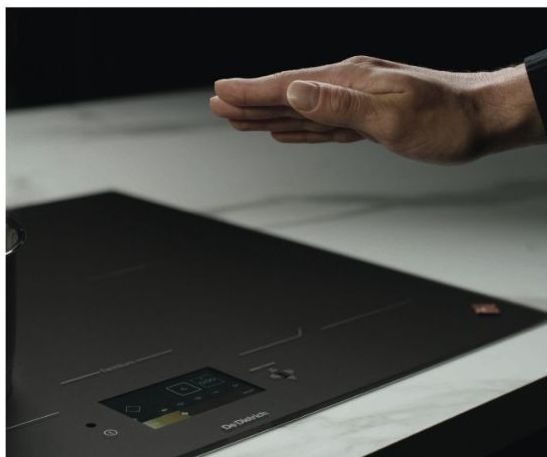
Induction Hobs: Sleek surfaces in 65, 80, or 90 cm sizes, equipped with color LCD or TFT screens.
Motion Control technology allows touchless control.
The Ténor inductor delivers a powerful 5500W on a flexible cooking zone.
The AI Talent table provides a guide with 74 programmed recipes based on food types, adjusting power, temperature, and time automatically.
Luxurious Aesthetics:
The Philharmonie range exudes luxury, with meticulously chosen colors and materials.
Five finishes cater to diverse kitchen styles:
Infinite Black
Heritage (pure black with copper accents)
Stellar Stainless Steel (intense black with stainless steel details)
Eternal White (white with stainless steel)
Master Black (deep black with velvety textures).
In summary, De Dietrich’s Philharmonie collection harmonizes innovation, elegance, and culinary precision—a symphony of excellence in the heart of the kitchen.


Groupe Brandt
Every 22 seconds: this is the frequency with which a cooking appliance was manufactured in Groupe Brandt factories in Orléans and Vendôme in 2022. 🎯 More than a slogan, sustainable French manufacturing is for the Brandt Group a commitment that continues in 2023 with: – Product innovations thanks to the unique know-how of their teams – Certifications and partnerships to promote French industry Origine France Garantie La French Fab – Services, tools and content to extend the life of our products:
Brandt Algeria
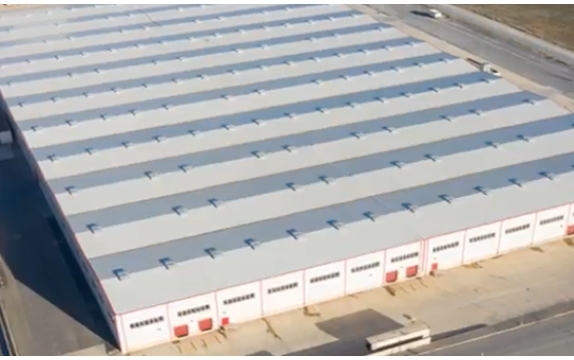
At Brandt Algeria, They believe in Algerian know-how! Refrigerators & washing machines are manufactured in our factories, in Algeria, at integration rates exceeding 85%.
A production complex built on 110 hectares and employing more than 4,000 employees.


Find out more http://brandt.dz
De Dietrich new black coal collection
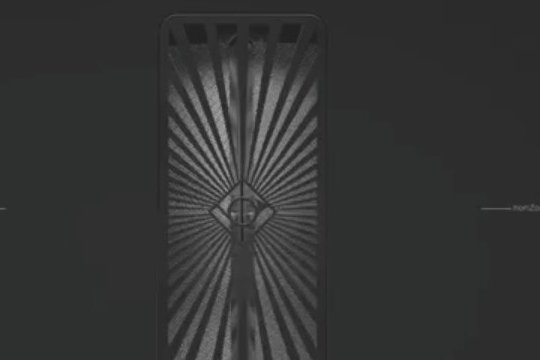
De Dietrich presents Black Coal the new charcoal collection, composed of Oven, microwave and hob with integrated extractor
Fascination, the latest in cooking by De Dietrich

Absolute black, Iron gray, Pure white and Platinum are the four exclusive collections of De Dietrich’s new Fascination range . Black, gray, white and platinum are the main colors of these four collections, which are combined with materials and textures, giving rise to an unprecedented design.
Different colors, combination of materials and mixture of textures such as cast iron, glass or copper, make this new collection a benchmark for design and innovation. So much so that some of its models have been awarded the Red Dot International Award.
As distinctive signs of the ovens of this collection, they stand out their robust handle, a platinum and copper selector to show the intuitive controls and an elegant black glass door, Iron gray or Pure white.
In its induction plates, the Horizone technology stands out, allowing it to reach a power of 5,000 W in different inductors without increasing the total power of the installation. In addition, these plates automatically recognize the size of the container on its surface.
 WHITEGOODSNOW