China’s Major Home Appliance Production: Mixed Results for Jan–Oct 2025

The latest figures from China’s National Bureau of Statistics (NBS) show a mixed picture for the country’s “big four” white goods categories during the first ten months of 2025. While three of the four major home appliances posted year-on-year growth, television production continues to slide.
Washing Machines Lead the Pack
Washing machines were the clear standout, with production surging 6.4% year-on-year to 101.08 million units from January to October. That’s an impressive volume, though the pace of growth has eased slightly compared to the 7.5% increase recorded over the first nine months.
Steady Gains for Cooling and Cold Appliances
Air-conditioner output continued its upward trend, posting solid year-on-year growth (exact percentage not disclosed in the latest release but in line with recent positive momentum).
Refrigerator production also expanded on the year, supported by steady replacement demand and export orders.

The divergent trends highlight a clear split in China’s white goods sector: essential laundry, cooling, and refrigeration products are enjoying healthy demand, while the TV segment faces structural headwinds. With the all-important year-end shopping festivals and pre-Lunar New Year restocking season approaching, manufacturers will be watching November and December figures closely to gauge whether the positive momentum in the first three categories can offset the weakness in televisions.
Stay tuned to WhiteGoodsNow.com for the latest production updates, export data, and market insights
Top Energy-Efficient Washing Machines and Fridge Freezers for Europe in 2025

With energy prices still high across Europe and the EU pushing for greener homes, upgrading to an A-class (or better) appliance is one of the easiest ways to cut your bills and carbon footprint. The rescaled EU energy label (A to G since 2021) makes true top performers stand out – genuine Class A models can use 20-50% less electricity than a typical B or C rated one from just a few years ago.
At WhiteGoodsNow, we focus on appliances available across the UK and EU. These recommendations are drawn from the latest Topten.eu lists (updated May 2025), Which? tests, independent lab data, and the European Product Registry for Energy Labelling (EPREL). We prioritise real Class A efficiency, low running costs, reliability, and features that matter to European households.
Why Energy Efficiency Matters in Europe Right Now
Savings: A Class A washing machine typically costs just €12-18 per year to run (based on the EU’s 100-cycle eco programme and average €0.30/kWh rates).
EU Rules: New ecodesign regulations reward ultra-efficient models with inverter motors, precise dosing, and better insulation.
Rebates & Incentives: Many countries (e.g., Germany’s BAFA, France’s MaPrimeRénov’, UK boiler upgrade-style schemes) offer cashback on A-rated white goods.
Best Energy-Efficient Washing Machines for 2025 (EU/UK)
True Class A is now achievable and increasingly common in premium and mid-range models.
Bosch Serie 8 WGB244A40 / i-DOS models
Energy class: A (some variants A-10% or better)
Consumption: ~40-49 kWh/100 cycles
Why it wins: i-DOS automatic detergent dosing prevents waste, 4D Wash system for deep cleaning even in full loads, super-quiet iQdrive motor. Which? Best Buy in 2025 tests.
Capacity: 9-10 kg – ideal for families.
Price range: €850-1,200
LG F4X series (e.g., F4X7511TSB or Vivace A-30% models)
Energy class: A (up to A-30% in some markets)
Consumption: As low as 32-45 kWh/100 cycles
Standout features: AI DD fabric sensing, TurboWash 360 for 39-minute full cycles, Steam+ for allergen removal. Extremely low running costs and app integration.
Capacity: 9-11 kg
Price range: €700-1,100
Miele W1 series (e.g., WWR860 WPS)
Energy class: A
Consumption: ~49 kWh/100 cycles
The longevity champion: Tested for 20+ years, TwinDos auto-dosing, CapDosing for specials. Quietest in class and outstanding build quality.
Capacity: 9 kg
Price range: €1,200-1,800 (worth it if you keep appliances forever)
Honourable mentions: Siemens iQ700 equivalents to Bosch (same group), AEG 9000 series with SoftWater tech, and Haier i-Pro Series 7 (great value Class A performer).
Tip: Always check the QR code on the EU energy label in-store or online – it links directly to the official EPREL database for exact consumption figures.

Appaloosa Doubles Down on Whirlpool Amid Slump

Appaloosa Capital has boosted its stake in Whirlpool to 5.5 million shares, now owning 9.8% of the company. Despite Whirlpool’s stock plunging 40% since July—hitting a 5½-year low—David Tepper’s move sparked a modest rebound, marking the first weekly gain in three weeks.

Whirlpool continues to face pressure from weak U.S. sales, shrinking margins, and rising debt, prompting a 48.6% dividend cut in July. Tepper’s bet suggests confidence in a turnaround, even as headwinds persist.

B&B Trends Acquires Ardes: A Bold Move in Europe’s SDA Market

At WhitegoodsNow, we’re always tracking the moves that shape the future of the appliance industry—and this one’s a big deal. B&B Trends has officially acquired Ardes, a respected Italian brand with deep roots in small domestic appliances. It’s a strategic play that not only strengthens B&B’s footprint in Italy but also signals a broader acceleration of their European growth.

🔍 Why Ardes Matters

Ardes isn’t just another name in the market—it’s a legacy brand trusted by millions of Italian households. Known for blending functionality with timeless design, Ardes brings decades of expertise to the table. This acquisition gives B&B Trends access to a rich product portfolio and a loyal customer base, while reinforcing their commitment to innovation that enhances everyday life at home.

🌍 What It Means for the Sector

This move reflects a growing trend: consolidation with purpose. By integrating heritage brands like Ardes, B&B Trends is positioning itself as a pan-European powerhouse in the SDA (small domestic appliance) space. Expect to see more cross-market launches, smarter product development, and a renewed focus on lifestyle-driven design.

🧠 Our Take

For industry watchers, this is more than a headline—it’s a signal of where the market is heading. Legacy meets agility. Tradition meets tech. And consumers stand to benefit from a new wave of appliances that are both intuitive and inspired.

We’ll be keeping a close eye on how this partnership evolves—and what it means for innovation, sustainability, and competition across Europe

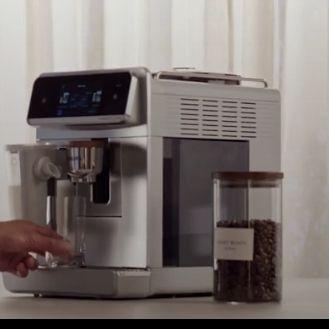
Philips Café Aromis 8000 Series: Café Quality at Home

Meet the Philips Café Aromis 8000 Series—your personal café in a sleek, smart machine. With over 50 hot and cold recipes, BrewExtract technology for rich flavour, and the LatteGo Pro milk system for velvety foam, it delivers barista-level coffee at the touch of a button.

Customize your brew with the Barista Assistant in the HomeID app and enjoy effortless indulgence, every day. Philips continues to raise the bar in home innovation—making life simpler, tastier, and more rewarding.

LG’s profits rise, but sales decline in Q3

LG Electronics today announced its global financial results for the  third quarter of 2025, reporting  consolidated revenue of €13.2 billion and operating profit of €420 million.  In the third quarter of 2024, sales were €14.76 billion. However, profit was significantly lower: in euros, it was only €50 million.

The Home Appliance Solution (HS) and Vehicle Solution (VS) divisions posted particularly strong performances, despite external challenges posed by U.S. tariffs and the slowdown in the electric vehicle market. The results reflect the ongoing transformation of LG’s business portfolio and commitment to qualitative growth, which includes B2B solutions such as vehicle and HVAC systems, the expansion of non-hardware businesses such as subscription services and the webOS platform and new direct-to-consumer business models.LG Home Appliance Solution (HS) Company

The HS division posted revenues equivalent to €4 billion and an operating profit of €220 million. This division also reported a decline in sales, which had been 8,340 billion won compared to 6,580 billion won in 2025, and profits fell from 527 billion to 366 billion won. Optimization of production sites and improved operational efficiency largely absorbed the impact of the U.S. tariffs, ensuring higher profitability than the previous year.

For the fourth quarter, the global home appliances market remains challenging, with demand recovery still weak and competition increasing. The division aims to continue expanding its subscription and digital businesses, strengthen qualitative growth, and improve profitability through cost review and fixed expense reduction

Elica Grows Despite Tough Market

Elica reported €349.5M in revenue for the first nine months of 2025, up 2.3%. Q3 saw a 5.1% boost, driven by new Cooking products in EMEA and Engines growth in Europe.

Margins dipped, with EBITDA at €21.9M and net loss at €3.3M. CEO Giulio Cocci cited strong price pressure but emphasized strategic investments and expanded distribution.

Full-year revenue is expected to reach €455M–€460M. Recent moves include expansion in Germany and the Netherlands, the Steel acquisition, and AriaChef’s award-winning debut in Japan.